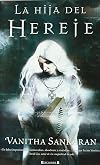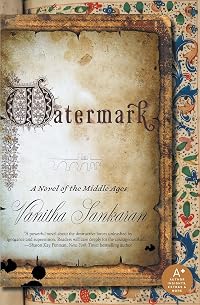
Watermark: A Novel of the Middle Ages
by Vanitha Sankaran
On This Page
Description
"The daughter of a papermaker in a small French village in the year 1320--mute from birth and forced to shun normal society--young Auda finds solace and escape in the wonder of the written word. Believed to be cursed by those who embrace ignorance and superstition, Auda's very survival is a testament to the strength of her spirit. But this is an age of Inquisition and intolerance, when difference and defiance are punishable "sins" and new ideas are considered damnable heresy. When darkness show more descends upon her world, Auda--newly grown to womanhood--is forced to flee, setting off on a remarkable quest to discover love and a new sense of self . . . and to reclaim her heritage and the small glory of her father's art"--P. [4] of cover. show lessTags
Recommendations











Member Reviews
Love, betrayal, fear and suspicion are some of the themes that populate this historical novel, a superb debut for Vanitha Sankaran. Set in early 14th century France, Watermark begins with the birth of Auda, the novel’s protagonist. Her mother, Elena, sacrifices herself so that her infant may live. But it’s obvious from the beginning that Auda will face many challenges:
Onors, the healer’s apprentice, dropped her muddy clump of roots and leaves and rushed to Elena’s side. Seeing a child kick beside its mother’s eviscerated body, she crossed herself…She looked more closely at the infant and gasped. This thing was no child at all but a sickly creature, ivory-colored in skin and hair, whate as bone. Even its eyes were so light, show more the translucent pink of a worm.
It had come too soon, undercooked, with no color yet baked into its skin and hair, so silent that she wondered for a moment if it still lived. But then it blinked.
“Demon,” she said in a whisper and crossed herself again. (page 6)
In a time and place when anyone out of the ordinary is suspected of being a heretic or of the devil, a mute albino girl - sometimes called the White Witch – might be blamed for the weather, for crop failures or livestock deaths. Auda has the protection of her father, Martin, a paper maker, but he is not invincible. Her older sister Poncia is a pious, fearful woman and thinks Auda would be safe if she were married to the old miller, so she makes the arrangements. However, Auda wants no part of it and prefers to stay with her father to help him with the paper making business. She has dreams of becoming a scribe – unheard of for a woman – and even more extraordinary, contemplates writing her own books.
Sakaran does an admirable job of keeping the story moving. Several times I thought I knew what was going to happen and was pleasantly surprised at the turns the story took. I was fascinated to learn about the paper making process: fermenting old rags into a pulp and pressing the pulp into paper. The title of the book, Watermark, refers to the technique invented in the 13th century to identify paper by pressing a unique symbol into the paper as it’s made. In this story, the watermark was also used to indicate a secret religious sect.
I’m always interested in stories involving witch hunts and the Inquisition. Medieval Europe is not a place I’d like to visit in reality, but I enjoy reading good historical fiction based on the time period. While reading Watermark, I was aware of the similarities to some of today's extreme religious fanatacism, resulting in polarities within our own culture, and I was reminded how dangerous intolerance can become.
Sankaran has written a compelling novel with interesting characters and has done some good research of the era. She even includes a glossary, a bibliography and a chronology of papermaking and other pertinent events of the time. I'm looking forward to reading her next book about printmaking in Italy. show less
Onors, the healer’s apprentice, dropped her muddy clump of roots and leaves and rushed to Elena’s side. Seeing a child kick beside its mother’s eviscerated body, she crossed herself…She looked more closely at the infant and gasped. This thing was no child at all but a sickly creature, ivory-colored in skin and hair, whate as bone. Even its eyes were so light, show more the translucent pink of a worm.
It had come too soon, undercooked, with no color yet baked into its skin and hair, so silent that she wondered for a moment if it still lived. But then it blinked.
“Demon,” she said in a whisper and crossed herself again. (page 6)
In a time and place when anyone out of the ordinary is suspected of being a heretic or of the devil, a mute albino girl - sometimes called the White Witch – might be blamed for the weather, for crop failures or livestock deaths. Auda has the protection of her father, Martin, a paper maker, but he is not invincible. Her older sister Poncia is a pious, fearful woman and thinks Auda would be safe if she were married to the old miller, so she makes the arrangements. However, Auda wants no part of it and prefers to stay with her father to help him with the paper making business. She has dreams of becoming a scribe – unheard of for a woman – and even more extraordinary, contemplates writing her own books.
Sakaran does an admirable job of keeping the story moving. Several times I thought I knew what was going to happen and was pleasantly surprised at the turns the story took. I was fascinated to learn about the paper making process: fermenting old rags into a pulp and pressing the pulp into paper. The title of the book, Watermark, refers to the technique invented in the 13th century to identify paper by pressing a unique symbol into the paper as it’s made. In this story, the watermark was also used to indicate a secret religious sect.
I’m always interested in stories involving witch hunts and the Inquisition. Medieval Europe is not a place I’d like to visit in reality, but I enjoy reading good historical fiction based on the time period. While reading Watermark, I was aware of the similarities to some of today's extreme religious fanatacism, resulting in polarities within our own culture, and I was reminded how dangerous intolerance can become.
Sankaran has written a compelling novel with interesting characters and has done some good research of the era. She even includes a glossary, a bibliography and a chronology of papermaking and other pertinent events of the time. I'm looking forward to reading her next book about printmaking in Italy. show less
Fair-haired Auda has been mute since birth, and due to her strange looks and lack of speech, has been sequestered away from society for most of her life. Living as an assistant to her father, the paper maker, Auda dreams of one day penning her own work of art on her father's pages. Though Auda and her father lead a quiet existence, life in their bucolic French village is becoming increasingly fraught with unease, as some in the town are being accused of heresy against the Church. But Auda has more pressing problems, for her sister is contracting a marriage between the young girl and the town's unattractive miller, a situation that causes Auda no end of unease. In order to escape his attentions, she contracts herself to the vicomtesse as show more a scribe in the castle. As she spends her days copying poetry from the crumbling parchment of the past, Auda discovers that a group of inquisitors are bearing down on the village and that their intent is to burn those who they deem to be heretics. Soon Auda comes to realize that she and her father are in grave danger by the rumors of heresy swirling around the village, and that they may have to sacrifice everything to save themselves and the ones they love. Told with a bewitching style and voice, Watermark is a dark swirling tale of secrecy and fear, set in a time where being different can be deadly.
From the moment I plunged into this tale, I realized that it was going to be a dark and treacherous ride. The story opens with the very dramatic scene of Auda's troublesome entrance into the world, leaving her motherless and disfigured. I knew just by this passage that Auda's life would be one fraught with difficulty and pain, and though there were some very joyous moments in the story, the tale lived up to my expectations.
I liked Auda and felt a strange protectiveness throughout the story. She was, in essence, an intelligent innocent, unschooled in the ways of the world, yet still independent and brave. Though most of her life was spent hidden and isolated, she had the same dreams and wishes for herself that most young girls have: to find love, to be respected and valued in the community, and to practice her art. She was not the type of character to feel pity for because she never sunk into pity for herself, choosing instead to lead her life with wonder and acceptance. She had very strong family ties and I really liked the relationship between her father and herself. She was not only his apprentice but his friend and confidante, weathering the hardships of life right alongside of him. Their relationship was sharply contrasted with the relationship she had with her older sister, Poncia, who was always meddling and lecturing, trying to be the maternal force in Auda's life. I had a strong dislike for Poncia and felt her to be at times very cruel.
Towards the middle of the book, Auda gets the chance to form a romantic relationship with a fellow artist. This was a nice aspect of the plot and tended to drown out the darker elements of the story, giving a nice balance to the narrative. As she begins to blossom in new ways, she grows beyond her small world of isolation and forges her way into the world surrounding her. The relationship between the two lovers was unique because it was not only forged in seduction and attraction, but also in mutual respect and admiration for one another's craft. Though the lovers have a difficult time rising above their situations and dangers, they are steadfastly loyal to one another and in the end are rewarded for it. I do wish that there had been a bit more focus on their relationship in the book because I really enjoyed reading about their times together and thought that it would be interesting to watch their relationship grow a bit more.
There were also a lot of great inside details on the craft of papermaking in the book. It's a craft that I had been curious about but knew very little of. The details of paper making were imparted with a great deal of clarity and filled in the plot very nicely. So much about this type of artistry would probably be foreign to most readers, but it was all conveyed with enthusiasm by the author and made for very interesting reading and speculation. I had no idea that it was such a detail oriented craft and that it was not at all popular in its early days.
The sections that dealt with the town's harassment by the inquisitors was truly frightening. Most of the suspected heretics were nothing of the kind, yet they were made to stand trial and torture and were most always executed, no matter what their level of guilt. It was in these sections that the story became gritty and raw. The fear of the Inquisition was a palpable vein running through the characters' lives and it seemed no one was safe from being arrested and burned in this town that had previously been peaceful and sheltered. This aspect of the plot felt very authentically documented and was thoroughly realized within the narrative, and at times, it was the crux of the story. Even the nobles of the town did not escape suspicion, though they were more capable of bartering themselves out of harm's way than most of the other villagers. I think that the author was amazingly adept at creating tension and fear in these scenes, and for me, these were the parts of the story that really stood out with distinction.
This book had a great dark and foreboding atmosphere and some very moving and dramatic plot elements that gave the story an edge over most other historical fiction of this kind. At times though, I felt that the plot moved a bit slowly and in a more roundabout way than what I had been expecting, and I found at times that I had to be patient with the story. If you are the type who enjoys historical fiction that centers around lesser known times and events, I think this book might be of interest to you. Readers who enjoy courageous and independent female characters might also appreciate this book. Though the book was involving, it was not overly dense, and aside from the plot lagging at times, it was an entertaining read. There are also few surprises tucked into the narrative as well, which I think will draw its readers deep into the recesses of the story and give them something to ponder. show less
From the moment I plunged into this tale, I realized that it was going to be a dark and treacherous ride. The story opens with the very dramatic scene of Auda's troublesome entrance into the world, leaving her motherless and disfigured. I knew just by this passage that Auda's life would be one fraught with difficulty and pain, and though there were some very joyous moments in the story, the tale lived up to my expectations.
I liked Auda and felt a strange protectiveness throughout the story. She was, in essence, an intelligent innocent, unschooled in the ways of the world, yet still independent and brave. Though most of her life was spent hidden and isolated, she had the same dreams and wishes for herself that most young girls have: to find love, to be respected and valued in the community, and to practice her art. She was not the type of character to feel pity for because she never sunk into pity for herself, choosing instead to lead her life with wonder and acceptance. She had very strong family ties and I really liked the relationship between her father and herself. She was not only his apprentice but his friend and confidante, weathering the hardships of life right alongside of him. Their relationship was sharply contrasted with the relationship she had with her older sister, Poncia, who was always meddling and lecturing, trying to be the maternal force in Auda's life. I had a strong dislike for Poncia and felt her to be at times very cruel.
Towards the middle of the book, Auda gets the chance to form a romantic relationship with a fellow artist. This was a nice aspect of the plot and tended to drown out the darker elements of the story, giving a nice balance to the narrative. As she begins to blossom in new ways, she grows beyond her small world of isolation and forges her way into the world surrounding her. The relationship between the two lovers was unique because it was not only forged in seduction and attraction, but also in mutual respect and admiration for one another's craft. Though the lovers have a difficult time rising above their situations and dangers, they are steadfastly loyal to one another and in the end are rewarded for it. I do wish that there had been a bit more focus on their relationship in the book because I really enjoyed reading about their times together and thought that it would be interesting to watch their relationship grow a bit more.
There were also a lot of great inside details on the craft of papermaking in the book. It's a craft that I had been curious about but knew very little of. The details of paper making were imparted with a great deal of clarity and filled in the plot very nicely. So much about this type of artistry would probably be foreign to most readers, but it was all conveyed with enthusiasm by the author and made for very interesting reading and speculation. I had no idea that it was such a detail oriented craft and that it was not at all popular in its early days.
The sections that dealt with the town's harassment by the inquisitors was truly frightening. Most of the suspected heretics were nothing of the kind, yet they were made to stand trial and torture and were most always executed, no matter what their level of guilt. It was in these sections that the story became gritty and raw. The fear of the Inquisition was a palpable vein running through the characters' lives and it seemed no one was safe from being arrested and burned in this town that had previously been peaceful and sheltered. This aspect of the plot felt very authentically documented and was thoroughly realized within the narrative, and at times, it was the crux of the story. Even the nobles of the town did not escape suspicion, though they were more capable of bartering themselves out of harm's way than most of the other villagers. I think that the author was amazingly adept at creating tension and fear in these scenes, and for me, these were the parts of the story that really stood out with distinction.
This book had a great dark and foreboding atmosphere and some very moving and dramatic plot elements that gave the story an edge over most other historical fiction of this kind. At times though, I felt that the plot moved a bit slowly and in a more roundabout way than what I had been expecting, and I found at times that I had to be patient with the story. If you are the type who enjoys historical fiction that centers around lesser known times and events, I think this book might be of interest to you. Readers who enjoy courageous and independent female characters might also appreciate this book. Though the book was involving, it was not overly dense, and aside from the plot lagging at times, it was an entertaining read. There are also few surprises tucked into the narrative as well, which I think will draw its readers deep into the recesses of the story and give them something to ponder. show less
4.5 out of 5 Stars
From the Back Cover:
The daughter of a papermaker in a small French village in the year 1320 - mute from birth and forced to shun normal society - young Auda finds solace and escape in the wonder of the written word. Believed to be cursed by those who embrace ignorance and superstition, Auda's very survival is a testament to the strength of her spirit. But this is an age of Inquisition and intolerance, when difference and defiance are punishable "sins" and new ideas are considered damnable heresy. When darkness descends upon her world, Auda - newly grown to womanhood - is forced to flee, setting off on a remarkable quest to discover love and a new sense of self...and to reclaim her heritage and the small glory of her show more father's art.
My Review:
In this impressive debut novel, Vanitha Sankaran crafts a very original tale centered around a very different kind of heroine. Auda is born an albino and the story opens with the gruesome circumstances of her birth, where a decision made by a superstitious midwife's apprentice renders her mute for life.
Fast forward twenty years to Auda as a woman grown. Auda lives and works with her father, a papermaker. Her father and sister have done a good job of protecting Auda from the outside world, but her sister has recently married and moved out of her father's home, and things are changing in Auda's world. Auda can't speak, but she can read and write, and in addition to copying texts for her father, she writes stories of her own and dreams of sharing them with the world. But her sister has other plans for her, to see her married and to remain safely hidden away.
"What form of story do you like best?"
This is what Auda writes on a little slip of paper, the first question she wants to ask of the man her sister has arranged for her to marry, and it was the moment I lost my heart to her. It's also the moment I realized I was in trouble, because people like Auda living in times like those didn't have happily ever afters. I had to tell myself not to get attached to her and her hopes for a full and happy life.
And oh, how Auda yearns to live a full and happy life. She's intelligent and inquisitive, and has reached the point in her life where she's ready to stretch her wings. But Auda's kind heart combined with her sheltered existance keep her from fearing the cruelty of others, and thus she goes along a little naively, unaware that seemingly innocent actions can draw unwanted attention. Which is unfortunate, for the town of Narbonne is on edge. An endless season of rain has ruined crops. Fear of heresy is sweeping through the country and priests are flocking to Narbonne to root out the cause of the evil weather. As heretic pamphlets begin surfacing more frequently in the town, the Inquisition turns its eyes to those who write, and to those who make the paper for them to write upon.
"If a man hears an evil idea, unless his mind is bent toward evil, he will not dwell on it, will forget it before long. But if that same idea is written, he will be drawn back to it, again and again. Evil has a temptation and man is bent toward it."
Auda's father comes under heavy suspicion and that means trouble for Auda. The story is compelling and well-paced, leading up to some pretty intense climactic scenes that keep the reader hooked right up to the sweet and satisfying conclusion. There were a couple of scenes that seemed to have been written specifically to draw attention to little nuggets of research the author found interesting (as explained in the author's note), but for me they came off as awkward rather than enlightening, since they didn't really have anything to do with the story. Minor quibbles, though. I thought this was a refreshingly original novel, fast-paced and very enjoyable with touches of poetry and story-telling. I loved the setting of this book, in the little seaside town of Narbonne rather than in a big cosmopolitan city like Paris and I enjoyed reading a story about someone who lives in the shadow of the lord of the land, rather than reading another story from the point of view of the nobility. Highly recommended for anyone looking for something different in historical fiction and interested in getting a glimpse of facets of medieval life not often explored show less
From the Back Cover:
The daughter of a papermaker in a small French village in the year 1320 - mute from birth and forced to shun normal society - young Auda finds solace and escape in the wonder of the written word. Believed to be cursed by those who embrace ignorance and superstition, Auda's very survival is a testament to the strength of her spirit. But this is an age of Inquisition and intolerance, when difference and defiance are punishable "sins" and new ideas are considered damnable heresy. When darkness descends upon her world, Auda - newly grown to womanhood - is forced to flee, setting off on a remarkable quest to discover love and a new sense of self...and to reclaim her heritage and the small glory of her show more father's art.
My Review:
In this impressive debut novel, Vanitha Sankaran crafts a very original tale centered around a very different kind of heroine. Auda is born an albino and the story opens with the gruesome circumstances of her birth, where a decision made by a superstitious midwife's apprentice renders her mute for life.
Fast forward twenty years to Auda as a woman grown. Auda lives and works with her father, a papermaker. Her father and sister have done a good job of protecting Auda from the outside world, but her sister has recently married and moved out of her father's home, and things are changing in Auda's world. Auda can't speak, but she can read and write, and in addition to copying texts for her father, she writes stories of her own and dreams of sharing them with the world. But her sister has other plans for her, to see her married and to remain safely hidden away.
"What form of story do you like best?"
This is what Auda writes on a little slip of paper, the first question she wants to ask of the man her sister has arranged for her to marry, and it was the moment I lost my heart to her. It's also the moment I realized I was in trouble, because people like Auda living in times like those didn't have happily ever afters. I had to tell myself not to get attached to her and her hopes for a full and happy life.
And oh, how Auda yearns to live a full and happy life. She's intelligent and inquisitive, and has reached the point in her life where she's ready to stretch her wings. But Auda's kind heart combined with her sheltered existance keep her from fearing the cruelty of others, and thus she goes along a little naively, unaware that seemingly innocent actions can draw unwanted attention. Which is unfortunate, for the town of Narbonne is on edge. An endless season of rain has ruined crops. Fear of heresy is sweeping through the country and priests are flocking to Narbonne to root out the cause of the evil weather. As heretic pamphlets begin surfacing more frequently in the town, the Inquisition turns its eyes to those who write, and to those who make the paper for them to write upon.
"If a man hears an evil idea, unless his mind is bent toward evil, he will not dwell on it, will forget it before long. But if that same idea is written, he will be drawn back to it, again and again. Evil has a temptation and man is bent toward it."
Auda's father comes under heavy suspicion and that means trouble for Auda. The story is compelling and well-paced, leading up to some pretty intense climactic scenes that keep the reader hooked right up to the sweet and satisfying conclusion. There were a couple of scenes that seemed to have been written specifically to draw attention to little nuggets of research the author found interesting (as explained in the author's note), but for me they came off as awkward rather than enlightening, since they didn't really have anything to do with the story. Minor quibbles, though. I thought this was a refreshingly original novel, fast-paced and very enjoyable with touches of poetry and story-telling. I loved the setting of this book, in the little seaside town of Narbonne rather than in a big cosmopolitan city like Paris and I enjoyed reading a story about someone who lives in the shadow of the lord of the land, rather than reading another story from the point of view of the nobility. Highly recommended for anyone looking for something different in historical fiction and interested in getting a glimpse of facets of medieval life not often explored show less
Watermark: A Novel of the Middle Ages by Vanitha Sankaran is set in 1320 in a small town in France. The main character is Auda, an albino girl thought to be a devil child from the moment she was born.
Auda is mute but can read and write having been raised by a papermaker. It's rare for women to read let alone write during this period, and Auda's striking features put her very existence in danger when the Inquisition comes to town.
If you love paper at all, you'll revel in this book as the plot follows the early creation of paper using rags. The subsequent use of paper by the wealthy and the avoidance by the Church was fascinating to me and I couldn't get enough.
Interweaved between these historical facts is Auda's story as a mute albino show more woman who doesn't want to marry and her efforts to survive and prosper in France during the 1300s.
The novel also includes a short history of paper-making at the end, including a recipe for making paper.
Watermark is an exciting read, laced with fear, danger and a love for paper, stories and verse. Perfect! show less
Auda is mute but can read and write having been raised by a papermaker. It's rare for women to read let alone write during this period, and Auda's striking features put her very existence in danger when the Inquisition comes to town.
If you love paper at all, you'll revel in this book as the plot follows the early creation of paper using rags. The subsequent use of paper by the wealthy and the avoidance by the Church was fascinating to me and I couldn't get enough.
Interweaved between these historical facts is Auda's story as a mute albino show more woman who doesn't want to marry and her efforts to survive and prosper in France during the 1300s.
The novel also includes a short history of paper-making at the end, including a recipe for making paper.
Watermark is an exciting read, laced with fear, danger and a love for paper, stories and verse. Perfect! show less
Vanitha Sankaran's Watermark is a beautifully written piece of historical fiction that will completely immerse you in the story within the first few pages. Auda is a unique and interesting character and it is impossible not to be immediately drawn into her life. Her struggles are the same struggles universal to women of the time period, but are amplified by her physical and educational differences. Auda and the other characters in Watermark are realistic and well-written, and come to vivid life through Sankaran's imaginative descriptions.
Sankaran's writing style if phenomenal. Her depiction of 1300s France - the people and small towns - as well as details of papermaking and scribing, are well-researched and artistically portrayed in show more Watermark. Auda's story is engrossing and memorable. Once I picked up Watermark, it was unimaginable that I would put the book down until I had devoured every last word. Fascinating and expertly paced, Watermark is a definite literary gem. show less
Sankaran's writing style if phenomenal. Her depiction of 1300s France - the people and small towns - as well as details of papermaking and scribing, are well-researched and artistically portrayed in show more Watermark. Auda's story is engrossing and memorable. Once I picked up Watermark, it was unimaginable that I would put the book down until I had devoured every last word. Fascinating and expertly paced, Watermark is a definite literary gem. show less
The early fourteenth century; Southern France and a girl is born. Albino and mute she must make her way in a world of suspicion of heresy and witchcraft. The attention of inquisitors has been drawn to the small town where she lives. Her father's craft of paper making is looked on as a way for heresy to be spread. What protection is there for one so different?
Vanitha Sankaran's historical novel is an interesting book, well researched and well written. The feel of the times; the people; crafts and ideas are described acurately (as far as I can tell). Auda, the protagonist, is naive; intelligent and a well developed character. The conflict of family and societies expectations unfold in a tale that could have taken place.
A good debut novel show more and I look forward to reading more of Vanitha Sankaran's work. show less
Vanitha Sankaran's historical novel is an interesting book, well researched and well written. The feel of the times; the people; crafts and ideas are described acurately (as far as I can tell). Auda, the protagonist, is naive; intelligent and a well developed character. The conflict of family and societies expectations unfold in a tale that could have taken place.
A good debut novel show more and I look forward to reading more of Vanitha Sankaran's work. show less
Watermark is the story of a young woman, Auda, who is different than others because she is albino and mute, and her struggle to survive in the middle ages. Ignorance and superstition are common place in Auda's time; she must combat these enemies, along with the Inquisition and society's senseless fear of anything that's different. I found the map of France, included in the front of the book, to be quite helpful.
I love the way this story unfolds, starting with the drama attendant upon Auda's birth and then, what seemingly passes for a normal life, until Auda has become a young adult. The true details of history and paper making included in the story as well as the carefully developed characters and their actions make this novel a page show more turner. There are both kinds of characters in this story; those you love and those you love to hate... still, I wasn't entirely prepared for the shocking ending... and, no, I'm not gonna tell... well, okay I'll just say this: it wasn't completely unexpected, but I did wish someone else had turned out to be Auda's betrayer.
In some books, the supporting addenda are almost as interesting as the main story. This is especially true of Watermark. In addition to the great story, and the aforementioned map, my copy of Watermark contains:
* An author's note that I recommend to readers finishing the book,
* A glossary of words originating in five other languages which were used in the book and which may be unfamiliar to many readers,
* A chronology of important events in the middle ages, and
* A selected bibliography for readers who may wish to read more about the historical events and influences behind the novel...
and that's not all, but I'll leave the rest for you to discover on your own.
I highly recommend this intriguing novel to lovers of historical fiction, and to those looking for something different to read. This review has been simultaneously published on Amazon.com, Dragon Views and LibraryThing. show less
I love the way this story unfolds, starting with the drama attendant upon Auda's birth and then, what seemingly passes for a normal life, until Auda has become a young adult. The true details of history and paper making included in the story as well as the carefully developed characters and their actions make this novel a page show more turner. There are both kinds of characters in this story; those you love and those you love to hate... still, I wasn't entirely prepared for the shocking ending... and, no, I'm not gonna tell... well, okay I'll just say this: it wasn't completely unexpected, but I did wish someone else had turned out to be Auda's betrayer.
In some books, the supporting addenda are almost as interesting as the main story. This is especially true of Watermark. In addition to the great story, and the aforementioned map, my copy of Watermark contains:
* An author's note that I recommend to readers finishing the book,
* A glossary of words originating in five other languages which were used in the book and which may be unfamiliar to many readers,
* A chronology of important events in the middle ages, and
* A selected bibliography for readers who may wish to read more about the historical events and influences behind the novel...
and that's not all, but I'll leave the rest for you to discover on your own.
I highly recommend this intriguing novel to lovers of historical fiction, and to those looking for something different to read. This review has been simultaneously published on Amazon.com, Dragon Views and LibraryThing. show less
Members
- Recently Added By
Lists

KayStJ's to-read list
1,616 works; 11 members

Troublesome bodies
110 works; 7 members
Author Information

1 Work 292 Members
Awards and Honors
Distinctions
Common Knowledge
- Original publication date
- 2010
- Important places
- Narbonne, Occitanie, France; Carcassonne, Occitanie, France
- Epigraph
- With the Lord's help, the Inquisitor can,
with an obstetrician's hand, bring the twisting
snake out of the sink and abyss of error.
- Bernardo Gui,
Practica Inquisitionis heretice pravitatis - Dedication
- For my sister, Suja, who always believed this day would come.
- First words
- Elena clutched her distended belly and tried not to cry out.
Classifications
Statistics
- Members
- 292
- Popularity
- 110,273
- Reviews
- 26
- Rating
- (3.75)
- Languages
- English, Spanish
- Media
- Paper, Ebook
- ISBNs
- 4
- ASINs
- 2