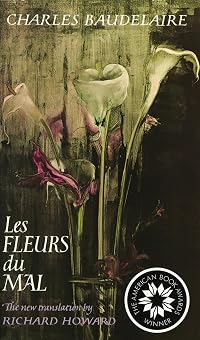
The Flowers of Evil
by Charles Baudelaire
On This Page
Description
One of the most influential volumes of poetry of the nineteenth century, Charles Baudelaire's The Flowers of Evil caused a sensation when it was originally published, even earning Baudelaire a fine when he was charged with "insulting public decency." With strong themes of debauchery, decadence, hedonism and sensuality, these intoxicating verses will etch themselves in your memory..
Tags
Recommendations


































Member Reviews
I don't speak French and can't read more than a few words here and there, but as I was reading Howard's non-rhyming translation, I felt for the first time I was seeing into the mind of Baudelaire. Surely it couldn't have been the translator's mind. These poems are full of disturbing images and very dark observations, and they aren't completely clear on a first or even second reading, but the experience of reading them is still riveting, and unlike some poetry, it makes you want to re-read them. And read criticism to better understand them. Perhaps like Confucius's Analects, you need to read more than one translation to really gain a better understanding. I may try that. In the meantime, I highly recommend this edition. I should point show more out, for those who care, that while it has both the French and English versions of the poems, these are in separate sections of the book--not on facing pages. So if you know some French and want to compare side-by-side, you're out of luck and may want to purchase another edition. show less
This wasn't the pit of debauchery I'd half expected from its reputation. Which isn't to say there aren't some shocking images ("The Carcass" comes to mind), but times have moved on.
It's an interesting reflection that poems explicitly about necrophilia weren't banned upon publication, but those about, or even hinting at, lesbianism were. A man's pleasures were seemingly more acceptable, however depraved.
It's not all about sex though (ok, a lot of it is!), and Baudelaire also tackles art and artists, love and romance, depression and, well, more depression, the inequalities of society, and the lives of the poor and wretched inhabitants of Paris's deprived urban landscapes away from the bright lights of the cafes and salons of the show more bourgeoisie.
A slightly unsettling 5/5 🌟 show less
It's an interesting reflection that poems explicitly about necrophilia weren't banned upon publication, but those about, or even hinting at, lesbianism were. A man's pleasures were seemingly more acceptable, however depraved.
It's not all about sex though (ok, a lot of it is!), and Baudelaire also tackles art and artists, love and romance, depression and, well, more depression, the inequalities of society, and the lives of the poor and wretched inhabitants of Paris's deprived urban landscapes away from the bright lights of the cafes and salons of the show more bourgeoisie.
A slightly unsettling 5/5 🌟 show less
Baudelaire was the heir of the darkest and melancholiest form of Romanticism, having dedicated here his poetry to Théophile Gautier, the red gilet of 'Hernani', while not forgetting Victor Hugo, recipient of a few poems and who had described 'The Flowers of Evil' as being a 'new shiver'. And what a shiver indeed! Here's a shiver announcing, also, in many ways, Symbolism yet to come... This book is a masterpiece. The matrix of modern poetry. For there is a before and an after Baudelaire; he who was an heir, but also a precursor; the Father, the Son, and the Unholy Spirit of Art and in front of whom one can only kneel -born too late, too early, and yet at the right time. What else to say?
His goal was 'to extract beauty out of Evil'. Man show more isn't naturally good. He has shadows, lurking within. Mysteries. An abyss, terrifying yet lodged right at the core of his consciousness. This abyss, nightmarish pit that most deny, Baudelaire reflects it here. He grabs the readers by the hair, and pull, pull mercilessly and despite protests so as to force us to look into it, even, throw us in. Fall. Plunge. Sink. And, if you can't cope, perish. His is a putrid poetry reeking of Hell.
We know, because too new, too daring, to audacious, only one publisher will have the b@lls to publish it, and the rest is history. Lauded by some, damned by others, the battle will end up in front of the tribunals where, accused of indecency, the book will be amputated of 6 of its poems (out of 100 or so). Why these poems in particular, I still fail to see the point. Suffice to say that, in France, the judgement and court decision will be reviewed only in... 1946! It took time to get Baudelaire.
But then, what else? Here's a jewel of a book. Ambitious. Near-perfect. The putrid guts of French poetry, and the insane grandparent of Modernism. Again: a masterpiece. show less
His goal was 'to extract beauty out of Evil'. Man show more isn't naturally good. He has shadows, lurking within. Mysteries. An abyss, terrifying yet lodged right at the core of his consciousness. This abyss, nightmarish pit that most deny, Baudelaire reflects it here. He grabs the readers by the hair, and pull, pull mercilessly and despite protests so as to force us to look into it, even, throw us in. Fall. Plunge. Sink. And, if you can't cope, perish. His is a putrid poetry reeking of Hell.
We know, because too new, too daring, to audacious, only one publisher will have the b@lls to publish it, and the rest is history. Lauded by some, damned by others, the battle will end up in front of the tribunals where, accused of indecency, the book will be amputated of 6 of its poems (out of 100 or so). Why these poems in particular, I still fail to see the point. Suffice to say that, in France, the judgement and court decision will be reviewed only in... 1946! It took time to get Baudelaire.
But then, what else? Here's a jewel of a book. Ambitious. Near-perfect. The putrid guts of French poetry, and the insane grandparent of Modernism. Again: a masterpiece. show less
Hace un tiempo tuve una discusión de borrachos donde quien sea el que tenía en frente dijo "No me gusta. No sé. Baudelaire está lleno de lugares comunes".
"No, gil de caucho. Los lugares comunes existen porque hace un siglo y medio que millones de personas que no conocen la palabra "originalidad" tratan de escribir como Baudellaire."
"Las Flores del Mal", según algunos la obra maestra de Charles Baudellaire, es una de las primeras (o al menos más notorias) quejas contra la modernidad que aparecieron. Mientras se inventaba la máquina de escribir (apenas un par de años después del fusil Remington, porque primero las balas, las letras que esperen su turno), se descubrían nuevas galaxias, se reducían las jornadas laborales show more británicas a 10 horas y Sudamérica acomodaba sus fronteras a codazos, Charles recorría las calles con el pelo verde, resaltando, entre otras cosas, el erotismo lésbico, la belleza de la melancolía y la presencia de viejitas, lisiados, prostitutas y alcohólicos.
"Este era medio romántico, ¿no?", me preguntó un amigo de mi viejo el otro día mientras señalaba el libro en mi mesita de luz.
Y... sí. Te parece. show less
"No, gil de caucho. Los lugares comunes existen porque hace un siglo y medio que millones de personas que no conocen la palabra "originalidad" tratan de escribir como Baudellaire."
"Las Flores del Mal", según algunos la obra maestra de Charles Baudellaire, es una de las primeras (o al menos más notorias) quejas contra la modernidad que aparecieron. Mientras se inventaba la máquina de escribir (apenas un par de años después del fusil Remington, porque primero las balas, las letras que esperen su turno), se descubrían nuevas galaxias, se reducían las jornadas laborales show more británicas a 10 horas y Sudamérica acomodaba sus fronteras a codazos, Charles recorría las calles con el pelo verde, resaltando, entre otras cosas, el erotismo lésbico, la belleza de la melancolía y la presencia de viejitas, lisiados, prostitutas y alcohólicos.
"Este era medio romántico, ¿no?", me preguntó un amigo de mi viejo el otro día mientras señalaba el libro en mi mesita de luz.
Y... sí. Te parece. show less
From Paris to the stars to the depths of ones splenetic imagination the reader feels the power of this verse compilation. Whether there has ever been anything like it does not matter as even in our later age the poems strike deep and hard inside our humanity. Love and death and the dregs of desire that cannot be imagined and yet appears here in the verse of the great one - Baudelaire.
O Gato
Vem cá, meu gato, aqui no meu regaço;
Guarda essas garras devagar,
E nos teus belos olhos de ágata e aço
Deixa-me aos poucos mergulhar.
Quando meus dedos cobrem de carícias
Tua cabeça e o dócil torso,
E minha mão se embriaga nas delícias
De afagar-te o elétrico dorso,
Em sonho a vejo. Seu olhar, profundo
Como o teu, amável felino,
Qual dardo dilacera e fere fundo,
E, dos pés à cabeça, um fino
Ar sutil, um perfume que envenena
Envolvem-lhe a carne morena.
Vem cá, meu gato, aqui no meu regaço;
Guarda essas garras devagar,
E nos teus belos olhos de ágata e aço
Deixa-me aos poucos mergulhar.
Quando meus dedos cobrem de carícias
Tua cabeça e o dócil torso,
E minha mão se embriaga nas delícias
De afagar-te o elétrico dorso,
Em sonho a vejo. Seu olhar, profundo
Como o teu, amável felino,
Qual dardo dilacera e fere fundo,
E, dos pés à cabeça, um fino
Ar sutil, um perfume que envenena
Envolvem-lhe a carne morena.
Baudelaire's Les Fleurs is a piqued sensorium; it's the silken petal gliding over flesh, guided by fingers that captivate. It's sensual and Baudelaire's emphasis on modern alienation serves to make it even more so. Whether because the theme of modern alienation speaks so loudly to our day to day or because it's laid so bare by Baudelaire's personal context, I'm not sure. I felt pulled by both during the read and this edition has become a favorite as a result.
Baudelaire speaks to the senses the way Whitman speaks to word lovers, the way a spoken word piece sinks into its audience. His verses have a lasting presence.
I would definitely recommend this edition to first time readers of Baudelaire. I enjoyed reading in French but it was show more interesting to have the English versions as well to see if there was a trade-off in meaning or overall feel. show less
Baudelaire speaks to the senses the way Whitman speaks to word lovers, the way a spoken word piece sinks into its audience. His verses have a lasting presence.
I would definitely recommend this edition to first time readers of Baudelaire. I enjoyed reading in French but it was show more interesting to have the English versions as well to see if there was a trade-off in meaning or overall feel. show less
Members
- Recently Added By
Lists

Favourite Books
1,819 works; 316 members

Favourite 19th century fiction
257 works; 62 members

.
194 works; 2 members

Books in Riverdale
123 works; 3 members

Recommended Reading : 600 Classics Reviewed, Editors of Salem Press, 2015
634 works; 6 members

poetry
15 works; 1 member

Books I recommend to everyone
29 works; 1 member

Yet another list
67 works; 1 member

Mustich's 1000 Books to Read Before You Die: A Life Changing List
1,001 works; 19 members
Greatest Books, allegedly
484 works; 10 members

Jones & Newman: Best Horror Books Further Recommended Reading
577 works; 4 members

Scary Stories for the Season
160 works; 94 members

SHOULD Read Books!
354 works; 9 members

19th Century
190 works; 16 members

Books Read in 2018
4,360 works; 110 members

Authors from France
23 works; 2 members
Harold Bloom - The Western Canon: C. The Democratic Age
336 works; 15 members

National Book Award winners
65 works; 11 members

Western World's Greatest Books - Project Gutenberg
295 works; 15 members

Poetry Corner
187 works; 15 members

Northern Exposure's Chris in the Morning Reading List
31 works; 1 member

Top Five Books of 2013
1,562 works; 715 members

Poetry Collections
79 works; 6 members

French Books
102 works; 15 members

Best of French Literature
138 works; 27 members

.
396 works; 1 member
Author Information

Charles Baudelaire, 1821 - 1867 Charles Baudelaire had perhaps had an immeasurable impact on modern poetry. He was born on April 9, 1821, to Joseph-Francois Baudelaire and Caroline Archimbaut Dufays in Paris. He was educated first at a military boarding school and then the College Louis-le-Grand, where he was later expelled in 1839. Baudelaire show more then began to study law, at the Ecole de Droit in Paris, but devoted most of his time to debauchery. After an abortive trip to the East, he settled in Paris and lived on an inheritance from his much despised step father, while he wrote poetry. During this period he met Jeanne Duval, a mulatto with whom he fell in love with and who became the "Black Venus," the muse behind some of his most powerful erotic verse. Baudelaire strove to portray sensual experiences and moods through complex imagery and classical form, avoiding sentimentality and objective description. Thus he profoundly influenced the later French symbolist writers, including Mallarme and Rimbaud, and such English-language poets as Yeats, Eliot, and Stevens. With much of his inheritance squandered, Baudelaire turned to journalism, especially art and literary criticism, the first of which were "Les Salons". Here he discovered the work of Edgar Allan Poe, which became an influence on his own poetry. While continuing to write unpublished verse, Baudelaire became famous as critic and translator of Poe. This reputation enabled Baudelaire to publish his most famous collection of poetry, "Les Fleurs du Mal" (The Flowers of Evil) in 1857. The result was an obscenity trial and the banning of six of the poems. Though he continued to write journalism with some success, he became increasingly depressed and pessimistic. Baudelaire attempted suicide in 1845, an attempt to get attention, and became minorly involved in the French Revolution. Today Baudelaire's work is considered the "last brilliant summation of romanticism, precursor of symbolism and the first expression of modern techniques". It was his originality that set him apart and ultimately proved to be his end. Baudelaire died, apparently from complications of syphilis, on August 31, 1867, in Paris. (Bowker Author Biography) show less
Some Editions
Awards and Honors
Awards
Distinctions
Notable Lists
Series
Belongs to Publisher Series
A New Directions Book (676)
Belliteratura serio (8-9 [Stafeto])
Llibres del Mall (88)
Franse Bibliotheek (Klassiek)
Loomingu Raamatukogu 1967 (35/36)
ET Tascabili [Einaudi] (589)
GF Flammarion (1496)
insel taschenbuch (0120)
Reclams Universal-Bibliothek (5076)
A tot vent (743)
Work Relationships
Is contained in
Contains
Inspired
Has as a student's study guide
Common Knowledge
- Canonical title
- The Flowers of Evil
- Original title
- Les Fleurs du Mal
- Alternate titles*
- Pahan kukat
- Original publication date
- 1857; 1936(Dillon-Millay translation) (Dillon-Millay translation); 1958(Jacques Leclercq translation) (Jacques Leclercq translation); 1993(James McGowan translation) (James McGowan translation)
- People/Characters
- Frances
- Important places
- Paris, France
- Dedication
- AU POËTE IMPECCABLE
Au Parfait Magicien ès Lettres Françaises
A Mon Très-cher et Très Vénéré
MAÎTRE ET AMI
Théophile Gautier
Avec Les Sentiments
De La Plus Profonde Humilité
Je Déd... (show all)ie
Ces Fleurs Maladives
C.B.
TO THE IMPECCABLE POET
To The Perfect Magician of French Letters
To My Dearest and Most Admired
MASTER AND FRIEND
Théophile Gautier
With Feelings
Of The Most Profound Humility
I Dedicate
T... (show all)hese Sickly Flowers
C.B.
This book is dedicated to
THE TRANSLATORS
--New Directions edition (1989) - First words
- La sottise, l'erreur, le péché, la lésine,/
Occupent nos esprits et travaillent nos corps,/
Et nous alimentons nos aimables remords,/
Comme les mendiants nourrissent leur vermine.
The present age of translation began some fifty years ago with Ezra Pound's versions of Cavalcanti, the Troubadours, the Chinese. . . .
--Preface (New Directions edition, 1989) - Quotations
- Verse-nous ton poison pour qu’il nous réconforte !/
Nous voulons, tant ce feu nous brûle le cerveau,/
Plonger au fond du gouffre, Enfer ou Ciel, qu’importe ?/
Au fond de l’Inconnu pour trouver du nouveau ! - Last words
- (Click to show. Warning: May contain spoilers.)Verse-nous ton poison pour qu’il nous réconforte !/
Nous voulons, tant ce feu nous brûle le cerveau,/
Plonger au fond du gouffre, Enfer ou Ciel, qu’importe ?/
Au fond de l’Inconnu pour trouver du nouveau ! - Publisher's editor*
- Michel Zink et Michel Jarrety
- Original language
- Français; French
- Disambiguation notice
- there are quite a few different versions of this book containing more or less poems (most notable the 6 condemned verses miss often and the "Tableaux parisiens" have been added in newer editions. (see ... (show all)mal.org/" rel="nofollow" target="_new">http://fleursdumal.org/ for details)
*Some information comes from Common Knowledge in other languages. Click "Edit" for more information.
Classifications
Statistics
- Members
- 9,039
- Popularity
- 1,179
- Reviews
- 90
- Rating
- (4.17)
- Languages
- 29 — Albanian, Arabic, Catalan, Chinese, Czech, Danish, Dutch, English, Estonian, Finnish, French, German, Hungarian, Italian, Japanese, Korean, Lithuanian, Multiple languages, Norwegian (Nynorsk), Norwegian (Bokmål), Polish, Romanian, Russian, Serbian, Slovenian, Spanish, Swedish, Turkish, Portuguese (Portugal)
- Media
- Paper, Audiobook, Ebook
- ISBNs
- 563
- ASINs
- 192