
K2 : Life and Death on the World's Most Dangerous Mountain
by Ed Viesturs, David Roberts
On This Page
Description
At 28,251 feet, the world's second-tallest mountain, K2 thrusts skyward out of the Karakoram Range of northern Pakistan. Climbers regard it as the ultimate achievement in mountaineering, with good reason. Four times as deadly as Everest, K2 has claimed the lives of seventy-seven climbers since 1954. In August 2008 eleven climbers died in a single thirty-six-hour period on K2-the worst single-event tragedy in the mountain's history and the second-worst in the long chronicle of mountaineering show more in the Himalaya and Karakoram ranges. Yet summiting K2 remains a cherished goal for climbers from all over the globe. show lessTags
Recommendations

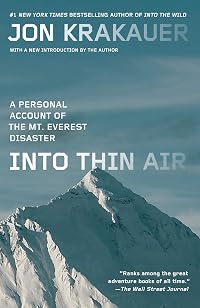




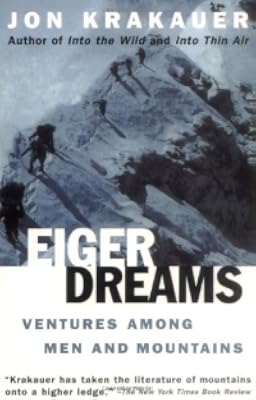
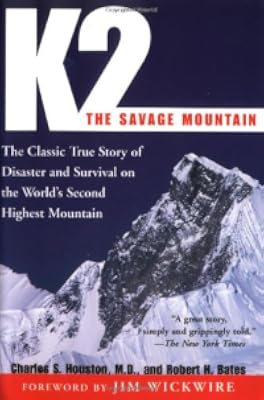

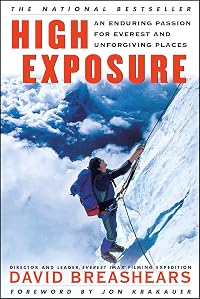












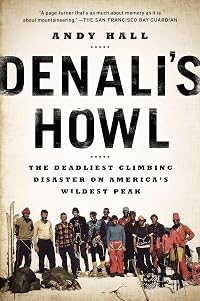
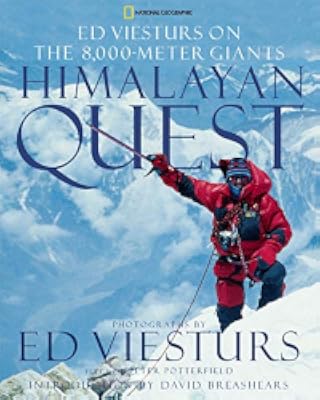
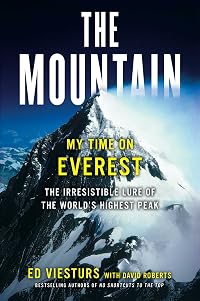











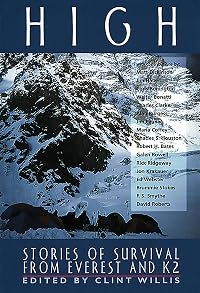
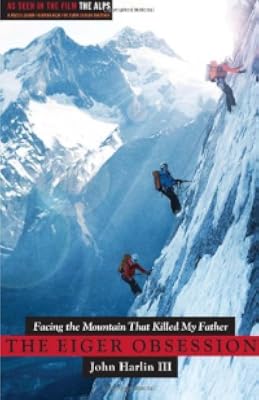
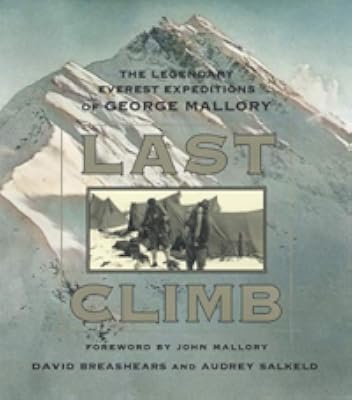




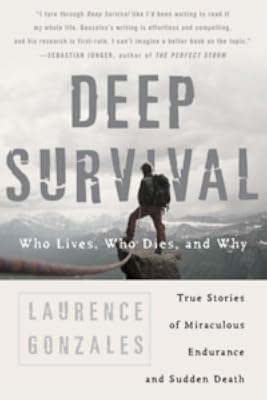


Member Recommendations


PamFamilyLibrary Who would guess, but going down into the Super Caves is as dangerous as going up K2 or Everest.

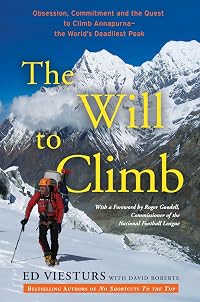
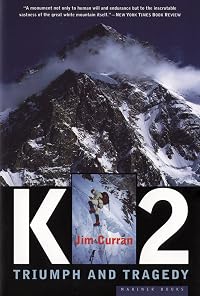
amerynth Chronicle of the failed 1975 American expedition to K2 and the reasons the team completely fell apart.

amerynth Story of the 1953 attempt on K2 by a mostly American team, where one man's "miracle belay" saved seven from sliding off the mountain to their deaths.
Member Reviews
Ed Viesturs is an accomplished high-altitude mountaineer who has summited all fourteen of the world’s peaks over 8000 meters. K2, the world’s second highest peak at 8,611 meters (28,251 feet), is located in the Korakoram Range of northern Pakistan. It is considered one of the most difficult and dangerous peaks to climb. This book not only tells of Viesturs’ ascent of K2 in 1992, but also recounts the history of six other K2 expeditions up to 2009, including an assessment of successes, catastrophes, and controversies. It gives the reader a good idea of what it would have been like to be part of such an expedition. It provides an interesting look at the improvements in climbing materials and the evolution of climbing strategies over show more the years. A couple of the more riveting sections include an account of the avalanche that sent Viesturs and climbing partner Scott Fisher plummeting down the mountain, and the analysis of the 2008 tragedy that resulted in the deaths of eleven climbers.
Viesturs expresses pointed opinions about his philosophy of climbing as well as what may have gone wrong in expeditions that resulted in tragedy. He concentrates on lessons that can be applied to high altitude climbing, with an emphasis on getting back safely. He illustrates the value of weighing risks, relying on instincts, showing loyalty to the team, leading from the front, and taking prompt action to save others in distress. He takes exception to some of the analyses provided by the press and other “armchair adventurers” and backs up his opinions drawing on a mix of logic, common sense, and experience. The narrative moves between materials written by others and Viesturs’ own experiences, weaving them together to make his points.
It assumes the reader already possesses at least a rudimentary knowledge of climbing terminology. Recommended to those interested in the history of mountaineering, active climbers who want to learn from the experiences of others, or fans of extreme adventures. show less
Viesturs expresses pointed opinions about his philosophy of climbing as well as what may have gone wrong in expeditions that resulted in tragedy. He concentrates on lessons that can be applied to high altitude climbing, with an emphasis on getting back safely. He illustrates the value of weighing risks, relying on instincts, showing loyalty to the team, leading from the front, and taking prompt action to save others in distress. He takes exception to some of the analyses provided by the press and other “armchair adventurers” and backs up his opinions drawing on a mix of logic, common sense, and experience. The narrative moves between materials written by others and Viesturs’ own experiences, weaving them together to make his points.
It assumes the reader already possesses at least a rudimentary knowledge of climbing terminology. Recommended to those interested in the history of mountaineering, active climbers who want to learn from the experiences of others, or fans of extreme adventures. show less
Ed Viesturs is an accomplished high-altitude mountaineer who has summited all fourteen of the world’s peaks over 8000 meters. K2, the world’s second highest peak at 8,611 meters (28,251 feet), is located in the Korakoram Range of northern Pakistan. It is considered one of the most difficult and dangerous peaks to climb. This book not only tells of Viesturs’ ascent of K2 in 1992, but also recounts the history of six other K2 expeditions up to 2009, including an assessment of successes, catastrophes, and controversies. It gives the reader a good idea of what it would have been like to be part of such an expedition. It provides an interesting look at the improvements in climbing materials and the evolution of climbing strategies over show more the years. A couple of the more riveting sections include an account of the avalanche that sent Viesturs and climbing partner Scott Fisher plummeting down the mountain, and the analysis of the 2008 tragedy that resulted in the deaths of eleven climbers.
Viesturs expresses pointed opinions about his philosophy of climbing as well as what may have gone wrong in expeditions that resulted in tragedy. He concentrates on lessons that can be applied to high altitude climbing, with an emphasis on getting back safely. He illustrates the value of weighing risks, relying on instincts, showing loyalty to the team, leading from the front, and taking prompt action to save others in distress. He takes exception to some of the analyses provided by the press and other “armchair adventurers” and backs up his opinions drawing on a mix of logic, common sense, and experience. The narrative moves between materials written by others and Viesturs’ own experiences, weaving them together to make his points.
It assumes the reader already possesses at least a rudimentary knowledge of climbing terminology. Recommended to those interested in the history of mountaineering, active climbers who want to learn from the experiences of others, or fans of extreme adventures. show less
Viesturs expresses pointed opinions about his philosophy of climbing as well as what may have gone wrong in expeditions that resulted in tragedy. He concentrates on lessons that can be applied to high altitude climbing, with an emphasis on getting back safely. He illustrates the value of weighing risks, relying on instincts, showing loyalty to the team, leading from the front, and taking prompt action to save others in distress. He takes exception to some of the analyses provided by the press and other “armchair adventurers” and backs up his opinions drawing on a mix of logic, common sense, and experience. The narrative moves between materials written by others and Viesturs’ own experiences, weaving them together to make his points.
It assumes the reader already possesses at least a rudimentary knowledge of climbing terminology. Recommended to those interested in the history of mountaineering, active climbers who want to learn from the experiences of others, or fans of extreme adventures. show less
Yes, Viesturs is completely full of himself. He can't even praise his children's skiing skills without interjecting "I'm a pretty good skier myself." But, I suppose, at least the book comes across as authentic to that aspect of his personality. Overall, I thought this was a great history of K2 climbs, especially of the 2008 disaster. It is highly opinionated, with Viesturs trying to draw lessons and willing to place blame for mistakes. (Mistakes that he would never have made himself, of course.) It is focused and not overly long. There are some great climbing stories.
> … There's no viable analogy between Everest in 1996 and K2 in 2008. Not a single one of the eleven climbers who died that August on the world's second-highest mountain show more was a true client in the sense that Scott Fischer’s Mountain Madness or Rob Hall's Adventure Consultants customers were. None of them were paying big bucks to have a commercial guiding company get them up the mountain. They were almost uniformly experienced climbers in their own right.
> Yet in one respect, 2008's mountaineers allowed themselves to slip closer to the status of clients than nearly anyone had on previous K2 campaigns. This had to do with their dependence on fixed ropes. In the aftermath of the tragedy, too much focus has been put on the collapse of the serac, too little on the whole business of the fixed ropes.
> Even Jim Wickwire in 1978, though near death after his bivouac, summoned the nerve and the technique to climb down the traverse and the Bottleneck unaided by fixed ropes or partners. No one even thought of fixing ropes all the way through the Bottleneck until about two years ago. How quickly, though, the comfort of fixed ropes gets taken for granted
> The second ascent of Mount Everest came in 1956, only three years after Hillary and Tenzing, when a Swiss party climbed the highest peak in the world and made the first ascent of neighboring Lhotse, the fourth-highest. The second ascent of K2 came only in 1977, twenty-three years after Lacedelli and Compagnoni
> The 1978 team was likewise torn with dissension, but finally placed four Americans on top. Jim Wickwire, John Roskelley, Lou Reichardt, and Rick Ridgeway—superb mountaineers, all four—made the third ascent of K2 via the long and intricate northeast ridge, which had been attempted before but never completed. (For the top 2,000 feet, the Americans' route coincided with the Abruzzi route.) Three of the four reached the summit without supplementary oxygen.
> Achille Compagnoni, must go down in history as one of the indelible bad guys of mountaineering. For fear of sharing the triumph with the younger, better climber, Compagnoni was apparently willing to let Bonatti and Amir Mahdi freeze to death in an open bivouac. And the premeditated ruse Compagnoni devised to prevent that sharing—hiding Camp IX behind rocks above a dangerous traverse—turned the bravest Hunza climber of his day into a frostbite victim
> On Everest, every spring you can usually count on a stable window of clear weather, when the high jet-stream winds start to get pushed away by the approaching monsoon. But the monsoon doesn’t reach the Karakoram. Instead, you have to throw the dice with the weather.
> I believe it will be the Poles, with their legendary stamina, tolerance for pain, and tenacity, who will be the first to get up K2 in winter. show less
> … There's no viable analogy between Everest in 1996 and K2 in 2008. Not a single one of the eleven climbers who died that August on the world's second-highest mountain show more was a true client in the sense that Scott Fischer’s Mountain Madness or Rob Hall's Adventure Consultants customers were. None of them were paying big bucks to have a commercial guiding company get them up the mountain. They were almost uniformly experienced climbers in their own right.
> Yet in one respect, 2008's mountaineers allowed themselves to slip closer to the status of clients than nearly anyone had on previous K2 campaigns. This had to do with their dependence on fixed ropes. In the aftermath of the tragedy, too much focus has been put on the collapse of the serac, too little on the whole business of the fixed ropes.
> Even Jim Wickwire in 1978, though near death after his bivouac, summoned the nerve and the technique to climb down the traverse and the Bottleneck unaided by fixed ropes or partners. No one even thought of fixing ropes all the way through the Bottleneck until about two years ago. How quickly, though, the comfort of fixed ropes gets taken for granted
> The second ascent of Mount Everest came in 1956, only three years after Hillary and Tenzing, when a Swiss party climbed the highest peak in the world and made the first ascent of neighboring Lhotse, the fourth-highest. The second ascent of K2 came only in 1977, twenty-three years after Lacedelli and Compagnoni
> The 1978 team was likewise torn with dissension, but finally placed four Americans on top. Jim Wickwire, John Roskelley, Lou Reichardt, and Rick Ridgeway—superb mountaineers, all four—made the third ascent of K2 via the long and intricate northeast ridge, which had been attempted before but never completed. (For the top 2,000 feet, the Americans' route coincided with the Abruzzi route.) Three of the four reached the summit without supplementary oxygen.
> Achille Compagnoni, must go down in history as one of the indelible bad guys of mountaineering. For fear of sharing the triumph with the younger, better climber, Compagnoni was apparently willing to let Bonatti and Amir Mahdi freeze to death in an open bivouac. And the premeditated ruse Compagnoni devised to prevent that sharing—hiding Camp IX behind rocks above a dangerous traverse—turned the bravest Hunza climber of his day into a frostbite victim
> On Everest, every spring you can usually count on a stable window of clear weather, when the high jet-stream winds start to get pushed away by the approaching monsoon. But the monsoon doesn’t reach the Karakoram. Instead, you have to throw the dice with the weather.
> I believe it will be the Poles, with their legendary stamina, tolerance for pain, and tenacity, who will be the first to get up K2 in winter. show less
It needs to be said that K2 may be the second highest mountain in the world, but it is arguably the most dangerous mountain to summit. Beyond unpredictable weather and inhospitable traverses, language barriers, varying climbing skills (and, let's be honest, knowledge), and clashing egos of the climbers make the mountain even more treacherous. Viesturs and Roberts cover six different campaigns to climb K2. At times these campaigns are confusing to read about because they include details from other mountain climbs (like Everest) and the timelines jump around.
The most enjoyable passages were when Viesturs and Roberts outlined the changed in technology and climbing gear. It makes earlier successes of summitting K2 even more impressive.
The most enjoyable passages were when Viesturs and Roberts outlined the changed in technology and climbing gear. It makes earlier successes of summitting K2 even more impressive.
After Krakuer's account of the failed Everest expedition, this K2 chronicle is a great further reading. Well researched and even better analyzed from his unique vantage point of being one of the most accomplished mountaineers of all time, the reader really takes away a keen sense of what's right and wrong on the mountain, and what the conditions/dynamics are really like up there. I didn't realize this book would be essentially the complete history of K2 mountaineering, but I'm glad he was so thorough in his retelling.
Mountaineer Ed Viesturs takes a look a the history of K2, the second highest mountain in the world, but the most deadly for climbers.
It was interesting to hear about the various excursions and adventures on the mountain, from the 1930s to 2008. I was listening to the audio, so my mind did wander occasionally, and for some reason, a little more in the second half, but overall, I quite enjoyed it. Because it was the audio, though, it was tricky sometimes to figure out which year's excursion I was listening to if I missed it! Some of the history was interesting, as well, as you get to hear about how some of the gear has changed over time.
It was interesting to hear about the various excursions and adventures on the mountain, from the 1930s to 2008. I was listening to the audio, so my mind did wander occasionally, and for some reason, a little more in the second half, but overall, I quite enjoyed it. Because it was the audio, though, it was tricky sometimes to figure out which year's excursion I was listening to if I missed it! Some of the history was interesting, as well, as you get to hear about how some of the gear has changed over time.
I really enjoyed the breadth of different stories that were included in this collection. It includes detailed accounts of expeditions across an entire century. It seems as though it is mostly about the defeats, but there are certainly plenty of people that make it to the summit in each of the tellings. More interesting in a way is the insight into Ed Viesturs' career and his climbing philosophy. He critiques each of the expeditions and supplies his own ideas about why each ended as it did. He tries to stay above gossip and bickering, while repeatedly saying that he thinks it is a bad thing to air the dirty laundry of an expedition in a book, but he seems to do just that. I think I'd like him, and I personally agree with his philosophy show more that getting to the top is no good if you don't get down.. safely. Plenty of adventure and a well told set of stories. show less
Members
- Recently Added By
Lists

Penguin Random House
458 works; 4 members
Author Information

8+ Works 1,221 Members

35+ Works 5,073 Members
David Roberts is a climber and mountaineer and the author of thirty books about mountaineering, exploration, and anthropology. His books have won the Boardman Tasker Award for Mountain Literature and the Grand Prize at the Banff Mountain Book Festival, and have been shortlisted for the PEN/ESPN Award for Literary Sports Writing. He lives in show more Massachusetts. show less
Common Knowledge
- Canonical title
- K2 : Life and Death on the World's Most Dangerous Mountain
- People/Characters
- Ed Viesturs; Scott Fischer; Rob Hall; Gary Ball; Charley Mace; Vladimir Balyberdin (show all 20); Thor Kieser; Chantal Mauduit; Aleksei Nikiforov; Gennadi Kopeika; Hugues d'Aubarede; Alberto Zerain; Ceclie Skog; Rolf Bae; Jehan Baig; Chris Klinke; Wilco van Rooijen; Chhiring Dorje; Pemba Gyalje; Cas van de Gevel
- Important places
- K2; Karakoram Range; Pakistan; K2, Karakoram Range, Kashmir / Trans-Karakoram Tract
- Dedication
- As always, to my loving wife Paula and our kids - still and forever the best reasons for coming home.
And also to those who have been inspired and challenged by the holy grail of mountaineering that is K2. - First words
- The Motivator. In the wee hours of the morning on August 1, 2008, some thirty climbers from ten different expeditions set out from their high camps on the Abruzzi Ridge of K2.
- Last words
- (Click to show. Warning: May contain spoilers.)And then, invariably, somebody will say, "Tell us about it."
Classifications
- Genres
- Sports and Leisure, Nonfiction, General Nonfiction, Travel, Biography & Memoir
- DDC/MDS
- 796.522095491 — Arts & recreation Recreation, sports, and performing arts Athletic and outdoor sports and games Outdoor leisure Walking and exploring by kind of terrain Mountains, hills and rocks standard subdivisions History, geographic treatment, biography
- LCC
- GV199.44 .P18 .V54 — Geography, Anthropology and Recreation Recreation. Leisure Recreation. Leisure Outdoor life. Outdoor recreation Hiking. Pedestrian tours
- BISAC
Statistics
- Members
- 416
- Popularity
- 74,739
- Reviews
- 15
- Rating
- (3.66)
- Languages
- English, Italian, Portuguese
- Media
- Paper, Audiobook, Ebook
- ISBNs
- 8
- ASINs
- 8