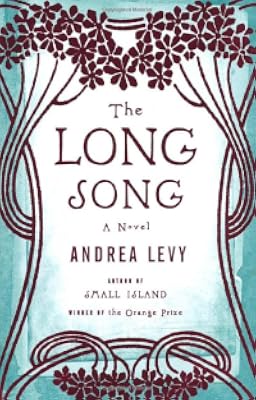
The Long Song
by Andrea Levy
On This Page
Description
The child of a field slave on the Amity sugar plantation in Jamaica, July lives with her mother until a recently transplanted English widow decides to move her into the great house and rename her. She remains bound to the plantation despite her "freedom." The arrival of a young English overseer dramatically changes life in the great house.Tags
Recommendations











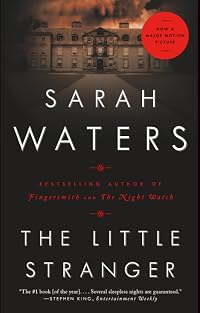
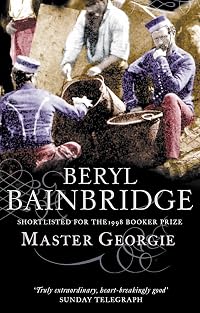
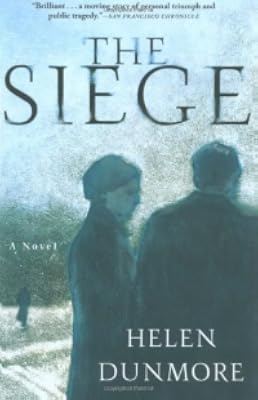
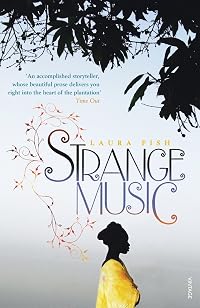




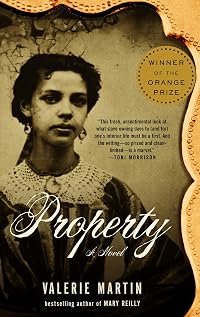
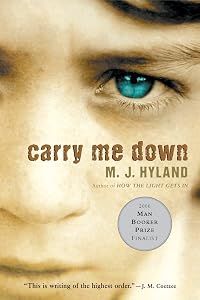
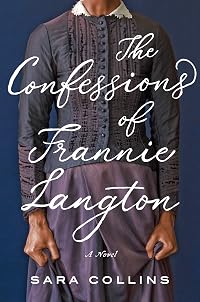
Member Recommendations

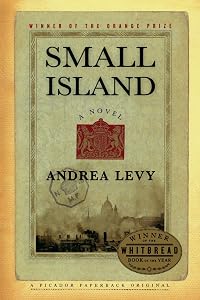
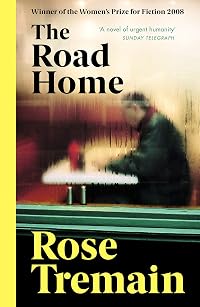
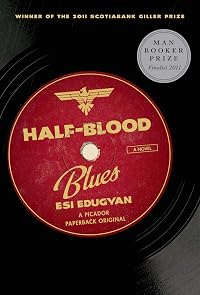
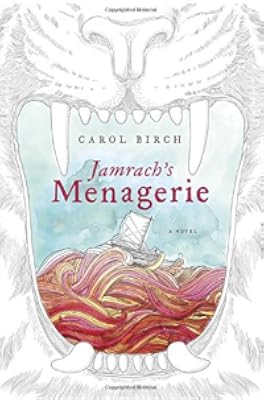
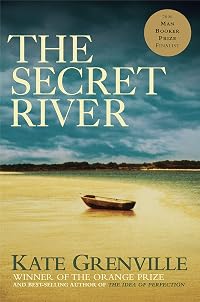
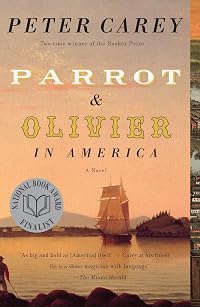
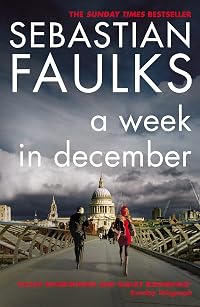
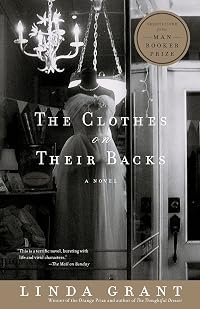
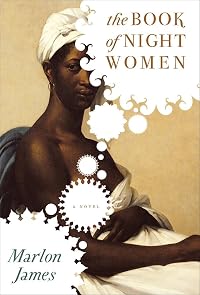
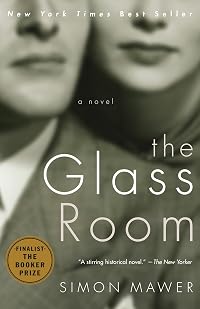
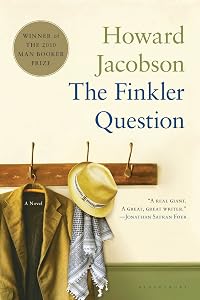
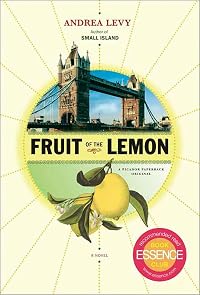
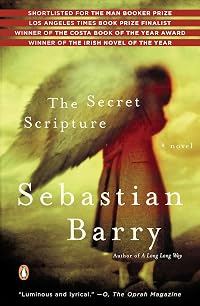
vancouverdeb Similar themes: black slaves, a young woman who works within the "White Master's" Plantation house.Slavery,Freedom from slavery; both wonderfully written. Divided loyalities, a fiesty female slave.
Member Reviews
The best book I've read so far this year. Andrea Levy tells the story of the last years of Jamaican slavery and the first years of manumission with a piercing humor, sometimes gentle and humane and sometimes appropriately less so.
The story is framed by a successful Jamaican printer who encourages his mother, July, to write down the story of her life, largely because she is distracting him by constantly trying to tell it to him. Mostly she tells the story in the third person but periodically the novel returns to the first person, present tense -- the time she is writing it many years later. It begins with July's conception in the rape of her mother by the overseer. And the continuous narrative ends with an event even more cold hearted show more and brutal.
In between, it tells the story of July, a sly, witty slave who becomes a house slave and, after manumission, continues on as a house servant.
It is hard for me to capture just how compelling, well written, beautifully imagined, funny, and tragic the book is. So you should read it for yourself. show less
The story is framed by a successful Jamaican printer who encourages his mother, July, to write down the story of her life, largely because she is distracting him by constantly trying to tell it to him. Mostly she tells the story in the third person but periodically the novel returns to the first person, present tense -- the time she is writing it many years later. It begins with July's conception in the rape of her mother by the overseer. And the continuous narrative ends with an event even more cold hearted show more and brutal.
In between, it tells the story of July, a sly, witty slave who becomes a house slave and, after manumission, continues on as a house servant.
It is hard for me to capture just how compelling, well written, beautifully imagined, funny, and tragic the book is. So you should read it for yourself. show less
Miss July was born a slave on a Jamaican sugar plantation. When she was a child, the English mistress took a liking to her and brought her from the fields into the house, forcibly separating July from her mother and insisting on calling her "Marguerite." July came of age serving the mistress, and made it through some very tumultuous times, including the Baptist Rebellion and later, the abolition of slavery. Now an old woman, July is living with her son and his family and sets to writing her story. That sentence alone tells you her life was an unusual one, and there are many details and plot twists the reader can look forward to in this novel.
I loved this book, and I loved July and her strong personality. Her survival was mostly due to show more pure cunning, mixed with a bit of luck. The people in her life -- both slaves and whites -- were well drawn, and Andrea Levy didn't shy away from the violent realities of slave treatment, the consequences of rebellion, and the tension once slaves were free but still expected to work on plantations.
This novel was shortlisted for the 2010 Booker Prize and is a worthy contender for that honor. show less
I loved this book, and I loved July and her strong personality. Her survival was mostly due to show more pure cunning, mixed with a bit of luck. The people in her life -- both slaves and whites -- were well drawn, and Andrea Levy didn't shy away from the violent realities of slave treatment, the consequences of rebellion, and the tension once slaves were free but still expected to work on plantations.
This novel was shortlisted for the 2010 Booker Prize and is a worthy contender for that honor. show less
The Long Song is the story of July, a woman born into slavery in 19th century Jamaica.
As an old woman at the end of the century, July is writing the story of her early life, and the narrative switches between the present day of the novel (1898), in the first person, and the past.
Slavery officially ended in Jamaica in 1838, but of course the former slave owners still controlled the plantations and the economy, and the former slaves still needed to work in exploitative conditions for the white people who all too obviously regarded them as an inferior race.
The Long Song is beautifully written and I found it a very readable novel, perhaps deceptively so. Thinking about it again for review purposes makes me want to reread it again more show more carefully. I was carried along by the story, or stories, July tells – frequently she offers several different versions of what happened, usually a more romantic account followed by one which seems more rooted in the realities of the day.
July is separated from her mother, Kitty, as a child by a white woman who thinks she is cute but is repelled by Kitty. She is not the most obedient or loyal slave (or servant) – at first, she hopes that if she gets things wrong she will be returned to her mother, but she grows up into a woman who tries to stand up for herself. But in this time and place black women have very little power over their lives and her very entertaining attempts at self-assertion often have quite unpleasant results for July.
Some readers may find it hard to like any of the characters, even July – I liked her a lot sometimes and felt some sympathy for her anger at other times.
This is not a feelgood novel about black and white characters getting together to challenge racism. A lot of potential happy endings are briefly dangled in front of the reader before being snatched away. That made me feel angrier as a reader when bad things happened.
The shifts in narrative, tone and style of the book, and the alternative stories offered, make reading this novel a bit more challenging but I would argue that it rewards careful reading.
Recommended. show less
As an old woman at the end of the century, July is writing the story of her early life, and the narrative switches between the present day of the novel (1898), in the first person, and the past.
Slavery officially ended in Jamaica in 1838, but of course the former slave owners still controlled the plantations and the economy, and the former slaves still needed to work in exploitative conditions for the white people who all too obviously regarded them as an inferior race.
The Long Song is beautifully written and I found it a very readable novel, perhaps deceptively so. Thinking about it again for review purposes makes me want to reread it again more show more carefully. I was carried along by the story, or stories, July tells – frequently she offers several different versions of what happened, usually a more romantic account followed by one which seems more rooted in the realities of the day.
July is separated from her mother, Kitty, as a child by a white woman who thinks she is cute but is repelled by Kitty. She is not the most obedient or loyal slave (or servant) – at first, she hopes that if she gets things wrong she will be returned to her mother, but she grows up into a woman who tries to stand up for herself. But in this time and place black women have very little power over their lives and her very entertaining attempts at self-assertion often have quite unpleasant results for July.
Some readers may find it hard to like any of the characters, even July – I liked her a lot sometimes and felt some sympathy for her anger at other times.
This is not a feelgood novel about black and white characters getting together to challenge racism. A lot of potential happy endings are briefly dangled in front of the reader before being snatched away. That made me feel angrier as a reader when bad things happened.
The shifts in narrative, tone and style of the book, and the alternative stories offered, make reading this novel a bit more challenging but I would argue that it rewards careful reading.
Recommended. show less
Such a magnificent piece of storytelling by gifted author, Andrea Levy. It speaks of the abuse and cruelty leading up to, through and after The Baptist War of Jamaica (1831/1832). But it also shares the tenderest of moments, shared sorrows and and dreams of hope. Levy's scene settings are cinematic as an aged woman (once a slave) recalls her life on that island. Her educated son struggles to keep a handle on her telling. So there are snippets of story which contradict (depending on whose telling you wish to believe). Levy has adopted Jamaican nomenclature which does take a bit of getting used to. But all in all, this was an excellent read and quite informative.
A former slave on a Jamaican sugar plantation writes the story of a former slave on a Jamaican sugar plantation. While the story is autobiographical, it's also clear that the writer is an unreliable narrator. She confesses to exaggeration at several points in her story. This is an exceptional book as far as technique goes, but I found it difficult to connect with the characters on an emotional level except for the field slave, Kitty, in her grief at the forced separation from her child. A strong undercurrent of anger runs throughout the book, and perhaps that accounts for my inability to connect with the characters. I felt angry on their behalf, but I didn't experience the empathy that occurs when a book's characters inhabit my heart show more and mind. show less
Darker than Small Island but still with powerful characters (few of whom are entirely sympathetic) and flashes of humour, particularly in the interactions between the novel's narrator, July, and her son Thomas Kinsman.
July is born into slavery on a Jamaican plantation in the 19th century. During her lifetime upheaval is followed by, and follows, the process of emancipation. The premise of the book is that she is writing down her life story at the urging of her son, now in the printing trade. The story is intermingled with her observations on the writing process, her son;'s observations on what she writes, and her opinions of her son's opinions. It's thus both her life story and the story of the telling of it, and this combination makes show more the novel special.
A great read, well-researched with sources cited in the afterword. It portrays the complexity of human relationships in this tragic and unfortunate period of history and shows how discrimination operates at many levels.
On writing this review, I was moved to read the 'foreword' (by Thomas, the son of the narrator) again. I recomend you do the same after reading the book. It makes so much more sense then. show less
July is born into slavery on a Jamaican plantation in the 19th century. During her lifetime upheaval is followed by, and follows, the process of emancipation. The premise of the book is that she is writing down her life story at the urging of her son, now in the printing trade. The story is intermingled with her observations on the writing process, her son;'s observations on what she writes, and her opinions of her son's opinions. It's thus both her life story and the story of the telling of it, and this combination makes show more the novel special.
A great read, well-researched with sources cited in the afterword. It portrays the complexity of human relationships in this tragic and unfortunate period of history and shows how discrimination operates at many levels.
On writing this review, I was moved to read the 'foreword' (by Thomas, the son of the narrator) again. I recomend you do the same after reading the book. It makes so much more sense then. show less
It’s the case of too many endings. Thomas Kinsman, black professional man living in Jamaica in 1898, convinces his mother that she should write a book depicting her life as a house slave on a sugar cane plantation in that English island colony in the mid-1800’s. Surprisingly, his mother turns out a very accomplished, very polished book, complete with two separate endings. The prose is lovely, the narrative flows, the story is captivating and yet something fell flat.
Here’s the problem, and it happens too often to ignore. A writer writes a spectacular book. The Booker committee fails to notice or decides it isn’t worth the trouble, or it isn’t that author’s “turn”. The book goes on to notable success, both critical and show more popular. A few years later, the author produces another book and the Booker committee finally takes notice and decides now is the time for this author to snag a nomination. I think this is what happened to Andrea Levy. Her 2004 novel, “Small Island,” was a stunning book, filled with poetic prose that just made its narrative sing. The Booker committee failed to take notice. The book went on to huge critical success and popular appeal. They tried to right this wrong by nominating her 2009 novel, “The Long Song,” for the prestigious award but, unfortunately, this novel is no “Small Island.” Don’t get me wrong; it’s a good book. It’s not a great book. It’s not nearly as good as the author’s previous effort. This could also just be my problem. Levy set such a high bar after the publication of “Small Island” that maybe, for me, no book could live up to its predecessor.
At any rate, Miss July is a slave child, wrenched from her mother’s arms at the age of nine, to become the house slave/companion to Caroline Mortimer, sister to the sugar cane plantation owner. There’s a world of difference between a house slave and a field slave and Levy points up all the differences. We follow July’s life as she becomes a young woman and faces the violent confrontation between the landowners and the slaves, as they seek their freedom. The accompanying violence and abuse paints an ugly picture of all that was at stake:
“The overseer tossed the limp remains of this negro aside, like he was a piece of spent cane just stripped through the mill. The girl, bloodstained as a butchered hog, grabbed Dewar around his ankles to plead for her salvation. He seized her by a fistful of hair to hold her steady as he rearmed his pistol. ‘No massa, no, massa, mercy, massa, mercy,’ she struggled savagely. The overseer could hardly hold her. ‘Shut up, you dead…nigger, shut up.’ It was as the overseer raised his hand to strike her with his pistol that Kitty flew.”
Raw, human emotion fills the pages. Levy writes beautifully and the story is compelling, by any measure. Recommended especially for those readers who have not yet read “Small Island.” show less
Here’s the problem, and it happens too often to ignore. A writer writes a spectacular book. The Booker committee fails to notice or decides it isn’t worth the trouble, or it isn’t that author’s “turn”. The book goes on to notable success, both critical and show more popular. A few years later, the author produces another book and the Booker committee finally takes notice and decides now is the time for this author to snag a nomination. I think this is what happened to Andrea Levy. Her 2004 novel, “Small Island,” was a stunning book, filled with poetic prose that just made its narrative sing. The Booker committee failed to take notice. The book went on to huge critical success and popular appeal. They tried to right this wrong by nominating her 2009 novel, “The Long Song,” for the prestigious award but, unfortunately, this novel is no “Small Island.” Don’t get me wrong; it’s a good book. It’s not a great book. It’s not nearly as good as the author’s previous effort. This could also just be my problem. Levy set such a high bar after the publication of “Small Island” that maybe, for me, no book could live up to its predecessor.
At any rate, Miss July is a slave child, wrenched from her mother’s arms at the age of nine, to become the house slave/companion to Caroline Mortimer, sister to the sugar cane plantation owner. There’s a world of difference between a house slave and a field slave and Levy points up all the differences. We follow July’s life as she becomes a young woman and faces the violent confrontation between the landowners and the slaves, as they seek their freedom. The accompanying violence and abuse paints an ugly picture of all that was at stake:
“The overseer tossed the limp remains of this negro aside, like he was a piece of spent cane just stripped through the mill. The girl, bloodstained as a butchered hog, grabbed Dewar around his ankles to plead for her salvation. He seized her by a fistful of hair to hold her steady as he rearmed his pistol. ‘No massa, no, massa, mercy, massa, mercy,’ she struggled savagely. The overseer could hardly hold her. ‘Shut up, you dead…nigger, shut up.’ It was as the overseer raised his hand to strike her with his pistol that Kitty flew.”
Raw, human emotion fills the pages. Levy writes beautifully and the story is compelling, by any measure. Recommended especially for those readers who have not yet read “Small Island.” show less
Members
- Recently Added By
Published Reviews
ThingScore 90
Daarvoor is ’Het lange lied’ een te menselijk verhaal, over vrouwen en kinderen die weten te overleven in tegenspoed, die leven en liefhebben, die geboren worden en sterven onder de heldere zon, omringd door de weelde van de tropen. Thomas, zoon van de verteller en trots op (maar niet verblind door) zijn Engelse opvoeding, drukt het zo uit: „De enige troost voor het geleden onrecht is de show more volledige waarheid”. Dat wil zeggen: een onsentimenteel portret van een gebroken samenleving, waarin de fouten van degenen die eerst tot slavernij en daarna tot armoede veroordeeld waren net zo eerlijk en met net zoveel sympathie worden beschreven als die van hun onderdrukkers. De slavenbezitters zijn vooral gênant als persoonlijkheid, niet als vertegenwoordigers van een bepaald volk of natie. show less
added by PGCM
As is inevitable in any book about slavery, this novel is confronting. And at times it is almost unbearable to witness the attitudes of the plantation owners.
added by suzebutch
In The Long Song, Andrea Levy explores her Jamaican heritage more completely than ever before. This sensational novel – her first since the Orange Prize-winning Small Island...Slavery is a grim subject indeed, but the wonder of Levy’s writing is that she can confront such things and somehow derive deeply life-affirming entertainment from them. July emerges as a defiant, charismatic, almost show more invincible woman who gives a unique voice to the voiceless, and for that she commands affection and admiration. Levy’s aim, she says, was to write a book that instilled pride in anyone with slave ancestors and The Long Song, though “its load may prove to be unsettling”, is surely that book. show less
added by vancouverdeb
Lists

Best Historical Fiction
620 works; 261 members

Booker Prize
491 works; 62 members

Favorite Caribbean Books
60 works; 28 members

Man Booker Prize Longlist 2010
12 works; 2 members

Historical Fiction Lovers
88 works; 4 members

Booker Prize Shortlist: Titles Not Yet Read
161 works; 4 members

Walter Scott Prize Winners and Shortlist
66 works; 6 members

Books Read in 2018
4,360 works; 110 members
Talk Discussions
Past Discussions
The Long Song by Andrea Levy in Orange January/July (November 2011)
Author Information

13+ Works 6,496 Members
Andrea Levy was born in London, England in 1956 to Jamaican parents of mixed descent. She studied textile design and became a costume assistant. She took a creative-writing class and started writing in her 30s. Her first novel, Every Light in the House Burnin', was published in 1994. Her novels chronicled the experience of Jamaican immigrants in show more Britain. Her other works included Fruit of the Lemon, Six Stories and an Essay, and The Long Song. Small Island won the Orange Prize for fiction and the Whitbread Award for the book of the year. She died from cancer on February 14, 2019 at the age of 62. (Bowker Author Biography) show less
Awards and Honors
Awards
Distinctions
Common Knowledge
- Canonical title
- The Long Song
- Original publication date
- 2010-04-27
- People/Characters
- Kitty; Tam Dewar; July aka Marguerite; Thomas Kinsman; John Howarth; Caroline Mortimer (show all 8); Nimrod Freedman; Robert Goodwin
- Important places
- Amity Plantation, Jamaica; Jamaica
- Important events
- The Baptist War (1831 | 1832)
- Dedication
- For Amy, Ivy and Beryl
- First words
- The book you are now holding within your hand was born of a craving.
- Quotations*
- Lezer, ik moet u iets opbiechten. Leg uw oor dicht tegen deze bladzij. Nog iets dichterbij. Want ik voel me genoodzaakt om vrijuit en oprecht te spreken over het hoofdstuk dat u zojuist hebt gelezen. Luistert u, lezer? dan za... (show all)l ik u het volgende onthullen: over het algemeen gedroegen blanke mannen op dit eiland in de Cariben zich niet zo.
- Last words
- (Click to show. Warning: May contain spoilers.)But why must I dwell upon sorrow? July's story will have only the happiest of endings and you must take my word upon it. Perhaps, I told my son, upon some other day there may come a person who would wish to tell the chronicle of those times anew. But I am an old-old woman. And, reader, I have not the ink.
- Publisher's editor
- Morpeth, Jane
*Some information comes from Common Knowledge in other languages. Click "Edit" for more information.
Classifications
Statistics
- Members
- 1,410
- Popularity
- 16,813
- Reviews
- 78
- Rating
- (3.64)
- Languages
- 9 — Danish, Dutch, English, Finnish, French, German, Hungarian, Italian, Spanish
- Media
- Paper, Audiobook, Ebook
- ISBNs
- 36
- ASINs
- 13