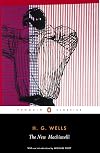
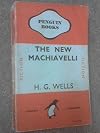
The New Machiavelli
by H. G. Wells
On This Page
Description
Dive into the scandalous roman à clef that shocked the world. Based in part on H. G. Wells' own alleged affair with a much-younger woman, the novel The New Machiavelli follows the rise to power of brilliant politician Richard Remington, whose ascendance is stopped in its tracks when his extramarital dalliance is revealed..
Tags
Recommendations



















Member Reviews
If he had dared H G Wells might have titled his novel “Sex and Politics”, but he had enough trouble getting this novel published without any additional provocation. As he was very interested in both sex and politics it is surprising that he waited until his nineteenth novel to write passionately about both, but when he finally did he produced an outstanding book that ranks among his best. Published in 1911 the centre-piece political event is the Liberal Party’s 1909 “budget for the people”, where the Commons challenged the power of the House of Lords and so today “The New Machiavelli” reads a bit like an historical novel, but in 1911 it would have been extremely topical especially as Wells’ scathing pen portraits of show more political figures would have been easily recognisable.
The novel is written in the first person: Richard Remington is writing his memoirs reflecting on his short but eventful political career, which had been wrecked by scandal. The reader therefore knows the end of the story and so the interest is in how it all happened and this gives Wells the opportunity to delve deeply into political, social and philosophical issues without having to maintain a tension in the story. Remington is in fact writing his autobiography and he starts with his childhood and upbringing and this has led some readers to conclude that this is Wells’ most autobiographical novel. While there is certainly plenty of Wells in Remington and he uses Remington to put forward some of his own views on society and politics it is dangerous to assume that this is in any way autobiographical: for example Remington went to a public school and on to Cambridge, then was elected to Parliament as a liberal MP. Wells did none of these things but did stand for parliament as a Labour MP later in life.
Remington was initially supported by the influential Baileys; the husband and wife team based on Sidney and Beatrice Webb, but once inside the Commons he fell out of step with the Liberal party. He married a wealthy heiress which gave him the independent means to follow his own path, he wrote pamphlets he organised groups, but increasingly saw the Liberals as a party made of individuals too concerned with their own position and influence to make any lasting changes. He looked across the floor of the House to the Tory benches and saw a beleaguered party who he thought might give him a better platform for the changes he wanted to make. He resigned from the Liberal Party and stood as a Tory at the next election and was successful again. He gathered around himself a group of young intellectuals and edited a weekly pamphlet that put forward their view point; he was creating a party for change within the Tory party. It all came crashing around his ears however when his love affair with his closest party worker Isabel Rivers became public and he was hounded out of the country.
Remington went into politics because he believed that he could make a difference. Very much like Wells he is appalled at the muddle-headedness that he saw all around him and believed that better education would be a basis for change and he sets out his arguments in some detail. Later in the novel he embraced eugenics which might make modern day readers shudder, but we would be much more inclined to support his views on women's suffrage. These are clearly Wells’ views and so he is able to indulge himself through Remington, but his indulgences are part and parcel of the political novel he is writing, he has Remington say:
“My political conceptions were perfectly plain and honest. I had one constant desire ruling my thoughts. I meant to leave England and the Empire better ordered than I found it, to organise and discipline to build up a constructive and controlling State out of my worlds confusions. We had I saw to suffuse education with public intention, to develop a new better living generation with a collectivist habit of thought, to link now chaotic activities in every human affair, and particularly to catch that escaped, world-making, world-ruining, dangerous thing, industrial and financial enterprise and bring it back to the service of the general good.”
There are fascinating sections on the Baileys influential groupings and on the groups within the political party’s. The glittering dinners, the weekends in the country, the importance of friends and contacts create a viable and credible scenario of the politics of the time. Perhaps the most interesting development is Remington’s attempt to create his own party within the Tory party which anticipates the Militant Tendency’s attempts to influence the Labour party in England in the 1980’s.
It is a sex scandal that finally brings Remington down and we know this from the very start of the novel and so Wells is keen to show his hero as a man with normal passionate desires. We learn of his initiation into the adult world of sex and how difficult it was for a young man at that time to find out anything at all about sex. Wells/Remington says:
“Humanity is begotten by desire, lives by desire” but Victorian/ Edwardian society does its best to hush it all up. He goes further to claim that society/politics “penalises abandonment to love so heavily, that power, influence and control fall largely to unencumbered people and sterile people and people who have married for passionless purposes, people beauty-blind, who don’t understand what it is to fall in love, what it is to desire children or have them, what it is to feel in their blood and bodies the supreme claim of good births………people almost of necessity averse from this most fundamental aspect of existence.”
The final part of the book describes Remington’s passionate affair with Isabel Rivers. He confesses to his wife Margaret and she is willing to forgive him and even to manage their marriage while the affair continues, but this would be unacceptable in public life and Remington rails against the hypocrisy of it all. He must in the end choose between the two women, knowing that if he continues his love affair with Isabel his career is finished.
This final part of the novel sounds like a cri de coeur from Wells whose own affair with Amber Reeves was causing him to make choices imposed on him by society, choices that are difficult to make in the heat of a passionate love affair. The affair and its ramifications are beautifully written with an intensity that impressed D H Lawrence and will keep the reader gripped until the end.
I have no doubt that The New Machiavelli is a fine achievement: it gives us a believable character struggling to do great things in a society that will not allow him to stray from the narrow path of its own hide bound sexuality. Along the way Wells gets to satirise leading political figures and air his own views on politics and society. London is beautifully described as are the horrors of the industrial Midlands. It all works magnificently and a five star read. show less
The novel is written in the first person: Richard Remington is writing his memoirs reflecting on his short but eventful political career, which had been wrecked by scandal. The reader therefore knows the end of the story and so the interest is in how it all happened and this gives Wells the opportunity to delve deeply into political, social and philosophical issues without having to maintain a tension in the story. Remington is in fact writing his autobiography and he starts with his childhood and upbringing and this has led some readers to conclude that this is Wells’ most autobiographical novel. While there is certainly plenty of Wells in Remington and he uses Remington to put forward some of his own views on society and politics it is dangerous to assume that this is in any way autobiographical: for example Remington went to a public school and on to Cambridge, then was elected to Parliament as a liberal MP. Wells did none of these things but did stand for parliament as a Labour MP later in life.
Remington was initially supported by the influential Baileys; the husband and wife team based on Sidney and Beatrice Webb, but once inside the Commons he fell out of step with the Liberal party. He married a wealthy heiress which gave him the independent means to follow his own path, he wrote pamphlets he organised groups, but increasingly saw the Liberals as a party made of individuals too concerned with their own position and influence to make any lasting changes. He looked across the floor of the House to the Tory benches and saw a beleaguered party who he thought might give him a better platform for the changes he wanted to make. He resigned from the Liberal Party and stood as a Tory at the next election and was successful again. He gathered around himself a group of young intellectuals and edited a weekly pamphlet that put forward their view point; he was creating a party for change within the Tory party. It all came crashing around his ears however when his love affair with his closest party worker Isabel Rivers became public and he was hounded out of the country.
Remington went into politics because he believed that he could make a difference. Very much like Wells he is appalled at the muddle-headedness that he saw all around him and believed that better education would be a basis for change and he sets out his arguments in some detail. Later in the novel he embraced eugenics which might make modern day readers shudder, but we would be much more inclined to support his views on women's suffrage. These are clearly Wells’ views and so he is able to indulge himself through Remington, but his indulgences are part and parcel of the political novel he is writing, he has Remington say:
“My political conceptions were perfectly plain and honest. I had one constant desire ruling my thoughts. I meant to leave England and the Empire better ordered than I found it, to organise and discipline to build up a constructive and controlling State out of my worlds confusions. We had I saw to suffuse education with public intention, to develop a new better living generation with a collectivist habit of thought, to link now chaotic activities in every human affair, and particularly to catch that escaped, world-making, world-ruining, dangerous thing, industrial and financial enterprise and bring it back to the service of the general good.”
There are fascinating sections on the Baileys influential groupings and on the groups within the political party’s. The glittering dinners, the weekends in the country, the importance of friends and contacts create a viable and credible scenario of the politics of the time. Perhaps the most interesting development is Remington’s attempt to create his own party within the Tory party which anticipates the Militant Tendency’s attempts to influence the Labour party in England in the 1980’s.
It is a sex scandal that finally brings Remington down and we know this from the very start of the novel and so Wells is keen to show his hero as a man with normal passionate desires. We learn of his initiation into the adult world of sex and how difficult it was for a young man at that time to find out anything at all about sex. Wells/Remington says:
“Humanity is begotten by desire, lives by desire” but Victorian/ Edwardian society does its best to hush it all up. He goes further to claim that society/politics “penalises abandonment to love so heavily, that power, influence and control fall largely to unencumbered people and sterile people and people who have married for passionless purposes, people beauty-blind, who don’t understand what it is to fall in love, what it is to desire children or have them, what it is to feel in their blood and bodies the supreme claim of good births………people almost of necessity averse from this most fundamental aspect of existence.”
The final part of the book describes Remington’s passionate affair with Isabel Rivers. He confesses to his wife Margaret and she is willing to forgive him and even to manage their marriage while the affair continues, but this would be unacceptable in public life and Remington rails against the hypocrisy of it all. He must in the end choose between the two women, knowing that if he continues his love affair with Isabel his career is finished.
This final part of the novel sounds like a cri de coeur from Wells whose own affair with Amber Reeves was causing him to make choices imposed on him by society, choices that are difficult to make in the heat of a passionate love affair. The affair and its ramifications are beautifully written with an intensity that impressed D H Lawrence and will keep the reader gripped until the end.
I have no doubt that The New Machiavelli is a fine achievement: it gives us a believable character struggling to do great things in a society that will not allow him to stray from the narrow path of its own hide bound sexuality. Along the way Wells gets to satirise leading political figures and air his own views on politics and society. London is beautifully described as are the horrors of the industrial Midlands. It all works magnificently and a five star read. show less
The first section of this book is great. Dick Remington's anecdotes of his childhood veer between humorous and insightful; I loved hearing both about his father's excesses and the first time he realized selfishness existed in the world. Also the tales of him building cities on the floor of his home were fantastic. One suspects that H. G. Wells would have loved Lego.
The book is never quite that interesting again, but it's never bad, either. Dick's political career is all right, and the depiction of him getting married and falling in love (in that order) are pretty insightful depictions of human psychology; you can see why some people thought that Wells was the next Thomas Hardy. Unfortunately, one gets the feeling that Wells was also show more obsessed with being right, and this book was basically one long "proof" of why he was right and everyone should have listened to him. Still, interesting enough.
(I was very disappointed in John S. Partington's endnotes in my Penguin Classic edition. Partington is long on facts and short on meaning; he'll give you the date of publication of any book mentioned in the text, and the lifespan of its author, but he never gives you any information that would help your understanding of the novel. Who cares when George Henry Lewes was born and died-- tell me why Wells might want to quote The Biographical History of Philsophy as his epigraph!) show less
The book is never quite that interesting again, but it's never bad, either. Dick's political career is all right, and the depiction of him getting married and falling in love (in that order) are pretty insightful depictions of human psychology; you can see why some people thought that Wells was the next Thomas Hardy. Unfortunately, one gets the feeling that Wells was also show more obsessed with being right, and this book was basically one long "proof" of why he was right and everyone should have listened to him. Still, interesting enough.
(I was very disappointed in John S. Partington's endnotes in my Penguin Classic edition. Partington is long on facts and short on meaning; he'll give you the date of publication of any book mentioned in the text, and the lifespan of its author, but he never gives you any information that would help your understanding of the novel. Who cares when George Henry Lewes was born and died-- tell me why Wells might want to quote The Biographical History of Philsophy as his epigraph!) show less
I was surprised at how moved I was by this. Part 1 and Part 4 has some of Wells' best writing - about marriage, relationships, and education, both sentimental and political. The middle bit gets kind of wooly in a Wellsian way, but even those chapters had the occasional salient nugget, made more significant by the election tumult going on in real life.
I think some writers craft and others blurt. Wells is a blurter, no doubt, and huge semi-digested chunks of this novel came from his life, not least his relationship with Amber Reeves Blanco (Isabel Rivers in the novel, many years his junior, with whom he had a child).One does sense that Wells was trying to work out whatever he experienced with her in the characters of Remington and Isabel show more and though he isn't totally sucessful, it's heartening to see him dive right in.
I also found the question- are politics movtivated by love or hate quite provocative, given the current political climate.
I wish I could give this another half star.
I also wish someone would write a biography of Amber Reeves. Maybe I will. show less
I think some writers craft and others blurt. Wells is a blurter, no doubt, and huge semi-digested chunks of this novel came from his life, not least his relationship with Amber Reeves Blanco (Isabel Rivers in the novel, many years his junior, with whom he had a child).One does sense that Wells was trying to work out whatever he experienced with her in the characters of Remington and Isabel show more and though he isn't totally sucessful, it's heartening to see him dive right in.
I also found the question- are politics movtivated by love or hate quite provocative, given the current political climate.
I wish I could give this another half star.
I also wish someone would write a biography of Amber Reeves. Maybe I will. show less
https://fromtheheartofeurope.eu/the-new-machiavelli-by-h-g-wells/
This is one of Wells' longer works, whose protagonist emerges from the heart of the middle classes to a Cambridge education, election as a young Liberal MP in the 1906 landslide, and then defects to the Conservatives as a radical new thinker, and also abandons his long-suffering wife for a younger and keener admirer. That last bit, if not the rest, is very clearly drawn from Wells’ own experience, and the emotional passages are poignantly drawn, even if we can’t always sympathise much with the choices made by Wells’ hero.
The political parts, however, are crashingly dull in places; the world has moved on a lot from the hot topics of political debate in 1910, and I show more can’t believe that Wells’ writing on this was a really attractive feature of the book when it first came out. Of the political issues that we do remember from that time, the suffragette movement is mentioned only as background colour, and Ireland not at all. Wells may perhaps have been hoping to shift the political debate with his fiction, but contemporary reaction seems to have concentrated on the scandalous sex in this novel. (Which as usual is discreetly off-stage.) There’s also a frankly nasty portrait of Beatrice and Sydney Webb, which must have annoyed their many mutual friends. show less
This is one of Wells' longer works, whose protagonist emerges from the heart of the middle classes to a Cambridge education, election as a young Liberal MP in the 1906 landslide, and then defects to the Conservatives as a radical new thinker, and also abandons his long-suffering wife for a younger and keener admirer. That last bit, if not the rest, is very clearly drawn from Wells’ own experience, and the emotional passages are poignantly drawn, even if we can’t always sympathise much with the choices made by Wells’ hero.
The political parts, however, are crashingly dull in places; the world has moved on a lot from the hot topics of political debate in 1910, and I show more can’t believe that Wells’ writing on this was a really attractive feature of the book when it first came out. Of the political issues that we do remember from that time, the suffragette movement is mentioned only as background colour, and Ireland not at all. Wells may perhaps have been hoping to shift the political debate with his fiction, but contemporary reaction seems to have concentrated on the scandalous sex in this novel. (Which as usual is discreetly off-stage.) There’s also a frankly nasty portrait of Beatrice and Sydney Webb, which must have annoyed their many mutual friends. show less
I bought my copy of "The New Machiavelli" all the way back in 1991; it sat unopened on my bookshelf for 18 years. There was a good reason for that! Wells' confessional novel is quite tedious: it's perhaps the most egotistical autobiographical novel I've ever read. The book starts out well, with a pleasant description of the sleepy suburban town where "Remington" (Wells) passes his adoloscence. But soon the novel is encumbered by a number of incidents that only exist to settle personal scores, and when politics of early twentieth century Britain become the main subject of the book, interest further dwindles. It's actually a little startling to see how much Wells bought into the Edwardian fad for eugenics! The final section, which deals show more gushingly with Remington's love life, contains some of the most embarrassingly bad prose I've encountered in recent years.
The second star I've provided is only an expression of the novel's historical interest. As a work of literature, I would give it just one star. show less
The second star I've provided is only an expression of the novel's historical interest. As a work of literature, I would give it just one star. show less
This was a mixture between a coming of age novel (at the beginning), then a political one, and finally imbued with a sense of romance. Overall, I thought it was decently contemplated and I felt invested in the characters, the story, and the final turnout. I recommend it to those who are interested in Wells, as this is quite an original piece of work by him.
3 stars.
3 stars.
I have an ongoing, but ultimately minor, interest in Wells. Being an SF enthusiast he is, of course, important to me as the author of many early SF works. The creation of the Eloi & Morlock characters in "The Time Machine" has provided me w/ archetypes to refer to from time to time. Since he's mainly famous for writing SF, I became reinterested in him when I discovered that he'd written non-SF novels too. I found one called "Mr. Britling Sees It Through" long ago & read that & enjoyed it enuf to keep me still slightly caring. Probably decades later, I found & read "The Research Magnificent" wch did the least for me of all of them but it was still ok. Even though I probably read it w/in the last few yrs I don't really remember it at all show more - except that it was probably similar to "The New Machiavelli" in some ways.
A slightly odd sidenote here is that when I was young, probably an adolescent, I had a picture of Wells whoever he was married to at the time? sitting naked on lounge chairs at a nudist camp - wearing only sandals & perhaps reading the newspaper. Where on earth did I get such a thing? Given that I'm a nudist myself, I still find that very endearing.
Additionally, somewhere along the line, I learned that Wells had had socialist utopian inclinations. It all adds up to making a seemingly interesting fellow. This edition of "The New Machiavelli" has some scholarly framing - wch I always enjoy. The introduction by the editor, Norman MacKenzie, was of substantial interest to me. It also created a somewhat strange notion of the bk for me in advance. MacKenzie starts off w/ saying that:
"The New Machiavelli caused H. G. Wells more trouble than any other book he wrote. He was already in difficulties with his publisher, Sir Frederick Macmillan, who had found the recent and similar novel Ann Veronica so 'distasteful' that he had refused to put it in his list, and now rejected the new work on the grounds that it was scandalous and potentially libelous."
Anyway, the bk's presented as being "thinly disguised autobiography" & its main theme was supposedly rejected by Macmillan for being too much about sex instead of about the politics that Wells supposedly claimed it to be about. Wells is presented as a pioneer of using such autobiography "as a vehicle for his social and political ideas". That, too, interests me - since much of my writing is autobiography intended the same way - but w/o the novelistic framing.
So I read it expecting at least a little torrid sex & found it to be.. mostly about politics - or at least about the main character's journey from quasi-socialist liberal to conservative to someone who'd rather leave it all & have a kid w/ the lover that replaces the wife. The "scandalous"ness of it is definitely of a century ago. Still, in a sense, the protaganist comes across as an energetic & driven character who's a maestro at justifying what ultimately amounts to some pretty selfish behavior.
All in all, the politics of it aren't ultimately that interesting to me & I don't really recommend the bk to anyone. I wrote a few notes in the front of my copy to refer me to a few key sections where he outlines his philosophy, predicts war between England & Germany, discusses women & feminism, & promotes "practical eugenics".. but, writing this review, I find that I really don't care that much. Wells, for me, is more like an old acquaintance who I like to catch up on from time to time. show less
A slightly odd sidenote here is that when I was young, probably an adolescent, I had a picture of Wells whoever he was married to at the time? sitting naked on lounge chairs at a nudist camp - wearing only sandals & perhaps reading the newspaper. Where on earth did I get such a thing? Given that I'm a nudist myself, I still find that very endearing.
Additionally, somewhere along the line, I learned that Wells had had socialist utopian inclinations. It all adds up to making a seemingly interesting fellow. This edition of "The New Machiavelli" has some scholarly framing - wch I always enjoy. The introduction by the editor, Norman MacKenzie, was of substantial interest to me. It also created a somewhat strange notion of the bk for me in advance. MacKenzie starts off w/ saying that:
"The New Machiavelli caused H. G. Wells more trouble than any other book he wrote. He was already in difficulties with his publisher, Sir Frederick Macmillan, who had found the recent and similar novel Ann Veronica so 'distasteful' that he had refused to put it in his list, and now rejected the new work on the grounds that it was scandalous and potentially libelous."
Anyway, the bk's presented as being "thinly disguised autobiography" & its main theme was supposedly rejected by Macmillan for being too much about sex instead of about the politics that Wells supposedly claimed it to be about. Wells is presented as a pioneer of using such autobiography "as a vehicle for his social and political ideas". That, too, interests me - since much of my writing is autobiography intended the same way - but w/o the novelistic framing.
So I read it expecting at least a little torrid sex & found it to be.. mostly about politics - or at least about the main character's journey from quasi-socialist liberal to conservative to someone who'd rather leave it all & have a kid w/ the lover that replaces the wife. The "scandalous"ness of it is definitely of a century ago. Still, in a sense, the protaganist comes across as an energetic & driven character who's a maestro at justifying what ultimately amounts to some pretty selfish behavior.
All in all, the politics of it aren't ultimately that interesting to me & I don't really recommend the bk to anyone. I wrote a few notes in the front of my copy to refer me to a few key sections where he outlines his philosophy, predicts war between England & Germany, discusses women & feminism, & promotes "practical eugenics".. but, writing this review, I find that I really don't care that much. Wells, for me, is more like an old acquaintance who I like to catch up on from time to time. show less
Members
- Recently Added By
Lists

Political Science Fiction
43 works; 3 members
Author Information

1,552+ Works 108,783 Members
H. G. Wells was born in Bromley, England on September 21, 1866. After a limited education, he was apprenticed to a draper, but soon found he wanted something more out of life. He read widely and got a position as a student assistant in a secondary school, eventually winning a scholarship to the Royal College of Science in South Kensington, where show more he studied biology. He graduated from London University in 1888 and became a science teacher. He also wrote for magazines. When his stories began to sell, he left teaching to write full time. He became an author best known for science fiction novels and comic novels. His science fiction novels include The Time Machine, The War of the Worlds, The Wonderful Visit, The Island of Doctor Moreau, The Invisible Man, The First Men in the Moon, and The Food of the Gods. His comic novels include Love and Mr. Lewisham, Kipps: The Story of a Simple Soul, The History of Mr. Polly, and Tono-Bungay. He also wrote several short story collections including The Stolen Bacillus, The Plattner Story, and Tales of Space and Time. He died on August 13, 1946 at the age of 79. (Bowker Author Biography) show less
Some Editions
Series
Belongs to Publisher Series
Work Relationships
Is contained in
Common Knowledge
- Original publication date
- 1911
- People/Characters
- Richard Remington
Classifications
Statistics
- Members
- 309
- Popularity
- 103,418
- Reviews
- 9
- Rating
- (3.29)
- Languages
- English, German, Italian
- Media
- Paper, Ebook
- ISBNs
- 51
- ASINs
- 19