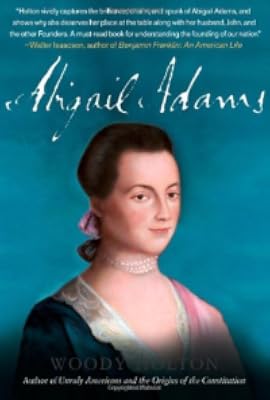
Abigail Adams: A Life
by Woody Holton
On This Page
Description
Prof. Woody Holton (NBA-finalist for Unruly Americans) reveals that American icon Abigail Adams was far wiser and wilier than previously known.Tags
Recommendations
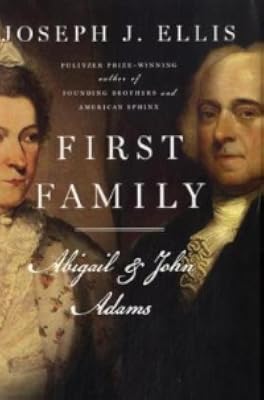
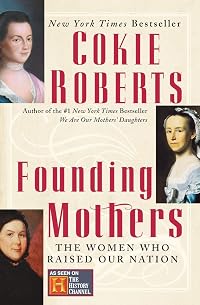
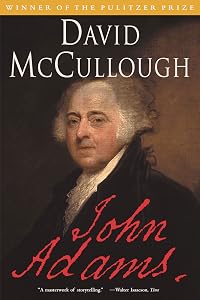
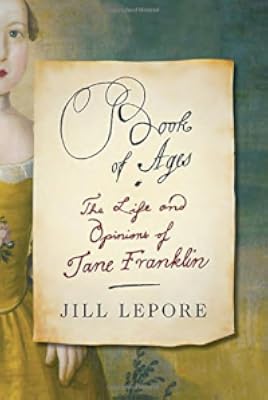
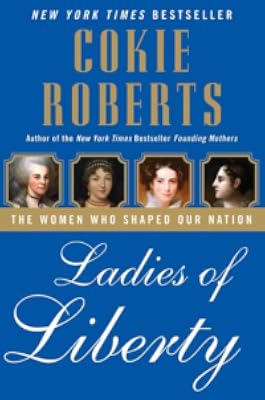
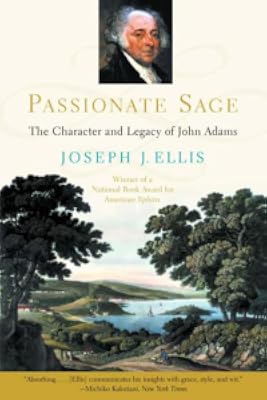
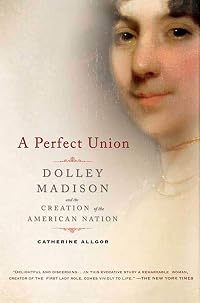
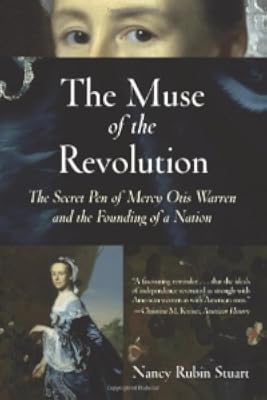
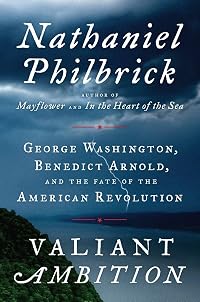
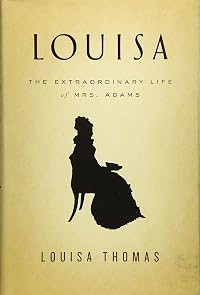
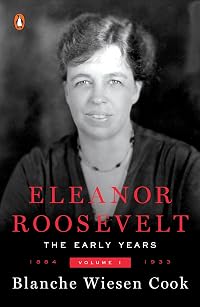
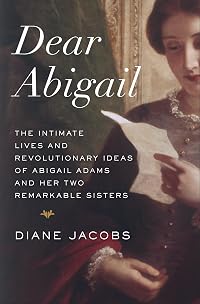


Member Recommendations
Member Reviews
I've always thought Abigail Adams was one of the most interesting of the "founding mothers," largely due to the fact that we have so much information about her, and in her own words. I was even more interested after reading John Adams by David McCullough. And while I think Holton's biography to be on the whole well-written and informative, I'm a little perplexed by his insistence on evaluating her in a modern context. Looking at her with current sensibilities, yes, she held racist and sexist views. However, In my opinion, you can only judge people by the standards, and the context, of their own time.
Here we have a woman who was obviously extremely intelligent, but who was essentially uneducated (because only males went to school). Yet, show more she successfully managed her husband's farm, family, and business dealings for years on end when he was stationed abroad. She was a successful retail merchant in her own right, even though she was forced to use men as her interlocuters (because married women did not engage in business). She was an astute investor, even though married women had no legal right to their own property and earnings. She was vocally opposed to slavery, at a time when slavery was legal everywhere, and in fact she grew up in a household that owned slaves (I was surprised and interested to learn this). IMHO, that sets her high above men like Thomas Jefferson, who supposedly deplored slavery even while engaging in it. As far as I can tell, she never set a foot wrong while navigating the social and political circles she found herself in, when society held much more stringent (and unfair) rules for the comportment of women than it did for men.
Responding to some of the other reviews, of course she can't be classed as a "feminist" because FEMINISM WOULD NOT EXIST as a movement for another 75 years. But I would definitely call her a proto-feminist, and even now her ideas about equal treatment and education for women resonate. Some of her views of the role of women feel archaic to us now, but at the time she was on the leading edge, if not the bleeding edge! It speaks well of her husband John that he "allowed" her so much license to express herself. I doubt she would have enjoyed such a voice had she been married to someone like Jefferson.
Abigail was both a woman of, and ahead of, her time. It was fascinating to read about her life. show less
Here we have a woman who was obviously extremely intelligent, but who was essentially uneducated (because only males went to school). Yet, show more she successfully managed her husband's farm, family, and business dealings for years on end when he was stationed abroad. She was a successful retail merchant in her own right, even though she was forced to use men as her interlocuters (because married women did not engage in business). She was an astute investor, even though married women had no legal right to their own property and earnings. She was vocally opposed to slavery, at a time when slavery was legal everywhere, and in fact she grew up in a household that owned slaves (I was surprised and interested to learn this). IMHO, that sets her high above men like Thomas Jefferson, who supposedly deplored slavery even while engaging in it. As far as I can tell, she never set a foot wrong while navigating the social and political circles she found herself in, when society held much more stringent (and unfair) rules for the comportment of women than it did for men.
Responding to some of the other reviews, of course she can't be classed as a "feminist" because FEMINISM WOULD NOT EXIST as a movement for another 75 years. But I would definitely call her a proto-feminist, and even now her ideas about equal treatment and education for women resonate. Some of her views of the role of women feel archaic to us now, but at the time she was on the leading edge, if not the bleeding edge! It speaks well of her husband John that he "allowed" her so much license to express herself. I doubt she would have enjoyed such a voice had she been married to someone like Jefferson.
Abigail was both a woman of, and ahead of, her time. It was fascinating to read about her life. show less
Much emphasis is rightly given to the founding fathers of America such as George Washington, Thomas Jefferson and John Adams. But rarely do we get such a detailed glimpse into the homes and personal lives of these men as we do the Adams' in Woody Holton's biography of Abigail Adams. With riveting detail, Holton introduces us to the complex woman who helped shaped America more than perhaps any other of the "founding mothers" through her influence on her husband.
Strong-willed, intelligent and willing to speak her mind, Adams was decades ahead of her time when it came to women's rights and involvement in the everyday affairs of life and politics. Relying heavily on Adams' correspondence between her husband and others, Holton places much show more emphasis on Adams as an advocate of women's rights. We glimpse the struggles that the Adams family endured through the many long absences of John Adams; but through these struggles we also get to see Abigail's knowledge and fortitude in being able to "keep the home fires burning" as it were. In a culture that frowned on educating women, she was very intelligent, widely read, and very active in promoting the education of her gender. She made financial investments often without the knowledge of her husband - also a cultural taboo.
Holton does an excellent job of highlighting Adams' strengths as well as her weaknesses, giving us a well-rounded, quite readable biography of this great woman. He certainly does Adams justice in examining her life as a woman and not simply as the wife of a founding father. I would highly recommend this book to any reader of American history or of women's rights. show less
Strong-willed, intelligent and willing to speak her mind, Adams was decades ahead of her time when it came to women's rights and involvement in the everyday affairs of life and politics. Relying heavily on Adams' correspondence between her husband and others, Holton places much show more emphasis on Adams as an advocate of women's rights. We glimpse the struggles that the Adams family endured through the many long absences of John Adams; but through these struggles we also get to see Abigail's knowledge and fortitude in being able to "keep the home fires burning" as it were. In a culture that frowned on educating women, she was very intelligent, widely read, and very active in promoting the education of her gender. She made financial investments often without the knowledge of her husband - also a cultural taboo.
Holton does an excellent job of highlighting Adams' strengths as well as her weaknesses, giving us a well-rounded, quite readable biography of this great woman. He certainly does Adams justice in examining her life as a woman and not simply as the wife of a founding father. I would highly recommend this book to any reader of American history or of women's rights. show less
A fascinating look at Abigail Adams. Most of us know about her “Remember the Ladies” appeal to her husband. This bio also shows her financial astuteness in spite of women having little legal power in that arena. She often advised other women (especially her sisters) on how to be financially stable after marriage and preparation for their possible widowhood — this was at a time when men generally had financial control but for some loopholes. Abigail Adams was definitely a woman ahead of her times.
A well written and very readable biography. Abigail Adams is a fascinating and interesting woman. She is *not* a feminist as she held many racist and sexist views, none the less she is very interesting.
I really loved this biographer. He was fair and included many negative aspects of Abigail without defending or explaining them.
I will definitely read more histories by this author.
I really loved this biographer. He was fair and included many negative aspects of Abigail without defending or explaining them.
I will definitely read more histories by this author.
I'm acknowledged in this book, so I can't really "review" it as such; consider this a hearty recommendation. It's one of the best biographies I've ever had the privilege to read, being at once pleasantly readable and also carefully researched. It breaks much new ground in pointing out the important role Abigail's financial prowess played in creating the family's fiscal stability: "it may be that if [John Adams'] financial records had survived the ravages of time as well as his correspondence did," Holton writes on p. 277, "they would show his wife making a larger contribution to the family's wealth than he did." A remarkable statement, perhaps, but not if you know Abigail as Holton reveals her.
Absolutely one of the top biographies of show more 2009, by far. show less
Absolutely one of the top biographies of show more 2009, by far. show less
This book is nicely researched and well written. A family tree might have been a nice addition, since the Adams family reproduces widely and everyone seems to have the same names. Holton pushes the feminist angle pretty strongly (Adams is well known for her "Remember the Ladies!" letter to her husband), and while Adams certainly displayed a lifelong interest in the rights and education of women, I think he sometimes holds her relationship with John up as more unusually egalitarian than it really was. Most of all, you get a real sense for the every day life of the period -- the problems that distance (even what now seems like a small distance) put on communication; the parallels between the federalists / anti-federalists and today's show more politicians; the economy crippling speculation and real estate bubbles after the war; and a truly moving exchange when Abigail's daughter finds a lump in her breast and has to be convinced to get a mastectomy. I'm very glad I had a chance to read this book.
[full review here: http://spacebeer.blogspot.com/2011/06/abigail-adams-by-woody-holton-2009.html ] show less
[full review here: http://spacebeer.blogspot.com/2011/06/abigail-adams-by-woody-holton-2009.html ] show less
The author does a good job of introducing us to the domestic life and interior thoughts of this eighteenth century feminist. Her life was interesting and inspiring in many ways. Unfortunately, her racist comments were also a disappointing discovery for me. All in all, worth the read.
Members
- Recently Added By
Lists

Best Biographies of Notable Women
424 works; 102 members
Author Information

7+ Works 1,369 Members
Woody Holton is an associate professor of history at the University of Richmond.
Some Editions
Awards and Honors
Awards
Common Knowledge
- Canonical title
- Abigail Adams: A Life
- Original publication date
- 2009
- People/Characters
- Abigail Adams; John Adams; Phoebe Abdee; William Abdee; Jesse Adair; Elihu Adams (show all 292); William Smith; Elizabeth Quincy Smith; Mary Smith Cranch; Richard Cranch; Elizabeth Cranch Norton; Lucy Cranch Greenleaf; William Cranch; William Smith, Jr.; Catharine Louisa Salmon Smith; Elizabeth Smith Foster; Louisa Catharine Smith; Mary Smith; Charles Salmon Smith; Isaac Smith; John Shaw; Elizabeth Smith Shaw; Stephen Peabody; William Smith Shaw; Elizabeth Quincy Shaw; Abigail Adams Shaw; Abigail Adams Smith; William Stephens Smith; William Steuben Smith; John Adams Smith; Thomas Hollis Smith; Caroline Amelia Smith de Windt; John Quincy Adams; Louisa Catherine Johnson Adams; George Washington Adams; Charles Francis Adams; Louisa Catherine Adams; Susanna Adams; Charles Adams; Sarah Smith Adams; Susanna Boylston Adams Clark; Abigail Louisa Smith Adams Johnson; Thomas Boylston Adams; Ann Harrod Adams; Abigail Smith Adams Angier; Elizabeth Coombs Adams; Thomas Boylston Adams, Jr.; Frances Foster Adams; Isaac Hull Adams; Joseph Harrod Adams; Elizabeth Welles Adams; Love Lawrence Adams; Samuel Adams; Sally Smith Adams; Ethan Allen; Thomas Alleyne; Martha Ballard; James Barry; John Beckley; John Bennett; Egbert Benson; Francis Bernard (1st Baronet, 1712-1779); Thomas Bernard; Mather Biles; Benjamin Blythe; Leonard Borland; James Bowdoin; Joseph Brant; Thomas Boylston; Esther Field Briesler; John Briesler; John Brown; Mather Brown; Sarah Brown; Thomas Bullfinch; Thomas Bumstead; John Burgoyne; Edmund Burke; Aaron Burr; Lord Byron; George Cabot; James Callender; Chevalier de la Luzerne; William Ellery Channing; Charlotte of Mecklenburg-Strelitz, Queen Consort of the United Kingdom; George Clinton; William Collins; James Fenimore Cooper; Samuel Cooper; Isaac Copeland; John Singleton Copley; Charles Cornwallis, 1st Marquess Cornwallis; Elaine Forman Crane; Hannah Cushing; Daniel Parke Custis; Elizabeth Custis; Elizabeth Dana; Francis Dana; Jacob Davis; Madame De Stael; Peter De Windt; Rebecca Dexter; Ralph Waldo Emerson; Dr. Edwards; George Erving; Mary Jefferson Eppes; Joseph Barlow Felt; Job Field; Benjamin Franklin; Deborah Read Franklin; Mary Frazier; Nathaniel Freeman; Thomas Gage; Horatio Gates; George III, King of the United Kingdom; George IV, King of the United Kingdom; Elbridge Gerry; Alexander Gillon; William Graham; Hannah Storer Green; Benjamin Greenleaf; James Greenleaf; John Greenleaf; Rufus Wilmot Griswold; John Hall; Alexander Hamilton; Dorothy Hancock; John Hancock; George Frideric Handel; Benjamin Harrison; Nancy Hazen; William Heath; Adelaide Hellen; Nancy Hellen; Walter Hellen; Sally Hemings; Patrick Henry; Edward Hill; Amos Holbrook; William Howe; David Humphreys; William Jackson; John Jay; Martha Wayles Skelton Jefferson; Thomas Jefferson; Edward Jenner; Alexander B. Johnson; Catherine Johnson; Joshua Johnson; Samuel Johnson; John Paul Jones; Joseph Coulon de Jumonville; John Philip Kemble; Marquis de Lafayette; Arthur Lee; Charles Lee; Hannah Lincoln; John Locke (1632-1704); Louis XVI, King of France; James Lovell; Mary Lovell; Nathaniel Byfield Lyde; Catharine Macaulay; Henry Mackenzie; Dolley Madison; James Madison; Giovanni Paolo Marana; William Marbury; Marie Antoinette; Rachel Marsh; John Marshall; Alexander McGillivray; James Monroe; Robert Morris; William Vans Murray; Napoleon Bonaparte; Thomas Newcomb; Jacob Norton; Richard Norton; Molière; Francisco de Miranda; James Otis, Jr.; Thomas Paine; Elizabeth Palmer; Joseph Palmer; Sophia Palmer; Theophilus Parsons; Oliver Pelton; Earl Percy; Adrian Petit; Charles Pinckney; Thomas Pinckney; Alexander Pope; Eliza Pope; John Pope; Thomas Preston; Richard Price; Edmund Quincy; Hannah Quincy; Elizabeth Norton Quincy; John Quincy; Norton Quincy; Samuel Quincy; Allan Ramsay; Andrew Ramsay; Jonathan Rawson; Paul Revere; Sarah Revere; James Reynolds; Samuel Richardson; Daniel Roberdeau; John Robison; Marie-Jeanne Roland; Benjamin Rush; Julia Rush; Richard Rush; Felix de St. Hilaire; Margaret de St. Hilaire; John Sartain; Edward Savage; Christian Schussele; John Scollay; Lucius Annaeus Seneca; Juliana-Susannah Seymour; William Shaw; Daniel Shays; John Shebbeare; Lord Shelbourne; Alice Lee Shippen; Sarah Siddons; Adam Smith; Betsy Smith; Catherine Johnson Smith; Justus Bosch Smith; Thomas Snowden; Laurence Sterne; Friedrich Wilhelm von Steuben (Baron von Steuben); Hannah Quincy Lincoln Storer; Gilbert Stuart; Jane Stuart; James Sullivan; John Sullivan; Jonathan Swift; Moses Taft; Charles Maurice de Talleyrand-Périgord; John Taylor; Tecumseh; Gilbert Tennent; Tenskwatawa; John Thaxter; Ebenezer Thayer; Solomon Thayer; John Thomas; James Thomson; Cornelius Tiebout; John Trumbull; William Tudor; Cotton Tufts; Lucy Tufts; Susannah Warner Tufts; John Turner; Royall Tyler; Laurel Ulrich; Francois Adriaan van der Kemp; Sarah Veasey; William Veasey; James Verchild; John Vinton; George Warren; James Warren; Joseph Warren; Mercy Otis Warren; Winslow Warren; George Washington; Martha Custis Washington; Harriet Welsh; Thomas Welsh; Phillis Wheatley; Esther Wheelwright; George Whitefield; Kilbon Whitman; Peter Whitney; Anthony Wibird; Helen Maria Williams; Jonathan Williams; Nathaniel Willis; James Wilson [signatory of the Declaration of Independence]; Thomas Wilson; Mary Wollstonecraft; Virginia Woolf; Patience Wright; Rosemarie Zagarri
- Important places
- Massachusetts, USA
- Important events
- American Revolution (1775 | 1783)
- Dedication
- For Beverly
- First words
- On an unusually warm morning in the middle of January 1816, seventy-one-year-old Abigail Adams, wracked with pain and convinced she was dying, sat down to write her will.
- Last words
- (Click to show. Warning: May contain spoilers.)Yet it seems unlikely that Abigail would have considered the younger woman's gift a defeat. After all, by deciding on her own authority to present the money to her children, Louisa acknowledged what the law of the land denied and Abigail had always affirmed: that the money was hers to give.
- Original language
- English US
Classifications
- Genres
- Biography & Memoir, History, Nonfiction, General Nonfiction, Home & Garden
- DDC/MDS
- 973.4 — History & geography History of North America United States Constitutional period (1789-1809)
- LCC
- E322.1 .A38 .H65 — History of the United States United States Revolution to the Civil War, 1775/1783-1861 By period 1789-1809. Constitutional period John Adams' administration, 1797-1801
- BISAC
Statistics
- Members
- 489
- Popularity
- 62,170
- Reviews
- 9
- Rating
- (3.97)
- Languages
- English
- Media
- Paper, Audiobook, Ebook
- ISBNs
- 10
- ASINs
- 6