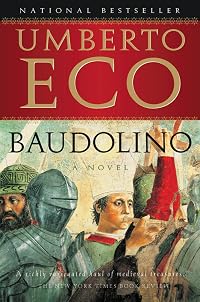
Baudolino
by Umberto Eco
On This Page
Description
As Constantinople is being pillaged and burned in April 1204, a young man, Baudolino, manages to save a historian and a high court official from certain death at the hands of crusading warriors. Born a simple peasant, Baudolino has two gifts: his ability to learn languages and to lie. A young man, he is adopted by a foreign commander who sends him to university in Paris. After he allies with a group of fearless and adventurous fellow students, they go in search of a vast kingdom to the show more East-a kingdom of strange creatures, eunuchs, unicorns and, of course, lovely maidens. Fusing historical events with myths and fables, this is a lighthearted, splendid tale. show lessTags
Recommendations



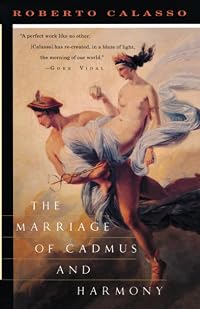
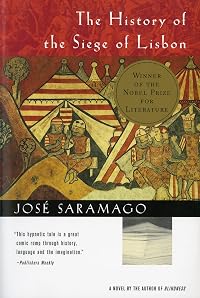
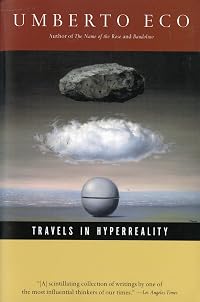
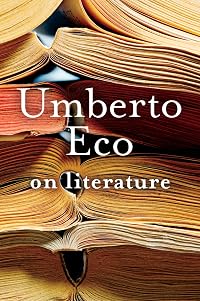

Member Recommendations


Member Reviews
Baudolino is in his sixties when he saves a minister of Constantinople during its sacking by the Fourth Crusade. This provides opportunity for him to recount his life story, one that begins as a historical fiction centered in the Holy Roman Emperor in the company of Barbarossa, but lends itself to fantasy once he engages upon a journey that leads him into an unlikely version of the middle east and India.
I liked The Name of the Rose and Foucault's Pendulum, but this novel was easily the most fun to read. Loads of humour and pathos + brain candy = a rare find, but here it is. As with the author's other novels there is much playfulness incorporating European legends of the Middle Ages, here centered mostly upon the mythical realm of show more Prester John, and the Holy Grail.
The narrator is wonderfully unreliable by his own confession. He openly admits to viewing lying as bringing things into being, merely by bearing false witness to them. There's an interesting, sharply defined progression from the first half of the story when Baudolino could be given benefit of the doubt (as what he says fits well with historical fact), into the latter half where he is clearly making everything up. Ironically Niketas appears to find his tale more credible in this latter half, even as it becomes increasingly wondrous (a similar theme was apparent in Foucault's Pendulum).
Regardless of the facts or fiction contained in Baudolino's story, it always conveys a great deal of heart and he is eminently likeable as a character to the last. The author has taught us love for a liar, and respect for a liar's method of introducing wonder into the world, not unlike my appreciation for this talented author. show less
I liked The Name of the Rose and Foucault's Pendulum, but this novel was easily the most fun to read. Loads of humour and pathos + brain candy = a rare find, but here it is. As with the author's other novels there is much playfulness incorporating European legends of the Middle Ages, here centered mostly upon the mythical realm of show more Prester John, and the Holy Grail.
The narrator is wonderfully unreliable by his own confession. He openly admits to viewing lying as bringing things into being, merely by bearing false witness to them. There's an interesting, sharply defined progression from the first half of the story when Baudolino could be given benefit of the doubt (as what he says fits well with historical fact), into the latter half where he is clearly making everything up. Ironically Niketas appears to find his tale more credible in this latter half, even as it becomes increasingly wondrous (a similar theme was apparent in Foucault's Pendulum).
Regardless of the facts or fiction contained in Baudolino's story, it always conveys a great deal of heart and he is eminently likeable as a character to the last. The author has taught us love for a liar, and respect for a liar's method of introducing wonder into the world, not unlike my appreciation for this talented author. show less
I read this on my way to London and my trip to London broke me, broke me in all the ways a man can be broken, yes, broken into a thousand little man-pieces that crunched underfoot when people walked on them, which people did even though they were me and I was saying this is me, please don't walk on m- crunch. So I really don't want to review it, even though I liked it a lot. It's one long shaggy dog story about the quest for the kingdom of Prester John and it's also about world-building and myth-making and story-telling and lies within lies within lies concealing each other and filling up the unknown spaces on the map and in the mind and in the past.
Baudolino is an Italian peasant living in the 1200s who is both a gifted story teller and a compulsive liar. The book is told through Baudolino's retelling of the events of his life to a Byzantine court official who he saves during one of the Crusades. The trick to this book is figuring out what is true, what is false, and if it even matters. As a young man, Baudolino falls into favor with the Holy Roman Emperor Frederick Barbarossa who sends him to Paris to study. Baudolino has a natural talent for learning languages. He meets several friends there and they become obsessed with the idea of the existence of Prester John, a mythical priest who supposedly rules in the East. Eventually, they contrive a way to go on a journey to find show more Prester John. They have many adventures along the way and this all becomes more and more fantastic.
This book is one of Eco's most readable novels because he manages to stay relatively on track with the plot instead of having multiple diversions in each chapter. There is still a lot of play with words and obscure historical references (many of which I'm sure I didn't get), but this book has a lot of life, humor, and a sense of fun.
My favorite line in this book is the last. Niketas, the byzantine official who listened to Baudolino's story with the intent of helping to write his biography, is talking to a wise man about how he can possibly write out Baudolino's story with any credibility. The wise man cautions him not to tell the story. When Niketas expresses his regret, the wise man says
You surely don't believe you're the only writer of stories in the world. Sooner or later, someone -- a greater liar than Baudolino -- will tell it. show less
This book is one of Eco's most readable novels because he manages to stay relatively on track with the plot instead of having multiple diversions in each chapter. There is still a lot of play with words and obscure historical references (many of which I'm sure I didn't get), but this book has a lot of life, humor, and a sense of fun.
My favorite line in this book is the last. Niketas, the byzantine official who listened to Baudolino's story with the intent of helping to write his biography, is talking to a wise man about how he can possibly write out Baudolino's story with any credibility. The wise man cautions him not to tell the story. When Niketas expresses his regret, the wise man says
You surely don't believe you're the only writer of stories in the world. Sooner or later, someone -- a greater liar than Baudolino -- will tell it. show less
Baudolino is a wonderful work of historical fiction, full of marvellous stories. In 1206 during the sack of Constantinople a Byzantine court official, Niketas, is rescued by Baudolino and, while in hiding, Baudolino starts to tell his life story. A fantastical tale unfolds - from his boyhood meeting with Frederick Barbarosa and his days as a scholar in Paris and his later travels as he searches for the kingdom of Prester John.
Baudolino is the epitome of unreliable narrators. His imagination leads him to see Saints and unicorns as a boy and the later lies and fabrications during his life lead on a quest that is, at least partly, because of the stories he and his friends tell. Eco has created a believable medieval world - from the show more descriptions of every day life in various countries; to the more fantastical possibilities of what might be found beyond the edges of the known world which hark back to the stories told in Herodotus' Histories. Eco has obviously done his research into the period and the translation by William Weaver reads very well.
This was a re-read for me, I first read it about ten years ago and, to be honest, I did not remember it as one of Eco's better works. Fortunately I was wrong - this read confirms that Eco is a wonderful author and storyteller. show less
Baudolino is the epitome of unreliable narrators. His imagination leads him to see Saints and unicorns as a boy and the later lies and fabrications during his life lead on a quest that is, at least partly, because of the stories he and his friends tell. Eco has created a believable medieval world - from the show more descriptions of every day life in various countries; to the more fantastical possibilities of what might be found beyond the edges of the known world which hark back to the stories told in Herodotus' Histories. Eco has obviously done his research into the period and the translation by William Weaver reads very well.
This was a re-read for me, I first read it about ten years ago and, to be honest, I did not remember it as one of Eco's better works. Fortunately I was wrong - this read confirms that Eco is a wonderful author and storyteller. show less
Aside from a few parts that I got a little bored with, this novel was, by and large, a tour de force of humorous historical storytelling proportions. I was delighted and totally amused by Baudolino, the inveterate trickster, storyteller, and liar.
Putting aside actual history for a moment and the MC's way of explaining that he is, as always, a liar, but he only lies for good, the novel grows epic from the first passages. We start with the fall of Constantinople, getting in tight with Barbarossa (the Holy Roman Emperor), and move into an amazing and amusing set of circumstances that include the founding of Alexandria, going on several quests for Prester John, meeting all manners of strange creatures and lands right out of the weirdest show more Medieval descriptions, and so much more.
This is Umberto Eco, after all. If we're not knee-or-thigh-deep in fascinating historical footnotes couched in an expansive idea-rich adventure, then we must have wandered into someone else's novel.
I laughed-out-loud many times. I especially loved the whole con game about selling relics. In this case, the seven severed heads of John the Baptist. :) The kinds of lies that Baudolino and his cohorts told were fantastic, rich, and while they didn't always pan out the way they hoped, the effects were gorgeous to behold.
Is this a farce? A satire? A wonderful sarcastic and worldly tribute to imagination and The Pilgrim's Progress? (And better, too?) Hell, you know this is crazy when you have our hero carry around the Holy Grail.
But what is real and what is pure fabrication? Possibly everything, but even Baudolino warns us that he tells us lies to get to the very truth of things. And that's the best part of the novel.
I got lost in the stories and didn't care a fig about anything but the telling.
My only complaint was with the whole sequence around Hypatia. I kinda didn't care for the philosophical ramblings so much. I just wanted him to move on with the rest of the adventure. But aside from this, I loved everything. :) show less
Putting aside actual history for a moment and the MC's way of explaining that he is, as always, a liar, but he only lies for good, the novel grows epic from the first passages. We start with the fall of Constantinople, getting in tight with Barbarossa (the Holy Roman Emperor), and move into an amazing and amusing set of circumstances that include the founding of Alexandria, going on several quests for Prester John, meeting all manners of strange creatures and lands right out of the weirdest show more Medieval descriptions, and so much more.
This is Umberto Eco, after all. If we're not knee-or-thigh-deep in fascinating historical footnotes couched in an expansive idea-rich adventure, then we must have wandered into someone else's novel.
I laughed-out-loud many times. I especially loved the whole con game about selling relics. In this case, the seven severed heads of John the Baptist. :) The kinds of lies that Baudolino and his cohorts told were fantastic, rich, and while they didn't always pan out the way they hoped, the effects were gorgeous to behold.
Is this a farce? A satire? A wonderful sarcastic and worldly tribute to imagination and The Pilgrim's Progress? (And better, too?) Hell, you know this is crazy when you have our hero carry around the Holy Grail.
But what is real and what is pure fabrication? Possibly everything, but even Baudolino warns us that he tells us lies to get to the very truth of things. And that's the best part of the novel.
I got lost in the stories and didn't care a fig about anything but the telling.
My only complaint was with the whole sequence around Hypatia. I kinda didn't care for the philosophical ramblings so much. I just wanted him to move on with the rest of the adventure. But aside from this, I loved everything. :) show less
Is this a fantasy? It's hard to say with any certainty. Undoubtedly we see many fantastic and magical things as Baudolino recounts his journeys, but Baudolino's a liar.
We meet Baudolino in 1204, as Constantinople is being sacked and burned by the Fourth Crusade. He rescues a high-ranking court official and historian, Niketas Choniates--a real person who did survive the sack of the city and subsequently wrote a history of Byzantium including the story of the sack. He then asks Niketas to listen to his own story, so that he can work out the meaning of it--if any.
Calling this an unreliable narrative is a gross understatement. Baudolino himself says that he habitually confuses what he wants to see with what he does see, and has often told show more colorful tales rather than the boring truth. An additional layer of unreliability is added by the fact that he's telling this tale entirely from memory, the journal he had kept for years having been lost in the course of his journeys. So this is a tale told from unreliable memory, most of it years after the fact, of an habitual liar.
As a young boy in twelfth-century Italy, Baudolino sets out on the road to fortune and adventure by telling a passing foreign knight that St. Baudolino has appeared to him and told him that Frederick Barbarossa would conquer Terdona (with which he was then at war.) Since the passing knight is Frederick Barbarossa, this prediction naturally goes down very well. In short order, Baudolino has thoroughly charme d the emperor, and is adopted as his son. He is raised in Frederick's court, and eventually, having no taste for war, is sent to Paris to study and returns to be a ministerial of the imperial court. There are elements of secret history to the story, as Baudolino becomes responsible for the founding of the city of Alessandria and the canonization of Charlemagne, amongst other things. In alternating sections, we get the story of Baudolino's rescue of Niketas and his family and their escape from Constantinople, and Baudolino's lifetime of colorful adventures, including his lifelong fascination with the fabled kingdom of Prester John. After Frederick's death, this fascination leads to Baudolino and a group of good friends and more dubious allies setting out for the distant east, following one expedition member's memories of a map claiming to show the way. In the course of their journey, they meet most of the creatures out of the more fantastic mediaeval bestiaries, including unicorns, but also skiapods ponces, and blemmyae, and encounter other wonders.
One of those "other wonders" is a raging river of stone, cutting off the route to Prester John's kingdom. Baudolino's Jewish companion, Rabbi Solomon, had told them of this wonder and its features that make it an unc rossable obstacle: the river flows with a powerful current for six days, and stops completely on the Sabbath. Jews, of course, cannot cross it on the Sabbath. Gentiles could, but when the stones stop, an impassable barrier of flames springs up on both riverbanks. They reach river, look in vain for a way to cross it at or above its source, and eventually give up, travelling downriver again to wait for its Sabbath stoppage. When this happens on schedule, they wait for the flames--and nothing happens:
"So you see you mustn't always believe what they tell you," Baudolino concluded. "We live in a world where people invent the most incredible stories. Solomon, this is a tale you Jews put into circulation to prevent Christians from coming to these parts."
Well, Baudolino--and Eco--certainly ought to know, at least about people inventing incredible stories.
This is a beautifully written book, a delight to read, and there's no need to wonder, as with Isabel Allende's City of the Beasts, whether Eco was well served by his translator. show less
We meet Baudolino in 1204, as Constantinople is being sacked and burned by the Fourth Crusade. He rescues a high-ranking court official and historian, Niketas Choniates--a real person who did survive the sack of the city and subsequently wrote a history of Byzantium including the story of the sack. He then asks Niketas to listen to his own story, so that he can work out the meaning of it--if any.
Calling this an unreliable narrative is a gross understatement. Baudolino himself says that he habitually confuses what he wants to see with what he does see, and has often told show more colorful tales rather than the boring truth. An additional layer of unreliability is added by the fact that he's telling this tale entirely from memory, the journal he had kept for years having been lost in the course of his journeys. So this is a tale told from unreliable memory, most of it years after the fact, of an habitual liar.
As a young boy in twelfth-century Italy, Baudolino sets out on the road to fortune and adventure by telling a passing foreign knight that St. Baudolino has appeared to him and told him that Frederick Barbarossa would conquer Terdona (with which he was then at war.) Since the passing knight is Frederick Barbarossa, this prediction naturally goes down very well. In short order, Baudolino has thoroughly charme d the emperor, and is adopted as his son. He is raised in Frederick's court, and eventually, having no taste for war, is sent to Paris to study and returns to be a ministerial of the imperial court. There are elements of secret history to the story, as Baudolino becomes responsible for the founding of the city of Alessandria and the canonization of Charlemagne, amongst other things. In alternating sections, we get the story of Baudolino's rescue of Niketas and his family and their escape from Constantinople, and Baudolino's lifetime of colorful adventures, including his lifelong fascination with the fabled kingdom of Prester John. After Frederick's death, this fascination leads to Baudolino and a group of good friends and more dubious allies setting out for the distant east, following one expedition member's memories of a map claiming to show the way. In the course of their journey, they meet most of the creatures out of the more fantastic mediaeval bestiaries, including unicorns, but also skiapods ponces, and blemmyae, and encounter other wonders.
One of those "other wonders" is a raging river of stone, cutting off the route to Prester John's kingdom. Baudolino's Jewish companion, Rabbi Solomon, had told them of this wonder and its features that make it an unc rossable obstacle: the river flows with a powerful current for six days, and stops completely on the Sabbath. Jews, of course, cannot cross it on the Sabbath. Gentiles could, but when the stones stop, an impassable barrier of flames springs up on both riverbanks. They reach river, look in vain for a way to cross it at or above its source, and eventually give up, travelling downriver again to wait for its Sabbath stoppage. When this happens on schedule, they wait for the flames--and nothing happens:
"So you see you mustn't always believe what they tell you," Baudolino concluded. "We live in a world where people invent the most incredible stories. Solomon, this is a tale you Jews put into circulation to prevent Christians from coming to these parts."
Well, Baudolino--and Eco--certainly ought to know, at least about people inventing incredible stories.
This is a beautifully written book, a delight to read, and there's no need to wonder, as with Isabel Allende's City of the Beasts, whether Eco was well served by his translator. show less
This was a fantastic read in every sense. Eco managed to make this interesting on levels that aren't always his strong suit--enchanting characters, plot, themes, real suspense. I was really not expecting this work to live up to the level of The Name of the Rose and Foucault's Pendulum--or expected that it would somehow exhaust the breadth of the interesting and novel intellectual puzzles or concepts that Eco had to offer his readers through fiction. Needless to say, I was glad to find that standard upheld. This work raises some fascinating question about the nature of truth and testimony, reality, history, social progress, the nature of faith, narrative as a concept, the nature of language as a communication device, translation, and show more cause and effect. There are a great number of subtle intellectual references cast into a sparkling narrative with a real and almost linear plot (something of a surprise coming from Eco, I think) and some of the most humorous--if dark--and creative historical redescriptions I have ever happened upon. I also get the sense that there's a bit of biography hidden in this work for Baudolino's fellow Alessandrian Umberto Eco. show less
Members
- Recently Added By
Published Reviews
ThingScore 25
It's a mystery that begins well, and ends well, too, drenched in the scholastic logic and the intricate, entertaining literary gamesmanship that is Mr. Eco's territory. The problem is that while ''Baudolino'' contains plenty of learning and imagination, it is so strenuously fanciful that it becomes tedious, like a Thanksgiving Day parade that lasts all day.
added by SimoneA
Lists

Best Historical Fiction
620 works; 261 members

Historical Fiction
889 works; 91 members

Unread books
1,063 works; 87 members

Italian Literature
558 works; 43 members

Favorite Long Books
330 works; 42 members

Books Set in Italy
167 works; 19 members

20th Century Literature
1,161 works; 55 members

Best 21st Century Books (So Far)
679 works; 86 members

Magic Realism
371 works; 52 members

2000s (the decade, not the century)
184 works; 11 members

Best historical fiction set in the ancient world
126 works; 40 members

SHOULD Read Books!
354 works; 9 members

Set in the Middle Ages
42 works; 9 members
Books translated from Romance Languages into English
102 works; 7 members
Lista dei 100 migliori libri italiani degli ultimi 200 anni
100 works; 1 member

Fiction with Men's Given Names in the Title
302 works; 11 members

In Our Time books
4,934 works; 2 members

1001 Books You Must Read Before You Die
1,448 works; 1,136 members
Author Information

512+ Works 115,544 Members
Umberto Eco was born in Alessandria, Italy on January 5, 1932. He received a doctorate of philosophy from the University of Turin in 1954. His first book, Il Problema Estetico in San Tommaso, was an extension of his doctoral thesis on St. Thomas Aquinas and was published in 1956. His first novel, The Name of the Rose, was published in 1980 and won show more the Premio Strega and the Premio Anghiar awards in 1981. In 1986, it was adapted into a movie starring Sean Connery. His other works include Foucault's Pendulum, The Island of the Day Before, Baudolino, The Prague Cemetery, and Numero Zero. He also wrote children's books and more than 20 nonfiction books including Serendipities: Language and Lunacy. He taught philosophy and then semiotics at the University of Bologna. He also wrote weekly columns on popular culture and politics for L'Espresso. He died from cancer on February 19, 2016 at the age of 84. (Bowker Author Biography) show less
Some Editions
Awards and Honors
Awards
Distinctions
Series
Belongs to Publisher Series
Work Relationships
Is contained in
Has the adaptation
Common Knowledge
- Canonical title
- Baudolino
- Original title
- Baudolino
- Original publication date
- 2000 (original Italian) (original Italian); 2001 (English translation) (English translation)
- People/Characters
- Baudolino; Frederick I / Frederick Barbarossa, Holy Roman Emperor; Prester John; Enrico Dandolo
- Important places
- Constantinople; Italy; Paris, France
- Important events
- Fourth Crusade
- Epigraph*
- Mi fan partir costoro il grande stento
- Dedication
- Emanuele
- First words
- Rattishbon Anno Domini mense decembri mclv Cronicle of Baudolino of the fammily of Aulario.
- Quotations
- "Faith makes things become true."
- Last words
- (Click to show. Warning: May contain spoilers.)"Sooner or later, someone—a greater liar than Baudolino—will tell it."
- Original language
- Italian
*Some information comes from Common Knowledge in other languages. Click "Edit" for more information.
Classifications
- Genres
- Fiction and Literature, General Fiction, Historical Fiction, Fantasy
- DDC/MDS
- 853.914 — Literature & rhetoric Italian, Romanian & related literatures Italian fiction 1900- 20th Century 1945-1999
- LCC
- PQ4865 .C6 .B3813 — Language and Literature French, Italian, Spanish and Portuguese literatures Italian literature Individual authors, 1961-2000
- BISAC
Statistics
- Members
- 8,550
- Popularity
- 1,293
- Reviews
- 106
- Rating
- (3.56)
- Languages
- 27 — Bulgarian, Catalan, Czech, Danish, Dutch, English, Estonian, Finnish, French, German, Greek, Hebrew, Hungarian, Italian, Korean, Latvian, Lithuanian, Macedonian, Norwegian (Bokmål), Polish, Portuguese, Romanian, Russian, Serbian, Spanish, Swedish, Turkish
- Media
- Paper, Audiobook, Ebook
- ISBNs
- 121
- ASINs
- 36