On This Page
Description
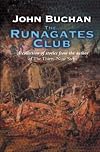
The Runagates Club (1928) was John Buchan's last collection of short stories, and is a classic of British interwar short fiction. These twelve stories were written from 1913 to 1927, when he was at the peak of his powers. Buchan designed The Runagates Club as a showcase to bring together the best of his magazine fiction. He repurposed these stories with new beginnings, framing them as after-dinner stories told over the port in a late 1920s private gentleman's dining-club. The narrators are a show more ready-made cast of storytelling characters, and Buchan filled out their backgrounds to fit the patrician, clubland background. This is interwar story-telling at its very best. The critical introduction by Buchan expert Kate Macdonald sets out the publishing history, context, plots and thematic links between the stories and Buchan's other works. For readers of classic adventure, the early thriller, vintage supernatural and horror, First World War espionage, and for John Buchan fans. show lessTags
Recommendations














Member Reviews
The Runagates Club is founded after World War One by men who had met each other during the war, generally while engaged in heroic exploits. They take turns telling tales of other adventures they have had. This gives Buchan an opportunity to have several of his series characters -- Richard Hannay, Edward Leithen, Lord Lamancha --and others tell short tales The Richard Hannay story is set in Africa prior to his return to England which led him to The 39 Steps, so it is the earliest bit we have of his career. it involves a very modern Boer young man who unexpectedly reverts to traits of an African ancestor --his family having picked up what Hanny ineleanty calls "a toucvh of the tarburush" at some point.
Ratings
Members
- Recently Added By
Author Information

280+ Works 17,557 Members
John Buchan was born in Perth on 26th August, 1875. Educated at Glasgow University and Brasenose College, Oxford, in 1898 Buchan won the Newdigate Prize for poetry. Although trained as a lawyer, Buchan became private secretary to Lord Alfred Milner, high commissioner for South Africa. In 1903 he returned to England where he became a director of show more the publishing company, Thomas Nelson & Sons. In 1910 Buchan had his first novel, Prester John, published. In July 1914, Blackwood's Magazine began serializing Buchan's The Thirty-Nine Steps. With Britain on the verge of war, the nation was obsessed with German spy fever and its subject matter made it an immediate success. When it was published in book form, it sold over 25,000 copies in three months. Charles Masterman, the journalist, was appointed head of the government's War Propaganda Bureau. Masterman recruited Buchan and asked him to organise the publication of a history of the war in the form of a monthly magazine. Published by his own company, the first installment of the Nelson's History of the War appeared in February, 1915. A further twenty-three appeared at regular intervals throughout the war. In the spring of 1915, Buchan agreed to become one of the five journalists attached to the British Army. He was given responsibility for providing articles for The Times and the Daily News. In June 1916, Buchan was recruited by the British Army to draft communiqués for Sir Douglas Haig and other members of the General Headquarters Staff. Given the rank of Second Lieutenant in the Intelligence Corps, Buchan was also provided with the documents needed to write the Nelson's History of the War. Buchan's History of the War provided the public with a completely false impression of what was going on the Western Front. Buchan also wrote a series of propoganda pamphlets published by Oxford University Press. In February, 1917, the government established a Department of Information. Given the rank Lieutenant Colonel, Buchan was put in charge on the department on an annual salary of £1,000 a year. After the war Buchan continued to write adventures stories such as Huntingtower, The Three Hostages, and Witch Wood (1927). He also became involved in politics and in 1927 was elected Conservative MP for the Scottish Universities. Buchan held the seat until granted the title Baron Tweedsmuir in 1935. Buchan was president of the Scottish History Society from 1929 to 1932, and wrote biographies of Montrose and Sir Walter Scott. Buchan also served as governor-general of Canada from 1935 to 1937 and chancellor of Edinburgh University from 1937 to 1940. John Buchan died on 12th February, 1940. (Bowker Author Biography) show less
Series

Belongs to Publisher Series
Work Relationships
Common Knowledge
- Original publication date
- 1928
- People/Characters
- Richard Hannay; Edward Leithen; Archie Roylance; Sandy Arbuthnot; John Palliser-Yeates; Charles Lamancha (show all 15); Sir Arthur Warcliff; Mike, Duke of Burminster; Henry Nightingale; Antony Hurrell; Francis Martendale; Oliver Pugh; Tommy Deloraine; Jim Arcoll; Ralph Collatt
- Important places
- Thursday Club; South African Veldt; London, England, UK; Glasgow, Scotland, UK; Oxfordshire, England, UK
- Important events
- World War I
Classifications
Statistics
- Members
- 128
- Popularity
- 256,085
- Reviews
- 1
- Rating
- (3.69)
- Languages
- English
- Media
- Paper, Ebook
- ISBNs
- 13
- ASINs
- 18