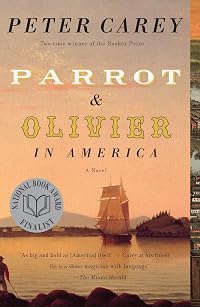
Parrot and Olivier in America
by Peter Carey
On This Page
Description
Parrot and Olivier in America has been shortlisted for the 2010 Man Booker Prize.From the two-time Booker Prize–winning author comes an irrepressibly funny new novel set in early nineteenth-century America.
Olivier—an improvisation on the life of Alexis de Tocqueville—is the traumatized child of aristocratic survivors of the French Revolution. Parrot is the motherless son of an itinerant English printer. They are born on different sides of history, but their lives will be connected by show more an enigmatic one-armed marquis.
When Olivier sets sail for the nascent United States—ostensibly to make a study of the penal system, but more precisely to save his neck from one more revolution—Parrot will be there, too: as spy for the marquis, and as protector, foe, and foil for Olivier.
As the narrative shifts between the perspectives of Parrot and Olivier, between their picaresque adventures apart and together—in love and politics, prisons and finance, homelands and brave new lands—a most unlikely friendship begins to take hold. And with their story, Peter Carey explores the experiment of American democracy with dazzling inventiveness and with all the richness and surprise of characterization, imagery, and language that we have come to expect from this superlative writer.
From the Hardcover edition.. show less
Tags
Recommendations











Member Recommendations
Member Reviews
I liked this very much. It's a slow read, which suits me as a slow reader—but not a draggy or boring one at all. There are a lot of layers here underneath Carey's extravagant language: political, psychological, historical. It's not very plot-driven, but rather all atmosphere and early 19th-century mores. Actually I think the political component was my favorite, as it drove everything else along neatly without being didactic.
Not sure if it would have helped to have read de Tocqueville first—he's the basis for Olivier, and this is the imagined story of his writings on America—but it's to Carey's credit that I didn't feel too strongly that I was missing something because I haven't. Even more so, now I'm interested in taking a look show more at the real thing, having been softened up by this very deliciously detailed scenario. Just fun reading all the way through, worth taking the time for and cogitating on a bit as I went along, and I don't begrudge it the book the time it took one bit.
Time to dust off my abandoned bedside copy of Simon Schama's [book: Citizens|20917785] and get back to my reading about the French Revolution. show less
Not sure if it would have helped to have read de Tocqueville first—he's the basis for Olivier, and this is the imagined story of his writings on America—but it's to Carey's credit that I didn't feel too strongly that I was missing something because I haven't. Even more so, now I'm interested in taking a look show more at the real thing, having been softened up by this very deliciously detailed scenario. Just fun reading all the way through, worth taking the time for and cogitating on a bit as I went along, and I don't begrudge it the book the time it took one bit.
Time to dust off my abandoned bedside copy of Simon Schama's [book: Citizens|20917785] and get back to my reading about the French Revolution. show less
Parrot and Olivier are a bit like The Prince and The Pauper: one born into crippling poverty and the other surrounded by more money than he can possibly imagine.
I did say " a bit", so the similarity between the two stories ends here.
The reader meets both when they are children, living very different lives. Parrot is English and Olivier de Garmont is French aristocracy (though deposed for the moment). The story then stops abruptly and we rejoin both when they are adults.
They are thrown together by those who surround them and come together with no liking or sympathy for each other. Parrot's story is revealed to us in interrupted chunks and we fill in the gaps of his turbulent life. We also quickly catch up with Olivier's life, which is show more not free of adventures.
I really enjoyed Peter Carey's description of an early America, the early years of that country with their republican and democratic zeal. I loved the vivid descriptions of the people and their behaviour, as well as, the soul he breathed into both Parrot and Olivier. As someone else said in their review on Goodreads, if you can get beyond the first chapter, the story becomes a fascinating tale.
I've had de Tocqueville's Democracy in America on my shelf for 3 years now and have wanted to read it for probably 10 more years. The study of America in its infancy is one that keeps me fascinated, but I haven't yet made a dent in the rather large tome which sits in the non-fiction section of my shelves. Peter Carey lists a few more books on the life of Alexis de Tocqueville in the back of Parrot and Olivier, which means that I've now added those to my wishlist.
Parrot and Olivier teased me from the library bookshelves for weeks before I finally borrowed it. Faced with a mountain of books to read in my house, but curious and always willing to explore and borrow more, I took the plunge for Kimbofo's Australian Literature Month (http://kimbofo.typepad.com/readingmatters/australian-literature-month-2013.html). I'm glad I did.
My only complaint comes from the interrupted nature of this book. Carey skips years ahead (which is ok) and then presents each man's viewpoint in alternating chapters (which is also ok). The stories had me so gripped, though, that I would often get to the end of Parrot's chapter and want to know what happened next, so I'd skip Olivier's chapter to find out. I'd then go back to Olivier, skip Parrot's chapter and then move onto the next Olivier chapter. It was a confusing way to read, but Carey's suspense at the end of many chapters tested my patience. In the end, I raced through the last 100 pages in one day, staying up way past my bedtime to finish this marvelous story. show less
I did say " a bit", so the similarity between the two stories ends here.
The reader meets both when they are children, living very different lives. Parrot is English and Olivier de Garmont is French aristocracy (though deposed for the moment). The story then stops abruptly and we rejoin both when they are adults.
They are thrown together by those who surround them and come together with no liking or sympathy for each other. Parrot's story is revealed to us in interrupted chunks and we fill in the gaps of his turbulent life. We also quickly catch up with Olivier's life, which is show more not free of adventures.
I really enjoyed Peter Carey's description of an early America, the early years of that country with their republican and democratic zeal. I loved the vivid descriptions of the people and their behaviour, as well as, the soul he breathed into both Parrot and Olivier. As someone else said in their review on Goodreads, if you can get beyond the first chapter, the story becomes a fascinating tale.
I've had de Tocqueville's Democracy in America on my shelf for 3 years now and have wanted to read it for probably 10 more years. The study of America in its infancy is one that keeps me fascinated, but I haven't yet made a dent in the rather large tome which sits in the non-fiction section of my shelves. Peter Carey lists a few more books on the life of Alexis de Tocqueville in the back of Parrot and Olivier, which means that I've now added those to my wishlist.
Parrot and Olivier teased me from the library bookshelves for weeks before I finally borrowed it. Faced with a mountain of books to read in my house, but curious and always willing to explore and borrow more, I took the plunge for Kimbofo's Australian Literature Month (http://kimbofo.typepad.com/readingmatters/australian-literature-month-2013.html). I'm glad I did.
My only complaint comes from the interrupted nature of this book. Carey skips years ahead (which is ok) and then presents each man's viewpoint in alternating chapters (which is also ok). The stories had me so gripped, though, that I would often get to the end of Parrot's chapter and want to know what happened next, so I'd skip Olivier's chapter to find out. I'd then go back to Olivier, skip Parrot's chapter and then move onto the next Olivier chapter. It was a confusing way to read, but Carey's suspense at the end of many chapters tested my patience. In the end, I raced through the last 100 pages in one day, staying up way past my bedtime to finish this marvelous story. show less
Parrot and Olivier in America (Knopf, 2010) is Peter Carey's fictional re-imagining of Alexis de Tocqueville's journey to America (the result of which was of course his famous Democracy in America). Carey's Tocqueville is recast as the sickly and tetchy Olivier de Garmont, but instead of his fellow aristocrat Gustave de Beaumont for a travelling companion, Garmont is granted John Larrit (aka Parrot), a cantankerous Englishman nearly 50 years old who provides both the comic relief and the narrative foundation of the novel.
Told in alternating chapters narrated by Parrot and Olivier, Carey manages to tease out each character's history (Olivier's as a coddled child of nobles during the aftermath of the French Revolution; Parrot's as a young show more printer's devil caught up in a forgery scandal and brought under the power of the mysterious Marquis de Tilbot). This early exposition takes up a quite a chunk of the novel - it's not until 100 pages in that our heroes even find themselves on board ship for America (Olivier to tour the prisons of the United States, Parrot assigned by Tilbot to keep a watchful eye on the young man while serving as his secretary). Parrot's story, at least, makes for fascinating reading, and as they set off across the Atlantic it's clear that he's got a major part to play (and some more secrets to share).
Carey handles the shifting perspectives well, and captured the two separate narrative voices expertly. Parrot's frustration(s) at his charge (who he quickly deems "Lord Migraine") are comical and understandable, while Olivier's fumings at his situation and his musings about all things American foreshadow his ultimate interest in a much wider range of cultural topics than how prisoners are treated.
Once the dynamic duo disembark in New York their relationship begins to morph into something very different from its French form, as they begin their travels around America to examine prisons and learn about the grand new experiment, the United States. Various adventures ensue, sometimes including both Olivier and Parrot, sometimes just one of the two - these mostly make for interesting reading, although a strange subplot involving characters from Parrot's early printing days strained credulity a bit.
Carey's writing is rich and lovely: I loved his description of a Philadelphia library and his descriptions of a New England town meeting and a Fourth of July celebration through the eyes of Olivier. I enjoyed his characters (and for their faults, liked each of them), and although I found a few of his tangents a bit disorienting, this is a book that I will recommend without reservation.
http://philobiblos.blogspot.com/2010/09/book-review-parrot-and-olivier-in.html show less
Told in alternating chapters narrated by Parrot and Olivier, Carey manages to tease out each character's history (Olivier's as a coddled child of nobles during the aftermath of the French Revolution; Parrot's as a young show more printer's devil caught up in a forgery scandal and brought under the power of the mysterious Marquis de Tilbot). This early exposition takes up a quite a chunk of the novel - it's not until 100 pages in that our heroes even find themselves on board ship for America (Olivier to tour the prisons of the United States, Parrot assigned by Tilbot to keep a watchful eye on the young man while serving as his secretary). Parrot's story, at least, makes for fascinating reading, and as they set off across the Atlantic it's clear that he's got a major part to play (and some more secrets to share).
Carey handles the shifting perspectives well, and captured the two separate narrative voices expertly. Parrot's frustration(s) at his charge (who he quickly deems "Lord Migraine") are comical and understandable, while Olivier's fumings at his situation and his musings about all things American foreshadow his ultimate interest in a much wider range of cultural topics than how prisoners are treated.
Once the dynamic duo disembark in New York their relationship begins to morph into something very different from its French form, as they begin their travels around America to examine prisons and learn about the grand new experiment, the United States. Various adventures ensue, sometimes including both Olivier and Parrot, sometimes just one of the two - these mostly make for interesting reading, although a strange subplot involving characters from Parrot's early printing days strained credulity a bit.
Carey's writing is rich and lovely: I loved his description of a Philadelphia library and his descriptions of a New England town meeting and a Fourth of July celebration through the eyes of Olivier. I enjoyed his characters (and for their faults, liked each of them), and although I found a few of his tangents a bit disorienting, this is a book that I will recommend without reservation.
http://philobiblos.blogspot.com/2010/09/book-review-parrot-and-olivier-in.html show less
Peter Carey's Parrot and Olivier in America was marketed as a comic novel based on the adventures of Alexis de Tocqueville, but it is something of a deliberate fraud on both counts. Olivier de Garmont certainly bears some resemblance to Tocqueville, but it quickly becomes clear that comparing them too carefully is a red herring. Olivier's story must be considered as an entity by itself, inhabiting a sort of parallel universe to Tocqueville's rather than a direct retelling (which makes sense: otherwise, why not just name the character Tocqueville?). Similarly, I was a little disappointed to find that, while Carey's writing is shot through with his usual sense of irony, Parrot and Olivier in America is not really a comic novel. Sure, show more there are moments when it sets out to satirize the past, especially the development of American democracy, in various ways, but it lacks any sort of laugh-out-loud passages that characterize the comic genre. You'll smile, but you won't laugh.
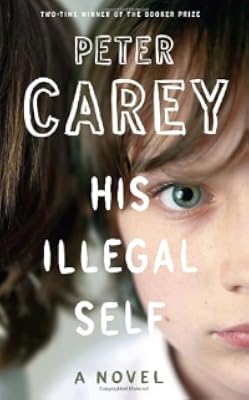
It took me a long time to warm to this book. In fact, I read it twice, several months apart, before I could decide that I actually liked it. Part of the problem came from my expectations that it *would* be a humorous novel, and I felt let down by the fact that it wasn't funny the first time through. Carey, however, is a complex novelist, and it took that second reading for me to see the deeper intricacies of what he was trying to do. If you've read some of Carey's other recent books, such as My Life as a Fake or His Illegal Self, you'll notice a recurring interest in two overlapping themes: the constructed nature of the self, and the possibilities for inauthenticity that arise from this condition. As such, Parrot and Olivier in America repeatedly deploys the intertwining notions of copying and the counterfeit, from the fake money manufactured by Parrot's father to the carbon paper that Parrot uses to duplicate Olivier's letters. Underneath this repeated symbolism is a political critique grounded in the thesis that the origins of democracy have themselves been counterfeited, allowing the political apparatus to be delivered into the hands of a new ruling class that uses a rhetoric of freedom and equality to cover up its own inherent injustices.
Although Carey delivers this message with deft subtlety, it is not hard to see why, for most readers, such a conclusion is going to touch a sore spot. It is a view that implicitly challenges some of the most basic assumptions about not only who we are as a society, but also certain cherished enlightenment ideas, particularly the notion that human beings naturally and instinctively desire freedom, one of the key foundations of democracy. Still, Carey's assessment is not grounded in a blind anti-Americanism: like his characters, like Tocqueville, he has seen America for himself (Carey teaches creative writing at New York's Hunter College), and this meticulously researched novel challenges the reader to reject the evasions and deceptions of democracy's birth from an empirical position rather than from mere cultural prejudice.
Parrot and Olivier in America is perhaps not Carey's best book, but it is a fine political novel of ideas that rewards patience and close attention. show less
It took me a long time to warm to this book. In fact, I read it twice, several months apart, before I could decide that I actually liked it. Part of the problem came from my expectations that it *would* be a humorous novel, and I felt let down by the fact that it wasn't funny the first time through. Carey, however, is a complex novelist, and it took that second reading for me to see the deeper intricacies of what he was trying to do. If you've read some of Carey's other recent books, such as My Life as a Fake or His Illegal Self, you'll notice a recurring interest in two overlapping themes: the constructed nature of the self, and the possibilities for inauthenticity that arise from this condition. As such, Parrot and Olivier in America repeatedly deploys the intertwining notions of copying and the counterfeit, from the fake money manufactured by Parrot's father to the carbon paper that Parrot uses to duplicate Olivier's letters. Underneath this repeated symbolism is a political critique grounded in the thesis that the origins of democracy have themselves been counterfeited, allowing the political apparatus to be delivered into the hands of a new ruling class that uses a rhetoric of freedom and equality to cover up its own inherent injustices.
Although Carey delivers this message with deft subtlety, it is not hard to see why, for most readers, such a conclusion is going to touch a sore spot. It is a view that implicitly challenges some of the most basic assumptions about not only who we are as a society, but also certain cherished enlightenment ideas, particularly the notion that human beings naturally and instinctively desire freedom, one of the key foundations of democracy. Still, Carey's assessment is not grounded in a blind anti-Americanism: like his characters, like Tocqueville, he has seen America for himself (Carey teaches creative writing at New York's Hunter College), and this meticulously researched novel challenges the reader to reject the evasions and deceptions of democracy's birth from an empirical position rather than from mere cultural prejudice.
Parrot and Olivier in America is perhaps not Carey's best book, but it is a fine political novel of ideas that rewards patience and close attention. show less
Please muddle through the first 100 pages of background material in this book, for after this the story literally takes off when the two unlikely companions are thrown together on an outlandish trans-Atlantic voyage. Olivier de Garmont was a young aristocrat in danger of imprisonment for being a traitor in post-revolutionary France. In order to get him out of the country, his parents arranged for him to travel to American to report on the prison system. Parrot (John Larrit) was an older and supposedly wiser English commoner who had street smarts, a checkered past, and a history with the one-armed Marquis who was the friend of Olivier’s protective mother. His services were unwillingly engaged to become Olivier’s personal secretary. show more It is so much fun to read about these two polar opposites living together in close quarters. The “icy master” is appalled by the servant who mocks him and is surreptitiously sending copies of all dictation back to Olivier’s mother in France through the wonder of carbon paper.
Each of the men in their own mind has decided to go their own way when they reach America, but the reality is that they will be tied together during this venture because they are co-signatories on the checking account that is their only means of support. It is fascinating to see early 19th century America through the eyes of two very different men.
Parrot: “It was such a pretty country -- luscious bays cut into the slopes which were covered by lawns, a great variety of ornamental trees growing right down to the water, and so many large houses… They looked like big boxes of chocolate, and from the windows the owners at their leisure could admire the brigs, gondolas, and boats of all sizes crossing in every direction.” (Pg. 140)
Olivier: “…I made out New York -- a great deal of bright yellow sappy wood, a vast pile of bricks, a provincial town in the process of being built or broken.” (Pg. 145). During the course of his interviews and observations, Olivier determines that Americans are obsessed with trade and money, lacking in artistic and musical talent, and they eat too much ham!
Peter Carey has written an extremely witty account of these disparate foreigners traversing America trying to make sense of people who can’t sit still because they are constantly trying to improve their lot in life. They slowly form a strange symbiotic friendship as they have shared adventures, surprises at every turn, and even a little romance with beautiful women. But the biggest surprise was to this reader who didn’t expect a study of the 1830’s in America to be such a light-hearted romp. This was my first book by Peter Carey, but it won't be my last. show less
Each of the men in their own mind has decided to go their own way when they reach America, but the reality is that they will be tied together during this venture because they are co-signatories on the checking account that is their only means of support. It is fascinating to see early 19th century America through the eyes of two very different men.
Parrot: “It was such a pretty country -- luscious bays cut into the slopes which were covered by lawns, a great variety of ornamental trees growing right down to the water, and so many large houses… They looked like big boxes of chocolate, and from the windows the owners at their leisure could admire the brigs, gondolas, and boats of all sizes crossing in every direction.” (Pg. 140)
Olivier: “…I made out New York -- a great deal of bright yellow sappy wood, a vast pile of bricks, a provincial town in the process of being built or broken.” (Pg. 145). During the course of his interviews and observations, Olivier determines that Americans are obsessed with trade and money, lacking in artistic and musical talent, and they eat too much ham!
Peter Carey has written an extremely witty account of these disparate foreigners traversing America trying to make sense of people who can’t sit still because they are constantly trying to improve their lot in life. They slowly form a strange symbiotic friendship as they have shared adventures, surprises at every turn, and even a little romance with beautiful women. But the biggest surprise was to this reader who didn’t expect a study of the 1830’s in America to be such a light-hearted romp. This was my first book by Peter Carey, but it won't be my last. show less
Sometimes I feel like I'm just not smart enough to read Peter Carey's novels. I always run across words I've never seen before, foreign terms, and such subtlety that I miss the point. In spite of that, however, I'm always enthralled with his writings and this novel doesn't disappoint. Mr. Carey's depiction of two very different characters tells a lot about how childhood does shape a person, and in this telling, shows how a nation is shaped by the people that create it or "recreate" it in the case of rebellion.
In short, very unique characters, interesting plot, but way too many foreign phrases that I just didn't understand. This is not an easy read, but one worth pursuing.
In short, very unique characters, interesting plot, but way too many foreign phrases that I just didn't understand. This is not an easy read, but one worth pursuing.
Peter Carey's writing in this book is brilliant, especially his alternating pair of highly unreliable narrators. Much of the story is fascinating and the observations thought provoking. But in the end the fact that I didn't find myself really caring about any of the characters was a real minus.
The book tells a highly fictionalized account of Tocqueville's travels to America, with an even more fictionalized English servant who accompanies him to spy on him but then takes more to the American style and tries to express himself as an artist.
The cast of ancillary characters in this picaresque tale is just as good and you have to read the novel to appreciate that they cannot be reduced to their simple descriptors of English forgers, a French show more spy, a French courtesan/artist, a dishonest American capitalist, and the closest thing to the bourgeoisie offered by New England.
But when the hero's mother is using ruses to try to break up his imminent marriage to an American girl and you find that you don't much care one way or the other if she succeeds, you know that a book is falling short of perfection -- and well short of the Dickens' novels to which Carey is too often compared. show less
The book tells a highly fictionalized account of Tocqueville's travels to America, with an even more fictionalized English servant who accompanies him to spy on him but then takes more to the American style and tries to express himself as an artist.
The cast of ancillary characters in this picaresque tale is just as good and you have to read the novel to appreciate that they cannot be reduced to their simple descriptors of English forgers, a French show more spy, a French courtesan/artist, a dishonest American capitalist, and the closest thing to the bourgeoisie offered by New England.
But when the hero's mother is using ruses to try to break up his imminent marriage to an American girl and you find that you don't much care one way or the other if she succeeds, you know that a book is falling short of perfection -- and well short of the Dickens' novels to which Carey is too often compared. show less
Members
- Recently Added By
Published Reviews
ThingScore 75
"There are engaging, funny scenes throughout this picaresque tale, but the travelogue grows rickety and stalls too often."
added by bookfitz
"Quirky and erudite, but the payoff in human-interest terms is meager."
added by bookfitz
"But this conclusion in no way dampens this dashing novel – for it is in the testing of assumptions, in Garmont and Parrot's challenging of each other, that its beauty and intelligence lies."
added by bookfitz
Lists

Booker Prize
491 works; 62 members

Historical Fiction
889 works; 91 members

Man Booker Prize Longlist 2010
12 works; 2 members

Fiction Set During a Revolution
55 works; 24 members
Animals in the Title
498 works; 11 members

Booker Prize Shortlist: Titles Not Yet Read
161 works; 4 members

Novels of Great Adventures
34 works; 6 members
National Book Award Finalists - Fiction
377 works; 12 members

Global Reads: Books Set in Western Europe
186 works; 10 members

Fiction with Men's Given Names in the Title
302 works; 11 members
Author Information

42+ Works 24,726 Members
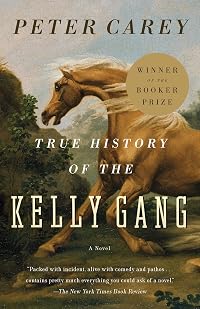
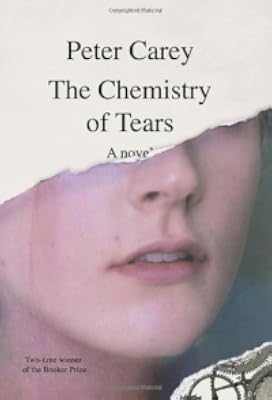
Peter Carey was born on May 7, 1943 in Bacchus Marsh, Victoria, Australia. His first two books, The Fat Man in History (1974) and War Crimes (1979), were short story collections. His first novel, Bliss, was published in 1982. At the time he was balancing his writing career with the operation of an advertising agency in Sydney, and his books were show more not generally known outside of Australia. He began to receive international attention when Illywhacker was published in 1985. He won the Booker Prize in 1988 for Oscar and Lucinda and in 2001 for True History of the Kelly Gang. His other works include The Tax Inspector, Parrot and Olivier in America, and The Chemistry of Tears. He also won the Miles Franklin Award three times. In 2015 he made the Australian Book Designers Association Award shortlist for his title Amnesia. This title also made the 2015 Prime Minister's Literary Awards shortlist. (Bowker Author Biography) show less
Some Editions
Awards and Honors
Awards
Distinctions
Common Knowledge
- Canonical title*
- Parrot en Olivier in Amerika
- Original title
- Parrot and Olivier in America
- Original publication date
- 2009
- People/Characters
- Olivier de Garmont; John Larritt; Alexis de Tocqueville
- Important places
- France; England, UK; Australia; New York, New York, USA
- Important events
- The July Revolution (1830)
- Epigraph
- 'Can it be believed that the democracy which has overthrown the feudal system and vanquished kings will retreat before tradesmen and capitalists?'
'It is not good to announce every truth.'
Alexis De Tocqueville - Dedication
- For Frances Coady
- First words
- I had no doubt that something cruel and catastrophic had happened before I was even born, yet the comte and comtesse, my parents, would not tell me what it was.
- Last words
- (Click to show. Warning: May contain spoilers.)I mean that all these words, these blemishes and tears, this darkness, this unreliable history - althought written pretty much as well as could be done in London - was cobbled together by me, jumped-up John Larrit, at Harlem Heights, and given to our compositor on May 10, 1837.
- Blurbers
- Auster, Paul; Seaman, Donna; White, Edmund; Sleigh, Tom
- Original language
- English
*Some information comes from Common Knowledge in other languages. Click "Edit" for more information.
Classifications
- Genres
- General Fiction, Fiction and Literature, Historical Fiction
- DDC/MDS
- 823.914 — Literature & rhetoric English & Old English literatures English fiction 1900- 1901-1999 1945-1999
- LCC
- PR9619.3 .C36 .P37 — Language and Literature English English Literature English literature: Provincial, local, etc.
- BISAC
Statistics
- Members
- 1,869
- Popularity
- 11,521
- Reviews
- 71
- Rating
- (3.49)
- Languages
- 9 — Chinese, Dutch, English, French, German, Italian, Portuguese, Spanish, Turkish
- Media
- Paper, Audiobook, Ebook
- ISBNs
- 57
- ASINs
- 19