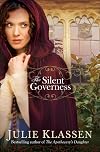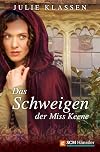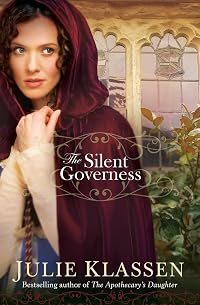
The Silent Governess
by Julie Klassen
On This Page
Description
Fiction. Historical Fiction. A dangerous secret...an overheard conversation...and a woman who is not what she seems. Will hidden pasts ruin their hope of finding love?Tags
Recommendations





Member Recommendations

Member Reviews
Olivia Keene is forced to flee her home and finds herself in dire circumstances, without home or family (she believes). Edward Brightwell has a secret which Olivia has discovered. So, Edward hires her as under nurse to his nephew and his sister's adopted children. Thus he keeps her close so she can't reveal his secret.
I love the world Klassen created and the way she incoporated rich details of 18th century English social structures. She even includes quotes from various sources on how a household should be run and what rules a proper governess should follow. Klassen's characters are very well-devoloped. Even the minor players in the story spring from the pages. It felt like I was strolling the grounds of this family home and watching show more through the windows, observing their life and getting swept up in the color and intrigue that comes about. Klassen did an amazing job tying up a myriad different plot threads to write a very satisfying end to this impossible-to-stop-reading story. I do believe I've found a new author to explore. show less
I love the world Klassen created and the way she incoporated rich details of 18th century English social structures. She even includes quotes from various sources on how a household should be run and what rules a proper governess should follow. Klassen's characters are very well-devoloped. Even the minor players in the story spring from the pages. It felt like I was strolling the grounds of this family home and watching show more through the windows, observing their life and getting swept up in the color and intrigue that comes about. Klassen did an amazing job tying up a myriad different plot threads to write a very satisfying end to this impossible-to-stop-reading story. I do believe I've found a new author to explore. show less
I received an ARC copy of Julie Klassen's The Silent Governess through the LibraryThing Early Reviewer program. The book was published in January. This review is based on an unedited galley proof.
Every month I browse through the LT review books and select anything that sounds interesting. The Silent Governess captured my attention because it was described as a cross between Jane Austen and Jane Eyre, so that was enough to pique my curiosity. I did not know at the time that it was published as Christian fiction, which may have skewed my perception and made me turn away; however, I am glad that I was unaware of this because the novel was a delightful surprise and not at all the moralistic treatise that my personal prejudice would have led show more me to expect.
***spoiler alert***
Miss Olivia Keene, schoolteacher, faithful daughter, and mathematical genius, has but one ambition--to open a school for girls, until she becomes tangled in a series of events that will make her question her very identity and change her life forever.
When Olivia witnesses a man attacking her mother, she rushes to her aid. Thinking only of saving her dear mother's life, Olivia strikes the man with a fire-iron and sees him drop to the ground, wounded and unconcious. Certain that she has murdered him, she flees at her mother's urging, seeking shelter in the woods and planning to travel to St. Aldwyn's School for Girls, where she hopes to find shelter and a situation. But one complication inevitably leads to another and Olivia encounters a group of poachers in the woods and comes under attack herself before a grizzled, haggard man named Croome secures her escape.
With nowhere to turn, Olivia wanders into the town of Arlington and makes the acquaintance of the local vicar, who offers to assist her and help her on her way. After a run-in with the local earl, Lord Bradley of Brightwell Court, Olivia becomes curious and decides to take a look at Brightwell Court. It is just her luck that she happens to overhear a conversation that can destroy Lord Bradley's position as an earl and his future as a peer. Caught by the manor's gamekeeper, Olivia is imprisoned in the local gaol in a cell with one of the poachers that threatened her during her journey through the woods. When the poacher tries to strangle her, Olivia is saved just in time, but temporarily loses her voice as a consequence. Not trusting her to keep his dreadful secret, Lord Bradley takes her into his home and assigns her a position in the nursery, looking after his two young step-cousins. Olivia's strength and integrity, and her innate generosity make her a favorite among the members of the household, but when her voice returns, Lord Bradley refuses to believe she will not divulge his secret and ensures that she will stay on as a governess.
No longer a member of the staff, Olivia's position places her above the other servants, but beneath the family. It is a lonely life that she leads as a governess, until she unexpectedly finds a friend in Lord Bradley, who comes to view her in a new light when he learns that Olivia also has secrets she would rather keep.
---
A touch of romance and mystery lend suspense to the tale in a way that would make the Brontes proud, while the manners and setting are Austenian indeed. The plot is fast-paced and the characters genuine. I was afraid that Olivia would be a self-effacing, highly moral miss (Christian fiction, silent governess... my prejudice again), but she was smart and daring, and defended her honor with untiring grace. Lord Bradley's admiration for Olivia evolved naturally, and the bond between them emerged in a manner similar to Jane and Mr. Rochester's, a pair of flawed equals. The mystery subplot was engaging and kept me guessing throughout, while the glimpse of life in a country house added to the idea that Olivia and Lord Bradley were part of a community filled with individuals, each of whom had their own story to tell.
Olivia's experience of life as a governess reminded me of the series "Berkeley Square," and the epigraphs at the head of each chapter (quoted from documents and texts concerning the lives of governesses) were particularly insightful. Overall, a great read for any Regency fan.
Gricel @ things-she-read.org show less
Every month I browse through the LT review books and select anything that sounds interesting. The Silent Governess captured my attention because it was described as a cross between Jane Austen and Jane Eyre, so that was enough to pique my curiosity. I did not know at the time that it was published as Christian fiction, which may have skewed my perception and made me turn away; however, I am glad that I was unaware of this because the novel was a delightful surprise and not at all the moralistic treatise that my personal prejudice would have led show more me to expect.
***spoiler alert***
Miss Olivia Keene, schoolteacher, faithful daughter, and mathematical genius, has but one ambition--to open a school for girls, until she becomes tangled in a series of events that will make her question her very identity and change her life forever.
When Olivia witnesses a man attacking her mother, she rushes to her aid. Thinking only of saving her dear mother's life, Olivia strikes the man with a fire-iron and sees him drop to the ground, wounded and unconcious. Certain that she has murdered him, she flees at her mother's urging, seeking shelter in the woods and planning to travel to St. Aldwyn's School for Girls, where she hopes to find shelter and a situation. But one complication inevitably leads to another and Olivia encounters a group of poachers in the woods and comes under attack herself before a grizzled, haggard man named Croome secures her escape.
With nowhere to turn, Olivia wanders into the town of Arlington and makes the acquaintance of the local vicar, who offers to assist her and help her on her way. After a run-in with the local earl, Lord Bradley of Brightwell Court, Olivia becomes curious and decides to take a look at Brightwell Court. It is just her luck that she happens to overhear a conversation that can destroy Lord Bradley's position as an earl and his future as a peer. Caught by the manor's gamekeeper, Olivia is imprisoned in the local gaol in a cell with one of the poachers that threatened her during her journey through the woods. When the poacher tries to strangle her, Olivia is saved just in time, but temporarily loses her voice as a consequence. Not trusting her to keep his dreadful secret, Lord Bradley takes her into his home and assigns her a position in the nursery, looking after his two young step-cousins. Olivia's strength and integrity, and her innate generosity make her a favorite among the members of the household, but when her voice returns, Lord Bradley refuses to believe she will not divulge his secret and ensures that she will stay on as a governess.
No longer a member of the staff, Olivia's position places her above the other servants, but beneath the family. It is a lonely life that she leads as a governess, until she unexpectedly finds a friend in Lord Bradley, who comes to view her in a new light when he learns that Olivia also has secrets she would rather keep.
---
A touch of romance and mystery lend suspense to the tale in a way that would make the Brontes proud, while the manners and setting are Austenian indeed. The plot is fast-paced and the characters genuine. I was afraid that Olivia would be a self-effacing, highly moral miss (Christian fiction, silent governess... my prejudice again), but she was smart and daring, and defended her honor with untiring grace. Lord Bradley's admiration for Olivia evolved naturally, and the bond between them emerged in a manner similar to Jane and Mr. Rochester's, a pair of flawed equals. The mystery subplot was engaging and kept me guessing throughout, while the glimpse of life in a country house added to the idea that Olivia and Lord Bradley were part of a community filled with individuals, each of whom had their own story to tell.
Olivia's experience of life as a governess reminded me of the series "Berkeley Square," and the epigraphs at the head of each chapter (quoted from documents and texts concerning the lives of governesses) were particularly insightful. Overall, a great read for any Regency fan.
Gricel @ things-she-read.org show less
 This review was written for LibraryThing Early Reviewers.
Even though this book was a bit longer than I am generally used to, I didn't notice the length as the chapters were quite manageable and the plot had me guessing and speculating over what would happen next. The book reminded me of Jane Eyre, which I still have yet to finish, but with more modern language. I found it interesting how well the Christian elements were woven into the plot - dare I use the word tastefully. I've read books in which the use of Christian influence feels stilted and awkward, almost as if it were added in as an afterthought to appeal to a certain audience. This does not feel that way, this feels genuine and sincere, such as when Olivia does not feel she is following the path God wants for her and her father's show more remorse over his alcoholism. All of the characters were well-defined and the loose ends of each of their subplots were resolved by the end of the text very satisfactorily. I also found the "silent" theme entertaining in how it played a part throughout the text, and the various ways that it popped up, whether for humor or for a more serious note. While I likely would not have selected this text for my reading pleasure if it were not offered to me to review, I am glad that I was given the opportunity to read it, as I thoroughly enjoyed the time I spent within its pages. show less
Well, here's the good news; after the first dozen or so chapters I was interested in the story and happy to read to the end. Was I diverted? Yes. Was I deeply involved or moved? No. This is a good-hearted fireside tale, and I'm sure it will be enjoyed by many.
Now that I've been even-handed and fair, please let me continue to its minor flaws. This book is preposterous, uses some overfamiliar tricks, is not entirely true to its period, and downright loopy when it comes to the ending. None of these stop it from being a good read, but you'll forgive me if I get more specific.
Preposterous:
1. Once our heroine, the shabby-genteel Miss Olivia Keene, hears Edward's Big Secret, why does he install her in his house as a nurserymaid? What the hell show more is his plan? Why not buy her a coach ticket to Bath, slip twenty pounds into her purse, and tell her never to show her face again? Why does he give this suspicious character the care of his improbably pleasant and lovely little cousins? Oh, so he can fall in love with her. Right.
2. Why does she put up with being held captive in his house and being forced to feign muteness? Why does she persist in this charade when she keeps on talking in her sleep? Why doesn't she write home and find out what happened after the violent scene that cast her out? Oh. Because she has to stay around and fall in love with Edward. Right.
3. Two encounters with wild dogs. Two?
Familiar:
1. A rival for Edward's love torn right from the pages of Jane Eyre.
2. Everyone falls in love with Olivia's meek, pretty, motherly ways, from the lowest scullery maid to the Earl himself. They all sit around her sickbed after a wild dog attack, fretting and realizing how much they have come to care for the sweet, pretty thing.
3. Edward's sneering, haughty, distrustful ways, which only hide his growing fascination with Olivia.
4. Rough, sexually threatening poachers; rough, sexually insistent groom; caddish, sexually insistent worthless cousin. They all pop up at frequent intervals, mostly so Olivia can be caught unwilling in their arms and then be sneered at distrustfully by Edward.
I do give Olivia some points for bopping one of them in the eye. The author's later attempts to redeem one of them is in period (oh, all men do that, it doesn't mean anything), but feels like a bit of a cop-out if one takes the modern view that a man who gropes an unwilling nurserymaid in a darkened corridor is not a man to befriend.
5. I'm not sure how common this is in romance novels, but I saw the hero's secret humble hobby coming a mile away, possibly because it reminded me of Moning's Beyond the Highland Mist. Why do all these sons of a hundred earls sneak off to the carpentry shed as soon as no-one's looking? Highland warrior-lord or English nobility, apparently all old-fashioned aristocrats just loved to spend an afternoon making wooden toys for the kids, just like any suburban dad.
Period Problems
While the period of the setting wasn't made clear, the comparisons to Austen and the characters' clothing suggest that it's set in the earlier part of the 1800s. How much anachronisms bother you really depends on how picky you are and how much you know about the period - so, a big deal for some, not a problem for others. There was nothing really weird, but here are a few things that stuck out for me.
1. the hero's desire to be a good, affectionate father figure, involved in his cousin's lives. Not impossible in that period, but worthy of comment.
2. the "good" characters' transgressions of social rank, especially the easy emotional intimacy between people of different ranks. The young lord casually volunteering to drive the governess to the county market? I doubt it.
3. the waltzing scene - the waltz was considered borderline pornographic when it first came out, and was still risqué in the 1820s. I'm not sure a proper governess would teach it to her students, let alone dance it with her employer.
4. the oddly progressive behaviour, like an employer keeping on a pregnant & married servant, a gentleman allowing his wife to work outside the home, and an employer allowing a servant to attend school.
Loopy ending
Oh my. Bassinet-swapping all over the place. I began to wonder if anyone was raised with the right last name. I know that Big Revelations regarding one's True Lineage are characteristic of Victorian melodrama (though not as characteristic of Regency novels), but I thought they were telegraphed too early, one even before page 70. I am plot-twist impaired, so if I'm getting it, you probably will.
The ending was bizarrely happy. I think she's going for a Jane Eyre-ish "reader, I married him," but there are so many miraculous reconciliations, reformations, accommodations between enemies, new babies, softenings of old grudges and... and.... I just couldn't quite take it all in. All the good people were rewarded and the bad people... went away.
After all that, it was still readable, and there were some things I genuinely liked; Edward's journey from Regency lordling to middle-class dad; Bob the pet pheasant; Olivia's commitment to her own ambitions; the subtlety of the religious theme.
Really, the romance itself didn't end up feeling like the main plotline to me. The unravelling of the various plots and schemes and the discovery of all the to-ing and fro-ing of twenty years before held more of my interest than the rather bland attachment between the hero and heroine. If I reread this, it will be for the supporting characters and the gentle but engaging pace. show less
Now that I've been even-handed and fair, please let me continue to its minor flaws. This book is preposterous, uses some overfamiliar tricks, is not entirely true to its period, and downright loopy when it comes to the ending. None of these stop it from being a good read, but you'll forgive me if I get more specific.
Preposterous:
1. Once our heroine, the shabby-genteel Miss Olivia Keene, hears Edward's Big Secret, why does he install her in his house as a nurserymaid? What the hell show more is his plan? Why not buy her a coach ticket to Bath, slip twenty pounds into her purse, and tell her never to show her face again? Why does he give this suspicious character the care of his improbably pleasant and lovely little cousins? Oh, so he can fall in love with her. Right.
2. Why does she put up with being held captive in his house and being forced to feign muteness? Why does she persist in this charade when she keeps on talking in her sleep? Why doesn't she write home and find out what happened after the violent scene that cast her out? Oh. Because she has to stay around and fall in love with Edward. Right.
3. Two encounters with wild dogs. Two?
Familiar:
1. A rival for Edward's love torn right from the pages of Jane Eyre.
2. Everyone falls in love with Olivia's meek, pretty, motherly ways, from the lowest scullery maid to the Earl himself. They all sit around her sickbed after a wild dog attack, fretting and realizing how much they have come to care for the sweet, pretty thing.
3. Edward's sneering, haughty, distrustful ways, which only hide his growing fascination with Olivia.
4. Rough, sexually threatening poachers; rough, sexually insistent groom; caddish, sexually insistent worthless cousin. They all pop up at frequent intervals, mostly so Olivia can be caught unwilling in their arms and then be sneered at distrustfully by Edward.
I do give Olivia some points for bopping one of them in the eye. The author's later attempts to redeem one of them is in period (oh, all men do that, it doesn't mean anything), but feels like a bit of a cop-out if one takes the modern view that a man who gropes an unwilling nurserymaid in a darkened corridor is not a man to befriend.
5. I'm not sure how common this is in romance novels, but I saw the hero's secret humble hobby coming a mile away, possibly because it reminded me of Moning's Beyond the Highland Mist. Why do all these sons of a hundred earls sneak off to the carpentry shed as soon as no-one's looking? Highland warrior-lord or English nobility, apparently all old-fashioned aristocrats just loved to spend an afternoon making wooden toys for the kids, just like any suburban dad.
Period Problems
While the period of the setting wasn't made clear, the comparisons to Austen and the characters' clothing suggest that it's set in the earlier part of the 1800s. How much anachronisms bother you really depends on how picky you are and how much you know about the period - so, a big deal for some, not a problem for others. There was nothing really weird, but here are a few things that stuck out for me.
1. the hero's desire to be a good, affectionate father figure, involved in his cousin's lives. Not impossible in that period, but worthy of comment.
2. the "good" characters' transgressions of social rank, especially the easy emotional intimacy between people of different ranks. The young lord casually volunteering to drive the governess to the county market? I doubt it.
3. the waltzing scene - the waltz was considered borderline pornographic when it first came out, and was still risqué in the 1820s. I'm not sure a proper governess would teach it to her students, let alone dance it with her employer.
4. the oddly progressive behaviour, like an employer keeping on a pregnant & married servant, a gentleman allowing his wife to work outside the home, and an employer allowing a servant to attend school.
Loopy ending
Oh my. Bassinet-swapping all over the place. I began to wonder if anyone was raised with the right last name. I know that Big Revelations regarding one's True Lineage are characteristic of Victorian melodrama (though not as characteristic of Regency novels), but I thought they were telegraphed too early, one even before page 70. I am plot-twist impaired, so if I'm getting it, you probably will.
The ending was bizarrely happy. I think she's going for a Jane Eyre-ish "reader, I married him," but there are so many miraculous reconciliations, reformations, accommodations between enemies, new babies, softenings of old grudges and... and.... I just couldn't quite take it all in. All the good people were rewarded and the bad people... went away.
After all that, it was still readable, and there were some things I genuinely liked; Edward's journey from Regency lordling to middle-class dad; Bob the pet pheasant; Olivia's commitment to her own ambitions; the subtlety of the religious theme.
Really, the romance itself didn't end up feeling like the main plotline to me. The unravelling of the various plots and schemes and the discovery of all the to-ing and fro-ing of twenty years before held more of my interest than the rather bland attachment between the hero and heroine. If I reread this, it will be for the supporting characters and the gentle but engaging pace. show less
This review was written for LibraryThing Early Reviewers.5 Stars 🤩! Mesmerizing Historical Fiction!
Oh, how I adored this historical fiction. I fell in love with the characters, the setting, and the overall arching theme of beauty coming out of darkness, second chances, and faith.
The Silent Governess by Julie Klassen is set in 19th-century England on an estate called Brightwell Court. Olivia Keene, through a various number of mishaps fleeing from danger in her hometown, becomes a governess burdened with a secret. It's impossible not to feel empathy for Olivia, who is smart, independent, and resilient in a world that often disregards such qualities in women. Her journey, is one of mystery, suspense, and heart. Lord Edward Bradley, presumed heir of Brightwell Court has hired Olivia on as show more governess for more than one reason. Their interactions are complex under his looming guise of suspicion.
The story has so many other secondary characters that make for a beautifully well-rounded read that you can’t help but get immersed in. You will not regret taking this journey with Olivia and Edward as they each discover truths about who they are, embrace second chances and find a happy ending. 💗 show less
Oh, how I adored this historical fiction. I fell in love with the characters, the setting, and the overall arching theme of beauty coming out of darkness, second chances, and faith.
The Silent Governess by Julie Klassen is set in 19th-century England on an estate called Brightwell Court. Olivia Keene, through a various number of mishaps fleeing from danger in her hometown, becomes a governess burdened with a secret. It's impossible not to feel empathy for Olivia, who is smart, independent, and resilient in a world that often disregards such qualities in women. Her journey, is one of mystery, suspense, and heart. Lord Edward Bradley, presumed heir of Brightwell Court has hired Olivia on as show more governess for more than one reason. Their interactions are complex under his looming guise of suspicion.
The story has so many other secondary characters that make for a beautifully well-rounded read that you can’t help but get immersed in. You will not regret taking this journey with Olivia and Edward as they each discover truths about who they are, embrace second chances and find a happy ending. 💗 show less
I have a love-hate relationship with Christian fiction. The stories are often interesting, some characters are surprisingly three-dimensional, and the genre is generally free from the preponderance of profanity and immorality found in many other categories of fiction. So I love Christian fiction because it generally won't corrupt. But it seems like every book follows the same pattern: boy meets girl; one or both are far from God; both have a crisis moment where they choose God; boy and girl finally can move forward in their relationship.
This book is no different. The story is well-told (though the pacing was maybe a little slow at times), and the characters are engaging. I was fully entertained the whole time, and the author's writing show more style wasn't the least bit distracting. She wrote a Regency story using "the king's English," but she uses it so handily that I wasn't often aware of sentence structure or word choice - that's hard to do in the Regency sub-genre! I appreciated the reality of many of the details, and how the author made certain social conventions come alive. She allowed things that would've been issues back then to remain issues in the novel - she didn't just do away with them for her convenience. They became part of the plot and served a real purpose (character development vs. "here's how much I researched," for instance).
I do have one criticism, and this is more a genre criticism than anything against this particular novel. Theology isn't central to the plot, really, so when it does come in, it's so incongruous that it seems like an after-thought. Like the story was written, and THEN it was picked up by a Christian publisher so the Gospel had to be thrown in right...HERE! Don't get me wrong: I don't have a problem with the Gospel. I believe the Gospel. I believe the Gospel should be a part of Christian story-telling. The issue is the mode and extent of inclusion. The essential idea is there - grace - but it's not fleshed out as it really should be to be effective. There's not enough of a spiritual element to the journey beforehand to make a character's new understanding of the grace of God at all life-changing. I know this is a novel, not a theological treatise, but whatever kind of text it is, the Gospel is never something we should leave muddy or include as an after-thought. The price He paid is too great; the purpose of His life and death is too important (Philippians 2:5-10).
THE SILENT GOVERNESS is a great read; I'm glad it's part of my library, and I do recommend it to you. Read it, be transported back a few centuries, be immersed in its world. Just don't try to use it as a witnessing tool. In that sense alone, the book does the reader no favors. show less
This book is no different. The story is well-told (though the pacing was maybe a little slow at times), and the characters are engaging. I was fully entertained the whole time, and the author's writing show more style wasn't the least bit distracting. She wrote a Regency story using "the king's English," but she uses it so handily that I wasn't often aware of sentence structure or word choice - that's hard to do in the Regency sub-genre! I appreciated the reality of many of the details, and how the author made certain social conventions come alive. She allowed things that would've been issues back then to remain issues in the novel - she didn't just do away with them for her convenience. They became part of the plot and served a real purpose (character development vs. "here's how much I researched," for instance).
I do have one criticism, and this is more a genre criticism than anything against this particular novel. Theology isn't central to the plot, really, so when it does come in, it's so incongruous that it seems like an after-thought. Like the story was written, and THEN it was picked up by a Christian publisher so the Gospel had to be thrown in right...HERE! Don't get me wrong: I don't have a problem with the Gospel. I believe the Gospel. I believe the Gospel should be a part of Christian story-telling. The issue is the mode and extent of inclusion. The essential idea is there - grace - but it's not fleshed out as it really should be to be effective. There's not enough of a spiritual element to the journey beforehand to make a character's new understanding of the grace of God at all life-changing. I know this is a novel, not a theological treatise, but whatever kind of text it is, the Gospel is never something we should leave muddy or include as an after-thought. The price He paid is too great; the purpose of His life and death is too important (Philippians 2:5-10).
THE SILENT GOVERNESS is a great read; I'm glad it's part of my library, and I do recommend it to you. Read it, be transported back a few centuries, be immersed in its world. Just don't try to use it as a witnessing tool. In that sense alone, the book does the reader no favors. show less
This review was written for LibraryThing Early Reviewers.Holding a flavoring of "Jane Eyre" and a hint of "The Importance of Being Earnest" fully in the environment of a regency tale, "The Silent Governess" brings forth mystery and intrigue with romance to make your heart melt. Previously while reading the first two novels by Julie Klassen I was appreciate, being after the second novel a true fan. The words on her page teach lessons and mold your heart loving her characters and their fictious lives. Just moments away from finishing this novel I can already tell you that I cannot wait for the next wonderful story from the imagination of Author Julie Klassen. Olivia Keene has a journey to endure before she can possibly get what she truly desires and that is only if the cards turn in her favor. show more Following the mystery of memories, inheritance, relatives and secrets with wild dogs, frightening poachers, scheming gentry, and spoiled cousins imaginations run wild and truths are hard to hold onto. What really matters in the end is a big question and each chapter gets the readers closer to solutions to the equations put forth. Once again Julie thrills with perfect quotes at the beginning of each chapter and it is truly apparent that her research it thorough and fun. More please! Now I just might have to go read some Jane Austen. show less
Members
- Recently Added By
Author Information

24+ Works 7,333 Members
Julie Klassen is a bestselling, award winning author. She graduated from the University of Illinois and worked in publishing for sixteen years in advertising and as a fiction editor. Klassen's books, The Girl in the Gatehouse and The Silent Governess won the Christy Award for Historical Romance. The Girl in the Gatehouse also won a Midwest Book show more Award and The Silent Governess was a finalist in Romance Writers of America's RITA awards. Julie is also the author of Lady of Milkweed Manor, which was a finalist for the Christy award, The Apothecary's Daughter, and The Maid of Fairbourne Hall. (Bowker Author Biography) show less
Awards and Honors
Awards
Work Relationships
Common Knowledge
- Canonical title
- The Silent Governess
- Original publication date
- 2009
- Publisher's editor
- Schurrer, Karen
- Original language
- English
Classifications
Statistics
- Members
- 697
- Popularity
- 41,200
- Reviews
- 51
- Rating
- (3.93)
- Languages
- Dutch, English, German
- Media
- Paper, Audiobook, Ebook
- ISBNs
- 14
- ASINs
- 6