
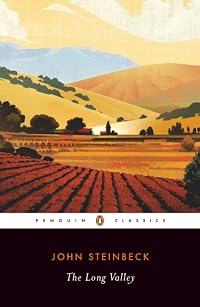
The Long Valley
by John Steinbeck
On This Page
Description
A Penguin Classic First published in 1938, this volume of stories collected with the encouragement of his longtime editor Pascal Covici serves as a wonderful introduction to the work of Nobel Prize winner John Steinbeck. Set in the beautiful Salinas Valley of California, where simple people farm the land and struggle to find a place for themselves in the world, these stories reflect Steinbeck's characteristic interests: the tensions between town and country, laborers and owners, past and show more present. Included here are the O. Henry Prize-winning story "The Murder"; "The Chrysanthemums," perhaps Steinbeck's most challenging story, both personally and artistically; "Flight," "The Snake," "The White Quail," and the classic tales of "The Red Pony." With an introduction and notes by John H. Timmerman. For more than seventy years, Penguin has been the leading publisher of classic literature in the English-speaking world. With more than 1,700 titles, Penguin Classics represents a global bookshelf of the best works throughout history and across genres and disciplines. Readers trust the series to provide authoritative texts enhanced by introductions and notes by distinguished scholars and contemporary authors, as well as up-to-date translations by award-winning translators. show lessTags
Recommendations










Member Recommendations
aulsmith Robinson loves California as much as Steinbeck, but his stories are more up-to-date.
Member Reviews
Considering how prolific John Steinbeck was in a near-forty-year writing career, it's a bit surprising to realise that The Long Valley is one of only two short story collections he authored (the other being his sophomore publication The Pastures of Heaven). The only other contender, the four stories of The Red Pony (published as a novella), can be disqualified because they are included in The Long Valley, along with eleven other stories.
It might just be it's not his medium, for though The Long Valley is a capable and interesting collection, it never really strikes you hard. The opening story, 'The Chrysanthemums', is written in such a way that you expect more profundity from its denouement than you get. The same is true of 'The White show more Quail', 'The Snake' and 'The Raid', although 'Flight' has a nice technique in how it represents the changing power dynamics between Pepé, the wildcat and the mountain lion. Steinbeck's writing and particularly his characterisation are always good, but in these initial stories you are left wanting just that little bit more.
The second movement of the collection is an improvement, and the stories in this cluster have endings that match their writing. 'The Harness' and 'The Vigilante' have some rewarding potency, though 'Johnny Bear' is perhaps the best – if you can accept the slight absurdity in its premise. 'Breakfast' and 'Saint Katy the Virgin' are the oddities of the collection, with 'The Murder' straying towards that territory also.
The final four stories of The Long Valley are those which had comprised The Red Pony a few years earlier. Again, the writing and characterisation are of high quality, and the pathos drawn out of Jody's coming-of-age experiences is sincere and rewarding. In these stories, Steinbeck balances his romanticism with a cold-eyed awareness of the brutality in the world, an approach he would use to greater effect in his later novels and novellas. As I suggested earlier, the author seemed to fancy himself more in that long-form medium. Steinbeck can walk in a short story, but for all his qualities he doesn't often leave a footprint. show less
It might just be it's not his medium, for though The Long Valley is a capable and interesting collection, it never really strikes you hard. The opening story, 'The Chrysanthemums', is written in such a way that you expect more profundity from its denouement than you get. The same is true of 'The White show more Quail', 'The Snake' and 'The Raid', although 'Flight' has a nice technique in how it represents the changing power dynamics between Pepé, the wildcat and the mountain lion. Steinbeck's writing and particularly his characterisation are always good, but in these initial stories you are left wanting just that little bit more.
The second movement of the collection is an improvement, and the stories in this cluster have endings that match their writing. 'The Harness' and 'The Vigilante' have some rewarding potency, though 'Johnny Bear' is perhaps the best – if you can accept the slight absurdity in its premise. 'Breakfast' and 'Saint Katy the Virgin' are the oddities of the collection, with 'The Murder' straying towards that territory also.
The final four stories of The Long Valley are those which had comprised The Red Pony a few years earlier. Again, the writing and characterisation are of high quality, and the pathos drawn out of Jody's coming-of-age experiences is sincere and rewarding. In these stories, Steinbeck balances his romanticism with a cold-eyed awareness of the brutality in the world, an approach he would use to greater effect in his later novels and novellas. As I suggested earlier, the author seemed to fancy himself more in that long-form medium. Steinbeck can walk in a short story, but for all his qualities he doesn't often leave a footprint. show less
I read the Red Pony years back, but forgot how brutal it was. At least I had a warning due to the brutality of the stories preceding it. Steinbeck is a legend and there's good reason for it. His pacing and phrasing and themes might not work in the hands of a lesser writer, but that's not the case here. Each story in this collection is dark, but each is beautiful in its own brutal way.
Steinbeck's works include several collections of short stories, some connected by a discernible narrative thread, others more traditional in organization. The Pastures of Heaven depends on a particular locale with some stories using recurring characters, others not. Tortilla Flat is really a collection of more coherent short stories using a recurring cast of characters in a particular locale rather than the usual "plot."
The Long Valley is even more loosely organized than The Pastures of Heaven. The commonality is the location--the Salinas Valley of California. In the thirteen stories that make up this work, only the final two have the same characters, The Red Pony and Leader of the People.
The Long Valley is a disturbing work, because show more in it, Steinbeck, who clearly loved the land, just as clearly reveals that while he does not sit in judgement, he is at best neutral towards his characters; there is nothing like the affection he has for Danny and his friends and the ne'er-do-wells like Mac and the boys of Tortilla Flat and Cannery Row, respectively. Almost without exception the people who live in the Long Valley are driven by loneliness, despair, fear, shame, or a grim sense of duty that seems to render any kind of happiness impossible. In his most famous story, The Red Pony, he extends that viewpoint towards children. Jody has the spirit of any small boy, but his parents, particularly his father, place severe restraints on the natural exuberance of childhood. We all know that children can be cruel, but Steinbeck turns that remorseless eye of his on the way that cruelty can be expressed in actions towards animals that are either tolerated or actually encouraged as a way of dealing with farm problems. In today's world, it's not pretty.
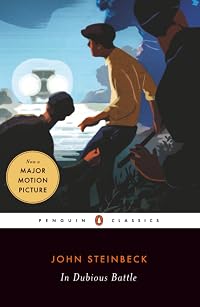
Concerned all his life with social justice issues, especially that of agricultural labor, The Raid is a continuation of the sort of story about Communist labor organizers that he pursued at much greater length in the novel In Dubious Battle and later in The Grapes of Wrath. However, as In Dubious Battle, the characters in The Raid are wooden--stereotypes that never really come to life, living a life of hard-to-believe idealism when faced with acknowledged insurmountable obstacles. They simply are not real.
I have a real quibble with the organization of the book. Whoever determined the order of the stories made the final impact anticlimactic, ending with Leader of the People instead of The Red Pony. The innocent Jody of the first story is not the emotionally battered, distrusting Jody of the end of The Red Pony. The entire work would have been greatly improved by reversing the order of the two stories.
This was not an easy read. It is one of Steinbeck's darker works, revealing underneath gorgeous descriptive prose of his beloved Salinas Valley a view of the people in it that is not the easy affection of the Monterey stories, but a very somber look at the dark underside of Paradise. show less
The Long Valley is even more loosely organized than The Pastures of Heaven. The commonality is the location--the Salinas Valley of California. In the thirteen stories that make up this work, only the final two have the same characters, The Red Pony and Leader of the People.
The Long Valley is a disturbing work, because show more in it, Steinbeck, who clearly loved the land, just as clearly reveals that while he does not sit in judgement, he is at best neutral towards his characters; there is nothing like the affection he has for Danny and his friends and the ne'er-do-wells like Mac and the boys of Tortilla Flat and Cannery Row, respectively. Almost without exception the people who live in the Long Valley are driven by loneliness, despair, fear, shame, or a grim sense of duty that seems to render any kind of happiness impossible. In his most famous story, The Red Pony, he extends that viewpoint towards children. Jody has the spirit of any small boy, but his parents, particularly his father, place severe restraints on the natural exuberance of childhood. We all know that children can be cruel, but Steinbeck turns that remorseless eye of his on the way that cruelty can be expressed in actions towards animals that are either tolerated or actually encouraged as a way of dealing with farm problems. In today's world, it's not pretty.
Concerned all his life with social justice issues, especially that of agricultural labor, The Raid is a continuation of the sort of story about Communist labor organizers that he pursued at much greater length in the novel In Dubious Battle and later in The Grapes of Wrath. However, as In Dubious Battle, the characters in The Raid are wooden--stereotypes that never really come to life, living a life of hard-to-believe idealism when faced with acknowledged insurmountable obstacles. They simply are not real.
I have a real quibble with the organization of the book. Whoever determined the order of the stories made the final impact anticlimactic, ending with Leader of the People instead of The Red Pony. The innocent Jody of the first story is not the emotionally battered, distrusting Jody of the end of The Red Pony. The entire work would have been greatly improved by reversing the order of the two stories.
This was not an easy read. It is one of Steinbeck's darker works, revealing underneath gorgeous descriptive prose of his beloved Salinas Valley a view of the people in it that is not the easy affection of the Monterey stories, but a very somber look at the dark underside of Paradise. show less
My edition of The Long Valley omits The Red Pony stories, as well as "Saint Katy the Virgin", so I'll have to seek those elsewhere. To judge only from what's left, Steinbeck's talent doesn't seem as magical in the shorter form. He is too heavy on symbolism, too light on subtlety. I am still a fan of these though, for displaying the usual empathy and understanding that he shows his characters. In several of them he is exploring the psychology behind real life episodes that intrigued him.
The Chrysanthemums - a woman feels the limitations of her existence, the containment of her potential.
The White Quail - a wife extrapolates her sense of self upon her environment, to the exclusion of her husband.
Flight - a boy's path to maturity also show more leads him to his fate.
The Snake - a mysterious incident unsettles a laboratory technician's quiet mind. Reads like a prequel to 'Cannery Row'.
Breakfast - reads like the memory of a perfect moment when Steinbeck knew a feeling of deep peace. A story requires conflict, but this vignette serves as a clue to life's deepest mystery.
The Raid - explores the psyche of Communists who strive to meet in secret and take a beating for their effort.
The Harness - when a man's overbearing wife dies, he is freed of the rules she imposed. Maybe.
The Vigilante - a man participating in a lynch mob doesn't recognize guilt when he feels it.
Johnny Bear - an autistic savant mentally records private conversations to earn whiskey. This was my favourite story in this collection, minus that clunker of a final line. No subtlety.
The Murder - a wife becomes increasingly viewed like a farm animal, to be trained and managed to properly fulfill her role. An opportunity to turn this around is lost. show less
The Chrysanthemums - a woman feels the limitations of her existence, the containment of her potential.
The White Quail - a wife extrapolates her sense of self upon her environment, to the exclusion of her husband.
Flight - a boy's path to maturity also show more leads him to his fate.
The Snake - a mysterious incident unsettles a laboratory technician's quiet mind. Reads like a prequel to 'Cannery Row'.
Breakfast - reads like the memory of a perfect moment when Steinbeck knew a feeling of deep peace. A story requires conflict, but this vignette serves as a clue to life's deepest mystery.
The Raid - explores the psyche of Communists who strive to meet in secret and take a beating for their effort.
The Harness - when a man's overbearing wife dies, he is freed of the rules she imposed. Maybe.
The Vigilante - a man participating in a lynch mob doesn't recognize guilt when he feels it.
Johnny Bear - an autistic savant mentally records private conversations to earn whiskey. This was my favourite story in this collection, minus that clunker of a final line. No subtlety.
The Murder - a wife becomes increasingly viewed like a farm animal, to be trained and managed to properly fulfill her role. An opportunity to turn this around is lost. show less
Twelve short stories by Steinbeck? Yes, please!
Lots to enjoy in this collection, and quite a bit of diversity in topics! "The Red Pony", is of course, the jewel of this book, and should be read by everyone, often! "The Snake" and "Johnny Bear" are creepy and bordering on a Twilight Zone type of vibe. "Saint Katy the Virgin" was hilarious! And "The Harness", well that one hit home for me.
I really enjoyed reading this slowly, and took my time letting each story soak in. Very glad that I did!
Lots to enjoy in this collection, and quite a bit of diversity in topics! "The Red Pony", is of course, the jewel of this book, and should be read by everyone, often! "The Snake" and "Johnny Bear" are creepy and bordering on a Twilight Zone type of vibe. "Saint Katy the Virgin" was hilarious! And "The Harness", well that one hit home for me.
I really enjoyed reading this slowly, and took my time letting each story soak in. Very glad that I did!
I've read about half of this collection before in various places. And I would agree that the best stories in The Long Valley are those which have been heavily anthologized. But reading them again in the context of the whole collection was surprisingly enjoyable. Here you get a wide range of Steinbeck's tone with a single theme throughout: violence.
As with all collections, some stories were weaker than others. In particular, I wasn't a fan of “The Murder,” a story which seemingly justifies the abuse of a wife. Having never seen Steinbeck as a raging misogynist, I chalk this story up to an objective portrayal of the culture at the time. Other stories in this collection may imply I'm wrong, however. We'll leave it at that.
Certainly, show more Steinbeck was primarily a novelist. He wasn't a masterful short story writer, but that doesn't mean he couldn't write a short story. Obviously, he could. I enjoyed this collection despite its limitations. Steinbeck fans should definitely get around to reading this one. Others may just wish to stick with the more heavily anthologized stories (e.g. “The Chrysanthemums,” “Flight”). show less
As with all collections, some stories were weaker than others. In particular, I wasn't a fan of “The Murder,” a story which seemingly justifies the abuse of a wife. Having never seen Steinbeck as a raging misogynist, I chalk this story up to an objective portrayal of the culture at the time. Other stories in this collection may imply I'm wrong, however. We'll leave it at that.
Certainly, show more Steinbeck was primarily a novelist. He wasn't a masterful short story writer, but that doesn't mean he couldn't write a short story. Obviously, he could. I enjoyed this collection despite its limitations. Steinbeck fans should definitely get around to reading this one. Others may just wish to stick with the more heavily anthologized stories (e.g. “The Chrysanthemums,” “Flight”). show less
John Steinbeck, for years a favourite author, demonstrates here clearly that a great novelist can also be a great short-story writer
Members
- Recently Added By
Lists

Favorite Short Fiction
228 works; 99 members

Tammen Keltainen kirjasto
81 works; 1 member

Reading LIst
648 works; 1 member
Author Information

In recent years Steinbeck has been elevated to a more prominent status among American writers of his generation. If not quite at the world-class artistic level of a Hemingway or a Faulkner, he is nonetheless read very widely throughout the world by readers of all ages who consider him one of the most "American" of writers. Born in Salinas County, show more California on February 27, 1902, Steinbeck was of German-Irish parentage. After four years as a special student at Stanford University, he went to New York, where he worked as a reporter and as a hod carrier. Returning to California, he devoted himself to writing, with little success; his first three books sold fewer than 3,000 copies. Tortilla Flat (1935), dealing with the paisanos, California Mexicans whose ancestors settled in the country 200 years ago, established his reputation. In Dubious Battle (1936), a labor novel of a strike and strike-breaking, won the gold medal of the Commonwealth Club of California. Of Mice and Men (1937), a long short story that turns upon a melodramatic incident in the tragic friendship of two farm hands, written almost entirely in dialogue, was an experiment and was dramatized in the year of its publication, winning the New York Drama Critics Circle Award. It brought him fame. Out of a series of articles that he wrote about the transient labor camps in California came the inspiration for his greatest book, The Grapes of Wrath (1939), the odyssey of the Joad family, dispossessed of their farm in the Dust Bowl and seeking a new home, only to be driven on from camp to camp. The fiction is punctuated at intervals by the author's voice explaining this new sociological problem of homelessness, unemployment, and displacement. As the American novel "of the season, probably the year, possibly the decade," it won the Pulitzer Prize in 1940. It roused America and won a broad readership by the unusual simplicity and tenderness with which Steinbeck treated social questions. Even today, The Grapes of Wrath remains alive as a vivid account of believable human characters seen in symbolic and universal terms as well as in geographically and historically specific ones. Ma Joad is one of the most memorable characters in twentieth-century American fiction. It is her courage that sustains the family. Steinbeck's best and most ambitious novel after The Grapes of Wrath is East of Eden (1952), a saga of two American families in California from before the Civil War through World War I. Cannery Row (1945), The Wayward Bus (1947), and Sweet Thursday (1955) are lighter works that find Steinbeck returning to the lighthearted tone of Tortilla Flat as he recounts picaresque adventures of modern-day picaros. The Winter of Our Discontent (1961) struck some reviewers as being appropriately titled because of its despairing treatment of humanity's fall from grace in a wasteland world where money is king. Steinbeck also wrote important nonfiction, including Russian Journal (1948) in collaboration with the photographer Robert Capa; Once There Was a War (1958) and America and Americans (1966), which features pictures by 55 leading photographers and a 70-page essay by Steinbeck. His interest in marine biology led to two books primarily about sea life, Sea of Cortez (1941) (with Edward F. Ricketts) and The Log from the Sea of Cortez (1951). Travels with Charley (1962) is an engaging account of his journey of rediscovery of America, which took him through approximately 40 states. Steinbeck was married three times and died in New York City on December 20, 1968 of heart disease and congestive heart failure. He was 66, and had been a life-long smoker. (Bowker Author Biography) show less
Some Editions
Series
Belongs to Publisher Series
Work Relationships
Is contained in
Contains
Common Knowledge
- Canonical title
- The Long Valley
- Original title
- The Long Valley
- Original publication date
- 1938
- Important places
- Salinas Valley, California, USA; California, USA
- First words
- The high grey-flannel fog of winter closed off the Salinas Valley from the sky and from all the rest of the world.
- Quotations
- Mamma said wisely, "A boy gets to be a man when a man is needed. Remember this thing. I have known boys forty years old because there was no need for a man."
- Last words
- (Click to show. Warning: May contain spoilers.)"Here, I'll reach the squeezer down to you."
- Original language
- English
- Disambiguation notice
- Some editions of The Long Valley omit the Red Pony stories.
Classifications
Statistics
- Members
- 1,669
- Popularity
- 13,345
- Reviews
- 22
- Rating
- (3.84)
- Languages
- 9 — Danish, English, Finnish, French, Italian, Polish, Portuguese, Spanish, Swedish
- Media
- Paper, Audiobook, Ebook
- ISBNs
- 34
- ASINs
- 47