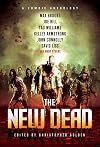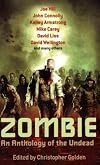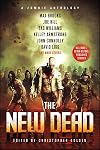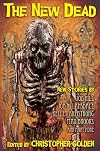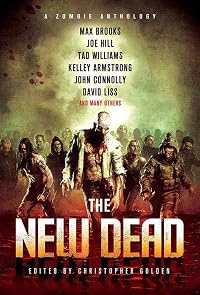
The New Dead: A Zombie Anthology
by Christopher Golden (Editor)
On This Page
Description
RESURRECTION! The hungry dead have risen. They shamble down the street. They hide in back yards, car lots, shopping malls. They devour neighbors, dogs and police officers. And they are here to stay. The real question is, what are you going to do about it? How will you survive? HOW WILL THE WORLD CHANGE WHEN THE DEAD BEGIN TO RISE? Stoker-award-winning author Christopher Golden has assembled an original anthology of never-before-published zombie stories from an eclectic array of today's show more hottest writers. Inside there are stories about military might in the wake of an outbreak, survival in a wasted wasteland, the ardor of falling in love with a zombie, and a family outing at the circus. Here is a collection of new views on death and resurrection. With stories from Joe Hill, John Connolly, Max Brooks, Kelley Armstrong, Tad Williams, David Wellington, David Liss, Aimee Bender, Jonathan Maberry, and many others, this is a wildly diverse and entertaining collection...the Last Word on the New Dead. show lessTags
Recommendations
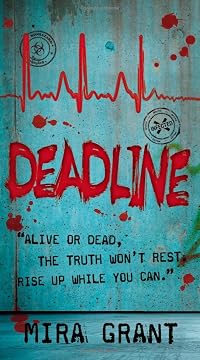
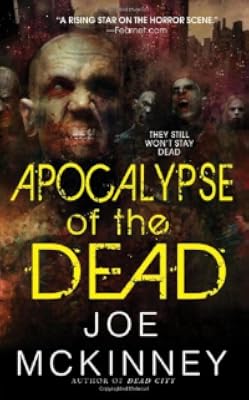
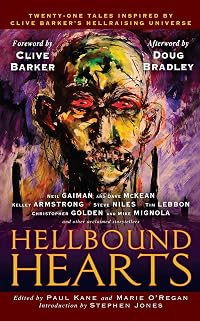
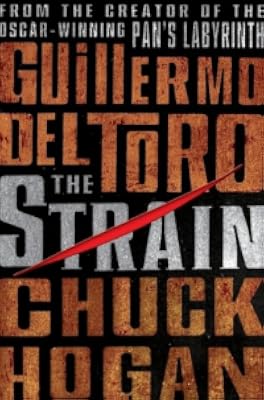
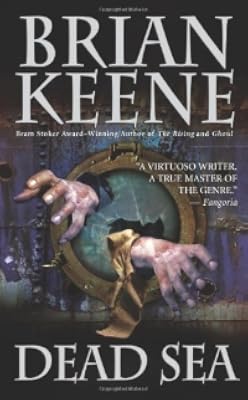
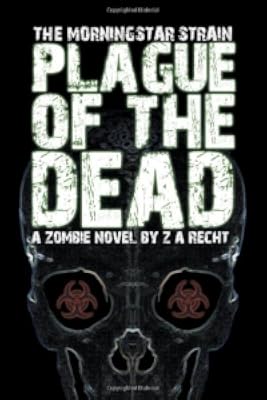
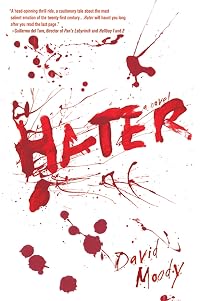
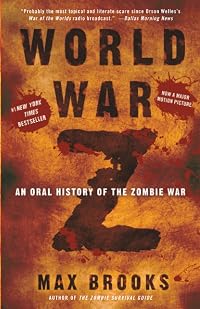

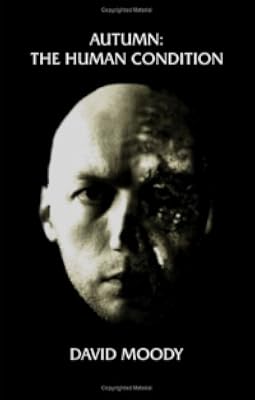
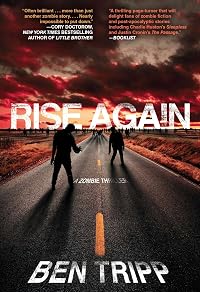
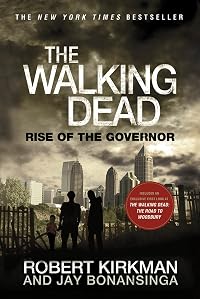
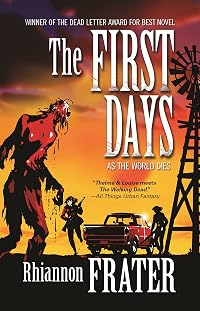
Member Recommendations
Member Reviews
I really liked John Joseph Adams' Living Dead anthologies, which I would describe, by and large, as being on the classier end of the zombie fiction spectrum. I was a little trepidatious about starting this one, though; somehow, I was expecting it to be rather more on the cheesy side. But I was very pleasantly surprised. This anthology is at least as good as either of Adams', and I'm giving it an extra point (or an extra half-star) for being more consistently good. I liked some of these stories better than others, of course, but there's not a real dud in the bunch. Even the ones that weren't quite to my taste, or that had an identifiable flaw or two were really interesting, and left me feeling genuine appreciation for what the author was show more doing.
I suppose there's arguably one exception to that: Joe R. Lansdale's "Shooting Pool." Which was actually a perfectly decent story, but which contained, as far as I can tell, no zombie-related content whatsoever, as if it had accidentally wandered in from an entirely different anthology. I suspect the author's intent on that one was to write a sort of anti-zombie story, as it features someone who dies and stays very dead. But if that's the idea, well, it's trying to be entirely too clever for its own good.
The standout stories, though, are really good. Joe Hill's "Twittering from the Circus of the Dead" may be the best fictional use of Twitter as a storytelling medium the world will ever see, and David Liss' "What Maisie Knew" is probably the most unrelentingly, memorably horrific thing I've read in ages.
On thing I find interesting about this anthology is that it simultaneously takes a very narrow and a very broad view of the zombie concept. On the narrow side -- that one bafflingly out-of-place entry aside -- these are all very much stories about animate corpses. No 28 Days Later-style rage zombies. Nothing that kinda-sorta metaphorically resembles a zombie if you squint. It's all walking corpses, all the time. (Well, Aimee Bender's bizarre little piece "Among Us" may be a partial exception, as its whole point seems to be that practically everything metaphorically resembles a zombie if you squint. But even that does have a walking corpse in it.)
The scope is also broad, though, in the sense that it includes a lot of different ideas about zombies and does a lot of very different things with them. We've got everything here from mindless monsters to dead bodies with perfectly functional human minds still inside them, including a whole lot of disturbing gray areas in between. We've got plague zombies, science zombies, voodoo zombies, and zombies whose origins nobody knows. There are lots of different settings, lots of surprisingly original details, and lots of different tones and themes. Although there are a couple of themes that do keep cropping up again and again. One is the venerable notion that living humans have the potential to be far worse than any flesh-eating monsters. Another is the seldom-addressed question of how we can feel so keen about the idea of killing zombies when we are so disgusted by the idea of desecrating a corpse.
And, you know, it's interesting. A common (and entirely understandable) opinion about zombies in pop culture right now is that it's just time for them to be over. They're overused to the point of cliche, to the point of meaninglessness. They're not scary anymore, and there's nothing much left to say with them. So why do stories like the ones here not seem at all tired or meaningless or unoriginal to me? It occurs to me that maybe it's only once a subgenre reaches this point of pop cultural oversaturation that writers become completely free to play around with its tropes, to subvert and re-examine them secure in the knowledge that the audience will be able to follow wherever they may go. (Stories that use fairy tale elements are, I think, another good example of this.) And maybe it's not surprising that once you reach that point, the zombie subgenre in particular lends itself well to that kind of attention, if you stop for a moment to think about exactly what a zombie is. Because we're talking about a dead human being, brought back to life with some fundamental component of life or humanity missing. And that, surely, is an idea that has the potential to tap into all kinds of questions that are both philosophically deep and viscerally affecting, questions about life and death, about the human mind and (if it exists) the soul.
Or maybe I'm overthinking things. Maybe, y'know, I just like zombies. And, hey, if you like zombies, too, this may be a book for you. If you're looking for B-movie gore-fests or lots of survival horror, you'll probably be disappointed, but if you want some well-written, thoughtful, thought-provoking stories that continue to do interesting things with an idea that still won't die, no matter how many people say it should, you may find it's exactly what you're looking for. show less
I suppose there's arguably one exception to that: Joe R. Lansdale's "Shooting Pool." Which was actually a perfectly decent story, but which contained, as far as I can tell, no zombie-related content whatsoever, as if it had accidentally wandered in from an entirely different anthology. I suspect the author's intent on that one was to write a sort of anti-zombie story, as it features someone who dies and stays very dead. But if that's the idea, well, it's trying to be entirely too clever for its own good.
The standout stories, though, are really good. Joe Hill's "Twittering from the Circus of the Dead" may be the best fictional use of Twitter as a storytelling medium the world will ever see, and David Liss' "What Maisie Knew" is probably the most unrelentingly, memorably horrific thing I've read in ages.
On thing I find interesting about this anthology is that it simultaneously takes a very narrow and a very broad view of the zombie concept. On the narrow side -- that one bafflingly out-of-place entry aside -- these are all very much stories about animate corpses. No 28 Days Later-style rage zombies. Nothing that kinda-sorta metaphorically resembles a zombie if you squint. It's all walking corpses, all the time. (Well, Aimee Bender's bizarre little piece "Among Us" may be a partial exception, as its whole point seems to be that practically everything metaphorically resembles a zombie if you squint. But even that does have a walking corpse in it.)
The scope is also broad, though, in the sense that it includes a lot of different ideas about zombies and does a lot of very different things with them. We've got everything here from mindless monsters to dead bodies with perfectly functional human minds still inside them, including a whole lot of disturbing gray areas in between. We've got plague zombies, science zombies, voodoo zombies, and zombies whose origins nobody knows. There are lots of different settings, lots of surprisingly original details, and lots of different tones and themes. Although there are a couple of themes that do keep cropping up again and again. One is the venerable notion that living humans have the potential to be far worse than any flesh-eating monsters. Another is the seldom-addressed question of how we can feel so keen about the idea of killing zombies when we are so disgusted by the idea of desecrating a corpse.
And, you know, it's interesting. A common (and entirely understandable) opinion about zombies in pop culture right now is that it's just time for them to be over. They're overused to the point of cliche, to the point of meaninglessness. They're not scary anymore, and there's nothing much left to say with them. So why do stories like the ones here not seem at all tired or meaningless or unoriginal to me? It occurs to me that maybe it's only once a subgenre reaches this point of pop cultural oversaturation that writers become completely free to play around with its tropes, to subvert and re-examine them secure in the knowledge that the audience will be able to follow wherever they may go. (Stories that use fairy tale elements are, I think, another good example of this.) And maybe it's not surprising that once you reach that point, the zombie subgenre in particular lends itself well to that kind of attention, if you stop for a moment to think about exactly what a zombie is. Because we're talking about a dead human being, brought back to life with some fundamental component of life or humanity missing. And that, surely, is an idea that has the potential to tap into all kinds of questions that are both philosophically deep and viscerally affecting, questions about life and death, about the human mind and (if it exists) the soul.
Or maybe I'm overthinking things. Maybe, y'know, I just like zombies. And, hey, if you like zombies, too, this may be a book for you. If you're looking for B-movie gore-fests or lots of survival horror, you'll probably be disappointed, but if you want some well-written, thoughtful, thought-provoking stories that continue to do interesting things with an idea that still won't die, no matter how many people say it should, you may find it's exactly what you're looking for. show less
One of the stories ("What Maisie Knew" by John Connolly) especially blew me away. It would make a great movie (if done tastefully since there are some parts in it that could go horribly wrong on film if not handled right by the director!)
"What Maisie Knew" is also the name of a Henry James novel so I was even more intrigued by this story (though the two aren't related at all I would love to know if the author is a James fan.) The thing those new to this genre may be surprised to discover about zombie short fiction is just how good it often is, how well-written and full of emotion (or more times than not a despair that lifts off the page and into your heart and mind.)
Connolly's tale reminds me a little of a modern day truly twisted O. show more Henry piece, only I seriously doubt O. Henry could ever have conceived of something so dark. Without giving too much away, I will say that "What Maisie Knew" gives new meaning to He Had It Coming and will make you look at ethics and "reanimates" (okay, zombies) together in a way you wouldn't have thought possible. show less
Got only through the first two stories, so there may be treasures later on! The first was a retelling of Lazarus, from his point of view. Come to find out he didn't WANT Jesus to turn him into a zombie! The other was about a society where the dead are reanimated and turned into robots that do mind-numbing work, or are used for domestic help--or, as it happens, sex slaves! The scene in the strip joint where the reanimates were dancing, and serving the patrons "needs", was just a little too much for me! It was written in an appealing manner--the protagonist kept denying responsibility for his actions, in the author's very tongue-in-cheek style. So it made me laugh a few times--but still!
If I had to choose a favorite, however, it would be Johnathan Maberry's "Family Business," dealing with half brothers Benny and Tom Imura, who both witnessed their parents' death - well their mother's anyway - on First Night - the marking point of the zombie outbreak. Benny, continuing to blame older brother Tom for their parents' death, refuses to join the "family business" of going out into the Rot and Ruin - the wasteland outside the gates of their town - to hunt down zombies for pay. In this twisted version of the brutal near future, everyone living within the town limits must hold a job, otherwise they only get half of their rations. Unlike other zombie hunters, Tom Imura doesn't kill for the sport or because he's a twisted son of show more a bitch. When Benny is forced to suck up his pride and works with Tom, he learns the true nature of this brother's job, and the hero he never knew. In order to seal the deal that Benny will take the job and become a man like his older brother, the two of them venture into a gated community that is all too familiar. show less
This was a pretty good collection of stories, but of course, with any anthology there were some that were stronger than others. My favorites were "Family Business" by Jonathan Maberry, "Life Sentence" by Kelley Armstrong, "The Storm Door" by Tad Williams, and "Second Wind" by Mike Carey. "Closure, Limited" by Max Brooks was also good and made me want to reread World War Z. A few of these stories were really messed up. Like, I'm side-eyeing some of these writers. David Liss, I'm looking at you. That was a messed up story. I also love a good Joe Hill story, and his didn't disappoint.
This was very much a hit or miss collection. The stories at the start were a little lackluster and then there was one that didn't have zombies at all...really nothing to do with them - a dead person that was just a corpse...
Fortunately, there were a few stories that saved the collection. Jonathan Maberry's story "Family Business" is a 4 1/2 star story on its own and was the best of the lot. Thankfully, it was one of the longest stories, clocking in at 55 pages.
A couple of the later stories were almost good, but too gimmicky and not timeless - Joe Hill's story told in twitter feeds comes to mind.
Fortunately, there were a few stories that saved the collection. Jonathan Maberry's story "Family Business" is a 4 1/2 star story on its own and was the best of the lot. Thankfully, it was one of the longest stories, clocking in at 55 pages.
A couple of the later stories were almost good, but too gimmicky and not timeless - Joe Hill's story told in twitter feeds comes to mind.
In the big three of popular supernatural creatures at the moment, of vampires, werewolves and zombies, zombies are the weirdest. Just what is so fascinating about the walking (and rotting) dead coming to eat the brains of us living humans? For me it is mostly the apocalyptic world they cause for the living humans, and my curiosity about how humans will survive.
In this collection many writers give their take on a zombie tale, and there are some pretty strong ones. There is a story by John Connolly about Lazarus, resurrected by Jesus, but now in a living-dead state that isn't that happy. There is a story (by Tim Lebbon) about the last three survivors in a quarantined city. In 'Life Sentence' by Kelley Armstrong a rich guy is trying to show more create a zombie virus so he can live forever. And the best story was by Joe Hill, which was nothing more than the twitter-feed of a girl on a boring road-trip, with a stopover that the world should know about.
All in all a pretty decent zombie collection (although not all tales contain zombies). Four out of five stars. show less
In this collection many writers give their take on a zombie tale, and there are some pretty strong ones. There is a story by John Connolly about Lazarus, resurrected by Jesus, but now in a living-dead state that isn't that happy. There is a story (by Tim Lebbon) about the last three survivors in a quarantined city. In 'Life Sentence' by Kelley Armstrong a rich guy is trying to show more create a zombie virus so he can live forever. And the best story was by Joe Hill, which was nothing more than the twitter-feed of a girl on a boring road-trip, with a stopover that the world should know about.
All in all a pretty decent zombie collection (although not all tales contain zombies). Four out of five stars. show less
Members
- Recently Added By
Lists

Books Read in 2018
4,360 works; 110 members
Author Information

Christopher Golden is the co-author of The Watcher's Guide and several Buffy the Vampire Slayer books, and the author of many other adult and teen thrillers. He is also a comic-book writer and pop-culture critic. (Bowker Author Biography) Writer Christopher Golden was born and raised in Massachusetts, and later graduated from Tufts University. show more Golden has held many positions in various places in the entertainment industry, including Billboard magazine, American Top 40, the Billboard Music Awards, and BPI Entertainment News. He was also editor of Cut!: Horror Writers on Horror Film, which won the Bram Stoker Award for Criticism. Golden has written several young adult fiction books including Buffy the Vampire Slayer (co-wrote), X-Men: Mutant Empire, Of Saints and Shadows, Angels Souls and Devil Hearts, as well as several Star Wars projects. (Bowker Author Biography) show less
All Editions
Awards and Honors
Awards
Work Relationships
Contains
Common Knowledge
- Canonical title
- The New Dead: A Zombie Anthology
- Original title
- The New Dead: A Zombie Anthology
- Alternate titles
- Zombie: An Anthology of the Undead
- Original publication date
- 2010-02
- People/Characters
- Benny Imura; Tom Imura
- First words
- He wakes in darkness, constricted by bonds.
- Last words
- (Click to show. Warning: May contain spoilers.)Minors must be accompanied by adult.
Classifications
- Genres
- Fiction and Literature, Horror
- DDC/MDS
- 813.0873808 — Literature & rhetoric American literature in English American fiction in English By type Genre fiction Adventure fiction Horror fiction; Ghost fiction Horror fiction Anthologies Collections
- LCC
- PS648 .Z64 .N49 — Language and Literature American literature American literature Collections of American literature Prose (General)
- BISAC
Statistics
- Members
- 406
- Popularity
- 76,448
- Reviews
- 16
- Rating
- (3.83)
- Languages
- English, German
- Media
- Paper, Ebook
- ISBNs
- 9
- ASINs
- 3