There is 1 current discussion about this work.
On This Page
Description
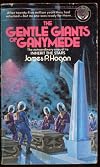
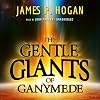
Long before the world of the Ganymeans blew apart millennia ago, the strange race of giants had already vanished. All that remained of them was a wrecked ship abandoned on a frozen moon of Jupiter. Now Earth's scientists are there, determined to ferret out the secret of the lost race. But when suddenly the Ganymeans return, they bring with them answers that will reveal the secret of our own as well.Tags
Recommendations


















Member Reviews
Gioiellino della fantascienza tecnologica e utopistica, in cui i terrestri hanno rinunciato alla violenza e di conseguenza non sparano a vista sugli alieni emersi dagli abissi del tempo e dello spazio, alieni che sono delle copie giganti dei figli dei fiori, con i loro abiti colorati, i lunghi capelli e le fronti cinte di face d'oro, e fa niente che le fasce sono i migliori precursori delle webcam che abbia mai trovato nella scifi del tempo.
Incredibilmente la traduzione è piacevole, e il titolo, anche se non fedelmente tradotto, per lo meno è attinente all'argomento.
Incredibilmente la traduzione è piacevole, e il titolo, anche se non fedelmente tradotto, per lo meno è attinente all'argomento.
This is the sequel to Hogan’s Inherit the Stars and builds on the ideas of the first book, or fleshes them out rather.
It opens in a similar way too: in Inherit… a body is found on the Moon, apparently human but fifty-thousand years old; here, what’s found is a crashed spaceship, preserved in the ice beneath the surface of Jupiter’s largest moon Ganymede—but far older, twenty-five million years old this time. As a scientific team from Earth cut their way in and explore its interior, they find a device which emits pulses of gravity waves and may be some sort of beacon (marker beacon? distress beacon?). Whatever it is, they seem to have unwittingly set it off.
This was published in 1978, around the same time that show more Ridley Scott’s Alien was being made, and I’ve no idea whether either influenced the other or whether, as ideas sometimes seem to be, the “crashed starship-beacon-aliens” idea was just sort of in the air at the end of the ’70s. Either way (as you can tell from the book’s title) what the humans are confronted with in this case is no nightmare.
As with the first book, this has an old-fashioned feel to it (nothing wrong with that either; all I mean is that it took me back to when I was growing up reading Asimov, say, or Arthur C Clarke); and, again, there’s no action-packed plot, while the ideas the scientists grapple with are both a bit convoluted and scientifically unlikely. But, as with Inherit the Stars, it’s an enjoyable read nonetheless. show less
It opens in a similar way too: in Inherit… a body is found on the Moon, apparently human but fifty-thousand years old; here, what’s found is a crashed spaceship, preserved in the ice beneath the surface of Jupiter’s largest moon Ganymede—but far older, twenty-five million years old this time. As a scientific team from Earth cut their way in and explore its interior, they find a device which emits pulses of gravity waves and may be some sort of beacon (marker beacon? distress beacon?). Whatever it is, they seem to have unwittingly set it off.
This was published in 1978, around the same time that show more Ridley Scott’s Alien was being made, and I’ve no idea whether either influenced the other or whether, as ideas sometimes seem to be, the “crashed starship-beacon-aliens” idea was just sort of in the air at the end of the ’70s. Either way (as you can tell from the book’s title) what the humans are confronted with in this case is no nightmare.
As with the first book, this has an old-fashioned feel to it (nothing wrong with that either; all I mean is that it took me back to when I was growing up reading Asimov, say, or Arthur C Clarke); and, again, there’s no action-packed plot, while the ideas the scientists grapple with are both a bit convoluted and scientifically unlikely. But, as with Inherit the Stars, it’s an enjoyable read nonetheless. show less
This is the second of the Giants novels, after Inherit the Stars. In the first novel, a body is found inside a space suit on the moon--and turns out to be 50 thousand years old. Later, on Ganymede, is found a derelict alien ship, with the remains of alien giants--and it turns out to be 25 million years old. These are the central mystery around which the story revolves, and the interesting part is the play of scientific ideas. In other worlds, the novel his hard science--pretty hardcore.
In the second novel, those aliens, the "Gentle Giants of Ganymede" return. Unlike one of the reviewers on LibraryThing I didn't find them a disappointment. It's true, when it comes to creating complex characters, human or otherwise, well, it's not show more Hogan's forte. But his ideas are, and I found the Ganymeans interesting foils for humans, and found the interplay of ideas very lively--in fact, I thought there were less dry patches here--with the information more skillfully delivered through story. And, I admit, I found the denouement fitting and rather moving. I can see her why Isaac Asimov thought Hogan was an author with promise in his early days. show less
In the second novel, those aliens, the "Gentle Giants of Ganymede" return. Unlike one of the reviewers on LibraryThing I didn't find them a disappointment. It's true, when it comes to creating complex characters, human or otherwise, well, it's not show more Hogan's forte. But his ideas are, and I found the Ganymeans interesting foils for humans, and found the interplay of ideas very lively--in fact, I thought there were less dry patches here--with the information more skillfully delivered through story. And, I admit, I found the denouement fitting and rather moving. I can see her why Isaac Asimov thought Hogan was an author with promise in his early days. show less
It turns out the gentle giants from Ganymede are originally from Minerva, a long-gone outer system planet, part of which is now Earth’s Moon. Hogan writes hard sci-fi in the mode of Arthur C. Clarke and Larry Niven. He relishes big ideas–catastrophic events in the history of the solar system, and hominid evolution.
If you liked Inherit the Stars, the first book in the series, you will enjoy getting to meet the giants.
If you liked Inherit the Stars, the first book in the series, you will enjoy getting to meet the giants.
Earth scientists investigating a 25-million-year-old alien shipwreck on Jupiter's moon accidentally trigger a distress beacon. The Gentle Giants suddenly return, providing profound, mind-bending answers about human origins and the ancient destruction of the solar system.
Following the events of Inherit the Stars, Earth teams are still studying the Ganymean vessel on Ganymede. When a distress beacon is activated, a Ganymean ship, the Shapieron, arrives.
The Ganymeans return to find their home world, Minerva, is gone. They are completely unaware of the events that transpired in their solar system over the last millions of years. Humans and the alien giants collaborate, sharing resources and data to piece together the last 25 million years show more of history.
Human and Ganymean history are intertwined, forcing the species to work together as they search for a new future. show less
Following the events of Inherit the Stars, Earth teams are still studying the Ganymean vessel on Ganymede. When a distress beacon is activated, a Ganymean ship, the Shapieron, arrives.
The Ganymeans return to find their home world, Minerva, is gone. They are completely unaware of the events that transpired in their solar system over the last millions of years. Humans and the alien giants collaborate, sharing resources and data to piece together the last 25 million years show more of history.
Human and Ganymean history are intertwined, forcing the species to work together as they search for a new future. show less
The Gentle Giants of Ganymede is the sequel to Peter Hogan’s Inherit the Stars. Although this book again has a pretty good scifi plot, the eponymous Ganymedians we meet are a big disappointment; their depiction is naïve and flat. Hogan was unable to transcend the 60s in his conjectures of what a peaceful alien race might be like – it seems like the Ganymedians should be wearing tie-dyes and smoking doobies as they rap about peace, man.
My second book by Hogan
James Hogan's books are slow moving but interesting. He creates mysteries which slowly unfold for the reader. The characters are realistic but their interaction is often boring. The desire to lean about the true origins of man, the ancient history of the solar system and alien technology keeps you reading.
This is the follow up to "Inherit the Stars". Good enough that I will read the third in sequel.
James Hogan's books are slow moving but interesting. He creates mysteries which slowly unfold for the reader. The characters are realistic but their interaction is often boring. The desire to lean about the true origins of man, the ancient history of the solar system and alien technology keeps you reading.
This is the follow up to "Inherit the Stars". Good enough that I will read the third in sequel.
Members
- Recently Added By
Published Reviews
ThingScore 75
Eine Lektüre, die man verschlingt, und eine Erinnerung daran, daß der Prozeß des Lernens zu den größten Abenteuern des Menschen gehört.
added by rat_in_a_cage
Talk Discussions
Current Discussions
Triple-G and the Coffin Lifters in Good Show Sir! — bad science fiction and fantasy covers (June 9)
Author Information

78+ Works 11,739 Members
James P. Hogan was born in London on June 27, 1941. He left school at the age of sixteen and eventually began an intensive, broad-based five-year program at the Royal Aircraft Establishment covering the practical and theoretical sides of electrical, electronic, and mechanical engineering. He worked as a design engineer for several companies before show more moving to sales. He started writing science fiction books in the 1970s and became a full-time writer in 1979. He wrote 30 fiction and non-fiction books during his lifetime including Inherit the Stars, Voyage from Yesteryear, and Kicking the Sacred Cow. He won three Seiun-sho awards, which were voted for by Japanese science fiction fans. He died suddenly on July 12, 2010 at the age of 69. (Bowker Author Biography) show less
Some Editions
Series

Belongs to Publisher Series
Moewig Science Fiction (3556)
Work Relationships
Common Knowledge
- Canonical title
- The Gentle Giants of Ganymede
- Original title
- The Gentle Giants of Ganymede
- Original publication date
- 1978-07
- People/Characters
- Victor Hunt; Chris Danchekker
- Important places*
- Iscaris; Ganymed; Houston, Texas, USA
- Dedication
- To my wife, Lyn, who showed me that greener grass can always be made to grow on whatever side of the field one happens to be.
- First words
- Leyel Torres, commander of the scientific observation base near the equator on Iscaris III, closed the final page of the report that he had been reading and stretched back in his chair with a grateful sigh.
- Quotations
- And then Garuth slowly raised his right arm in a gesture of salutation. One by one the rest of the Ganymeans copied him. They stood there silent and unmoving, a hundred arms extended and raised to convey a common message of g... (show all)reeting and friendship to all of the peoples of Earth.
- Last words
- (Click to show. Warning: May contain spoilers.)He turned back and gazed wistfully at the screen once more, then added: “I suppose it would have been even nicer if they knew it too.”
- Blurbers*
- Asimov, Isaac
- Original language
- English
*Some information comes from Common Knowledge in other languages. Click "Edit" for more information.
Classifications
Statistics
- Members
- 723
- Popularity
- 39,015
- Reviews
- 14
- Rating
- (3.78)
- Languages
- 6 — Czech, Dutch, English, German, Japanese, Polish
- Media
- Paper, Audiobook, Ebook
- ISBNs
- 22
- ASINs
- 8