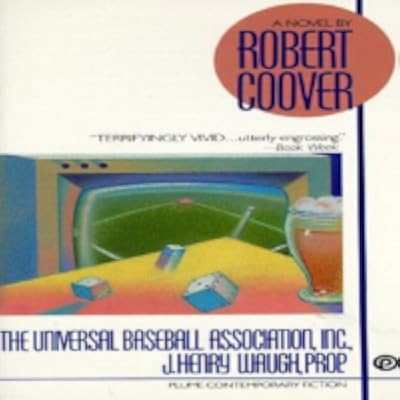
The Universal Baseball Association, Inc., J. Henry Waugh, Prop.
by Robert Coover
On This Page
Description
As owner of every team in the league, Henry is flush with pride in a young rookie who is pitching a perfect game. When the pitcher completes the miracle game, Henry's life lights up. But then the rookie is killed by a freak accident, and this'death' affects Henry's life in ways unimaginable. In a blackly comic novel that takes the reader between the real world and fantasy, Robert Coover delves into the notions of chance and power.Tags
Recommendations






















Member Reviews
Summary: An accountant creates a fantasy baseball league that takes over his life.
Before modern fantasy baseball leagues. Before the invention of Sabremetrics to analyze every possible baseball statistic. In 1968, Robert Coover introduced us to J. Henry Waugh, sole proprietor of the Universal Baseball League. It is a league created in Waugh’s apartment. But no one else knows about it. He named the eight teams after early pro teams. He filled the rosters with players who he named, who took on lives of their own. Games were played by the role of three dice. Waugh had created an elaborate system for each possible dice combination.
As the book opens, the league is in its fifty-sixth (LVI) season of 84 games. But something is wrong, both show more with the league and with Henry. The league just doesn’t seem to have the same excitement. Yet it is taking over more and more of Henry’s life. His day job is as an accountant with a big accounting firm. Then he ran the league in the evening and weekends. His only social life is trips to the local dive bar, his friend Lou from work, and Hetty, his neighbor and “friend with benefits.” A local grocer delivers his food.
But it gets worse. Not only does he play the games, and keep records of all the statistics, promote rookies, and retire veterans. He also has allowed the players to occupy his mind with their lives–their off the field escapades and tragedies. There are long passages of imagined bar scenes with bawdy songs (including one with a rape). And as the league occupies more of his head space, his work suffers and his job is at risk. Sometimes, fantasy dialogue leaks out in real life conversation.
By Season LVI, star players have sons in the game. For example, Damon Rutherford is a rookie pitcher who looks like he will follow in the steps of his Hall of Fame Father Brock Rutherford. The book opens with him in the middle of pitching a perfect game. And Henry realizes that Damon hold the hope of a revitalized league. And then, in the next game it all changes with one roll of the dice that come up 1-1-1. That unlikely combination means a batter hit by a pitch that kills him. And who is at the plate when this unlucky role comes up? Damon Rutherford.
With that, it all spirals downward, for Henry and for the League. He even lets Lou help him with a game, letting him in on his secret obsession. It doesn’t go well. As his job hangs by a thread, he considers winding it all up and getting his life in order. But will he?
Robert Coover invents a character with an unusual fantasy obsession that holds up a mirror to our obsessions and addictions. With the advent of online sports betting, we hear more and more stories of those who have wrecked their lives and their families’ finances with their obsession. But Coover uncovers a more profound truth. What does Henry have to live for that is better than his personal fantasy league?
This is an adult book with adult language and sexual material, some of which may be triggering. But it also explores the adult obsessions and addictions with which we fill our lives when nothing greater and better does. It’s both fascinating and painful. But the life you save may be your own. show less
Before modern fantasy baseball leagues. Before the invention of Sabremetrics to analyze every possible baseball statistic. In 1968, Robert Coover introduced us to J. Henry Waugh, sole proprietor of the Universal Baseball League. It is a league created in Waugh’s apartment. But no one else knows about it. He named the eight teams after early pro teams. He filled the rosters with players who he named, who took on lives of their own. Games were played by the role of three dice. Waugh had created an elaborate system for each possible dice combination.
As the book opens, the league is in its fifty-sixth (LVI) season of 84 games. But something is wrong, both show more with the league and with Henry. The league just doesn’t seem to have the same excitement. Yet it is taking over more and more of Henry’s life. His day job is as an accountant with a big accounting firm. Then he ran the league in the evening and weekends. His only social life is trips to the local dive bar, his friend Lou from work, and Hetty, his neighbor and “friend with benefits.” A local grocer delivers his food.
But it gets worse. Not only does he play the games, and keep records of all the statistics, promote rookies, and retire veterans. He also has allowed the players to occupy his mind with their lives–their off the field escapades and tragedies. There are long passages of imagined bar scenes with bawdy songs (including one with a rape). And as the league occupies more of his head space, his work suffers and his job is at risk. Sometimes, fantasy dialogue leaks out in real life conversation.
By Season LVI, star players have sons in the game. For example, Damon Rutherford is a rookie pitcher who looks like he will follow in the steps of his Hall of Fame Father Brock Rutherford. The book opens with him in the middle of pitching a perfect game. And Henry realizes that Damon hold the hope of a revitalized league. And then, in the next game it all changes with one roll of the dice that come up 1-1-1. That unlikely combination means a batter hit by a pitch that kills him. And who is at the plate when this unlucky role comes up? Damon Rutherford.
With that, it all spirals downward, for Henry and for the League. He even lets Lou help him with a game, letting him in on his secret obsession. It doesn’t go well. As his job hangs by a thread, he considers winding it all up and getting his life in order. But will he?
Robert Coover invents a character with an unusual fantasy obsession that holds up a mirror to our obsessions and addictions. With the advent of online sports betting, we hear more and more stories of those who have wrecked their lives and their families’ finances with their obsession. But Coover uncovers a more profound truth. What does Henry have to live for that is better than his personal fantasy league?
This is an adult book with adult language and sexual material, some of which may be triggering. But it also explores the adult obsessions and addictions with which we fill our lives when nothing greater and better does. It’s both fascinating and painful. But the life you save may be your own. show less
Chapter I hits the perfect pitch of fan excitement, play-by-play energy of a live pennant broadcast, and lightning-flash glimpses inside the heads of players at key points in the drama. I've not read a better account of a baseball game, whether in fiction or creative non-fiction. Coover captures the dynamics & personality of a live contest and wonderfully sets the stage for so much more than baseball, all in a breathless 29 pages.
Chapter VIII transforms this account into another language entirely, everything pivots from sports journalism to heady moral philosophy, even as it all stays, intact, though prismed from one experience to another. It is psychological, religio-metaphysical, existential. It casts in a harsh light the metafiction show more played out in the preceding seven chapters, and winds up almost an opening chapter to another, dystopian novel.
In between, Coover serves up a character study of a solitary but not necessarily lonely accountant at a turning point in his life. Whether Henry Waugh suffers a mid-life crisis or gains a renewed commitment to an authentic self, is a question left to the reader. Coover's prose is neat but never simpleminded; serious but lit up with a rake's wicked humour; and ultimately teasing in the way Waugh himself is tantalizingly there, and yet, what is imagined and what lies there on the page is not in the end so obvious.
Coover also offers extended puns; lyrics to imagined baseball ballads sounding as genuine and aged as crusty sea shanties; and a lively & true sense of dialogue.
And then, there is the UBA itself: doled out over the course of the novel, the rules and statistics, odds and principles predicated on baseball's unmatched statistical archive. Coover must have kept records as close and accurate as did Waugh in order to describe what little of the UBA he did. It is eerily similar to a game invented by Jack Kerouac as a teen and played through his adult life, including parallels in the number of teams in the league (8), fictional players and backgrounds, extensive context such as financial transactions and trades between fictional owners ... even the fact both Kerouac and Waugh played a fictional horseracing game on the side. (See the NYTimes article linked by the Wikipedia entry for Fantasy Baseball.) show less
Chapter VIII transforms this account into another language entirely, everything pivots from sports journalism to heady moral philosophy, even as it all stays, intact, though prismed from one experience to another. It is psychological, religio-metaphysical, existential. It casts in a harsh light the metafiction show more played out in the preceding seven chapters, and winds up almost an opening chapter to another, dystopian novel.
In between, Coover serves up a character study of a solitary but not necessarily lonely accountant at a turning point in his life. Whether Henry Waugh suffers a mid-life crisis or gains a renewed commitment to an authentic self, is a question left to the reader. Coover's prose is neat but never simpleminded; serious but lit up with a rake's wicked humour; and ultimately teasing in the way Waugh himself is tantalizingly there, and yet, what is imagined and what lies there on the page is not in the end so obvious.
Coover also offers extended puns; lyrics to imagined baseball ballads sounding as genuine and aged as crusty sea shanties; and a lively & true sense of dialogue.
And then, there is the UBA itself: doled out over the course of the novel, the rules and statistics, odds and principles predicated on baseball's unmatched statistical archive. Coover must have kept records as close and accurate as did Waugh in order to describe what little of the UBA he did. It is eerily similar to a game invented by Jack Kerouac as a teen and played through his adult life, including parallels in the number of teams in the league (8), fictional players and backgrounds, extensive context such as financial transactions and trades between fictional owners ... even the fact both Kerouac and Waugh played a fictional horseracing game on the side. (See the NYTimes article linked by the Wikipedia entry for Fantasy Baseball.) show less
The UBA is really a masterpiece. Coover is able to deftly blend exceptional writing, humor, a straight forwardly interesting plot, AND second order speculation about, among other things, the creative process and the nature of the cosmos.
If one were to peruse the reviews from 1968, when the novel was first published, one would find that the New York Times praises the book's metaphorical aspects (and suggests that it's baseball content is ultimately dispensable ) while Sports Illustrated takes the opposite angle (suggesting that UBA is a baseball book through and through... posh on those trying to read too much into it).
What makes the work truly great is that SI and the NYT are both essentially correct. UBA is a great baseball novel show more that also has a host of metaphysically interesting questions that can be found just below the surface level event; minimal digging required. show less
If one were to peruse the reviews from 1968, when the novel was first published, one would find that the New York Times praises the book's metaphorical aspects (and suggests that it's baseball content is ultimately dispensable ) while Sports Illustrated takes the opposite angle (suggesting that UBA is a baseball book through and through... posh on those trying to read too much into it).
What makes the work truly great is that SI and the NYT are both essentially correct. UBA is a great baseball novel show more that also has a host of metaphysically interesting questions that can be found just below the surface level event; minimal digging required. show less
Fascinating novel about a man who invents a dice-based baseball simulator and manages it through dozens of fictional seasons. Conceptually very rich, and I don't think Coover always gets his due as a stylist: sentence for sentence, this is one of the most accomplished novels I've read in the last few years.
Date approximate
An enduring classic for anyone who has every spent hours rolling the APBA dice (or Strat-O-Matic, etc.) Accountant J. Henry Waugh has become so immersed in the baseball simulation he has created that then when the unthinkable--an extremely rare play--occurs, well...let's just say it gets weird from that point. Truly brilliant and unique. I suppose this could be about any obsession, but there's really no obsession like a baseball simulation, is there? :-)
One of my favorite books of all time. A book about an ordinary guy who lives a rich and very detailed fantasy life in a baseball game he has created (in pencil and paper, pre-computers and pre-internet). Contains some beautiful vignettes of early 1960's New York City, incidentally. J. Henry Waugh (the protagonist) is author-like, or godlike, in his devotion to his imagined world.
Members
- Recently Added By
Lists

Larry McCaffery's 20th Century Greatest Hits: 100 English-Language Books
103 works; 12 members

Experimental Literature
141 works; 18 members

Best Sellers / Popular 1968
237 works; 5 members

Fiction with Men's Given Names in the Title
302 works; 11 members
Author Information

72+ Works 5,758 Members
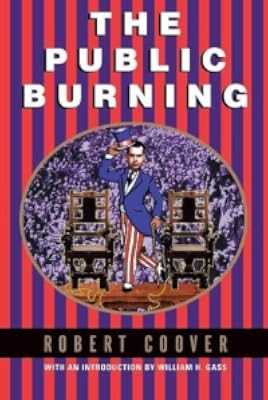
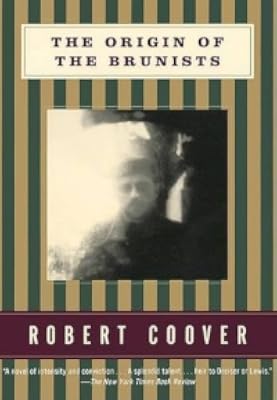
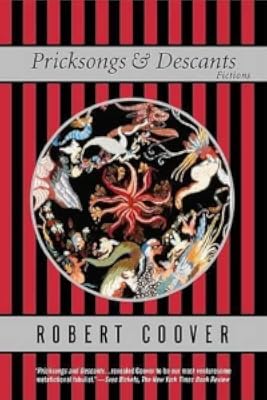
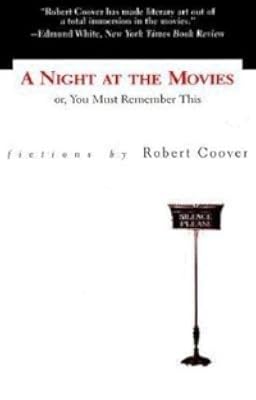
Robert Coover is a midwesterner who has earned a reputation as one of the most innovative of contemporary writers of fiction. Coover likes to experiment with an abundance of differing styles. The Origin of the Brunists (1966), his first novel, is a religious parable heavily loaded with symbolism and mythical parallels. It deals with the rise show more following an Appalachian coal-mine disaster of a sect of worshipers made up of fundamentalists and theosophists whose leader, Giovanni Bruno, is less a preacher than a silent enigma. The principal analogue is apparently meant to be the founding of the Christian religion, but Coover's extensive irony requires that he reverse many of the traditional features of the Christian legend. The Universal Baseball Association (1968), Coover's most accessible novel to date, is also dominated by religious symbolism. Over the years, J. Henry Waugh, a middle-aged bachelor and accountant, has developed an elaborately structured game, which he plays with dice. His game is based on the mathematical probabilities of baseball. Every evening Henry plays his game and maintains his extensive record books. J. Henry Waugh is a surrogate for God, and the participants in his imaginary baseball league seem almost to come to life, raising as they do age-old questions about fate and free will, success and failure, games and religions. Coover's Pricksongs and Descants (1969) is a collection of 20 short pieces and a theoretical "Prologo" in which the author states his belief that contemporary fiction should be based on familiar historical or mythical forms. Most of the stories in this volume, which was well received by critics, are based on biblical episodes or classical fairy tales retold in startling new ways. The Public Burning (1977) is based on the controversial trial of the Rosenbergs. With the exception of a novel, A Night at the Movies (1992), Coover's publications in recent years have consisted mainly of shorter works, written at various stages of his career, published in limited editions to appeal to collectors. Coover is one of the founders of the Electronic Literature Organization. In 1987 he was chosen as the winner of the Rea Award for the Short Story. Coover is indeed one of the foremost short story writers of the postmodern period, as exemplified by the "Seven Exemplary Fictions" contained in his 1969 book Pricksongs and Descants. (Bowker Author Biography) show less
Awards and Honors
Notable Lists
Common Knowledge
- Original publication date
- 1968
- Epigraph
- It is here not at all requisite to prove that such an intellectus archetypus is possible, but only that we are led to the Idea of it ...
Kant, Critique of Judgment - Dedication
- for Pili: co-proprietor
- First words
- Bottom half of the seventh, Brock's boy had made it through another inning unscratched, one! two! three! Twenty-one down and just six outs to go! and Henry's heart was racing, he was sweating with relief and tension all at on... (show all)ce, unable to sit, unable to think, in there, with them! Oh yes, boys, it was on! He was sure of it! More than just another ball game now: history!
- Quotations
- Sometimes, true, in the heat of a pennant chase, for example, his daytime job could be a nuisance, but over the long haul he needed that balance, that rhythmic shift from house to house, and he knew that total one-sided parti... (show all)cipation in the league would soon grow even more oppressive than his job at Dunkelmann, Zauber & Zifferblatt. [141]
- Last words
- (Click to show. Warning: May contain spoilers.)"It's not a trial," says Damon, glove tucked in his armpit, hands working the new ball. Behind him, he knows, Scat Batkin, the batter, is moving toward the plate. "It's not even a lesson. It's just what it is." Damon holds the baseball up between them. It is hard and white and alive in the sun.
He laughs. It's beautiful, that ball. He punches Damon lightly in the ribs with his mitt. "Hang loose," he says, and pulling down his mask, trots back behind home plate. [242]
Classifications
Statistics
- Members
- 855
- Popularity
- 31,902
- Reviews
- 16
- Rating
- (3.68)
- Languages
- English, Italian
- Media
- Paper, Audiobook, Ebook
- ISBNs
- 14
- ASINs
- 18