On This Page
Description
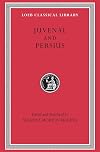
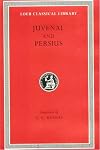
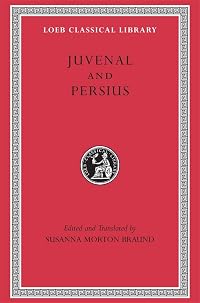
Bite and wit characterize two seminal and stellar authors in the history of satirical writing, Persius (34-62 CE) and Juvenal (writing about sixty years later). The latter especially had a lasting influence on English writers of the Renaissance and succeeding centuries.Tags
Recommendations


Member Reviews
Persius's Prolog (freely translated by AW Powers)
Not along the lonely beaches, nor
From scenery and mountain views, do I
Remember brooding to become a writer.
The beaches and the lonely looks I leave
To pictures on the backs of books.
(Myself, I didn't take Creative Writing.)
Where's the parrot learn, "Polly wanna
Cracker," or crows to speak the English?
From that Master of Arts, Instructor
Stomach, expressing the inexpressible.
If there's the faintest hope of copping fame,
Crowing poets and classroom mavens--
You'd think we sang like wild hill warblers.
The best trans of Juvenal X is of course Sam Johnson's
"Vanity of HUman Wishes." Freely translated, as well.
Not along the lonely beaches, nor
From scenery and mountain views, do I
Remember brooding to become a writer.
The beaches and the lonely looks I leave
To pictures on the backs of books.
(Myself, I didn't take Creative Writing.)
Where's the parrot learn, "Polly wanna
Cracker," or crows to speak the English?
From that Master of Arts, Instructor
Stomach, expressing the inexpressible.
If there's the faintest hope of copping fame,
Crowing poets and classroom mavens--
You'd think we sang like wild hill warblers.
The best trans of Juvenal X is of course Sam Johnson's
"Vanity of HUman Wishes." Freely translated, as well.
"I would advise you to undertake a regular course of history & poetry in both languages ... in Latin read Livy, Caesar, Sallust Tacitus, Cicero’s Philosophies, and some of his Orations, in prose; and Virgil, Ovid’s Metamorphoses, Horace, Terence & Juvenal for poetry." - Thomas Jefferson to Francis Eppes, 6 Oct. 1820
Edition: // Descr: lxxxii, 416 p. 17 cm. // Series: The Loeb Classical Library Call No. { 877 J98.08-L 1 } Series Edited by T.E. Page With an English Translation by G.G. Ramsay Contains Latin and English Versions, Index to Juvenal, and Index to Persius. // //
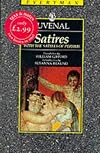
SATIRAS POR DECIO JUVENAL Y AULO PERSIO
576 páginas
Décimo Junio Juvenal, a pesar de ser uno de los mayores poetas satíricos romanos, es un desconocido para nosotros: apenas sabemos de seguro que nació en Aquino (Lacio) en época de Nerón (54-68 d.C.) y que murió durante el imperio de Adriano (117-138); probablemente participó en el ejército y en la vida política, residió en Roma en tiempo del emperador Domiciano y tal vez sufriera exilio.
Sus Sátiras, dieciséis repartidas en cinco libros, son el modelo universal del género, que Juvenal deseó situar a la altura de las poesías épica y trágica y de la oratoria.Lo que a él le interesa es dar la impresión de ser un hombre serio y honesto que no soporta la corrupción y show more degradación de la sociedad romana y que responde ante ellas con una indignación de la que brota su poesía a borbotones. Para dar esta imagen de satírico amargado por la degeneración, Juvenal sabia que no podia admitir en el programa de su sátira el humor, considerado por todos los satiricos precedentes un ingrediente fundamental del género;pues el humor, como señalan Cicerón y Quintiliano en sus tratados de retórica, sirve para mitigar o hacer desaparecer la ira (cf. De Orat. II 236 e Inst. orat. VI 3, 9).
Con el humor su indignación habria resultado menos creible. Por eso Juvenal lo elimina de su programa. Por otra parte, consciente de que la indignación requeria un estilo brillante y encendido, tampoco reivindica el estilo llano del sermon,.Se refieren a la vida en la Roma contemporánea al autor, y tratan con una acidez despiadada y vitriólica a una variopinta galería de personajes: son víctimas de sus pullas los moralistas hipócritas, el estilo de vida en la urbe –en la sátira que muchos consideran la mejor–, el gobierno de Domiciano, las mujeres –en la misógina sátira 6–, los literatos y los maestros, los que creen en la nobleza del linaje y los que sucumben a los vicios sexuales... Pocos son, en suma, los que se salvan de la quema.
De Juvenal se ha apreciado, amén de la singular fuerza expresiva, la sinceridad de su cólera y un inagotable ingenio que ha legado al acervo literario expresiones tan universales como panem et circenses, rara avis in terris y mens sana in corpore sano.
Este volumen completa la imagen de la sátira romana con Persio (34-62 d.C.), quien en su breve vida compuso seis sátiras a la manera de Lucilio y Horacio, que, lejos de la cólera de Juvenal, transmiten una rigurosa moralidad estoica. show less
576 páginas
Décimo Junio Juvenal, a pesar de ser uno de los mayores poetas satíricos romanos, es un desconocido para nosotros: apenas sabemos de seguro que nació en Aquino (Lacio) en época de Nerón (54-68 d.C.) y que murió durante el imperio de Adriano (117-138); probablemente participó en el ejército y en la vida política, residió en Roma en tiempo del emperador Domiciano y tal vez sufriera exilio.
Sus Sátiras, dieciséis repartidas en cinco libros, son el modelo universal del género, que Juvenal deseó situar a la altura de las poesías épica y trágica y de la oratoria.Lo que a él le interesa es dar la impresión de ser un hombre serio y honesto que no soporta la corrupción y show more degradación de la sociedad romana y que responde ante ellas con una indignación de la que brota su poesía a borbotones. Para dar esta imagen de satírico amargado por la degeneración, Juvenal sabia que no podia admitir en el programa de su sátira el humor, considerado por todos los satiricos precedentes un ingrediente fundamental del género;pues el humor, como señalan Cicerón y Quintiliano en sus tratados de retórica, sirve para mitigar o hacer desaparecer la ira (cf. De Orat. II 236 e Inst. orat. VI 3, 9).
Con el humor su indignación habria resultado menos creible. Por eso Juvenal lo elimina de su programa. Por otra parte, consciente de que la indignación requeria un estilo brillante y encendido, tampoco reivindica el estilo llano del sermon,.Se refieren a la vida en la Roma contemporánea al autor, y tratan con una acidez despiadada y vitriólica a una variopinta galería de personajes: son víctimas de sus pullas los moralistas hipócritas, el estilo de vida en la urbe –en la sátira que muchos consideran la mejor–, el gobierno de Domiciano, las mujeres –en la misógina sátira 6–, los literatos y los maestros, los que creen en la nobleza del linaje y los que sucumben a los vicios sexuales... Pocos son, en suma, los que se salvan de la quema.
De Juvenal se ha apreciado, amén de la singular fuerza expresiva, la sinceridad de su cólera y un inagotable ingenio que ha legado al acervo literario expresiones tan universales como panem et circenses, rara avis in terris y mens sana in corpore sano.
Este volumen completa la imagen de la sátira romana con Persio (34-62 d.C.), quien en su breve vida compuso seis sátiras a la manera de Lucilio y Horacio, que, lejos de la cólera de Juvenal, transmiten una rigurosa moralidad estoica. show less
Jan 19, 2018 (Edited)Spanish
Ratings
Members
- Recently Added By
Author Information

141+ Works 2,979 Members
The 16 Satires (c.110--127) of Juvenal, which contain a vivid picture of contemporary Rome under the Empire, have seldom been equaled as biting diatribes. The satire was the only literary form that the Romans did not copy from the Greeks. Horace merely used it for humorous comment on human folly. Juvenal's invectives in powerful hexameters, exact show more and epigrammatic, were aimed at lax and luxurious society, tyranny (Domitian's), criminal excesses, and the immorality of women. Juvenal was so sparing of autobiographical detail that we know very little of his life. He was desperately poor at one time and may have been an important magistrate at another. His influence was great in the Middle Ages; in the seventeenth century he was well translated by Dryden, and in the eighteenth century he was paraphrased by Johnson in his London and The Vanity of Human Wishes. He inspired in Swift the same savage bitterness. (Bowker Author Biography) show less

34+ Works 628 Members
Persius was a native of Etruria and was educated in Rome, where he became Lucan's friend. He wrote six satires in a somewhat contorted style, which inculcate Stoic morality. His sanity and wit have direct appeal. (Bowker Author Biography)
Some Editions
Series
Belongs to Publisher Series
Everyman's Library (997)
Work Relationships
Common Knowledge
- Canonical title
- Juvenal and Persius
- Original title
- Satirae
- Alternate titles
- Satires, Opera
- People/Characters
- Juvenal, Persius, Domitian, Messalina, Catullus (J.'s friend, not the poet)
- Important places
- Rome, Italy; Egypt; Italy
- First words
- "Semper ego auditor tantum? Numquamne reponam?" Juvenal I, 1
- Last words
- (Click to show. Warning: May contain spoilers.)Inventus, Chrysippe, tui finitor acervi.
- Publisher's editor
- Ramsay, G. G.
- Original language
- Latin
Classifications
Statistics
- Members
- 279
- Popularity
- 115,632
- Reviews
- 4
- Rating
- (3.44)
- Languages
- English, French, Latin, Spanish
- Media
- Paper, Ebook
- ISBNs
- 9
- ASINs
- 9