At Play in the Fields of the Lord
by Peter Matthiessen
On This Page
Description
In a malarial outpost in the South American rain forest, two misplaced gringos converge and clash. Martin Quarrier has come to convert the fearful and elusive Niaruna Indians to his brand of Christianity. Lewis Moon, a stateless mercenary who is himself part Indian, has come to kill them on behalf of the local comandante. Out of their struggle, Peter Matthiessen has created an electrifying moral thriller, a novel of Conradian richness that explores both the varieties of spiritual experience show more and the politics of cultural genocide. show lessTags
Recommendations































Member Reviews
The intersection of spiritual, moral, and capitalist colonialism highlights this tale of missionaries and mercenaries with conflicting agendas in a Brazillian jungle. The way the evangelical try to claim victory in bringing christianity to the natives while denouncing their catholic predecessors is the type of pious hypocrisy that reminds me why I left organized relgion behind.
What an exuberant mess of a book! It galloped forward. So much happened. I mean, there is a sheer overwhelming flood of happenings in his book, assaulting the reader almost, at the pace of The Perils of Pauline, a series of "and-then, and then, and-then's"...
I loved that something so well written and so thoughtful and so philosophically rich could also be jam-packed with action. Ridiculous and great at the same time.
I loved that something so well written and so thoughtful and so philosophically rich could also be jam-packed with action. Ridiculous and great at the same time.
I've wanted to read this book since I saw the movie version, several years ago. In it, Peter Matthiessen tells the story of what happens when a group of American Protestant missionaries come to a remote outpost on a tributary of the Amazon river. There they clash with a pair of American mercenaries trying to get their passports back from the military leader and earn enough money to fill the tank of their airplane with gas so they can leave. The military leader is looking for an excuse to wipe out an unruly indigenous group, the Niaruna.
In At Play in the Fields of the Lord, Matthiessen demolishes the idea of the White Savior rescuing a minority group through selflessness and dedication. While there are several important characters, the show more two who are the most interesting are Martin Quarrier, a selfless and self-examining missionary who really wants to understand the Niaruna, and to protect them from the forces threatening them, from annihilation by the government to the missteps of missionaries who break-down tribal ties and encourage dependency, and Lewis Moon who, because he half Native American, has never found himself belonging anywhere. In the Niaruna he sees what might have been for his own culture and so is determined to join the Niaruna and to guide them in how to avoid assimilation.
Through the prism of the mist, the heat of the low jungle sky seemed to focus on this wretched spot, where tarantulas and scorpions and stinging ants accompanied the mosquito and the biting fly into the huts, where the vampire bats, defecating even as they fed, would fasten on exposed toes at night, where one could never be certain that a bushmaster or few-de-lance had not formed its cold coil in a dark corner. In the the river, piranhas swam among the stingrays and candirus and the large crocodilians called lagartos; in adjacent swamps and forests lived the anaconda and the jaguar. But at Remate de Males such creatures were but irritants; the true enemies were the heat and the biting insects, the mud and the nagging fear, more like an ague, of the silent hostile people of the rain forest.
While the Americans, despite bringing only harm, are portrayed with nuance and the Niaruna themselves with respect, the military commander, as well as the indians who support him and live in the town, are treated by Matthiessen with not much more than contempt. It would have been a stronger book had he been able to treat those living between the Americans and the Niaruna with the same complexity as the other characters. Still, At Play in the Fields of the Lord is a fascinating story of what happens when good intentions are not enough. show less
In At Play in the Fields of the Lord, Matthiessen demolishes the idea of the White Savior rescuing a minority group through selflessness and dedication. While there are several important characters, the show more two who are the most interesting are Martin Quarrier, a selfless and self-examining missionary who really wants to understand the Niaruna, and to protect them from the forces threatening them, from annihilation by the government to the missteps of missionaries who break-down tribal ties and encourage dependency, and Lewis Moon who, because he half Native American, has never found himself belonging anywhere. In the Niaruna he sees what might have been for his own culture and so is determined to join the Niaruna and to guide them in how to avoid assimilation.
Through the prism of the mist, the heat of the low jungle sky seemed to focus on this wretched spot, where tarantulas and scorpions and stinging ants accompanied the mosquito and the biting fly into the huts, where the vampire bats, defecating even as they fed, would fasten on exposed toes at night, where one could never be certain that a bushmaster or few-de-lance had not formed its cold coil in a dark corner. In the the river, piranhas swam among the stingrays and candirus and the large crocodilians called lagartos; in adjacent swamps and forests lived the anaconda and the jaguar. But at Remate de Males such creatures were but irritants; the true enemies were the heat and the biting insects, the mud and the nagging fear, more like an ague, of the silent hostile people of the rain forest.
While the Americans, despite bringing only harm, are portrayed with nuance and the Niaruna themselves with respect, the military commander, as well as the indians who support him and live in the town, are treated by Matthiessen with not much more than contempt. It would have been a stronger book had he been able to treat those living between the Americans and the Niaruna with the same complexity as the other characters. Still, At Play in the Fields of the Lord is a fascinating story of what happens when good intentions are not enough. show less
This novel is the story about the impact of outsiders on a tribe of Indians in the Amazon. Essentially two facets of the outsiders (read Western Civilisation) that are explored the "sacred"in the form of missionaries, and the "profane" in the guise of mercenaries. Their stories told in alternating chapters, Lewis Moon and Martin Quarrier both have a purpose in mind - both feel that they can "save" the locals that are yet to come in full contact with Western Civilisation. Moon is part Native American, and at the beginning of our story he is a mercenary hired to kill the Indians. On a drug induced flight, he crashes into the jungle and ingratiates himself into the �wild� Indian tribe. His relationship with the tribe is really an show more extension of his life so far - he doesn't quite fit in, no matter what he does. Quarrier is an evangelical missionary who has travelled with his wife and child to bring the word of God to Indians. Very early on, however, Quarrier has doubts about his own suitability, and then the broad-spectrum suitability of anyone using trickery to force a belief on the Indians. This brings him into conflict with his co-missionary, who is a stereotype of all that is wrong in the missionary movement - this character is a man more interested in his own personal reputation and the number of souls he has saved (or it looks like he has saved) than genuine results.
This is a well written exploration of 'missionaries and misfits' on the edges of civilisation. We have comparisons of Catholics and Evangelicals; comparisons between missionaries who are there for the greater glory of God (or the idea of God at least) and for the greater glory of their own name; and the attempts by different outsiders to "save" a tribe from other outsiders, with more concerns for their own agendas than the welfare of those they are trying to save. Oh, and there is some amazingly insightful writing about interpersonal relationships to boot.
What I liked best about this book was that Matthiessen spared nobody - unlike some novels of this genre, the Indians are not simple noble savages some are cleverer than others; the Indians aren't all environmentally friendly, in-tune with nature good-guys (Moon takes them for task for their wasteful practices, but they don't care)and Matthiessen takes the time to explain the motivations of his characters, something that can be sorely lacking in some novels.
I would recommend this book to anyone who likes a good novel. For those with an interest in the specific topic area (the Amazon, 'Western' culture meets 'natives', missionaries) there is a lot here (if you liked Poisonwood Bible, i you would probably like this). But even if this is not an area you would naturally gravitate to, i would recommend it on the basis of Matthiessen's great writing alone.One point - the first 4 -6 chapters can be hard going, but stick with it - things pick up. show less
This is a well written exploration of 'missionaries and misfits' on the edges of civilisation. We have comparisons of Catholics and Evangelicals; comparisons between missionaries who are there for the greater glory of God (or the idea of God at least) and for the greater glory of their own name; and the attempts by different outsiders to "save" a tribe from other outsiders, with more concerns for their own agendas than the welfare of those they are trying to save. Oh, and there is some amazingly insightful writing about interpersonal relationships to boot.
What I liked best about this book was that Matthiessen spared nobody - unlike some novels of this genre, the Indians are not simple noble savages some are cleverer than others; the Indians aren't all environmentally friendly, in-tune with nature good-guys (Moon takes them for task for their wasteful practices, but they don't care)and Matthiessen takes the time to explain the motivations of his characters, something that can be sorely lacking in some novels.
I would recommend this book to anyone who likes a good novel. For those with an interest in the specific topic area (the Amazon, 'Western' culture meets 'natives', missionaries) there is a lot here (if you liked Poisonwood Bible, i you would probably like this). But even if this is not an area you would naturally gravitate to, i would recommend it on the basis of Matthiessen's great writing alone.One point - the first 4 -6 chapters can be hard going, but stick with it - things pick up. show less
The story is interesting, but is ruined by the stereotypical personalities of the women in the story. The book starts out with an unnecessary scene with a prostituted women, which is annoying, and after that, every time a woman is described, she is some sort of male fantasy, all of them either women to be attracted to or repelled by. This lack of realistic women ruined the story for me.
Although written in 1965 (when Matthiessen was 38) the novel still remains vibrant and relevant, its staying power attested by its transition to film almost 30 years later in 1992. Even though it would seem almost un-filmable, the director did a good job, carried in part by the beautiful photography of the Amazon. The book is basically about the extinction of a smaller culture by a larger more powerful culture - it is no accident the main characters are Jewish and Navajo Indian, two cultures that have historically successfully resisted attempts at genocide. Matthiessen was active with indigenous peoples in the Amazon when he published the non-fiction book "The Cloud Forest" in 1962, just a few years before "Fields of the Lord", the two show more works can be profitably be read in conjunction as both biographical of Matthiessen's evolving views and understanding of the culture and geography. show less
I chose this for a book/movie club because I liked the movie so much, but as the film turned out to be 3+ hours long, we chose The Mission to view. Both are typical missionary-mercenary stories, where people tamper with primitive cultures for different – usually selfish -- reasons (example: Poisonwood Bible). The book starts very slowly, and is a rather negative take on missionaries, but by the sixth chapter it gets into gear, and I found it very thought-provoking, exploring issues of faith, identity and culture from the point of view of missionaries (both Catholic and fundamentalist, American and non-), government officials, and most especially the compelling native American mercenary character who is adrift in every world: Louis Moon.
Members
- Recently Added By
Lists

National Book Award Finalists - Fiction
377 works; 12 members

Blue Pyramid 1,276 Best Books of All Time
1,248 works; 32 members

Fiction about missionaries
34 works; 5 members

The Joe Rogan Experience Library
254 works; 3 members

Gen X Library
245 works; 4 members
Author Information

48+ Works 13,947 Members
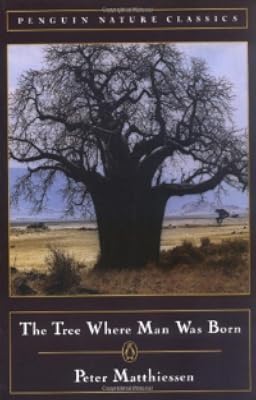
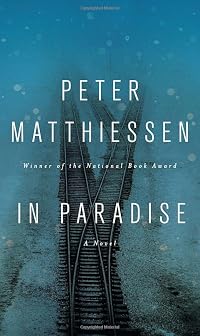
Peter Matthiessen was born in Manhattan, New York on May 22, 1927. He served in the Navy at Pearl Harbor. He graduated with a degree in English from Yale University in 1950. It was around this time that he was recruited by the CIA and traveled to Paris, where he became acquainted with several young expatriate American writers. In the postwar years show more the CIA covertly financed magazines and cultural programs to counter the spread of Communism. While in Paris, he helped found The Paris Review in 1953. After returning to the United States, he worked as a commercial fisherman and the captain of a charter fishing boat. His first novel, Race Rock, was published in 1954. His other fiction works include Partisans, Raditzer, Far Tortuga, and In Paradise. His novel, Shadow Country, won a National Book Award. His novel, At Play in the Fields of the Lord, was made into a movie. He started writing nonfiction after divorcing his first wife. An assignment for Sports Illustrated to report on American endangered species led to the book Wildlife in America, which was published in 1959. His travels took him to Asia, Australia, South America, Africa, New Guinea, the Florida swamps, and beneath the ocean. These travels led to articles in The New Yorker as well as numerous nonfiction books including The Cloud Forest: A Chronicle of the South American Wilderness, Under the Mountain Wall: A Chronicle of Two Seasons of Stone Age New Guinea, Blue Meridian: The Search for the Great White Shark, The Tree Where Man Was Born, and Men's Lives. The Snow Leopard won the 1979 National Book Award for nonfiction. He died from leukemia on April 5, 2014 at the age of 86. (Bowker Author Biography) show less
Awards and Honors
Awards
Distinctions
Series
Belongs to Publisher Series
Harvill (14)
Work Relationships
Is contained in
Has the adaptation
Common Knowledge
- Original title
- At Play in the Fields of the Lord
- Original publication date
- 1965
- People/Characters
- Lewis Moon; Martin Quarrier
- Important places
- South America
- Related movies
- At Play in the Fields of the Lord (1991 | IMDb)
- Epigraph
- The way to innocence, to the uncreated and to God leads on, not back, not back to the wolf or to the child, but ever further into sin, ever deeper into human life. -- Hermann Hesse
- Dedication
- For Luke and Carey, Rue and Alex
- First words
- In the jungle, during one night in each month, the moths did not come to lanterns; through the black reaches of the outer night, so it was said, they flew toward the full moon.
- Last words
- (Click to show. Warning: May contain spoilers.)At dark he built an enormous fire, in celebration of the only man beneath the eye of Heaven.
Classifications
Statistics
- Members
- 993
- Popularity
- 26,504
- Reviews
- 17
- Rating
- (3.91)
- Languages
- 7 — Czech, Dutch, English, French, German, Spanish, Swedish
- Media
- Paper, Audiobook, Ebook
- ISBNs
- 35
- UPCs
- 1
- ASINs
- 21