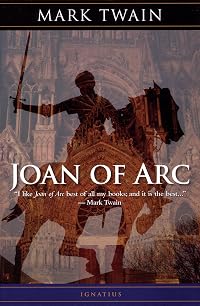
Joan of Arc
by Mark Twain 
On This Page
Description
Regarded by many as the most luminous example of Twain's work, this historical novel chronicles the French heroine's life, as purportedly told by her longtime friend, Sieur Louis de Conte. A panorama of stirring scenes recount Joan's childhood in Domremy, the story of her voices, the fight for Orleans, the splendid march to Rheims, and much more. An amazing record that disclosed Twain's unrestrained admiration for Joan's nobility of character, the book is matchless in its workmanship--one of show more Twain's lesser-known novels that will charm and delightfully surprise his admirers and devotees. show lessTags
Recommendations











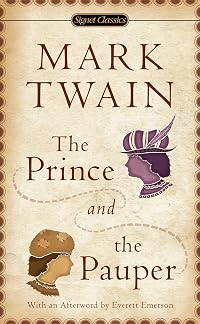
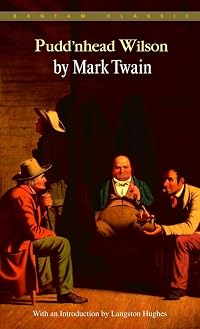















Member Recommendations
Member Reviews
I read this book during college in the ‘90s after finding it in the stacks on a search for a forgotten topic. Having been raised Catholic, I knew all the major saints stories including Joan of Arc who I considered one of the cool ones. Most of the stories I read came from saint’s cards or booklets from the church. When I saw Twain’s book, I felt shock at his writing her story and, along with a large dictionary, read the book in a couple of days.
I recently reread the book to determine if my impressions of it would remain. While it’s not a perfect book, his scholarship and details create images of the places and people that evoke an emotional response. His descriptions of how she understands her voices helps to understand her. It show more also helps to understand how those voices drove her to such an incredible leadership position at that time and in that place. Twain keeps her fury through the book, which is remarkable considering when he was writing.
I wondered why Twain wrote this book. What compelled him to write a somber book about a furious Catholic girl who died as a heretic? To me, in the pre-Internet era, Twain’s obsession with Joan of Arc was a big riddle. While he had published two books set in midieval Europe, this book differed considerably in tone and topic. Twain wrote it as personal recollections sourced from the trial transcripts and a history of France. I read the story through my feminist lenses as a strong, resolute woman who never backs down even in the face of an incredibly painful and public death.
In a strange coincidence, a local call-in radio show was hosting a Twain scholar not too long after I read the book. He said he did not expect a question about that book. I didn’t expect him to tell me that Twain viewed Joan differently than I did. In Twain’s narrative, Joan’s virtue, her youth and subsequent purity, appealed to Twain and in later years he would rail against those who portrayed her as a stout, almost masculine figure. He said that Twain was in a period in which he increasingly valued innocence and came to saw it embodied in young women.
I still find the book remarkable no matter the intent of the author. We see our historical “heroes” as we want to see them. Twain valued her for her purity in the face of unrelenting suffering. I value her for her integrity and incredible courage. It’s a remarkable book. show less
I recently reread the book to determine if my impressions of it would remain. While it’s not a perfect book, his scholarship and details create images of the places and people that evoke an emotional response. His descriptions of how she understands her voices helps to understand her. It show more also helps to understand how those voices drove her to such an incredible leadership position at that time and in that place. Twain keeps her fury through the book, which is remarkable considering when he was writing.
I wondered why Twain wrote this book. What compelled him to write a somber book about a furious Catholic girl who died as a heretic? To me, in the pre-Internet era, Twain’s obsession with Joan of Arc was a big riddle. While he had published two books set in midieval Europe, this book differed considerably in tone and topic. Twain wrote it as personal recollections sourced from the trial transcripts and a history of France. I read the story through my feminist lenses as a strong, resolute woman who never backs down even in the face of an incredibly painful and public death.
In a strange coincidence, a local call-in radio show was hosting a Twain scholar not too long after I read the book. He said he did not expect a question about that book. I didn’t expect him to tell me that Twain viewed Joan differently than I did. In Twain’s narrative, Joan’s virtue, her youth and subsequent purity, appealed to Twain and in later years he would rail against those who portrayed her as a stout, almost masculine figure. He said that Twain was in a period in which he increasingly valued innocence and came to saw it embodied in young women.
I still find the book remarkable no matter the intent of the author. We see our historical “heroes” as we want to see them. Twain valued her for her purity in the face of unrelenting suffering. I value her for her integrity and incredible courage. It’s a remarkable book. show less
It's hard to know just what to make of Mark Twain's Joan of Arc. Twain was an unbeliever who disliked patriotism and war, and hated the medieval period with its monarchy and feudalism and frequently mocked attempts to romanticize it (in, for instance, A Connecticut Yankee in King Arthur's Court, and even, to a lesser extent, in The Prince and the Pauper). And yet he clearly idolized the devoutly faithful, patriotic, king-crowning general Joan of Arc. Huh?
But in the preface, Twain specifies the quality in her which he found fundamentally worthy of admiration: "She was perhaps the only entirely unselfish person whose name has a place in profane history." And he stresses this theme throughout the book. I guess it doesn't matter if she show more devotes her life to ideals which Twain was given to regularly skewering, just so long as she wasn't so profane as to ever do anything for herself.
Still, there are some indications that perhaps some of this should be taken with a grain of salt, as when the narrator tells of a dragon that lived in the woods near their childhood village: "It was thought that this dragon was of a brilliant blue colour, with gold mottlings, but no one had ever seen it, therefore this was not known to be so, it was only an opinion. It was not my opinion; I think there is no sense in forming an opinion when there is no evidence to form it on. If you build a person without any bones in him, he may look fair enough to the eye, but he will be limber and cannot stand up; and I consider that evidence is the bones of an opinion. But I will take up this matter more at large at another time, and try to make the justness of my position appear. As to that dragon, I always held the belief that its colour was gold and without blue, for that has always been the colour of dragons."
The narrator, as well as a couple of other characters in Joan's personal retinue, especially the Paladin and Noël Rainguesson, also provide some comic relief. Unfortunately, some of this seems to have little to do with Joan's story, and seems to be included just to allow Twain to write in his more natural comedic style for a while. And some of the recurring jokes---about the Paladin's wild exaggerations of his feats of arms, for example---become a bit redundant.
The main storyline about Joan suffers from occasional repetitiousness as well. Much of the book seems to be: Joan makes impossible prediction, prediction is fulfilled, everyone is amazed...Joan goes on to make even more wonderful prophecy, everyone is again astonished when it too comes to pass...etc., etc. But when that's not going on, the more credible events of Joan's life are quite fascinating. The story of a young peasant girl who rises to command armies to defend her homeland naturally evokes much admiration and pathos, and Twain might have been better off laying more stress on that aspect of it. But he does, to some extent, in the final part of the book about Joan's trial and execution, which is where everything really comes together. show less
But in the preface, Twain specifies the quality in her which he found fundamentally worthy of admiration: "She was perhaps the only entirely unselfish person whose name has a place in profane history." And he stresses this theme throughout the book. I guess it doesn't matter if she show more devotes her life to ideals which Twain was given to regularly skewering, just so long as she wasn't so profane as to ever do anything for herself.
Still, there are some indications that perhaps some of this should be taken with a grain of salt, as when the narrator tells of a dragon that lived in the woods near their childhood village: "It was thought that this dragon was of a brilliant blue colour, with gold mottlings, but no one had ever seen it, therefore this was not known to be so, it was only an opinion. It was not my opinion; I think there is no sense in forming an opinion when there is no evidence to form it on. If you build a person without any bones in him, he may look fair enough to the eye, but he will be limber and cannot stand up; and I consider that evidence is the bones of an opinion. But I will take up this matter more at large at another time, and try to make the justness of my position appear. As to that dragon, I always held the belief that its colour was gold and without blue, for that has always been the colour of dragons."
The narrator, as well as a couple of other characters in Joan's personal retinue, especially the Paladin and Noël Rainguesson, also provide some comic relief. Unfortunately, some of this seems to have little to do with Joan's story, and seems to be included just to allow Twain to write in his more natural comedic style for a while. And some of the recurring jokes---about the Paladin's wild exaggerations of his feats of arms, for example---become a bit redundant.
The main storyline about Joan suffers from occasional repetitiousness as well. Much of the book seems to be: Joan makes impossible prediction, prediction is fulfilled, everyone is amazed...Joan goes on to make even more wonderful prophecy, everyone is again astonished when it too comes to pass...etc., etc. But when that's not going on, the more credible events of Joan's life are quite fascinating. The story of a young peasant girl who rises to command armies to defend her homeland naturally evokes much admiration and pathos, and Twain might have been better off laying more stress on that aspect of it. But he does, to some extent, in the final part of the book about Joan's trial and execution, which is where everything really comes together. show less
I'm not one to applaud a heedless devotion to faith and country, but I do love Joan of Arc and I like that while Twain usually satirizes these traits in society, he glorifies them in the Maid. If her conviction to God and France were not complete, she would not have achieved her goals. Throughout the trial portion of the telling, I was repeatedly convinced that she would overcome her accusers and prevail, until I of course remembered that I already knew the ending, which never failed to upset me.
She was an unschooled country peasant that lifted the fortunes of her uncrowned King and nation on her shoulders, but when she needed them was abandoned. Joan of Arc stands alone among Mark Twain’s bibliography as a historical novel about the one person in history he admires above all others.
Twain’s account of Joan of Arc’s life is written from the perspective of a fictional version of Joan’s former secretary and page Sieur Louis de Conte written at the end of his life to his great-nephews and nieces. The first part of the book focuses on her life in the village of Domremy, essentially where all but the last two years of her life occurred, and the beginning of her visions then quest to fulfill the commission she received. The show more second part is her successful meeting with the King, formal acknowledgement of the Church that she wasn’t a witch, then her year-long military campaign—with numerous breaks due to political interference and foot dragging by Charles VII—that saw her mission completed, and finally her capture by the Burgundians. The final part of the book was of her year in captivity and the long grueling “legal” process that the English-paid French clergy put her through to murder her as a heretic. The final chapter is of Conte giving a brief account of the feckless Charles VII waiting over two decades to Rehabilitate his benefactor after allowing her to be murdered by not paying her ransom all those years before.
This was a labor of love for Twain to write and it was easy to tell given how professionally researched it was in every detail. While many 20th-Century critics and other Twain admirers don’t like this book because it’s not “classic” Twain because of his praise of Joan given that she’s French, Catholic, and a martyr when he disliked or hated all three; they didn’t seem to understand his hero worship of this teenage girl who put a nation on her shoulders to resurrect its existence. Yet, while this was a straight historical novel there are touches of Twain especially in Conte’s “relating” the adventures of the Domremy boys when they were not in Joan’s presence, especially Paladin.
Joan of Arc is not the typical Mark Twain work, but that doesn’t mean one can not appreciate it for well, if not professionally, researched historical novel that it is. show less
Twain’s account of Joan of Arc’s life is written from the perspective of a fictional version of Joan’s former secretary and page Sieur Louis de Conte written at the end of his life to his great-nephews and nieces. The first part of the book focuses on her life in the village of Domremy, essentially where all but the last two years of her life occurred, and the beginning of her visions then quest to fulfill the commission she received. The show more second part is her successful meeting with the King, formal acknowledgement of the Church that she wasn’t a witch, then her year-long military campaign—with numerous breaks due to political interference and foot dragging by Charles VII—that saw her mission completed, and finally her capture by the Burgundians. The final part of the book was of her year in captivity and the long grueling “legal” process that the English-paid French clergy put her through to murder her as a heretic. The final chapter is of Conte giving a brief account of the feckless Charles VII waiting over two decades to Rehabilitate his benefactor after allowing her to be murdered by not paying her ransom all those years before.
This was a labor of love for Twain to write and it was easy to tell given how professionally researched it was in every detail. While many 20th-Century critics and other Twain admirers don’t like this book because it’s not “classic” Twain because of his praise of Joan given that she’s French, Catholic, and a martyr when he disliked or hated all three; they didn’t seem to understand his hero worship of this teenage girl who put a nation on her shoulders to resurrect its existence. Yet, while this was a straight historical novel there are touches of Twain especially in Conte’s “relating” the adventures of the Domremy boys when they were not in Joan’s presence, especially Paladin.
Joan of Arc is not the typical Mark Twain work, but that doesn’t mean one can not appreciate it for well, if not professionally, researched historical novel that it is. show less
This isn't so much a critical review of the life of Joan of Arc as it is an ode of love. It seems clear that Mark Twain and his narrator are both in love with her. However, the constant praise of her makes her into a rather one dimensional marble goddess rather than fleshing out an entirely intriguing human being. It's an interesting approach, in that the book is narrated by a childhood friend who becomes her clerk and is at her side through the efforts to be taken seriously by the French authorities and then the successful battles. He also manages to wangle himself a place as a clerk at her trial and execution. It is told in retrospect, as an old man recounting his experiences some 60 years ago, so there is always a sense that the end show more is known by both the narrator and the reader. Which is a neat way of getting round the fact that we do know the end - there can be little suspense from that point of view.
It is somewhat long and feels padded by the way he can't praise Joan with one word, he uses half a page. Each and every time at it becomes just a little wearisome. The early years are where she appears to have the most life and sparkle, and seems like a human being.
Some people don;t come out of this very well - the french King she expands so much effort to crown is a weasly little man who doesn't deserve to be favoured by Joan or God. And the bishop (French - which i didn't realise) who stage manages her trial might well sue for defamation at every turn. In that sense it is a bit pantomimic - all black and white, very little in the way of shades of grey. But I suppose that contrast is what makes it dramatic. Stops, abruptly, at her execution. Oddly enough, the English don;t come out of this all badly. they're portrayed as a fairly honourable foe, and while they do execute Joan, they don;t actually try her - that's performed by the French clergy (well at least those under English rule) and they get the bad press they seem to deserve.
As a history, the facts are in the right order and it works. As a piece of biography, I'm not sure you end up learning much more about the person - it's all about the legend. show less
It is somewhat long and feels padded by the way he can't praise Joan with one word, he uses half a page. Each and every time at it becomes just a little wearisome. The early years are where she appears to have the most life and sparkle, and seems like a human being.
Some people don;t come out of this very well - the french King she expands so much effort to crown is a weasly little man who doesn't deserve to be favoured by Joan or God. And the bishop (French - which i didn't realise) who stage manages her trial might well sue for defamation at every turn. In that sense it is a bit pantomimic - all black and white, very little in the way of shades of grey. But I suppose that contrast is what makes it dramatic. Stops, abruptly, at her execution. Oddly enough, the English don;t come out of this all badly. they're portrayed as a fairly honourable foe, and while they do execute Joan, they don;t actually try her - that's performed by the French clergy (well at least those under English rule) and they get the bad press they seem to deserve.
As a history, the facts are in the right order and it works. As a piece of biography, I'm not sure you end up learning much more about the person - it's all about the legend. show less
I've owned this book for some 15 years after buying it from my hometown library. It's the 1896 first edition, illustrated throughout, though with a very garish orange library binding. It turns out there is a Wikipedia entry on this book; geez, I wish mine still had that beautiful original cover. At 461 pages in small print, it's no wonder I put off reading it for so long, but I'm finally glad I did.
Samuels Clemens - also known as Mark Twain - wrote this under a pen name. The book is presented as a first person account of Joan's life from her childhood friend and scribe. However, it's rather unconventional as first person because there is very little text using the "I" pronoun. The narrator regards his long life as being insignificant show more compared to the brief, beautiful spark of existence that Joan had, and she is the one emphasized. He is simply an observer blessed to know her.
The text is flowery and sometimes dense, but once I fell into the groove I really enjoyed it. This really comes across as a labor of love. We follow Joan's life from young childhood up to her fiery death. A full third of the text is devoted to her trial alone, which makes for fascinating reading, even as it frustrates me to see someone so good treated so cruelly. Joan of Arc is an amazing individual, whether or not you believe she was truly guided by God.
I definitely have a renewed interest in Joan of Arc and will be searching for more quality books on her. If any of you have any recommendations, please comment and let me know! show less
Samuels Clemens - also known as Mark Twain - wrote this under a pen name. The book is presented as a first person account of Joan's life from her childhood friend and scribe. However, it's rather unconventional as first person because there is very little text using the "I" pronoun. The narrator regards his long life as being insignificant show more compared to the brief, beautiful spark of existence that Joan had, and she is the one emphasized. He is simply an observer blessed to know her.
The text is flowery and sometimes dense, but once I fell into the groove I really enjoyed it. This really comes across as a labor of love. We follow Joan's life from young childhood up to her fiery death. A full third of the text is devoted to her trial alone, which makes for fascinating reading, even as it frustrates me to see someone so good treated so cruelly. Joan of Arc is an amazing individual, whether or not you believe she was truly guided by God.
I definitely have a renewed interest in Joan of Arc and will be searching for more quality books on her. If any of you have any recommendations, please comment and let me know! show less
This was an appealing, but flawed in style, historical novel denoting the history of Joan of Arc. There was intrigue, danger, excitement, and interesting events happening here. Yet, the writing was stiff and forced in this one, much more so than in other Twain works. Nonetheless, I do believe it's worth reading, for there are pearls in here to gander at.
3.25 stars.
3.25 stars.
Members
- Recently Added By
Lists

Best books about Joan of Arc
14 works; 6 members

CCE 1000 Good Books List
1,033 works; 12 members

Fiction (Mostly) in Selective Bibliography of American Literature 1775-1900
431 works; 3 members

Beautiful Feet Books
304 works; 7 members

Ambleside Year 7
69 works; 1 member

el
1,139 works; 1 member

Authors' Favourites
18 works; 5 members
Author Information

2,761+ Works 209,267 Members
Mark Twain was born Samuel L. Clemens in Florida, Missouri on November 30, 1835. He worked as a printer, and then became a steamboat pilot. He traveled throughout the West, writing humorous sketches for newspapers. In 1865, he wrote the short story, The Celebrated Jumping Frog of Calaveras County, which was very well received. He then began a show more career as a humorous travel writer and lecturer, publishing The Innocents Abroad in 1869, Roughing It in 1872, and, Gilded Age in 1873, which was co-authored with Charles Dudley Warner. His best-known works are The Adventures of Tom Sawyer, Mississippi Writing: Life on the Mississippi, and The Adventures of Huckleberry Finn. He died of a heart attack on April 21, 1910. (Bowker Author Biography) show less
Mark Twain has a Legacy Library. Legacy libraries are the personal libraries of famous readers, entered by LibraryThing members from the Legacy Libraries group.
All Editions
Some Editions
Work Relationships
Is contained in
Historical Romances: The Prince and the Pauper / A Connecticut Yankee in King Arthur's Court / Personal Recollections of Joan of Arc by Mark Twain
Contains
Is retold in
Has the adaptation
Has as a reference guide/companion
Common Knowledge
- Canonical title
- Joan of Arc
- Original title
- Personal recollections of Joan of Arc, by the Sieur Louis de Conte
- Original publication date
- 1896
- People/Characters
- Joan of Arc (Jeanne d'Arc); Charles VII, King of France
- Important places
- Orléans, Loiret, Centre-Val de Loire, France; Reims, Marne, Grand-Est, France; Rouen, Seine-Maritime, Normandy, France; France
- Important events
- Hundred Years' War (1337 | 1453); Siege of Orléans (1428-10-12 | 1429-05-08); Coronation of Charles VII of France (1429-07-17); Execution of Joan of Arc (1431-05-30); Middle Ages
- Original language
- English
Classifications
Statistics
- Members
- 2,587
- Popularity
- 7,348
- Reviews
- 30
- Rating
- (4.00)
- Languages
- 10 — Czech, English, Finnish, French, Hungarian, Italian, Portuguese, Russian, Spanish, Swedish
- Media
- Paper, Audiobook, Ebook
- ISBNs
- 137
- UPCs
- 2
- ASINs
- 95