On This Page
Description
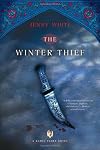
Special Prosecutor Kamil Pasha encounters his most ruthless adversary to date: Vahid, head of a special branch of the secret police, who has convinced the sultan that a socialist commune is leading a secessionist movement and should be destroyed--along with surrounding villages. Kamil must stop the massacre, but he finds himself on the wrong side of the law, framed for murder and accused of treason.Tags
Recommendations





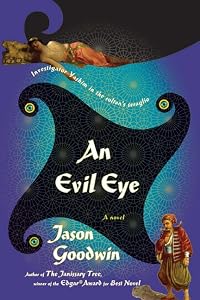


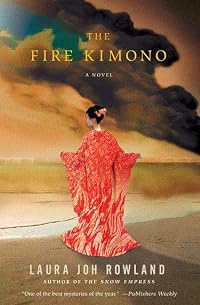
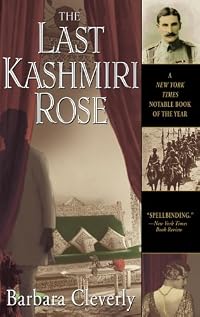


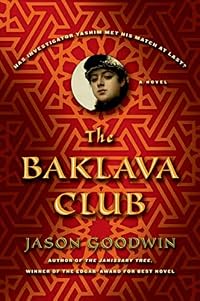


















Member Reviews
I got this book through the LT Early Reviewer program. It is book 3 of the Kamil Pasha mystery series. It is set in 1888 in a remote Turkish valley and Istanbul in the Ottoman Empire.
I had it on my wishlist to pick up when it was published in tradepaper, so I was going to read it anyway. I have books 1 (The Sultan's Seal) & 2 (The Abyssinian Proof), but have not yet read them. That lack did not hamper my enjoyment of this book. The characters and relationships are well defined. I am already familiar with the Ottoman Empire, so I understood the undercurrents, politics and social setting.
I loved this book. It took me a bit to get into it, but when I did, I lost myself. I just disappeared and ended up in the world of the story and the show more characters. White is spot on in depicting the time period, setting and characters in terms of making a seamless whole with nothing jarring you out of the book and back into the modern world.
There are several POV characters, but the main one is Kamil Pasha, a magistrate in the Ministry of Justice in Istanbul. He is a rich and powerful man, but still must be careful of other bureaucrats. There is backbiting, jealousy and intrigue in those surrounding the Sultan. Kamil becomes locked in a battle with Vahid the head of a new secret police agency. The Vizier is under Vahid's sway and he tries to influence the Sultan against Kamil. Vahid is feeding the Sultan's fear of invasion by the Russians and attempted uprisings by ethnic minorities.
The story is about a group of Russian-Armenians who come to Turkey to start a communist worker's commune in a remote valley. They have been hounded out of Czarist Russia. Vahid paints them as revolutionaries and terrorists. He wants to wipe them out along with the people who live in the surrounding villages, also Armenians, whom he feels must be in league with the newcomers. Vahid wants advancement and power and doesn't care who he kills or slanders to get it.
The Russians are dedicated to the idea of an egalitarian workers' commune, and oblivious to the local Armenian political factions, and the enmity of the Ottoman rulers. Politically naive, they try to smuggle weapons for their protection, which are intercepted. Using local Armenians with their own agenda, they rob an imperial bank, which turns deadly. These crimes feed into the idea that they are dangerous to the empire. Kamil tries to untangle the truth to prevent a slaughter since the Sultan is being advised to send in his irregular Kurdish troops to kill everyone in the valley.
One of the POVs is an upper class Russian, Vera, who has married an operative in the new commune. She is dedicated to him and the idea of uplifting the workers - but she is idealistic and has no practical experience. She doesn't know how to do cloak and dagger and falls into the hands of the secret police. We see the secret police, the local Armenian community and the commune through her eyes.
Amid all the professional chaos Kamil is also shown with his family. He dotes on his sister Feride and is smitten by her friend, Elif. He visits Feride and her husband Huseyin, also an Ottoman official, often, since Elif is there a lot. She is Armenian and a refugee from a Turkish police action. She has not recovered from the trip where her husband and son were murdered. She likes Kamil but is unready to move forward with him.
Kamil also has connections with a very powerful older man, Yorg Pasha. He is an Uncle and also a weapons' dealer and he helps Kamil to understand the aims of the new Russian immigrants. Kamil works with Omar, a Police chief in a section of Istanbul who is a good personal and professional friend.
Eventually Kamil's personal and professional life converge when Huseyin is a victim of the aftermath of the bank robbery and goes missing. Feride and Elif are out searching for him, and having to fend of the attacks of Vahid's men. Missing Huseyin has somehow drawn Vahid's ire.
Kamil is framed for a murder committed by the sadistic Vahid and incarcerated. When released he is sent to the remote valley by the Sultan on a fact finding mission; he succeeds in planting doubt about the motives and truthfulness of Vahid and the Vizier. Left on his own, the Sultan changes his mind and sends the troops to attack after Kamil has gone to the valley. Notification recalling Kamil is mysteriously never sent and he and Omar and the tag-along Elif, are caught in the middle of the fight.
The story had many twists and turns with many settings. They were all done well and I was never lost or confused. The setting and people seemed real and I cared about them. The writing was very good and gripping.
I plan to read the first 2 books in the series soon, and will continue to follow the series when the next book comes out.
This was one of my top 5 reads this year. It reminds me in setting and quality of the mystery series by Jason Goodwin, also set in the Ottoman Empire: Inspector Yashim Togalu : (The Snake Stone and The Janissary Tree). show less
I had it on my wishlist to pick up when it was published in tradepaper, so I was going to read it anyway. I have books 1 (The Sultan's Seal) & 2 (The Abyssinian Proof), but have not yet read them. That lack did not hamper my enjoyment of this book. The characters and relationships are well defined. I am already familiar with the Ottoman Empire, so I understood the undercurrents, politics and social setting.
I loved this book. It took me a bit to get into it, but when I did, I lost myself. I just disappeared and ended up in the world of the story and the show more characters. White is spot on in depicting the time period, setting and characters in terms of making a seamless whole with nothing jarring you out of the book and back into the modern world.
There are several POV characters, but the main one is Kamil Pasha, a magistrate in the Ministry of Justice in Istanbul. He is a rich and powerful man, but still must be careful of other bureaucrats. There is backbiting, jealousy and intrigue in those surrounding the Sultan. Kamil becomes locked in a battle with Vahid the head of a new secret police agency. The Vizier is under Vahid's sway and he tries to influence the Sultan against Kamil. Vahid is feeding the Sultan's fear of invasion by the Russians and attempted uprisings by ethnic minorities.
The story is about a group of Russian-Armenians who come to Turkey to start a communist worker's commune in a remote valley. They have been hounded out of Czarist Russia. Vahid paints them as revolutionaries and terrorists. He wants to wipe them out along with the people who live in the surrounding villages, also Armenians, whom he feels must be in league with the newcomers. Vahid wants advancement and power and doesn't care who he kills or slanders to get it.
The Russians are dedicated to the idea of an egalitarian workers' commune, and oblivious to the local Armenian political factions, and the enmity of the Ottoman rulers. Politically naive, they try to smuggle weapons for their protection, which are intercepted. Using local Armenians with their own agenda, they rob an imperial bank, which turns deadly. These crimes feed into the idea that they are dangerous to the empire. Kamil tries to untangle the truth to prevent a slaughter since the Sultan is being advised to send in his irregular Kurdish troops to kill everyone in the valley.
One of the POVs is an upper class Russian, Vera, who has married an operative in the new commune. She is dedicated to him and the idea of uplifting the workers - but she is idealistic and has no practical experience. She doesn't know how to do cloak and dagger and falls into the hands of the secret police. We see the secret police, the local Armenian community and the commune through her eyes.
Amid all the professional chaos Kamil is also shown with his family. He dotes on his sister Feride and is smitten by her friend, Elif. He visits Feride and her husband Huseyin, also an Ottoman official, often, since Elif is there a lot. She is Armenian and a refugee from a Turkish police action. She has not recovered from the trip where her husband and son were murdered. She likes Kamil but is unready to move forward with him.
Kamil also has connections with a very powerful older man, Yorg Pasha. He is an Uncle and also a weapons' dealer and he helps Kamil to understand the aims of the new Russian immigrants. Kamil works with Omar, a Police chief in a section of Istanbul who is a good personal and professional friend.
Eventually Kamil's personal and professional life converge when Huseyin is a victim of the aftermath of the bank robbery and goes missing. Feride and Elif are out searching for him, and having to fend of the attacks of Vahid's men. Missing Huseyin has somehow drawn Vahid's ire.
Kamil is framed for a murder committed by the sadistic Vahid and incarcerated. When released he is sent to the remote valley by the Sultan on a fact finding mission; he succeeds in planting doubt about the motives and truthfulness of Vahid and the Vizier. Left on his own, the Sultan changes his mind and sends the troops to attack after Kamil has gone to the valley. Notification recalling Kamil is mysteriously never sent and he and Omar and the tag-along Elif, are caught in the middle of the fight.
The story had many twists and turns with many settings. They were all done well and I was never lost or confused. The setting and people seemed real and I cared about them. The writing was very good and gripping.
I plan to read the first 2 books in the series soon, and will continue to follow the series when the next book comes out.
This was one of my top 5 reads this year. It reminds me in setting and quality of the mystery series by Jason Goodwin, also set in the Ottoman Empire: Inspector Yashim Togalu : (The Snake Stone and The Janissary Tree). show less
 This review was written for LibraryThing Early Reviewers.
Jenny White has created a pretty memorable character in Kamil Pasha, the hero of The Winter Thief. He's a magistrate in the service of the Sultan of the Ottoman Empire in the late 19th century charged with finding who's trying to import illegal weapons, while also investigating a robbery at a very important bank. The solution to these mysteries leads him into the Turk-Armenian conflict and the sphere of socialists who might be trying to overthrow the Empire for a Marxist state.
The Winter Thief is a decent police procedural, but even better, it's a wonderful look into the political stew that was the Ottoman Empire. White shows scenes of privilege and want, of power seekers and idealist who want to change the world by violent means, if show more necessary. It's a fascinating place and time.
This is the third book in the series, however, The Winter Thief easily stands alone just fine. I'll definitely be looking for the first two, though! show less
The Winter Thief is a decent police procedural, but even better, it's a wonderful look into the political stew that was the Ottoman Empire. White shows scenes of privilege and want, of power seekers and idealist who want to change the world by violent means, if show more necessary. It's a fascinating place and time.
This is the third book in the series, however, The Winter Thief easily stands alone just fine. I'll definitely be looking for the first two, though! show less
This review was written for LibraryThing Early Reviewers.The plot of Jenny White’s new Kamil Pasha mystery, set in late 19th century Istanbul, is well, byzantine, and that is a good thing. This was my first exposure to Kamil Pasha, a wealthy Special Prosecutor for the Istanbul police who features in two previous mysteries. Sultan Abdulhamid II, while still an absolute ruler, sits uneasily on the throne of the Ottoman Empire. There are pressures at every turn: an expanding Russia to the north, Armenian nationalists to the East, rebellious provinces in the Balkans and meddling foreign powers, waiting for the “sick man of Europe” to expire. This political setting, with various factions vying for influence, provides a great background to this novel.
The action in “The Winter Thief” gets show more moving when a shipload of guns discovered in Istanbul’s harbor is confiscated by police, almost immediately followed by a mysterious explosion and robbery of the Imperial Ottoman Bank. Several suspects are on the short list, and a series of disappearances and murders quickly serve to thicken the plot. Is it the Armenians? A rogue arm of the secret police? Will the English or French use the incident as a reason to intervene?
White’s setting of Istanbul in the late 1800s and her choice of Kamil Pasha are both refreshing. The historical mystery is a unique genre and relies on the author’s abilities to keep the interest and suspense boiling, while nailing down the historical period, always insuring that her detective’s sleuthing rings true to the setting and the time. Judging from White’s work in “The Winter Thief” these standards are met and my interest was well engaged throughout the novel. Adding to this was the interesting angle of learning about the status of Armenians within Turkey in 1888. The culminating events of the novel, seemed a little far-fetched, but certainly within the realm of possibility, especially considering the later ethnic cleansing suffered by Armenians at Turkish hands. I plan to read the previous Kamil Pasha mysteries and will look forward to a sequel. show less
The action in “The Winter Thief” gets show more moving when a shipload of guns discovered in Istanbul’s harbor is confiscated by police, almost immediately followed by a mysterious explosion and robbery of the Imperial Ottoman Bank. Several suspects are on the short list, and a series of disappearances and murders quickly serve to thicken the plot. Is it the Armenians? A rogue arm of the secret police? Will the English or French use the incident as a reason to intervene?
White’s setting of Istanbul in the late 1800s and her choice of Kamil Pasha are both refreshing. The historical mystery is a unique genre and relies on the author’s abilities to keep the interest and suspense boiling, while nailing down the historical period, always insuring that her detective’s sleuthing rings true to the setting and the time. Judging from White’s work in “The Winter Thief” these standards are met and my interest was well engaged throughout the novel. Adding to this was the interesting angle of learning about the status of Armenians within Turkey in 1888. The culminating events of the novel, seemed a little far-fetched, but certainly within the realm of possibility, especially considering the later ethnic cleansing suffered by Armenians at Turkish hands. I plan to read the previous Kamil Pasha mysteries and will look forward to a sequel. show less
This review was written for LibraryThing Early Reviewers.“What’s a lodos?”
“When it suddenly gets hot like this in the winter, it means a hot wind will blow in from the Southwest. It brings wind demons that dance on the water, kicking up their heels.”
“The Winter Thief” by Jenny White
I love a good mystery, but if it’s placed in an exotic locale, during an interesting (if not pivotal) point in history, and has several captivating love stories interwoven through it, then apparently everything else in my life goes on the back burner, because I’m hooked.
I want to write this review while this wonderful book is still fresh in my head. Then I can go do the Christmas shopping, decorating, cooking, etc., & etc. that I’ve put off while reading it. (Fortunately, there are 9 days show more left!)
I don’t want to give away too much of the story and spoil it for others, but I will say that the action begins with an idealistic, but naïve young Russian couple, Vera & Gabriel Arti. Gabriel is busy supplying & arming a commune he’s hoping to lead as a Socialist Utopia. In fact, unbeknownst to Vera, he’s arranged for a shipment of guns to be unloaded in Istanbul for this purpose. His plan is that he & his wife will take the guns and supplies east to the commune, which is in the process of being populated by international Socialists, as well as Armenian Socialists from Turkey. Unfortunately, the shipment of guns has been discovered, and Gabriel must find the means to get new ones. The answer: Rob the Imperial Ottoman Bank. What Gabriel doesn’t know, is that his accomplice has another agenda, which is to stir up enough trouble so that the Russians or the British will get involved & start a war against the Ottoman rule. His accomplice blows up the bank, which also causes a catastrophic fire in the tavern across the street, killing and wounding many.
Vera, in the meantime, is determined to get Marx’s “Communist Manifesto” published in Armenian so that it is available to the people she is living amongst. She takes the document to a publisher, and thereby unwittingly leads the Secret Police back to her husband and the gold. Unable to find either, the Secret Police take Vera, instead.
Enter Special Prosecutor Kamil Pasha, who must unravel the mystery of who imported the guns & why, who blew up the bank & why –while his sister, Feride, tries to find her husband, Huseyin, who may or may not be a victim of the fire that destroyed the tavern. To further complicate matters, Feride is assisted in her search by Elif, the woman whom Kamil loves. While worrying about his loved ones, Kamil must determine the motives for the crimes, as well as who is or isn’t trustworthy in this tangled scheme, and he must safely navigate in the political atmosphere of the late Ottoman Empire.
And that’s just the beginning! Kamil soon meets a most repugnant adversary, Vahid, head of a special branch of the Secret Police. For reasons of his own, Vahid is trying to convince the Sultan that the commune is leading a secessionist movement and should be destroyed.
A complicated plot? Oh yes, it’s meaty, but White makes it easy to follow by writing short chapters, which are usually devoted to a specific character or a single incident. It makes the storyline flow easily, and made the book extremely hard to put down. White’s characterizations are wonderful. Even the peripheral characters are intriguing enough that we hope to encounter them again, so we can learn what’s become of them.
The main character, Kamil Pasha is a man with a high moral code, who sees things occur, and must participate in the kinds of actions, that make him question his values: “He found himself thinking that what’s right today may not be right tomorrow depending on the circumstances. He wondered uneasily where such a relativist attitude might lead him.” Gabriel is a flawed man with good intentions, but we all know where that road leads. While he longs for a fair society, his misguided actions wreak havoc to those he wishes to save. Vera grows from being the pampered daughter of bourgeois Russian parents, to become the brave woman who makes a grueling trip through the mountains with a group of strange men, for the purpose of teaching other women how to use firearms. Vera stole my heart when she told Kamil, “Karl Marx believes that money is like a living thing that divides and multiplies, so that those who have it gain ever more, while sucking the life from those who have none and never will.” A true believer. Sympathetic characters like these make this a hard book from which to disengage.
I guess you can see from this review, that I loved the book. FYI, although “The Winter Thief” is the third book in a series, that didn’t affect my enjoyment of the book – it can stand on its own quite well. The only effect would be that I’ve just ordered the first book of the series, “The Sultan’s Seal” and will be ordering the second book, “The Abyssinian Proof” after the holiday. Thank-you, Ms. White, for providing me with such an enjoyable reading experience. show less
“When it suddenly gets hot like this in the winter, it means a hot wind will blow in from the Southwest. It brings wind demons that dance on the water, kicking up their heels.”
“The Winter Thief” by Jenny White
I love a good mystery, but if it’s placed in an exotic locale, during an interesting (if not pivotal) point in history, and has several captivating love stories interwoven through it, then apparently everything else in my life goes on the back burner, because I’m hooked.
I want to write this review while this wonderful book is still fresh in my head. Then I can go do the Christmas shopping, decorating, cooking, etc., & etc. that I’ve put off while reading it. (Fortunately, there are 9 days show more left!)
I don’t want to give away too much of the story and spoil it for others, but I will say that the action begins with an idealistic, but naïve young Russian couple, Vera & Gabriel Arti. Gabriel is busy supplying & arming a commune he’s hoping to lead as a Socialist Utopia. In fact, unbeknownst to Vera, he’s arranged for a shipment of guns to be unloaded in Istanbul for this purpose. His plan is that he & his wife will take the guns and supplies east to the commune, which is in the process of being populated by international Socialists, as well as Armenian Socialists from Turkey. Unfortunately, the shipment of guns has been discovered, and Gabriel must find the means to get new ones. The answer: Rob the Imperial Ottoman Bank. What Gabriel doesn’t know, is that his accomplice has another agenda, which is to stir up enough trouble so that the Russians or the British will get involved & start a war against the Ottoman rule. His accomplice blows up the bank, which also causes a catastrophic fire in the tavern across the street, killing and wounding many.
Vera, in the meantime, is determined to get Marx’s “Communist Manifesto” published in Armenian so that it is available to the people she is living amongst. She takes the document to a publisher, and thereby unwittingly leads the Secret Police back to her husband and the gold. Unable to find either, the Secret Police take Vera, instead.
Enter Special Prosecutor Kamil Pasha, who must unravel the mystery of who imported the guns & why, who blew up the bank & why –while his sister, Feride, tries to find her husband, Huseyin, who may or may not be a victim of the fire that destroyed the tavern. To further complicate matters, Feride is assisted in her search by Elif, the woman whom Kamil loves. While worrying about his loved ones, Kamil must determine the motives for the crimes, as well as who is or isn’t trustworthy in this tangled scheme, and he must safely navigate in the political atmosphere of the late Ottoman Empire.
And that’s just the beginning! Kamil soon meets a most repugnant adversary, Vahid, head of a special branch of the Secret Police. For reasons of his own, Vahid is trying to convince the Sultan that the commune is leading a secessionist movement and should be destroyed.
A complicated plot? Oh yes, it’s meaty, but White makes it easy to follow by writing short chapters, which are usually devoted to a specific character or a single incident. It makes the storyline flow easily, and made the book extremely hard to put down. White’s characterizations are wonderful. Even the peripheral characters are intriguing enough that we hope to encounter them again, so we can learn what’s become of them.
The main character, Kamil Pasha is a man with a high moral code, who sees things occur, and must participate in the kinds of actions, that make him question his values: “He found himself thinking that what’s right today may not be right tomorrow depending on the circumstances. He wondered uneasily where such a relativist attitude might lead him.” Gabriel is a flawed man with good intentions, but we all know where that road leads. While he longs for a fair society, his misguided actions wreak havoc to those he wishes to save. Vera grows from being the pampered daughter of bourgeois Russian parents, to become the brave woman who makes a grueling trip through the mountains with a group of strange men, for the purpose of teaching other women how to use firearms. Vera stole my heart when she told Kamil, “Karl Marx believes that money is like a living thing that divides and multiplies, so that those who have it gain ever more, while sucking the life from those who have none and never will.” A true believer. Sympathetic characters like these make this a hard book from which to disengage.
I guess you can see from this review, that I loved the book. FYI, although “The Winter Thief” is the third book in a series, that didn’t affect my enjoyment of the book – it can stand on its own quite well. The only effect would be that I’ve just ordered the first book of the series, “The Sultan’s Seal” and will be ordering the second book, “The Abyssinian Proof” after the holiday. Thank-you, Ms. White, for providing me with such an enjoyable reading experience. show less
This review was written for LibraryThing Early Reviewers.This multiple-POV tale of intrigue and detection in late-1800's Istanbul (and the remote countryside, later) slowly pulled me in. The varying narrators gave interesting perspectives and details, but at least to start with, there were just too many. Happily, the author pretty much dropped relating one character's POV partway through, making it easier to settle down and pay attention to the observations and actions of the remaining protagonists. The most thoroughly-developed perspectives were those of magistrate Kamil Pasha (the star of White's series) and Vera Arti, the naive upper-class Russian who wanted to free people from injustice but didn't think things through much (but then, neither did her husband, Gabriel, or their fellow show more idealists). Every unthinking plan they made increased my sympathy for Kamil's pursuit of running down gun-runners, bank robbers, and suspected Armenian revolutionaries. Discussions among Kamil's royal connections also allowed a look at the larger political issues surrounding the actions of the idealists and the reactions in the capital, without turning the novel into a political tract. The book's pace and feel changed when Kamil had to lead an expedition to the country, but both "halves" of the book worked well.
Beyond the mystery/intrigue aspect of the book, there were interesting portrayals of relationships between men and women. The "side" story of Kamil's sister Feride and her husband Huseyin got interesting once Feride began developing interests of her own -- and it turned out there was more to Huseyin's life than was shown at first, too. Kamil pressed his courtship of Huseyin's cousin Elif uncomfortably a couple of times early on, but she came into her own later on and their relationship evolved -- with more interesting developments and revelations to come in future books, it looks like. I liked the author's show-don't-tell approach -- some of the characters were reflective, and the main threads of the plot were clear enough if one followed along, but some of the situations, developments, relations, and explanations were open to interpretation.
Warning: sexual assalts are portrayed in this book (but not within the relationships mentioned above).
Caveat: the ARC I got as part of the Early Reviewers program had some typographical errors, mainly around chapter headings. show less
Beyond the mystery/intrigue aspect of the book, there were interesting portrayals of relationships between men and women. The "side" story of Kamil's sister Feride and her husband Huseyin got interesting once Feride began developing interests of her own -- and it turned out there was more to Huseyin's life than was shown at first, too. Kamil pressed his courtship of Huseyin's cousin Elif uncomfortably a couple of times early on, but she came into her own later on and their relationship evolved -- with more interesting developments and revelations to come in future books, it looks like. I liked the author's show-don't-tell approach -- some of the characters were reflective, and the main threads of the plot were clear enough if one followed along, but some of the situations, developments, relations, and explanations were open to interpretation.
Warning: sexual assalts are portrayed in this book (but not within the relationships mentioned above).
Caveat: the ARC I got as part of the Early Reviewers program had some typographical errors, mainly around chapter headings. show less
This review was written for LibraryThing Early Reviewers.It's the winter of 1888 in Istanbul. Authorities discover a shipload of imported arms. Shortly afterward an international bank is robbed. Suspicion soon falls on a group of socialists, an international bunch but with an Armenian majority. If establishing a utopian commune is really their goal, why are they attempting to smuggle weapons into the country? Could the Armenians be planning an armed revolt against the Ottoman government? Magistrate Kamil Pasha is assigned to investigate both the shipment of weapons and the bank robbery. In the process, he acquires some enemies in very high places who threaten, not just his position, but also his life and the lives of his family, colleagues, and loyal friends.
I found a lot to like in this show more novel. Istanbul in 1888 was a cosmopolitan place, and many nationalities are represented in the book. None of the sub-plots hinder the overall flow of the story, and no loose ends are left. It was pretty easy to sort out the "good guys" and "bad guys" in the novel, so this wasn't the source of suspense. The tension was similar to some legal thrillers--not whodunnit, but rather, how will they get caught? At times I felt like the author had attributed 21st century attitudes to some of the characters, but this was only a minor distraction to me. It seemed to me that, with the exception of Kamil, the female characters were the most defined, and all of the "bad guys" were men. It made me think of Lake Wobegon, "where all the women are strong."
Readers who like historical thrillers or adventure novels but dislike an emphasis on "blood and guts" might want to give this series a try. While there are violent scenes in the book, the author doesn't describe the gore with excessive detail. Although it's the third book in a series, it can be enjoyed as a standalone. I haven't yet read the first two books in the series, but I liked it well enough to seek them out, and to look forward to book four.
This is a review of a publisher's advance copy provided through the Early Reviewers program. show less
I found a lot to like in this show more novel. Istanbul in 1888 was a cosmopolitan place, and many nationalities are represented in the book. None of the sub-plots hinder the overall flow of the story, and no loose ends are left. It was pretty easy to sort out the "good guys" and "bad guys" in the novel, so this wasn't the source of suspense. The tension was similar to some legal thrillers--not whodunnit, but rather, how will they get caught? At times I felt like the author had attributed 21st century attitudes to some of the characters, but this was only a minor distraction to me. It seemed to me that, with the exception of Kamil, the female characters were the most defined, and all of the "bad guys" were men. It made me think of Lake Wobegon, "where all the women are strong."
Readers who like historical thrillers or adventure novels but dislike an emphasis on "blood and guts" might want to give this series a try. While there are violent scenes in the book, the author doesn't describe the gore with excessive detail. Although it's the third book in a series, it can be enjoyed as a standalone. I haven't yet read the first two books in the series, but I liked it well enough to seek them out, and to look forward to book four.
This is a review of a publisher's advance copy provided through the Early Reviewers program. show less
This review was written for LibraryThing Early Reviewers.As often happens when you pick up a book that is third or fourth in a series, the character development seems lacking, and it's hard to judge the author's ability to create characters without having read the first book, in which these people were introduced.
That said, the plot was both interesting and well researched, and the contrast between the luxuries of upper-class Turkish life and the violence of war was well drawn. Unfortunately, I just didn't care all that much about who made it through, with the exception of the hero's sister. His love interest I didn't find sympathetic.
I will keep an eye out for the first and second books in this series in the used bookstore, but won't be buying them new.
That said, the plot was both interesting and well researched, and the contrast between the luxuries of upper-class Turkish life and the violence of war was well drawn. Unfortunately, I just didn't care all that much about who made it through, with the exception of the hero's sister. His love interest I didn't find sympathetic.
I will keep an eye out for the first and second books in this series in the used bookstore, but won't be buying them new.
This review was written for LibraryThing Early Reviewers.Members
- Recently Added By
Author Information

5 Works 699 Members
Jenny White is associate professor of anthropology at Boston University. She is the author of Islamist Mobilization in Turkey and Money Makes Us Relatives: Women's Labor in Urban Turkey.
Series

Common Knowledge
- Canonical title
- The Winter Thief
- Original publication date
- 2010-03-15
- People/Characters
- Kamil Pasha; Yorg Pasha; Simon; Police Chief Omar Loutfi; Sultan Abdulhamid; Huseyin Pasha (show all 31); Feride Hanoum; Elif Hanoum; Vahid; Apollo Grigorian; Vera Arti; Gabriel Arti; Yakup; Nizam Pasha; Sister Hildegard; Vizier Koraslan; Doctor Moreno; Father Zadian; Bendit; Tariq; Sosi; Abel; Nissam; Marta; Gosdan; Victor Byman; Alicia; Levon; Taniel; Siranoush Ana; Sakat Ali
- Important places
- Istanbul, Turkey; Trazbon; Choruh Valley; New Concord; Ispir
Classifications
Statistics
- Members
- 105
- Popularity
- 307,482
- Reviews
- 24
- Rating
- (3.83)
- Languages
- English
- Media
- Paper, Audiobook, Ebook
- ISBNs
- 12
- ASINs
- 2