On This Page
Description
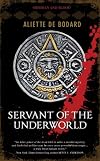
Fantasy. Fiction. Historical Fiction. HTML:The first book in the critically acclaimed Obsidian and Blood trilogy:Year One-Knife, Tenochtitlan the capital of the Aztecs. Human sacrifice and the magic of the living blood are the only things keeping the sun in the sky and the earth fertile.
A Priestess disappears from an empty room drenched in blood. It should be a usual investigation for Acatl, High Priest of the Dead—except that his estranged brother is involved, and the the more he digs, show more the deeper he is drawn into the political and magical intrigues of noblemen, soldiers, and priests-and of the gods themselves...
REVIEWS:
' gripping mystery steeped in blood and ancient Aztec magic. I was enthralled.' — Sean Williams
'An Aztec priest of the dead tries to solve a murder mystery, and finds that politics may be even more powerful than magic. A vivid portrayal of an interesting culture in a truly fresh fantasy novel.' — Kevin J. Anderson
'Amid the mud and maize of the Mexica empire, Aliette de Bodard has composed a riveting story of murder, magic and sibling rivalry.' — Elizabeth Bear
'The world-building is exquisite and we *believe* we are transported to the 15th century Tenotichtlan and together with the superb voice they formed the main reason I enjoyed this book so much... Highly recommended... Ms. de Bodard is a writer to watch.' — Fantasy Book Critic. show less
Tags
Recommendations




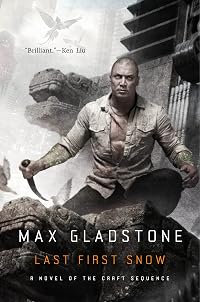


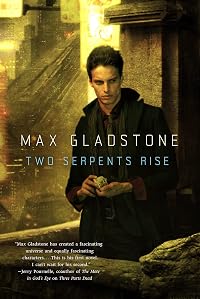
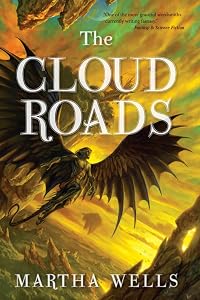
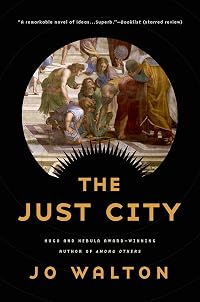


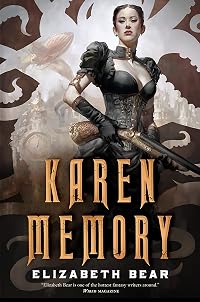
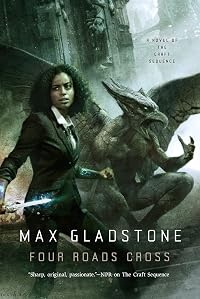
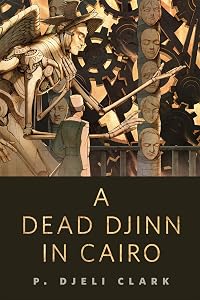





Member Recommendations

Cecrow Historical fiction leading up to the Spanish invasion.
Member Reviews
Looking for something besides medieval European-based fantasy? Too many werewolves just looking for love in your reading? Tired of airships and clockworks? (Note: I’m not even bringing up the zombie references, but yes, you can have too much of the walking dead). Aliette de Bodard’s trilogy Obsidian and Blood might just be the solution to the fantasy reader looking to genre-bend. The first book, Servant of the Underworld, is a fascinating stand-alone book, so don’t let commitment issues prevent you from reading.
Acatl-tzin, the High Priest of the Dead, is interrupted in the middle of a ceremony easing the passage to the Underworld for a dead noble. Ceyaxochitl, the second in command of the Mexica Empire, requests his presence at show more the scene of a crime. A priestess has gone missing from her chambers, and all that is left is copious amounts of blood and the odor of jaguar-magic. Although Ceyaxochitl would normally be in charge of the investigation, she has matters of the Empire preoccupying her at the moment, and besides–the chief suspect is Acatl’s estranged brother. Acatl’s relationship with the Underworld means he is particularly well-suited by both magical ability and forensic skills to investigate deaths. Unfortunately, attempting to clear his brother will mean Acatl will need to confront their mutual animosity. As the investigation grows more complicated, he’s forced to take on an aide, the cocky Teomitl, and even interrogate the gods. It seems the missing priestess is at the center of a great power struggle where almost everyone has a stake–except Acatl, who wants to avoid it.
Chichén Itzá
I can’t remember any fantasy that’s transported me more thoroughly to another Earth-time and Earth-culture. What is truly impressive, however, is that Bodard imbued the story with the feel of belief in the magics and the gods. I felt a empathetic connection. On her website Bodard states “See, I’m a writer–not a historian, not a researcher. I did my best with a mountain of sources, but I’m no expert and no Nahuatl, so it’s highly possible (and, indeed, highly probable) that the Obsidian and Blood books include some mistakes.” I don’t believe her–the world she created feels more authentic than most urban fantasies set in the here and now, and the fact that she actually shares further reference reading demonstrates more cultural respect than most. What is even more impressive is that she did it old-school science-fiction style, dropping the reader into a new world without narrative information-dumping. She admits to a few authorial cultural changes here and there, particularly shortening the incredibly multi-syllabic names, easing up on the human sacrifice and modifying the concept of dual gods, but it certainly isn’t anything but an expert would recognize. What I did note was the sense of place, the jungles and floating islands, the native foods, the elaborate dress. With her descriptions, I was reminded of ponderous stone statues at the Met, the steep stairs at Chichén Itzá, the rhythm of a Navajo chant.
Jaguar ‘cuauhxicalli’ sacrificial vessel, National Museum of Anthropology, Mexico City
There are a few shortcomings, none of much consequence. Occasionally a descriptive phrase or two for a character is repeated. Given Bodard’s thoroughness in outlining and detail, I’m guessing the repetition was intended as a person-clue as much as the names, which are occasionally similar. I expected to be uncomfortable with certain cultural aspects given prior knowledge about Aztec human sacrifice, but I was unprepared with the frequency of the ritual animal sacrifice. Eventually, though, Bodard helped me came to understand it, at least culturally. The ending, while satisfactory, is a bit too neat in some ways, as well as falling prey to a common fantasy trope. For some readers, the cultural immersion might feel too alien in a genre accustomed to wrapping 21st century beliefs in the trappings of whatever time period it chooses to play in (I’m talking to you, neo-Victorian steampunkers). Most significantly, Bodard does so well as the recreating a Meso-American culture from 1480 that it is a little challenging to empathize with the characters. Come to think of it, the way many sci-fi and fantasy writers get around the alien culture-empathy challenge is to give the reader a more modern human to identify with. So kudos, Bodard, for not including a time-traveler and challenging the reader to identify with Acatl.
This isn’t a book that will appeal to everyone. It isn’t a quick, breezy beach read–it requires some mental stretching and attention. This is the thick, homemade dark chocolate version of hot chocolate, not the instant Carnation version with little stale marshmallows. If that sounds appealing, I highly recommend it. I’m looking forward to the next book.
Book trailer and sample chapter available through a link on my blog or Bodard's.
Cross posted (with much better original formatting) at:
http://clsiewert.wordpress.com/2014/07/08/servant-of-the-underworld-by-aliette-d... show less
Acatl-tzin, the High Priest of the Dead, is interrupted in the middle of a ceremony easing the passage to the Underworld for a dead noble. Ceyaxochitl, the second in command of the Mexica Empire, requests his presence at show more the scene of a crime. A priestess has gone missing from her chambers, and all that is left is copious amounts of blood and the odor of jaguar-magic. Although Ceyaxochitl would normally be in charge of the investigation, she has matters of the Empire preoccupying her at the moment, and besides–the chief suspect is Acatl’s estranged brother. Acatl’s relationship with the Underworld means he is particularly well-suited by both magical ability and forensic skills to investigate deaths. Unfortunately, attempting to clear his brother will mean Acatl will need to confront their mutual animosity. As the investigation grows more complicated, he’s forced to take on an aide, the cocky Teomitl, and even interrogate the gods. It seems the missing priestess is at the center of a great power struggle where almost everyone has a stake–except Acatl, who wants to avoid it.
Chichén Itzá
I can’t remember any fantasy that’s transported me more thoroughly to another Earth-time and Earth-culture. What is truly impressive, however, is that Bodard imbued the story with the feel of belief in the magics and the gods. I felt a empathetic connection. On her website Bodard states “See, I’m a writer–not a historian, not a researcher. I did my best with a mountain of sources, but I’m no expert and no Nahuatl, so it’s highly possible (and, indeed, highly probable) that the Obsidian and Blood books include some mistakes.” I don’t believe her–the world she created feels more authentic than most urban fantasies set in the here and now, and the fact that she actually shares further reference reading demonstrates more cultural respect than most. What is even more impressive is that she did it old-school science-fiction style, dropping the reader into a new world without narrative information-dumping. She admits to a few authorial cultural changes here and there, particularly shortening the incredibly multi-syllabic names, easing up on the human sacrifice and modifying the concept of dual gods, but it certainly isn’t anything but an expert would recognize. What I did note was the sense of place, the jungles and floating islands, the native foods, the elaborate dress. With her descriptions, I was reminded of ponderous stone statues at the Met, the steep stairs at Chichén Itzá, the rhythm of a Navajo chant.
Jaguar ‘cuauhxicalli’ sacrificial vessel, National Museum of Anthropology, Mexico City
There are a few shortcomings, none of much consequence. Occasionally a descriptive phrase or two for a character is repeated. Given Bodard’s thoroughness in outlining and detail, I’m guessing the repetition was intended as a person-clue as much as the names, which are occasionally similar. I expected to be uncomfortable with certain cultural aspects given prior knowledge about Aztec human sacrifice, but I was unprepared with the frequency of the ritual animal sacrifice. Eventually, though, Bodard helped me came to understand it, at least culturally. The ending, while satisfactory, is a bit too neat in some ways, as well as falling prey to a common fantasy trope. For some readers, the cultural immersion might feel too alien in a genre accustomed to wrapping 21st century beliefs in the trappings of whatever time period it chooses to play in (I’m talking to you, neo-Victorian steampunkers). Most significantly, Bodard does so well as the recreating a Meso-American culture from 1480 that it is a little challenging to empathize with the characters. Come to think of it, the way many sci-fi and fantasy writers get around the alien culture-empathy challenge is to give the reader a more modern human to identify with. So kudos, Bodard, for not including a time-traveler and challenging the reader to identify with Acatl.
This isn’t a book that will appeal to everyone. It isn’t a quick, breezy beach read–it requires some mental stretching and attention. This is the thick, homemade dark chocolate version of hot chocolate, not the instant Carnation version with little stale marshmallows. If that sounds appealing, I highly recommend it. I’m looking forward to the next book.
Book trailer and sample chapter available through a link on my blog or Bodard's.
Cross posted (with much better original formatting) at:
http://clsiewert.wordpress.com/2014/07/08/servant-of-the-underworld-by-aliette-d... show less
3.5 stars
I was expecting more zombies and animated skulls with a book that heavily referenced necromancy in its blurbs. What I got was a book where characters get their magic via their gods. It just so happens that the MC serves the god of death. It had a lot of political machinations and some fun magic. The magic was insanely well explained. The book was engaging, even if it didn’t have zombies.
I was expecting more zombies and animated skulls with a book that heavily referenced necromancy in its blurbs. What I got was a book where characters get their magic via their gods. It just so happens that the MC serves the god of death. It had a lot of political machinations and some fun magic. The magic was insanely well explained. The book was engaging, even if it didn’t have zombies.
I picked this up because I loved de Bodard's On A Red Station, Drifting, so much. I understood that it was urban fantasy and set in Aztec Mexico, which are two things I don't usually read, but I figured that since the story was structured around a mystery I would have something to hang on to. And I did. The world-building is very well done. The reader is dropped into the world immediately, but not in a wholly disorienting way, and you get to know the mythology and the setting at about the same time as you get to know the various characters and see the mystery unfold. It is paced well, with each section of the book developing some aspect of the characters' development or the plot.
I know next to nothing about Aztec history and culture, show more so most of the person and place names were unfamiliar to me, and it took a while for me to get comfortable. I looked up some of the pronunciations on a Wiki cheat sheet for Nahuatl and I'm still not sure I got them right, but I repeated them to myself as I read and by halfway through the book they were flowing into the rest of the text. De Bodard helps the reader by giving many of the main characters fairly short names.
The narrator, Acatl, is an interesting and appealing character, and the reader learns along with him. He's not a superman or a perfect person, and I appreciated his reluctance to accept the privilege and power that was seemingly thrust upon him (he thinks he would have preferred to remain an obscure country priest but he's been appointed to a major clerical position). The mystery itself involves Acatl's family, from whom he is estranged, and it requires him to reconnect with them and also interact with powerful people (which he always tried to avoid because he hates politics). Along the way he picks up an intriguing sidekick who is not altogether what he seems, and he spends a lot of time negotiating the divide between the human world and the worlds of the various gods.
This book is not for readers who can't stand any violence toward animals or on-page spilling of blood, because blood and animal sacrifices are commonplace in the magic system and in priestly rituals. They're not sensationalized at all, they're very matter-of-fact, but they are explicit, however briefly they occur.
The writing is good. De Bodard's style has a deliberateness and straightforwardness that gives weight to the characters and events, which feels appropriate considering what the storyline is. There's little flash in her writing but it kept me turning the pages. I did take a little while to get into the rhythm because of the unfamiliarity, but it paid off for me and after the first third I found it hard to put down.
Given how little urban fantasy I read (I'm not even sure that's what this is) and my ignorance of the setting and mythos from which the book is drawn, I can't evaluate its authenticity. It felt authentic and respectful to me; there's not a whiff of the "exotic" about it (which makes sense because de Bodard is very sensitive to those traps) and it lines up with the little I do know about the period and people. As a reading experience for me, it was terrific.
This is the first book in a trilogy and I'm definitely going on to the second. show less
I know next to nothing about Aztec history and culture, show more so most of the person and place names were unfamiliar to me, and it took a while for me to get comfortable. I looked up some of the pronunciations on a Wiki cheat sheet for Nahuatl and I'm still not sure I got them right, but I repeated them to myself as I read and by halfway through the book they were flowing into the rest of the text. De Bodard helps the reader by giving many of the main characters fairly short names.
The narrator, Acatl, is an interesting and appealing character, and the reader learns along with him. He's not a superman or a perfect person, and I appreciated his reluctance to accept the privilege and power that was seemingly thrust upon him (he thinks he would have preferred to remain an obscure country priest but he's been appointed to a major clerical position). The mystery itself involves Acatl's family, from whom he is estranged, and it requires him to reconnect with them and also interact with powerful people (which he always tried to avoid because he hates politics). Along the way he picks up an intriguing sidekick who is not altogether what he seems, and he spends a lot of time negotiating the divide between the human world and the worlds of the various gods.
This book is not for readers who can't stand any violence toward animals or on-page spilling of blood, because blood and animal sacrifices are commonplace in the magic system and in priestly rituals. They're not sensationalized at all, they're very matter-of-fact, but they are explicit, however briefly they occur.
The writing is good. De Bodard's style has a deliberateness and straightforwardness that gives weight to the characters and events, which feels appropriate considering what the storyline is. There's little flash in her writing but it kept me turning the pages. I did take a little while to get into the rhythm because of the unfamiliarity, but it paid off for me and after the first third I found it hard to put down.
Given how little urban fantasy I read (I'm not even sure that's what this is) and my ignorance of the setting and mythos from which the book is drawn, I can't evaluate its authenticity. It felt authentic and respectful to me; there's not a whiff of the "exotic" about it (which makes sense because de Bodard is very sensitive to those traps) and it lines up with the little I do know about the period and people. As a reading experience for me, it was terrific.
This is the first book in a trilogy and I'm definitely going on to the second. show less
Acatl, reluctantly the High Priest of the Dead, is pointedly called by his patroness to investigate the probable murder and certain disappearance of an important priestess. The kicker is that his estranged brother is being held for the crime, which was perpetrated with magic limited to his birth month. Of course the matter is larger and more tangled and requires angst-ridden recollections and confrontations with dysfunctional family dynamics.
Engrossing mystery set in the Aztec/Mexica empire circa 1480, where the magic of the gods is real; blood – freely given or sacrificed – invokes the divine; and where the politics would put Byzantine to shame.
Acatl, High Priest of the God of the Dead, is called in to investigate an apparent locked-room murder. His estranged warrior brother Neutemoc is the only suspect. But the use of magic in the murder that Neutemoc doesn’t know and can’t use leads Acatl to a series of suspects and gods.
Acatl suffers from what we’d call imposter syndrome, elevated to an office he never wanted by the recommendation of a mentor/frenemy. He doesn’t handle the position well, preferring to immerse himself in details. Priests being celibate and show more of a lower social strata than warriors, he was a disappointment to his now-deceased parents. The evolution of his family and professional relationships are integral elements of the plot.
One must read slowly and pay attention – otherwise names – especially the multi-syllabic names of the gods - tend to devolve into word salad. And you’ll need to know who the author is talking about at any given time, in a complicated story with plenty of red herrings, loops, back tracking and magical interference.
The author, a French woman writing in English (can you say ‘overachiever’?, WoW asks jealously) has full command of a fluid, quickly moving style. There are occasional odd turns of phrase and word choices – “”played on” for colloquial USAian “played” and “a dark lean shape whispering its seducing song” instead of ‘seductive song’, which caught my attention, but nothing to throw you completely out of the story. I’ve acquired the sequel and am really looking forward to it. show less
Acatl, High Priest of the God of the Dead, is called in to investigate an apparent locked-room murder. His estranged warrior brother Neutemoc is the only suspect. But the use of magic in the murder that Neutemoc doesn’t know and can’t use leads Acatl to a series of suspects and gods.
Acatl suffers from what we’d call imposter syndrome, elevated to an office he never wanted by the recommendation of a mentor/frenemy. He doesn’t handle the position well, preferring to immerse himself in details. Priests being celibate and show more of a lower social strata than warriors, he was a disappointment to his now-deceased parents. The evolution of his family and professional relationships are integral elements of the plot.
One must read slowly and pay attention – otherwise names – especially the multi-syllabic names of the gods - tend to devolve into word salad. And you’ll need to know who the author is talking about at any given time, in a complicated story with plenty of red herrings, loops, back tracking and magical interference.
The author, a French woman writing in English (can you say ‘overachiever’?, WoW asks jealously) has full command of a fluid, quickly moving style. There are occasional odd turns of phrase and word choices – “”played on” for colloquial USAian “played” and “a dark lean shape whispering its seducing song” instead of ‘seductive song’, which caught my attention, but nothing to throw you completely out of the story. I’ve acquired the sequel and am really looking forward to it. show less
It started slowly for me and it took a while for me to get into it's rhythm but near the end I could barely put it down. There is a lot of death in this book, of people and animals but much of it is ritual death, this is a world where the rhythm of days is ordered by death and things are complicated by death not coming. Magic takes blood and Acatl is the high priest of the lord of Death. When he is summoned to a mysterious death that implicates his brother he is determined to prove himself and to solve the mystery around this death. As he digs it becomes more complicated and he has to make personal sacrifices to ensure that things will turn out for the best.
It's a complicated story and weaves a different world than we are used to, truly show more a story that sometimes took me by surprise and where the hero has a completely different view of the world. show less
It's a complicated story and weaves a different world than we are used to, truly show more a story that sometimes took me by surprise and where the hero has a completely different view of the world. show less
The priestess Huei has gone missing and Acatl's brother Nuetomoc is found in her room covered in her blood, so as high priest of Mictlantecuhli, the god of the Underworld, Acatl must investigate. But is it a sordid tale of lust and murder, or part of the machinations of court politics as the Emperor is dying, or something more cosmic as deities vie for supremacy?
The author mixes mystery, fantasy, and history well in this story with good world building so that the reader can follow the investigation with some sort of sense of what is and is not possible in its supernatural system.
The author mixes mystery, fantasy, and history well in this story with good world building so that the reader can follow the investigation with some sort of sense of what is and is not possible in its supernatural system.
Members
- Recently Added By
Published Reviews
ThingScore 75
Servant of the Underworld takes its historical setting and the mythology of the Aztecs seriously, to deliver a historical fantasy. Even if the magic is of an unfamiliar sort, its reality is asserted from the first page. . .
added by PhoenixFalls
Lists

Future Green Dragon Group Read Books
80 works; 6 members

Fantasy by Women Who Broke Away from Europe
144 works; 12 members

KayStJ's to-read list
1,616 works; 11 members

infjsarah's wishlist
408 works; 2 members

16 Books About Gods and Mythology
16 works; 1 member

Books Read in 2021
5,361 works; 113 members

SciFi/Fantasy Without Romance!
37 works; 1 member
Author Information

131+ Works 5,973 Members
Aliette de Bodard was born in the United States, and grew up in France. She studied computer science and applied mathematics at Ecole Polytchnique, one of France's top engineering schools. She began writing fiction to distract herself from her classwork, and completed two novels before finishing her studies. She is a system engineer and writer of show more speculative fiction. Her works include the Obsidian and Blood trilogy and The House of Shattered Wings. Her short fiction has received two Nebula Awards, a Locus Award, and a British Science Fiction Award. (Bowker Author Biography) show less
Some Editions
Series

Work Relationships
Is contained in
Common Knowledge
- Canonical title
- Servant of the Underworld
- Original title
- Servant of the Underworld
- Original publication date
- 2010-01-07
- People/Characters
- Acatl (High Priest of Mictlantecuhtli); Neutemoc (Jaguar Knight); Mihmatini; Huei; Ceyaxochitl (Guardian of the Sacred Precinct); Ichtaca (Fire Priest) (show all 20); Ixtli (Warrior of the Duality); Palli (offering priest); Ezamahual (novice priest); Teomitl; Tizoc-tzin (Master of the House of Darts); Yaotl; Acamapichtli (High Priest of Tlaloc); Eliztac (Priest of Chalchiutlicue); Mahuizoh (Jaguar Knight); Mazatl; Ollin; Pinahui-tzin (Magistrate); Quiyahuayo (Jaguar Commander); Zollin
- Important places
- Tenochtitlán, Mexica Empire; Chalco, Mexica Empire; Amecameca, Mexica Empire
- First words
- In the silence of the shrine, I bowed to the corpse on the altar: a minor member of the Imperial Family, who had died in a boating accident on Lake Texcoco.
- Last words
- (Click to show. Warning: May contain spoilers.)This was my place, and my legacy.
- Publisher's editor
- Gascoigne, Marc
- Blurbers
- Bear, Elizabeth ; Williams, Sean ; Buckell, Tobias S. ; Anderson, Kevin J.
- Original language
- English
Classifications
Statistics
- Members
- 526
- Popularity
- 56,812
- Reviews
- 28
- Rating
- (3.53)
- Languages
- English, French
- Media
- Paper, Audiobook, Ebook
- ISBNs
- 9
- ASINs
- 10