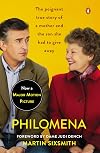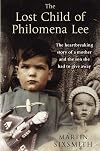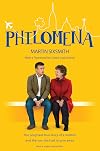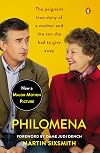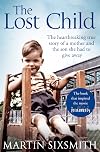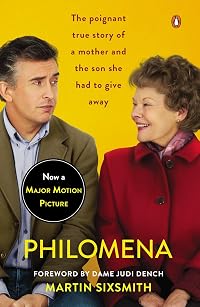
Philomena: A Mother, Her Son, and a Fifty-Year Search
by Martin Sixsmith
On This Page
Description
New York Times BestsellerThe heartbreaking true story of an Irishwoman and the secret she kept for 50 years
When she became pregnant as a teenager in Ireland in 1952, Philomena Lee was sent to a convent to be looked after as a "fallen woman." Then the nuns took her baby from her and sold him, like thousands of others, to America for adoption. Fifty years later, Philomena decided to find him.
Meanwhile, on the other side of the Atlantic, Philomena's son was trying to find her. Renamed show more Michael Hess, he had become a leading lawyer in the first Bush administration, and he struggled to hide secrets that would jeopardize his career in the Republican Party and endanger his quest to find his mother.
A gripping exposé told with novelistic intrigue, Philomena pulls back the curtain on the role of the Catholic Church in forced adoptions and on the love between a mother and son who endured a lifelong separation. show less
Tags
Recommendations









Member Recommendations
FerneMysteryReader Related story of the treatment of unwed mothers in Ireland.
The book is about the treatment of women in Magdalene Laundries and the story of Philomena Lee, an Irish woman who has been searching for her son for 50 years.
Member Reviews
I found this book surprisingly more interesting than I thought I would. The title is misleading, though. Philomena was a young woman in Ireland who became pregnant out of wedlock and was placed in a convent to give birth. There she had her child, a son, who was then forcibly taken away from her with another little girl from that same convent, both to be adopted by a couple in the United States who already had three children of their own. This is really the story of Anthony Lee, raised as Michael Anthony Hess, by a distant controlling father and a meek mother. Michael's story of his family life, education, and personal life was as interesting as it was sad.
Throughout the entire book, I always had the feeling that Michael was an show more individual whose life was a living lie. Nothing he ever accomplished, at least in this literary version of his life, was without anguish, pain, or fear. He was brilliant, but the turns of his life, especially the way the author describes Michael as a tormented gay man who rose to prominence within the legal department of the Republican party, were agonizing. By the end of the book, I was wrung out - from sadness and from the injustice of it all.
-----------------------------
P.S. Now that I wrote the above review based on how I perceived the book alone, I went back to read other reviews. There I found many reports of inaccuracies, falsehoods, omissions, and exaggerations in the story of Michael Hess. It would be nice if someone would come forward and write a more accurate biography of this interesting individual. I would like to read a corrected version. show less
Throughout the entire book, I always had the feeling that Michael was an show more individual whose life was a living lie. Nothing he ever accomplished, at least in this literary version of his life, was without anguish, pain, or fear. He was brilliant, but the turns of his life, especially the way the author describes Michael as a tormented gay man who rose to prominence within the legal department of the Republican party, were agonizing. By the end of the book, I was wrung out - from sadness and from the injustice of it all.
-----------------------------
P.S. Now that I wrote the above review based on how I perceived the book alone, I went back to read other reviews. There I found many reports of inaccuracies, falsehoods, omissions, and exaggerations in the story of Michael Hess. It would be nice if someone would come forward and write a more accurate biography of this interesting individual. I would like to read a corrected version. show less
Un libro bellissimo pur nella sua dolorosa e terribile realtà e che è riuscito a suscitare in me una profonda rabbia verso un sistema retrogrado, reazionario, assurdo e inconcepibile.
Una storia vera, narrata con piglio giornalistico, che porta alla luce il dramma delle ragazze madri irlandesi, vittime di pregiudizi e ostracismo sociale. Queste, per una morale bigotta e priva di qualsiasi scrupolo e umanità, venivano costrette anche a privarsi dei loro figli, dati in adozione forzata a famiglie straniere, dietro compenso dovuto agli enti religiosi presso i quali le stesse venivano recluse e trattate, dalle religiose che li gestivano, alla stregua di schiave prive di qualsiasi diritto e dignità.
La prima parte narra la storia di show more Philomena e dei tre difficilissimi anni passati nell’Abbazia di Sean Ross dove partorisce il figlio, Anthony, a cui può restare a malapena vicino sino al giorno in cui le viene strappato via per essere consegnato in adozione, quasi fosse un pacco postale, a una famiglia americana.
Da quel momento in poi ci viene raccontata la nuova vita di questo dolcissimo bambino che vedrà cambiato pure il suo nome in Michael e che, per tutta la vita, rimarrà condizionato da questa terribile esperienza che vivrà sempre come fosse una sua colpa, subendone anche delle terribili conseguenze.
Un libro che squarcia le tenebre sui soprusi e le ipocrisie perpetrate per anni in Irlanda su povere e ingenue ragazze madri, succubi di un sistema perverso e crudele gestito e condotto da religiosi nel più completo dispregio dei principi fondanti del loro credo ecclesiale di amore e carità cristiana.
Da leggere per scoprire qualcosa di inimmaginabile che è realmente accaduto in un passato alquanto recente. show less
Una storia vera, narrata con piglio giornalistico, che porta alla luce il dramma delle ragazze madri irlandesi, vittime di pregiudizi e ostracismo sociale. Queste, per una morale bigotta e priva di qualsiasi scrupolo e umanità, venivano costrette anche a privarsi dei loro figli, dati in adozione forzata a famiglie straniere, dietro compenso dovuto agli enti religiosi presso i quali le stesse venivano recluse e trattate, dalle religiose che li gestivano, alla stregua di schiave prive di qualsiasi diritto e dignità.
La prima parte narra la storia di show more Philomena e dei tre difficilissimi anni passati nell’Abbazia di Sean Ross dove partorisce il figlio, Anthony, a cui può restare a malapena vicino sino al giorno in cui le viene strappato via per essere consegnato in adozione, quasi fosse un pacco postale, a una famiglia americana.
Da quel momento in poi ci viene raccontata la nuova vita di questo dolcissimo bambino che vedrà cambiato pure il suo nome in Michael e che, per tutta la vita, rimarrà condizionato da questa terribile esperienza che vivrà sempre come fosse una sua colpa, subendone anche delle terribili conseguenze.
Un libro che squarcia le tenebre sui soprusi e le ipocrisie perpetrate per anni in Irlanda su povere e ingenue ragazze madri, succubi di un sistema perverso e crudele gestito e condotto da religiosi nel più completo dispregio dei principi fondanti del loro credo ecclesiale di amore e carità cristiana.
Da leggere per scoprire qualcosa di inimmaginabile che è realmente accaduto in un passato alquanto recente. show less
I enjoyed this book, despite its limitations. It felt like a genuine attempt to imagine the life of a man who was born and raised in extraordinary and unjust circumstances. There is something very unique about a creative biography; this book is almost historical fiction set in the second half of the twentieth century. I don't think it's a genre I'll be hurrying back to, but I also wouldn't rule out reading it again.
There are essentially three main characters in this book - Philomena Lee, who is mostly featured in her absence; Mike Hess; and the journalist writing the story. I think the book could have been a masterpiece if more thought had gone into how those three characters were incorporated into the story. Instead, we get quite a show more straightforward narrative of the life of Mike Hess, apparently with lots of invention, interpolation and speculation. I made the mistake of thinking that the journalist had done extensive research to share with Philomena Lee and then turned it into a book. It would have been interesting to read what drove him to do that, or given that it's not quite what he did, it would have aided the book to have more written about what exactly the author was doing.
Nevertheless, reading this was a positive experience and I found myself very moved by the ending and very able to sympathise with Philomena Lee and Mike Hess. show less
There are essentially three main characters in this book - Philomena Lee, who is mostly featured in her absence; Mike Hess; and the journalist writing the story. I think the book could have been a masterpiece if more thought had gone into how those three characters were incorporated into the story. Instead, we get quite a show more straightforward narrative of the life of Mike Hess, apparently with lots of invention, interpolation and speculation. I made the mistake of thinking that the journalist had done extensive research to share with Philomena Lee and then turned it into a book. It would have been interesting to read what drove him to do that, or given that it's not quite what he did, it would have aided the book to have more written about what exactly the author was doing.
Nevertheless, reading this was a positive experience and I found myself very moved by the ending and very able to sympathise with Philomena Lee and Mike Hess. show less
As a person who was interviewed for this book and who appears as a “character” in it, I believe this book should be categorized as fiction. The Lost Child of Philomena Lee, written by Martin Sixsmith, was originally published in 2009. After the success of the movie Philomena, the book was reissued with a new title. By now, everyone knows that the book tells the tragic story of Philomena Lee, who had an illegitimate child in the early 1950s while living at an abbey run by nuns in Ireland. An American couple adopted her son, Anthony Lee, when he was 3 years old and renamed him Michael Hess. Philomena and Michael were stymied in their search to find each other by the nuns’ refusal to give them information.
About 7 years ago, show more Michael’s partner (called Pete in the book) referred me to a journalist who was trying to pitch a book based on the story of Michael’s birth mother’s search for her son. Following Pete’s lead, I agreed to speak to Martin Sixsmith about my friendship with Michael. He recorded our 2-hour conversation. Pete expected to hear from Sixsmith if the book proposal ever came to fruition.
When the book appeared without prior notice to Pete or me in 2009, I was appalled to find that Sixsmith had written a fictional version of Michael’s life in which characters engage in conversations that never happened. Because the book received consistently bad reviews in the British newspapers, I decided not to write a review, hoping that the book would fade from view. That is exactly what happened until Steve Coogan read the 2009 newspaper article by Sixsmith and the rest is history.
I cringed when I read my “character” engaging in fictional dialogue with Michael. Things only went downhill from there. The dialogue that Sixsmith invented for the conversations Michael and I supposedly had were not quotes from the interview I gave, and I did not agree to my interview being turned into scenes with made-up dialogue. Michael is dead and cannot verify these conversations or, for that matter, any of the conversations he is purported to have had throughout the book.
Inaccuracies abound. I met Michael when he hired me to work for him in December of 1977. The book has me engaging in fictional conversations during 1975 and 1976 with Michael about his boyfriend Mark, and even having conversations with Mark about Michael’s supposedly dark moods and behavior. I think the author created these events to support his premise that Michael was a troubled and tortured soul because he could not find his birth mother and because he was required to hide his sexuality at his place of work. This was the 1980s and there were very few gay men or woman who were “out” at work.
The fiction continues. I did not discuss politics with Michael during this time period and never talked about supporting Carter. Also, Sixsmith has Michael moving in with me to “recover” from too much partying. Not true. The many purported conversations in which I provide advice to Michael about his love life or work problems simply did not occur. Like most good friends, I did a lot of listening and nodding.
It is really difficult for those of us who knew Michael to see him portrayed so poorly. He was smart, charming, good looking and thoughtful. Michael always went out of his way to make his friends’ birthdays special. For 10 years, he took my daughter and me to many Christmas tree lots in search of the perfect tree.
Michael was a great boss and mentor who taught me so much about legal research and writing and encouraged me to take on difficult and challenging assignments. He was a terrific writer and speaker. These talents and a lot of hard work contributed to his successful career.
Pete and other friends have tried to correct Sixsmith’s depiction of Michael as a tortured soul in recent articles that appeared in The New York Times and Politico. They stress his long-term relationship with Pete and his multifaceted interests, which ranged from following Notre Dame sports to predicting the best new Broadway musicals to his prodigious gardening.
Between the made-up dialogue and almost prurient focus on Michael’s sexual behavior, the author has failed to present anything near a recognizable picture of Michael Hess. While I can only speak definitively to the information that I gave Sixsmith and my knowledge of Michael, the book contains other conversations that can’t possibly be sourced because the people are dead. If you plan to read the book, be aware that you will be reading fiction and, not very well written fiction, at that. show less
About 7 years ago, show more Michael’s partner (called Pete in the book) referred me to a journalist who was trying to pitch a book based on the story of Michael’s birth mother’s search for her son. Following Pete’s lead, I agreed to speak to Martin Sixsmith about my friendship with Michael. He recorded our 2-hour conversation. Pete expected to hear from Sixsmith if the book proposal ever came to fruition.
When the book appeared without prior notice to Pete or me in 2009, I was appalled to find that Sixsmith had written a fictional version of Michael’s life in which characters engage in conversations that never happened. Because the book received consistently bad reviews in the British newspapers, I decided not to write a review, hoping that the book would fade from view. That is exactly what happened until Steve Coogan read the 2009 newspaper article by Sixsmith and the rest is history.
I cringed when I read my “character” engaging in fictional dialogue with Michael. Things only went downhill from there. The dialogue that Sixsmith invented for the conversations Michael and I supposedly had were not quotes from the interview I gave, and I did not agree to my interview being turned into scenes with made-up dialogue. Michael is dead and cannot verify these conversations or, for that matter, any of the conversations he is purported to have had throughout the book.
Inaccuracies abound. I met Michael when he hired me to work for him in December of 1977. The book has me engaging in fictional conversations during 1975 and 1976 with Michael about his boyfriend Mark, and even having conversations with Mark about Michael’s supposedly dark moods and behavior. I think the author created these events to support his premise that Michael was a troubled and tortured soul because he could not find his birth mother and because he was required to hide his sexuality at his place of work. This was the 1980s and there were very few gay men or woman who were “out” at work.
The fiction continues. I did not discuss politics with Michael during this time period and never talked about supporting Carter. Also, Sixsmith has Michael moving in with me to “recover” from too much partying. Not true. The many purported conversations in which I provide advice to Michael about his love life or work problems simply did not occur. Like most good friends, I did a lot of listening and nodding.
It is really difficult for those of us who knew Michael to see him portrayed so poorly. He was smart, charming, good looking and thoughtful. Michael always went out of his way to make his friends’ birthdays special. For 10 years, he took my daughter and me to many Christmas tree lots in search of the perfect tree.
Michael was a great boss and mentor who taught me so much about legal research and writing and encouraged me to take on difficult and challenging assignments. He was a terrific writer and speaker. These talents and a lot of hard work contributed to his successful career.
Pete and other friends have tried to correct Sixsmith’s depiction of Michael as a tortured soul in recent articles that appeared in The New York Times and Politico. They stress his long-term relationship with Pete and his multifaceted interests, which ranged from following Notre Dame sports to predicting the best new Broadway musicals to his prodigious gardening.
Between the made-up dialogue and almost prurient focus on Michael’s sexual behavior, the author has failed to present anything near a recognizable picture of Michael Hess. While I can only speak definitively to the information that I gave Sixsmith and my knowledge of Michael, the book contains other conversations that can’t possibly be sourced because the people are dead. If you plan to read the book, be aware that you will be reading fiction and, not very well written fiction, at that. show less
In 1952, Philomena Lee became pregnant our of wedlock in an Ireland where that just wasn't allowed to happen. She was sent to a convent to give birth to her baby, and would live there for three years, caring for her son and working in the convent's commercial laundry. At the end of that time, Philomena was forced to sign him over to the convent for adoption, and he was effectively sold to an American couple.
She loved her beautiful, happy son, and despite being forced to sign him away and promise never to seek to find him, she made her first attempt less than a year later. Meanwhile, her son, now named Michael Hess, grew up in America, and wondered and worried why his birth mother had given him up.
Michael experienced the hard version of show more some of the challenges of being adopted in the era of closed adoptions, but he was smart, handsome, hardworking, and kind. He grew up to be a lawyer, and a leading official in the first Bush administration.
Philomena was torn by her desire to know what happened to her son on the one hand, and the insistence of the sisters that even talking about her baby born in sin was another sin. She became a nurse, married, and raised a family, but eventually started looking for her son again.
We get Philomena's experiences up to the point of Michael's adoption, and then we go following his life in America, occasionally interspersed with Sixsmith's account of how he got involved in the search for him. We don't get back to Philomena's story until the end. I found this a bit frustrating; I would have preferred a more even dividing and alternation of their experiences, and frankly could have waiting for Sixsmith's story of how he became involved until Philomena's story reached that point.
Despite that complaint, this is a well-researched, thoughtful, moving story, that reveals a dark side of Ireland and the Catholic Church in the 20th century, without demonizing either.
Recommended.
I bought this book. show less
She loved her beautiful, happy son, and despite being forced to sign him away and promise never to seek to find him, she made her first attempt less than a year later. Meanwhile, her son, now named Michael Hess, grew up in America, and wondered and worried why his birth mother had given him up.
Michael experienced the hard version of show more some of the challenges of being adopted in the era of closed adoptions, but he was smart, handsome, hardworking, and kind. He grew up to be a lawyer, and a leading official in the first Bush administration.
Philomena was torn by her desire to know what happened to her son on the one hand, and the insistence of the sisters that even talking about her baby born in sin was another sin. She became a nurse, married, and raised a family, but eventually started looking for her son again.
We get Philomena's experiences up to the point of Michael's adoption, and then we go following his life in America, occasionally interspersed with Sixsmith's account of how he got involved in the search for him. We don't get back to Philomena's story until the end. I found this a bit frustrating; I would have preferred a more even dividing and alternation of their experiences, and frankly could have waiting for Sixsmith's story of how he became involved until Philomena's story reached that point.
Despite that complaint, this is a well-researched, thoughtful, moving story, that reveals a dark side of Ireland and the Catholic Church in the 20th century, without demonizing either.
Recommended.
I bought this book. show less
Aha, my first VG read of the New Year! This is a chilling extension of the Magdalene Laundries story. The protagonist asks for help from a reporter to find her son, who was sold fifty years prior from an Irish convent to an American family looking to adopt an Irish child. When unmarried Philomena gets pregnant in 1952, she is brought to the convent and abandoned by her family. She is allowed to care for her son Anthony for three years before he is stolen from her. Where and how Anthony ends up is completely startling and compelling. I wish that Philomena herself had been more fully realized, but that's a minor quibble in a non fiction that so completely immerses itself in a remarkable American life. Can't wait to see the movie!
I was inspired to pick up this book after seeing the movie back in February, and I'm so glad I read it. It's a harrowing and wonderful book. Heartbreaking to read about what the Catholic Church did to these women and children, frustrating (but also inspiring) to read about how one mother forgave them. Martin Sixsmith does an excellent job of pasting together what must have been many stories and testaments of varying degrees of intimacy and honesty. Interestingly, while the movie tells the story of Philomena and Martin Sixsmith's search and discovery, the book is really more the story of Anthony Lee/Michael Hess, Philomena's "lost child". Excellent to read and watch together. (And btw, it's just so much fun to say "Martin Sixsmith". Try it.)
Members
- Recently Added By
Lists

Top Five Books of 2014
1,064 works; 398 members

Books To Get From The Library
115 works; 5 members

Books That Made Me Cry
199 works; 105 members

Books Read in 2016
4,666 works; 197 members

Biographies of Little Known People
39 works; 2 members
Author Information

Martin Sixsmith was educated at Oxford, Harvard and the Sorbonne. From 1980 to 1997, he was the BBC correspondent in Moscow, Washington, Brussels and Warsaw. From 1997 to 2002, he worked as the director of communications and press secretary for Harriet Harman, Alistair Darling, and Stephen Byers. He is the author of two novels, Spin and I Heard show more Lenin Laugh. His non-fiction work, The Lost Child of Philomena Lee, is the basis for the film Philomena starring Steve Coogan and Judi Dench. (Bowker Author Biography) show less
Some Editions
Awards and Honors
Awards
Series
Belongs to Publisher Series
Common Knowledge
- Canonical title
- Philomena: A Mother, Her Son, and a Fifty-Year Search
- Original title
- The Lost Child of Philomena Lee: A Mother, Her Son And A Fifty Year Search
- Alternate titles*
- Une mère, un fils, la quête de toute une vie pour se retrouver
- Original publication date
- 2009
- People/Characters
- Philomena Lee; Michael A. Hess, nee Anthony Lee
- Important places
- Sean Ross Abbey, Roscrea, County Tipperary, Ireland; St. Louis, Missouri, USA
- Related movies
- Philomena (2014 | IMDb)
- First words
- Sister Annuciata cursed the electric.
- Quotations
- If we lose sight of our actions as having meaning in themselves, if we think only of winning, rather than the purpose of what we are doing, we can easily lose our way. (Roger Allan Moore)
- Last words
- (Click to show. Warning: May contain spoilers.)Epilogue: Some lines of inquiry have emerged and are being pursued, but that, as they say, is a story for another occasion.
- Blurbers
- Dench, Dame Judi
*Some information comes from Common Knowledge in other languages. Click "Edit" for more information.
Classifications
- Genres
- Biography & Memoir, Nonfiction, General Nonfiction
- DDC/MDS
- 941.7082092 — History & geography History of Europe British Isles Connaught
- LCC
- HQ999 .I73 .S59 — Social sciences The family. Marriage, Women and Sexuality The Family. Marriage. Women The family. Marriage. Home Illegitimacy. Unmarried mothers
- BISAC
Statistics
- Members
- 804
- Popularity
- 34,511
- Reviews
- 31
- Rating
- (3.42)
- Languages
- 7 — Dutch, English, French, German, Italian, Portuguese, Spanish
- Media
- Paper, Audiobook, Ebook
- ISBNs
- 41
- ASINs
- 9