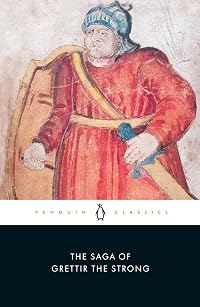
The Saga of Grettir the Strong
by Anonymous
On This Page
Description
Profound and intriguing, Grettir's Saga is the last of the great Icelandic sagas. It tells of the life and death of Grettir, a great rebel, individualist, and romantic hero viewed unromantically. Grettir spends his childhood violently defying authority: as a youth of sixteen he kills a man and is outlawed; all the rest of his life he devotes, with remarkable composure, to fighting more and more formidable enemies. He pits himself against bears, berserks, wraiths, trolls, and finally, it show more seems, the whole population of Iceland. Yet he is not a bloodthirsty killer, but only a man who is totally unwilling to compromise. As a result of his desire for freedom, he becomes increasingly isolated, although he wishes to live in society, and indeed can hardly bear solitude. Driven back and forth from Iceland to Norway, harried around Iceland, he continually flees subjection and confinement only to find a perilous freedom beset both by the external hazards of a new land and by the internal hazards of loneliness and pride. He escapes to freedom and finds destruction. He finally meets his death in his last refuge on the top of an unscalable island near the northern tip of Iceland.Grettir's Saga has several themes. One of them is the conflict between the Christian world and the survival of the pagan world, as sorcery or heroic pride; the other is the conflict between man's desire for individual freedom and the restrictive bond imposed by society.This translation is the first into English since 1914; it is based on a more accurate Icelandic text than the earlier translations, and, unlike them, is unexpurgated and in unarchaic English. The saga has an especial modern relevance - a recent translation into Czech reached the top of the best-seller list. The present volume includes genealogies, a study of the legal system, and a critical assessment of the work. show lessTags
Recommendations










Member Recommendations


Member Reviews
OK, I've read a fair number of Sagas over the years, and this might be becoming my favorite, in the Jesse Byock translation. Or at least right behind Poul Anderson's retelling of Hrolf Kraki's Saga. Njal's Saga is like The Iliad. Grim, inexorable, and a bit of a reading slog. Egil's Saga - well, Egil is even more of an asshole than Grettir, and I remember it as being super long. Grettir's Saga feels so much more readable than many of the sagas, and to my thinking, much more "modern". The episodic nature of it, together with the frequent supernatural encounters, livens up the constant feuding over land, insults, horses, and such.
What are we to make of Grettir the Outlaw? He definitely feels more of a modern "anti-hero", rather than a show more classic hero. He's downright obnoxious and an asshole, pretty much from childhood. Yet the author seems to want us to empathize with him (as a side note, it's interesting the periodic injections of Christianity into this - the events of the saga take place just as Iceland is being Christianized although when it's written, we're 300 years into Christianity in Iceland). The Outlaw as hero feels very akin to how Americans might view someone like Billy the Kid, Jesse James, or Butch Cassidy, who were romanticized and reviled in equal measures. A more modern equivalent might be the Jack Reacher character in Lee Child's books - a giant among men, who succeeds by both talent and by dint of his physical superiority, who has his own code and follows it to the end. (Note: someone actually wrote a novel modernizing Grettir, with a new character, but based on Grettir: Nutcase, by Tony Williams: http://www.textjournal.com.au/oct19/tonywilliams.htm)
Grettir is pretty laconic, and many of his responses are single sentence proverbs: "He is a friend who spares others from problems", "He learns more that tries more", "danger is at your own door when it has entered your neighbors", "only that which is tested is known", "the expected happens, and also the unexpected", "only a slave immediately takes vengeance, a coward never", (and more), and my personal favorite, "Bare is the back of every man, except those who have a brother". This last is one of my favorite Viking sayings, it occurs in many many more modern books, but I don't recall ever having seen it in the original! I've always seen it translated more like "Bare is back without brother to guard it", which I like better than this translation. The original for reference: Ber er hver á bakinu nema sér bróður eigi. (btw you can see the entire Icelandic text here: https://sagadb.org/grettis_saga.is).
It seems like 5 or 10 times, somebody said something, and the response is: "Grettir just grinned" - which just feels so modern in style.
Some of my favorite scenes: the battle on top of the whale carcass, the battle with Glam, the battle with the Trolls & Giants, the scenes on Drangey, the chapters where he feigns friendship with the Berserkers before killing them. The final scenes with Thorstein the Galleon, cavorting with Spes and tricking her husband. Gisli Sheds his Clothes!!
The battle scenes with the monsters (and people), I really liked. The descriptions just seemed so much more kinetic than in other sagas - people crashing around rooms, knocking the door frames off buildings. I loved the visual details: from the peak of the battle with Glam, so visual:
> Just as Glam fell the clouds moved, revealing the moon. Glam stared up at the light, and Grettir later said that this sight was the only one that had ever scared him.
from when Grettir dives into a waterfall for the second troll:
> The priest watched as the soles of Grettir's feet disappeared.
I loved all the nicknames. It seems so much more prevalent in this saga compared to others I've read.
As many others have noted, the Giant troll scenes are very reminiscent of Beowulf (troll with arm ripped off, second creature in a cave under a waterfall). Beowulf predates Grettir by hundreds of years, and some major details are different, but the similarities are striking and too big to be coincidence. There are many studies of this, including a complete book! (https://www.jstor.org/stable/10.3138/j.ctt2ttnhd). show less
What are we to make of Grettir the Outlaw? He definitely feels more of a modern "anti-hero", rather than a show more classic hero. He's downright obnoxious and an asshole, pretty much from childhood. Yet the author seems to want us to empathize with him (as a side note, it's interesting the periodic injections of Christianity into this - the events of the saga take place just as Iceland is being Christianized although when it's written, we're 300 years into Christianity in Iceland). The Outlaw as hero feels very akin to how Americans might view someone like Billy the Kid, Jesse James, or Butch Cassidy, who were romanticized and reviled in equal measures. A more modern equivalent might be the Jack Reacher character in Lee Child's books - a giant among men, who succeeds by both talent and by dint of his physical superiority, who has his own code and follows it to the end. (Note: someone actually wrote a novel modernizing Grettir, with a new character, but based on Grettir: Nutcase, by Tony Williams: http://www.textjournal.com.au/oct19/tonywilliams.htm)
Grettir is pretty laconic, and many of his responses are single sentence proverbs: "He is a friend who spares others from problems", "He learns more that tries more", "danger is at your own door when it has entered your neighbors", "only that which is tested is known", "the expected happens, and also the unexpected", "only a slave immediately takes vengeance, a coward never", (and more), and my personal favorite, "Bare is the back of every man, except those who have a brother". This last is one of my favorite Viking sayings, it occurs in many many more modern books, but I don't recall ever having seen it in the original! I've always seen it translated more like "Bare is back without brother to guard it", which I like better than this translation. The original for reference: Ber er hver á bakinu nema sér bróður eigi. (btw you can see the entire Icelandic text here: https://sagadb.org/grettis_saga.is).
It seems like 5 or 10 times, somebody said something, and the response is: "Grettir just grinned" - which just feels so modern in style.
Some of my favorite scenes: the battle on top of the whale carcass, the battle with Glam, the battle with the Trolls & Giants, the scenes on Drangey, the chapters where he feigns friendship with the Berserkers before killing them. The final scenes with Thorstein the Galleon, cavorting with Spes and tricking her husband. Gisli Sheds his Clothes!!
The battle scenes with the monsters (and people), I really liked. The descriptions just seemed so much more kinetic than in other sagas - people crashing around rooms, knocking the door frames off buildings. I loved the visual details: from the peak of the battle with Glam, so visual:
> Just as Glam fell the clouds moved, revealing the moon. Glam stared up at the light, and Grettir later said that this sight was the only one that had ever scared him.
from when Grettir dives into a waterfall for the second troll:
> The priest watched as the soles of Grettir's feet disappeared.
I loved all the nicknames. It seems so much more prevalent in this saga compared to others I've read.
As many others have noted, the Giant troll scenes are very reminiscent of Beowulf (troll with arm ripped off, second creature in a cave under a waterfall). Beowulf predates Grettir by hundreds of years, and some major details are different, but the similarities are striking and too big to be coincidence. There are many studies of this, including a complete book! (https://www.jstor.org/stable/10.3138/j.ctt2ttnhd). show less
Story of an outsider. It has to be one of the greats of outsider fiction although maybe it doesn’t occur in The Outsider. With the terse psychology of sagas we watch Grettir alienate his fellow man from the start, and then watch him slip through the social pavement. He also earns devotion from a few. That few includes me.
This saga, a late one, is just glorious: harsh realities, eerie atmospherics, high heroics, lows of homelessness in Iceland. This is my saga of choice. It has genuinely freaky trolls along with what might be either mental illness or maleficent visions. It has stolen bits from Beowulf and from Tristan & Isolde. It has interesting women and unemployed berserks.
RIP Grettir. I know that is only ironic for you
This saga, a late one, is just glorious: harsh realities, eerie atmospherics, high heroics, lows of homelessness in Iceland. This is my saga of choice. It has genuinely freaky trolls along with what might be either mental illness or maleficent visions. It has stolen bits from Beowulf and from Tristan & Isolde. It has interesting women and unemployed berserks.
RIP Grettir. I know that is only ironic for you
When I think of Norse sagas, this one pretty much ticks all the boxes: a gutsy, sword swinging hero of dubious moral character, lots of assorted and colorful secondary characters, blood and violence galore, encounters with supernatural creatures, vengeance, black magic, plenty of gallows humor and a bit of sauciness thrown in to sweeten the pot.
After the tedious preliminaries establishing character and setting, we're soon thrust into the meat of the story. Grettir is the son of a farmer, who through his enormous strength and overbearing personality, soon becomes the most dominant warrior in all of Iceland. Following a serious of incidents he soon alienates his former friends and kinsmen and is sentenced to outlawry. The bulk of the show more story follows his adventures in exile, as he wanders the land looking for a place to call home.
None of the sagas is big on interior monologue. Every character is a mask with one or two lines sketched on, and it is through their actions that their thoughts are revealed. Nonetheless, Grettir perhaps comes closest to what we might call a fully-fleshed personality. His character is shown to be deep and complex, filled with odd little details and amusing contradictions. He's also one of the most tragic figures in Icelandic literature; there's something intimately pathetic about watching this larger than life personality gradually eroding as the years of his exile begin to tell on him and he finds himself ever more alone.
Whilst a shade too long, and lacking the tautness of something like Gisli's Saga (another personal favorite) this is an immensely fun read, and one which will appeal to a number of people on a number of different levels. Though there's violence here, quite a ludicrous amount, it's set against a framework of laws and settlements that punishes those who act out of line, and generally paints a picture of a society not a million miles away from our own.
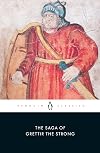
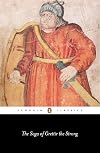
A note on the text: like a lot of these modern Penguin translations, the language here is crisp, forceful and direct. If you're going to read this saga I recommend this edition. Some of the older translations (mostly online) omit certain details and lack the matter-of-factness of tone which I think is one of the defining traits of classical Norse literature. show less
After the tedious preliminaries establishing character and setting, we're soon thrust into the meat of the story. Grettir is the son of a farmer, who through his enormous strength and overbearing personality, soon becomes the most dominant warrior in all of Iceland. Following a serious of incidents he soon alienates his former friends and kinsmen and is sentenced to outlawry. The bulk of the show more story follows his adventures in exile, as he wanders the land looking for a place to call home.
None of the sagas is big on interior monologue. Every character is a mask with one or two lines sketched on, and it is through their actions that their thoughts are revealed. Nonetheless, Grettir perhaps comes closest to what we might call a fully-fleshed personality. His character is shown to be deep and complex, filled with odd little details and amusing contradictions. He's also one of the most tragic figures in Icelandic literature; there's something intimately pathetic about watching this larger than life personality gradually eroding as the years of his exile begin to tell on him and he finds himself ever more alone.
Whilst a shade too long, and lacking the tautness of something like Gisli's Saga (another personal favorite) this is an immensely fun read, and one which will appeal to a number of people on a number of different levels. Though there's violence here, quite a ludicrous amount, it's set against a framework of laws and settlements that punishes those who act out of line, and generally paints a picture of a society not a million miles away from our own.
A note on the text: like a lot of these modern Penguin translations, the language here is crisp, forceful and direct. If you're going to read this saga I recommend this edition. Some of the older translations (mostly online) omit certain details and lack the matter-of-factness of tone which I think is one of the defining traits of classical Norse literature. show less
When I think of Norse sagas, this one pretty much ticks all the boxes: a gutsy, sword swinging hero of dubious moral character, lots of assorted and colorful secondary characters, blood and violence galore, encounters with supernatural creatures, vengeance, black magic, plenty of gallows humor and a bit of sauciness thrown in to sweeten the pot.
After the tedious preliminaries establishing character and setting, we're soon thrust into the meat of the story. Grettir is the son of a farmer, who through his enormous strength and overbearing personality, soon becomes the most dominant warrior in all of Iceland. Following a serious of incidents he soon alienates his former friends and kinsmen and is sentenced to outlawry. The bulk of the show more story follows his adventures in exile, as he wanders the land looking for a place to call home.
None of the sagas is big on interior monologue. Every character is a mask with one or two lines sketched on, and it is through their actions that their thoughts are revealed. Nonetheless, Grettir perhaps comes closest to what we might call a fully-fleshed personality. His character is shown to be deep and complex, filled with odd little details and amusing contradictions. He's also one of the most tragic figures in Icelandic literature; there's something intimately pathetic about watching this larger than life personality gradually eroding as the years of his exile begin to tell on him and he finds himself ever more alone.
Whilst a shade too long, and lacking the tautness of something like Gisli's Saga (another personal favorite) this is an immensely fun read, and one which will appeal to a number of people on a number of different levels. Though there's violence here, quite a ludicrous amount, it's set against a framework of laws and settlements that punishes those who act out of line, and generally paints a picture of a society not a million miles away from our own.
A note on the text: like a lot of these modern Penguin translations, the language here is crisp, forceful and direct. If you're going to read this saga I recommend this edition. Some of the older translations (mostly online) omit certain details and lack the matter-of-factness of tone which I think is one of the defining traits of classical Norse literature. show less
After the tedious preliminaries establishing character and setting, we're soon thrust into the meat of the story. Grettir is the son of a farmer, who through his enormous strength and overbearing personality, soon becomes the most dominant warrior in all of Iceland. Following a serious of incidents he soon alienates his former friends and kinsmen and is sentenced to outlawry. The bulk of the show more story follows his adventures in exile, as he wanders the land looking for a place to call home.
None of the sagas is big on interior monologue. Every character is a mask with one or two lines sketched on, and it is through their actions that their thoughts are revealed. Nonetheless, Grettir perhaps comes closest to what we might call a fully-fleshed personality. His character is shown to be deep and complex, filled with odd little details and amusing contradictions. He's also one of the most tragic figures in Icelandic literature; there's something intimately pathetic about watching this larger than life personality gradually eroding as the years of his exile begin to tell on him and he finds himself ever more alone.
Whilst a shade too long, and lacking the tautness of something like Gisli's Saga (another personal favorite) this is an immensely fun read, and one which will appeal to a number of people on a number of different levels. Though there's violence here, quite a ludicrous amount, it's set against a framework of laws and settlements that punishes those who act out of line, and generally paints a picture of a society not a million miles away from our own.
A note on the text: like a lot of these modern Penguin translations, the language here is crisp, forceful and direct. If you're going to read this saga I recommend this edition. Some of the older translations (mostly online) omit certain details and lack the matter-of-factness of tone which I think is one of the defining traits of classical Norse literature. show less
This saga takes place in the eleventh century, and was probably written near the end of the Middle Ages and the beginning of the Renaissance, around the 16th century. It is possibly one of the bloodier sagas, with people being killed for all of the typical reason: insults, revenge, theft, revenge, a little temper tantrum, fights with trolls and ghosts, revenge. But there is more of it in this saga, because Grettir...well, Grettir just isn't very socially adjusted. He is the strongest man in Iceland and much of Norway, but he never learns from his mistakes. He can sometimes forsee his future, but is unable to change it. Which is to say, he is unwilling or unable to change himself. What more dire future could a person face?
Grettir takes a show more "saga tour" of Iceland during his long period of outlawry; many vignettes of historical places, figures and tales are interwoven into Grettir's story. It contains violence, magic, feats of strength, passion and lust, and humor. The bulk of the story is made up of Grettir losing his temper, killing someone (or many someones), and being driven off somewhere else because, surprisingly, he makes people nervous. However the last quarter of the book really picks up as Grettir begins his exile on Drangey Island with his brother Illugi and servant Glaum.
Drangey Island is the ideal spot for an outlaw. In Grettir's time it was jointly owned by several landholders, and populated only by sheep. The only way to ascend the steep cliffs that protected the island from intruders was, and is, by way of a ladder. Grettir and his companions attained the summit, pulled up the ladder, and had enough lamb to last them several years, to say nothing of natural spring water and a limitless supply of birds for meat and eggs. The landowners were entirely helpless to rescue their sheep or their land, or to evict Grettir.
The story of how Grettir was overcome and outwitted involves many individuals over many years. It culminates in a crone, or witch, who places a curse on him. When Grettir realizes what she has done, he hurls a rock over the cliff of Drangey at the woman, resulting in this typically wry dialogue:
"A great shriek was heard. The rock had hit the old woman on her thigh and broken it.
Then Illugi said, 'I wish you hadn't done that.'
'Don't find fault with me for that,' Grettir said, 'but it disturbs me that it didn't hit her hard enough, because a crone's life wouldn't be too great a price to pay for both of ours.'
'How could she pay for us?' asked Illugi. 'That wouldn't make us worth much.'"
Although this saga deals primarily with outlaws and warriors, near the end of the story some selfless and honorable characters emerge, in some surprising places. Another really intriguing aspect of the tale is that so many of the physical places where events occured are identifiable places that can be visited, such as Grettir's Lift, Drangey Island, Haerring's Leap, and Grettir's Pool. show less
Grettir takes a show more "saga tour" of Iceland during his long period of outlawry; many vignettes of historical places, figures and tales are interwoven into Grettir's story. It contains violence, magic, feats of strength, passion and lust, and humor. The bulk of the story is made up of Grettir losing his temper, killing someone (or many someones), and being driven off somewhere else because, surprisingly, he makes people nervous. However the last quarter of the book really picks up as Grettir begins his exile on Drangey Island with his brother Illugi and servant Glaum.
Drangey Island is the ideal spot for an outlaw. In Grettir's time it was jointly owned by several landholders, and populated only by sheep. The only way to ascend the steep cliffs that protected the island from intruders was, and is, by way of a ladder. Grettir and his companions attained the summit, pulled up the ladder, and had enough lamb to last them several years, to say nothing of natural spring water and a limitless supply of birds for meat and eggs. The landowners were entirely helpless to rescue their sheep or their land, or to evict Grettir.
The story of how Grettir was overcome and outwitted involves many individuals over many years. It culminates in a crone, or witch, who places a curse on him. When Grettir realizes what she has done, he hurls a rock over the cliff of Drangey at the woman, resulting in this typically wry dialogue:
"A great shriek was heard. The rock had hit the old woman on her thigh and broken it.
Then Illugi said, 'I wish you hadn't done that.'
'Don't find fault with me for that,' Grettir said, 'but it disturbs me that it didn't hit her hard enough, because a crone's life wouldn't be too great a price to pay for both of ours.'
'How could she pay for us?' asked Illugi. 'That wouldn't make us worth much.'"
Although this saga deals primarily with outlaws and warriors, near the end of the story some selfless and honorable characters emerge, in some surprising places. Another really intriguing aspect of the tale is that so many of the physical places where events occured are identifiable places that can be visited, such as Grettir's Lift, Drangey Island, Haerring's Leap, and Grettir's Pool. show less
Maybe my favorite of the sagas I've read. Heroic battles against trolls, undead and earthly foes told with wry wit and dry humor. Also, broad spears are now in fashion.
This Icelandic Saga tells the story of the outlaw Grettir the Strong, his father, and his brother. Grettir spends most of his time getting into quarrels with people and then fighting them resulting in him becoming more and more of an outlaw. The story in this sage brings the world of the Vikings to life. Nevertheless, this reader found himself bored with him getting into yet another fight.
This penguin edition is excellent with a very readable translation and with useful footnotes to explain what is happening. The book also includes a long introductory essay on the saga that is useful for understanding the story. It also includes helpful material outlining the story and its characters.
This penguin edition is excellent with a very readable translation and with useful footnotes to explain what is happening. The book also includes a long introductory essay on the saga that is useful for understanding the story. It also includes helpful material outlining the story and its characters.
Members
- Recently Added By
Author Information
51 Works 14,489 Members
Some Editions
Series
Belongs to Publisher Series
Work Relationships
Is contained in
Common Knowledge
- Canonical title
- The Saga of Grettir the Strong
- Original title
- Grettis saga Ásmundarsonar
- Original publication date
- c. 1400; 1997 (English: Scudder) (English: Scudder)
- People/Characters
- Grettir; Grettir Ásmundarson
- Important places
- Iceland
- First words
- There was a man named Onund.
(translated by Bernard Scudder, 1997) - Original language
- Icelandic
- Disambiguation notice*
- Antti Tuuri on suomentaja, ei kirjoittaja.
*Some information comes from Common Knowledge in other languages. Click "Edit" for more information.
Classifications
- Genre
- Fiction and Literature
- DDC/MDS
- 839.63 — Literature & rhetoric German & related literatures Other Germanic literatures Old Norse, Old Icelandic, Icelandic, Faroese literatures Old Norse fiction
- LCC
- PT7269 .G7 .E53 — Language and Literature German, Dutch and Scandinavian literatures Old Norse literature: Old Icelandic and Old Norwegian Individual sagas and historical works
- BISAC
Statistics
- Members
- 639
- Popularity
- 45,480
- Reviews
- 12
- Rating
- (4.03)
- Languages
- 5 — Dutch, English, Finnish, French, Norwegian (Nynorsk)
- Media
- Paper, Ebook
- ISBNs
- 27
- ASINs
- 12