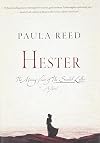
Hester
by Paula Reed
On This Page
Description
Widowed Hester Prynne travels with her wealthy heiress daughter to England in search of a quiet life only to land in the inner circle of power-hungry Oliver Cromwell, who wishes to harness Hester's ability to recognize the sins and hypocrisy of others.Tags
Recommendations

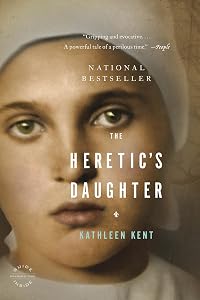



















Member Recommendations

by KatyBee
Member Reviews
The first and last time I read The Scarlet Letter was the summer before junior year of high school. It, along with a list of other books, was assigned summer reading for AP English. I didn't much care for it, and didn't think much about after I was done and the assignment turned in. I honestly wasn't sure what to expect when I started Hester. I contemplated re-reading The Scarlet Letter first but dismissed the thought based on bad associations of forced summer reading journals. After reading Hester, I am reconsidering. Reed takes a well-known classic book and adds more depth to the characters, giving them more purpose, more plot, and more life. It was interesting having flashes of Hawthorne's book coming back to me as I read.
Towards the show more end of Hawthorne's novel, Hester takes her daughter and leaves for England. Time passes and she eventually returns alone to New England and settles back down into her old cottage. Reed's book tackles the gigantic question of what happened in between. She invents a backstory for Hester, a loving childhood friend who takes her and Pearl in, and expands upon the insight the red "A" gifted Hester so that she can see a person's guilt and sin. Her friend is married to a member of Oliver Cromwell's circle, and Hester soon finds herself compelled to use her sight on Cromwell's behalf and becomes embroiled into the politics of the Roundheads and the Royalists.
I really liked the book. I didn't expect to and I did. There is loads of political intrigue, lots of introspective self-reflection on Hester's part, history, and even a spot of romance or two. And character growth by the truckload. Reed brought Hester alive in a way that Hawthorne never did for me.
Review copy courtesy of the publisher via Goodreads First Reads show less
Towards the show more end of Hawthorne's novel, Hester takes her daughter and leaves for England. Time passes and she eventually returns alone to New England and settles back down into her old cottage. Reed's book tackles the gigantic question of what happened in between. She invents a backstory for Hester, a loving childhood friend who takes her and Pearl in, and expands upon the insight the red "A" gifted Hester so that she can see a person's guilt and sin. Her friend is married to a member of Oliver Cromwell's circle, and Hester soon finds herself compelled to use her sight on Cromwell's behalf and becomes embroiled into the politics of the Roundheads and the Royalists.
I really liked the book. I didn't expect to and I did. There is loads of political intrigue, lots of introspective self-reflection on Hester's part, history, and even a spot of romance or two. And character growth by the truckload. Reed brought Hester alive in a way that Hawthorne never did for me.
Review copy courtesy of the publisher via Goodreads First Reads show less
Normally I'm rather hesitant about reading books that are modern sequels or retellings of classics. I do often wonder "what happened next" when I finish a book, but don't want classics ruined by unqualified modern authors. However, Reed's book far exceeded my expectations, she did a very good job. When I saw Hester posted as a giveaway and read the description I decided to enter. I was delighted to win and was excited to read the book.
This book was really quite good. I haven't read the Scarlet Letter in years, but I remembered the storyline well enough. I felt like Reed did a good job of keeping the book historically accurate to the Commonwealth period, given my limited studies of the time period.
The storyline was truly enjoyable, show more Hester's ability is portrayed as both a blessing and a curse. She fled the New England shame and distain in order to make a better life in England. However once she returns people are unsettled by her ability and she is still an outsider. Seeing her get thrown into politics and the ruling circles of England and her struggles to learn to leverage her ability to her advantage was an interesting process. Imagining a woman having such influence with Cromwell and King Charles II made for an unusual contrast to all the other submissive, austere Puritan women Hester was surrounded with. Watching Pearl grow up and eventually make her own life was both exciting and bittersweet.
Reed got inside the heads of her characters and made the reader invest in the outcome. Hester, Pearl, Mary, Robert and John were all shown as humans who made their choices and then were forced to deal with the consequences of their actions. I really liked this book, and I feel like I understand Hester and the situations in Commonwealth England much better. I'm not sure if Hawthorne himself would approve of the book, but for me this book made The Scarlet Letter more accessible. I'm pretty sure I will be re-reading it in the near future. show less
This book was really quite good. I haven't read the Scarlet Letter in years, but I remembered the storyline well enough. I felt like Reed did a good job of keeping the book historically accurate to the Commonwealth period, given my limited studies of the time period.
The storyline was truly enjoyable, show more Hester's ability is portrayed as both a blessing and a curse. She fled the New England shame and distain in order to make a better life in England. However once she returns people are unsettled by her ability and she is still an outsider. Seeing her get thrown into politics and the ruling circles of England and her struggles to learn to leverage her ability to her advantage was an interesting process. Imagining a woman having such influence with Cromwell and King Charles II made for an unusual contrast to all the other submissive, austere Puritan women Hester was surrounded with. Watching Pearl grow up and eventually make her own life was both exciting and bittersweet.
Reed got inside the heads of her characters and made the reader invest in the outcome. Hester, Pearl, Mary, Robert and John were all shown as humans who made their choices and then were forced to deal with the consequences of their actions. I really liked this book, and I feel like I understand Hester and the situations in Commonwealth England much better. I'm not sure if Hawthorne himself would approve of the book, but for me this book made The Scarlet Letter more accessible. I'm pretty sure I will be re-reading it in the near future. show less
Paula Reed has chosen to continue the story of Hester Prynne, telling us what happened to her and to her daughter, Pearl, during the years after Arthur Dimmesdale’s death – the years before she returned alone to New England to take up life again in her old cottage. Interesting idea – as all such endeavors seem. These books that revolve around well-known fictional characters always seem like a good idea when I read the little descriptions of them. And I won’t say that this is a bad book – it isn’t – but I think the author did not write about the things I had expected her to, while going in certain directions that I did not expect at all.
I did not, for instance, expect that Hester now has certain psychic abilities that show more enable her to see the sinful ‘aura’ that hangs about various individuals. Worse, once I learned about this ability of hers, I did not expect Hester to be using said ability (albeit unwillingly) to help warty ol’ Oliver Cromwell ferret out his enemies and punish the traitors. I expected more from her daughter Pearl who just becomes a sassy, willful, almost 21st century-type teenager intent upon landing her lover. And I did not expect Hester to settle for a friends-with-benefits relationship with the rakish, conspirator against Cromwell - Sir John Manning. I surely thought that after all she went through with Arthur Dimmesdale, Hester would be after something a little more solid and honest than just frequent canoodling with the randy Sir John in order to satisfy her physical needs.
Not to say that I did not enjoy this book; of its kind, it was a good one – not great, but good. I think I might have wanted to read a bit more about the way things were in the time of Cromwell for Reed concentrates mostly upon what happens to the conspirators against the Lord Protector rather than how it was to have to live in that time. And wishing that the author had made her heroine some other woman entirely is really rather pointless, too. No, she made her choice to write Hester’s story as she imagined it and I made my choice to read it.
This is an O.K. book. Not awful. Not great. O.K. Wish I could say more and better things about it, but I can’t. show less
I did not, for instance, expect that Hester now has certain psychic abilities that show more enable her to see the sinful ‘aura’ that hangs about various individuals. Worse, once I learned about this ability of hers, I did not expect Hester to be using said ability (albeit unwillingly) to help warty ol’ Oliver Cromwell ferret out his enemies and punish the traitors. I expected more from her daughter Pearl who just becomes a sassy, willful, almost 21st century-type teenager intent upon landing her lover. And I did not expect Hester to settle for a friends-with-benefits relationship with the rakish, conspirator against Cromwell - Sir John Manning. I surely thought that after all she went through with Arthur Dimmesdale, Hester would be after something a little more solid and honest than just frequent canoodling with the randy Sir John in order to satisfy her physical needs.
Not to say that I did not enjoy this book; of its kind, it was a good one – not great, but good. I think I might have wanted to read a bit more about the way things were in the time of Cromwell for Reed concentrates mostly upon what happens to the conspirators against the Lord Protector rather than how it was to have to live in that time. And wishing that the author had made her heroine some other woman entirely is really rather pointless, too. No, she made her choice to write Hester’s story as she imagined it and I made my choice to read it.
This is an O.K. book. Not awful. Not great. O.K. Wish I could say more and better things about it, but I can’t. show less
 This review was written for LibraryThing Early Reviewers.
The Scarlet Letter is a story I've re-read at different times in my life and responded to differently based on maturity and experience. In my opinion, one must really be able to relate to Hester's point of view in order to really get all there is to get out of The Scarlet Letter. Yeah, you can be the scorned and bitter type and get Chillingworth, you can be the self-hating man with a martyr complex and get Dimmesdale, but to get Hester, you've got to understand redemption. You've got to "get" grace. Not everyone who reads Hester sympathizes with Hester. You sort of have to have been Hester to get it and the more life experiences I have that draw me closer to her character---all of her character---the more I cherish the story.
Reed pretty show more much butchers everything Hawthorne built in the character of Hester. Granted, there were some great story line themes but I was disappointed overall. As one who usually doesn't enjoy continuations, I was willing to come into this one with an open mind. I started out really admiring the new, stronger Hester; but as the author destroyed her strong and sure character more and more as the book progressed, I ended up highly disliking and disrespecting her.
It's interesting that one character trait that many reviewers seem to despise was the one thing about her that seemed completely real and believable to me. Because of her experience with the consequences of sin, Hester has the ability to see the sins of others. I, too, see hypocrisy and hidden sin in people. It's a discernment that God gives to some---a trust so one can pray and possibly speak into the situation at the appropriate time. And yes, it requires a little bit of, "it takes one to know one." Hester describes it as a mantle that they wear---I see it as a name or title they are given. As a Christian, I know that God desires us to walk with the character of Christ. When we sin, he doesn't desire to call us by that sinful name, but to give us a new name that symbolizes our redemption and salvation through him (Rev. 2). When I see a person burdened by their secret sin and that sin is named to me, I am able to privately pray into that specific situation, usually without the person ever realizing I know, in a way that not everyone can. Hester's "ability", as well as the way she was treated because of it, seems perfectly plausible to me as I have operated in this fashion to varying extents for years.
Now for all the stuff I didn't like...
Hester's deep and regular involvement in aiding Cromwell seems *a bit* contrived and overdone. Her discernment of peoples' motives and private sins was an interesting twist at first, but the author turned it into something seemingly unbelievable when she made Hester, a commoner and a woman without a male head, a most trusted aid to Cromwell. This is the 17th century we're talking about. At best, she would have been thrown out of the Wright's home to avoid scandal on their good name. At worst, she would have been condemned as a witch. Never would she have been, one day and seemingly without much thought, private confidant, and later conscience, (what????) of the Lord Protector Oliver Cromwell.
I was also really annoyed with her free and easy sexual nature. The author wanted the opportunity to bring in a Libertine character since that was a big Charles II "thing", but the derogatory sexual escapades and language that Hester uses change her from a woman with passions who had already learned to bridle them to something cheap and nasty. The author seemed to think Hester had to have some kind of "release" and thus took up with the character of John. But seriously, if she was so desperate for more illicit sex, wouldn't we have seen that crop up in The Scarlet Letter, where she lived alone and shunned, rather than later on when she had friends and the respect of those around her?
It would have been nice to see Pearl learn from her mother's mistakes, but instead we have to follow the predictable "sins of the fathers" trope and watch her fall into the lust trap---only to be rescued in probably the most ridiculously contrived part of the story. (Except for maybe the part about Charles II and his entourage taking regular dinners with Hester and Pearl in their little townhouse in Buges.)
Speaking of tropes, I get so tired of the "every man will betray you" garbage. Hester lectures Pearl about her ignorance toward men and assures her that even her beloved new beau will betray her before long. Men just can't. be. trusted. Sure, that might be true---but no one bothers to point out that women betray their men in the same ways. It's called being human. You stay with someone long enough and they will hurt you at some point. No matter how true in spirit they are. Can we get off the man-hater wagon...or, at the least, acknowledge we women are no better when it comes to disappointing the ones we love?
Anyone who is a fan of Hawthorne and The Scarlet Letter will probably want to read this one---regardless of how lousy the reviews are. If you go into it ready to chuck plausibility, historical accuracy, and depth of character growth out the window, you'll surely find something redeemable about the story. show less
Reed pretty show more much butchers everything Hawthorne built in the character of Hester. Granted, there were some great story line themes but I was disappointed overall. As one who usually doesn't enjoy continuations, I was willing to come into this one with an open mind. I started out really admiring the new, stronger Hester; but as the author destroyed her strong and sure character more and more as the book progressed, I ended up highly disliking and disrespecting her.
It's interesting that one character trait that many reviewers seem to despise was the one thing about her that seemed completely real and believable to me. Because of her experience with the consequences of sin, Hester has the ability to see the sins of others. I, too, see hypocrisy and hidden sin in people. It's a discernment that God gives to some---a trust so one can pray and possibly speak into the situation at the appropriate time. And yes, it requires a little bit of, "it takes one to know one." Hester describes it as a mantle that they wear---I see it as a name or title they are given. As a Christian, I know that God desires us to walk with the character of Christ. When we sin, he doesn't desire to call us by that sinful name, but to give us a new name that symbolizes our redemption and salvation through him (Rev. 2). When I see a person burdened by their secret sin and that sin is named to me, I am able to privately pray into that specific situation, usually without the person ever realizing I know, in a way that not everyone can. Hester's "ability", as well as the way she was treated because of it, seems perfectly plausible to me as I have operated in this fashion to varying extents for years.
Now for all the stuff I didn't like...
Hester's deep and regular involvement in aiding Cromwell seems *a bit* contrived and overdone. Her discernment of peoples' motives and private sins was an interesting twist at first, but the author turned it into something seemingly unbelievable when she made Hester, a commoner and a woman without a male head, a most trusted aid to Cromwell. This is the 17th century we're talking about. At best, she would have been thrown out of the Wright's home to avoid scandal on their good name. At worst, she would have been condemned as a witch. Never would she have been, one day and seemingly without much thought, private confidant, and later conscience, (what????) of the Lord Protector Oliver Cromwell.
I was also really annoyed with her free and easy sexual nature. The author wanted the opportunity to bring in a Libertine character since that was a big Charles II "thing", but the derogatory sexual escapades and language that Hester uses change her from a woman with passions who had already learned to bridle them to something cheap and nasty. The author seemed to think Hester had to have some kind of "release" and thus took up with the character of John. But seriously, if she was so desperate for more illicit sex, wouldn't we have seen that crop up in The Scarlet Letter, where she lived alone and shunned, rather than later on when she had friends and the respect of those around her?
It would have been nice to see Pearl learn from her mother's mistakes, but instead we have to follow the predictable "sins of the fathers" trope and watch her fall into the lust trap---only to be rescued in probably the most ridiculously contrived part of the story. (Except for maybe the part about Charles II and his entourage taking regular dinners with Hester and Pearl in their little townhouse in Buges.)
Speaking of tropes, I get so tired of the "every man will betray you" garbage. Hester lectures Pearl about her ignorance toward men and assures her that even her beloved new beau will betray her before long. Men just can't. be. trusted. Sure, that might be true---but no one bothers to point out that women betray their men in the same ways. It's called being human. You stay with someone long enough and they will hurt you at some point. No matter how true in spirit they are. Can we get off the man-hater wagon...or, at the least, acknowledge we women are no better when it comes to disappointing the ones we love?
Anyone who is a fan of Hawthorne and The Scarlet Letter will probably want to read this one---regardless of how lousy the reviews are. If you go into it ready to chuck plausibility, historical accuracy, and depth of character growth out the window, you'll surely find something redeemable about the story. show less
"And I could almost pity him, the most powerful man in England"
We've all read Hawthorne's The Scarlet Letter back in our old school days (and most of you hated it), but I reread it a few years back and just loved it. Hester refuses to name her lover and is forced to wear the badge of an adulteress - the Scarlet Letter - while preacher Arthur Dimmesdale wears his own badge in secret. In the end, Hester's older husband dies and leaves his fortune to her free-spirited daughter Pearl. So, what happened after that? Thanks to author Paula Reed now we know - Hester and Pearl return to England, an England ravaged by Civil War and controlled by Oliver Cromwell and his New Model Army. An England where the Puritans reign supreme and gaiety, show more laughter and frivolity are frowned upon.
Finding her father dead, Hester takes up residence in the Puritan household of a childhood friend who is married to one of Cromwell's loyal generals. She enters their social circle, but Hester's gift of being able to look into one's eyes and see the *sins of their soul* becomes a bit disconcerting to those Puritans who are perhaps not quite as pure as they pretend. This gift (which she developed in her years of wearing the letter) comes to the attention of Cromwell, who sees Royalists spies and traitors everywhere. Hester eventually becomes a bit too involved in the plots to oust Cromwell and finds herself caught in a dangerous game of cat and mouse as England tires of Cromwell and plots abound to bring Charles Stuart back to England as King.
I have to admit I was a bit nervous going into this one, usually spin-off novels fall flat as a pancake, but I was pleasantly surprised with this one. While not the greatest novel ever written, it was still quite enjoyable and fun reading *the rest of the story*. I really liked Reed's writing style, even with the first person narrative (not a favorite of mine) and she managed to keep Hester in the thick of things and not retelling the story from the sidelines of the sewing room. Although this is a pretty complicated period in England's history, the author keeps it on the lighter, less complicated side, so I wouldn't be concerned going in not knowing too much about it. I didn't care too much for the final bit of Pearl's story and her romance felt a bit contrived and for that I'm knocking off a half star to 3.5/5. Outside of that quibble, this was a light, entertaining read and I'm looking forward to more from Ms. Reed. show less
We've all read Hawthorne's The Scarlet Letter back in our old school days (and most of you hated it), but I reread it a few years back and just loved it. Hester refuses to name her lover and is forced to wear the badge of an adulteress - the Scarlet Letter - while preacher Arthur Dimmesdale wears his own badge in secret. In the end, Hester's older husband dies and leaves his fortune to her free-spirited daughter Pearl. So, what happened after that? Thanks to author Paula Reed now we know - Hester and Pearl return to England, an England ravaged by Civil War and controlled by Oliver Cromwell and his New Model Army. An England where the Puritans reign supreme and gaiety, show more laughter and frivolity are frowned upon.
Finding her father dead, Hester takes up residence in the Puritan household of a childhood friend who is married to one of Cromwell's loyal generals. She enters their social circle, but Hester's gift of being able to look into one's eyes and see the *sins of their soul* becomes a bit disconcerting to those Puritans who are perhaps not quite as pure as they pretend. This gift (which she developed in her years of wearing the letter) comes to the attention of Cromwell, who sees Royalists spies and traitors everywhere. Hester eventually becomes a bit too involved in the plots to oust Cromwell and finds herself caught in a dangerous game of cat and mouse as England tires of Cromwell and plots abound to bring Charles Stuart back to England as King.
I have to admit I was a bit nervous going into this one, usually spin-off novels fall flat as a pancake, but I was pleasantly surprised with this one. While not the greatest novel ever written, it was still quite enjoyable and fun reading *the rest of the story*. I really liked Reed's writing style, even with the first person narrative (not a favorite of mine) and she managed to keep Hester in the thick of things and not retelling the story from the sidelines of the sewing room. Although this is a pretty complicated period in England's history, the author keeps it on the lighter, less complicated side, so I wouldn't be concerned going in not knowing too much about it. I didn't care too much for the final bit of Pearl's story and her romance felt a bit contrived and for that I'm knocking off a half star to 3.5/5. Outside of that quibble, this was a light, entertaining read and I'm looking forward to more from Ms. Reed. show less
This review was written for LibraryThing Early Reviewers.Historical fiction is just that: fiction. Readers know that the author is deviating from fact to create a good story. But good writers also know that these deviations must seem plausible if readers aren't to shake their heads or snort with derision.
That said, Paula Reed's Hester: The Missing Years of The Scarlet Letter relies on a series of unlikely premises:
1) Hester's husband Roger Chillingworth makes Pearl (the result of Hester's adultery with the Rev. Dimmesdale, a child that he has only met once) his heir. So this man who changed his name to avoid being known as a cuckold presumably has no concern whatsoever for the scandal that this action will cause after his death?
2) As soon as the cash falls their way, Hester opts to return to show more England, supposedly so that Pearl can make a good marriage. Are we truly to believe that no one wrote back home about Hester's notoriety and that she can start over with a clean slate in Oliver Cromwell's Commonwealth? Apparently so.
3) Hester, we now learn, was a baron's daughter. However, she had no idea that her father was dead, nor that his estate has been either abandoned or seized. But her improved status provides her with a childhood friend in the upper class, one willing to take in Hester and Pearl and introduce them to society.
4) Hester's experience with her scarlet "A" has given her a keen understanding of sin that manifests itself in a paranormal ability: she sees sin surrounding others like a cloak, much as modern-day psychics claim to read auras. (Of course, the one man whose aura she can't see clearly is the one with whom she falls in love.)
5) Oliver Cromwell, uber-Puritan, supposedly believes that Hester's ability is not due to witchcraft or the devil but is a gift from God, sent to protect his government; he uses her as a sort of litmus test when questioning suspected traitors. (Who knew that Oliver Cromwell was a New Ager? I thought he was a religious zealot and a misogynist.)
Putting all that aside (is it possible?), well, this is still not a particularly engaging novel. I will give Reed credit for taking on a period in English history that is often overlooked as dull, and she does a reasonably good job of depicting the daily lives of the upper class and the anxiety rampant under Cromwell's Protectorate. That alone makes the book worth reading. But the plot gets bogged down at times (e.g., lengthy dissertations about philosophy) and the writing itself is uneven. The dialogue is generally stilted, yet at other times the author falls into melodramatic schlock:
"He understood so entirely; it was as if we were two halves of the same soul, two halves drawn inexorably together towards completion. Once released, the passion was far from spent. It intensified and distilled into an elixir, infusing itself into the blood of the child it had produced."
Add to this a flat, predictable ending, and you'll understand why Hester earned only 2.5 stars from me (which may have been a bit on the generous side). show less
That said, Paula Reed's Hester: The Missing Years of The Scarlet Letter relies on a series of unlikely premises:
1) Hester's husband Roger Chillingworth makes Pearl (the result of Hester's adultery with the Rev. Dimmesdale, a child that he has only met once) his heir. So this man who changed his name to avoid being known as a cuckold presumably has no concern whatsoever for the scandal that this action will cause after his death?
2) As soon as the cash falls their way, Hester opts to return to show more England, supposedly so that Pearl can make a good marriage. Are we truly to believe that no one wrote back home about Hester's notoriety and that she can start over with a clean slate in Oliver Cromwell's Commonwealth? Apparently so.
3) Hester, we now learn, was a baron's daughter. However, she had no idea that her father was dead, nor that his estate has been either abandoned or seized. But her improved status provides her with a childhood friend in the upper class, one willing to take in Hester and Pearl and introduce them to society.
4) Hester's experience with her scarlet "A" has given her a keen understanding of sin that manifests itself in a paranormal ability: she sees sin surrounding others like a cloak, much as modern-day psychics claim to read auras. (Of course, the one man whose aura she can't see clearly is the one with whom she falls in love.)
5) Oliver Cromwell, uber-Puritan, supposedly believes that Hester's ability is not due to witchcraft or the devil but is a gift from God, sent to protect his government; he uses her as a sort of litmus test when questioning suspected traitors. (Who knew that Oliver Cromwell was a New Ager? I thought he was a religious zealot and a misogynist.)
Putting all that aside (is it possible?), well, this is still not a particularly engaging novel. I will give Reed credit for taking on a period in English history that is often overlooked as dull, and she does a reasonably good job of depicting the daily lives of the upper class and the anxiety rampant under Cromwell's Protectorate. That alone makes the book worth reading. But the plot gets bogged down at times (e.g., lengthy dissertations about philosophy) and the writing itself is uneven. The dialogue is generally stilted, yet at other times the author falls into melodramatic schlock:
"He understood so entirely; it was as if we were two halves of the same soul, two halves drawn inexorably together towards completion. Once released, the passion was far from spent. It intensified and distilled into an elixir, infusing itself into the blood of the child it had produced."
Add to this a flat, predictable ending, and you'll understand why Hester earned only 2.5 stars from me (which may have been a bit on the generous side). show less
This review was written for LibraryThing Early Reviewers.Background:
In Nathaniel Hawthorne's classic " The Scarlett Letter", we are introduced to the characters of Hester Prynne (the adulteress), Pearl (Hester's daughter), Arthur Dimmesdale (Minister and father to Pearl), and Old Roger Chillingworth (cuckolded husband of Hester). To recap, Hester Prynne was married to Roger Prynne, but while Roger Prynne was detained in another place, Hester met, fell in love, and lay with her minister, Arthur Dimmesdale, resulting in a child, an unhappy husband, a shamed woman, and a guilty minister.
Husband Roger returns and rescues himself from public embarrassment by adopting a new surname (Chillingworth) and occupation (physician). He then proceeds to exact revenge on the trespasser while Hester, who now show more bears the sign of her sin upon her bosom, is sworn to secrecy about her husband's new identity. In the end, Arthur Dimmesdale dies of guilt, husband Roger soon follows, and Hester, with her daughter, Pearl, venture out to a different part of the world, with Hester returning some time later.
Overview:
Hester and her daughter, Pearl, have just been informed that Roger Chillingworth has died and has bequeathed all of his vast fortune to Pearl. Hester is surprised, but pleased, at this news and makes a decision to take Pearl to Hester's homeland, England.
England is different than when Hester was last here. The king was executed by members of a new regime led by Oliver Cromwell, and the new laws are very much like the ones she left behind, that of the puritans.
Hester soon realizes that she has a gift that was acquired while she was in America. She can see the sins and shame of others by looking at them, and they can see it reflected in her eyes. This brings discomfort in many around her and they avoid her as often as possible.
However, a close associate of Cromwell's considers this to be an opportunity for the Protectorate and Hester is thrown into a political adventure that will affect the course of English history.
My review:
I did not like "The Scarlett Letter". It was a beautiful use of language to read, but the story was just boring. I wanted to read this book, "Hester", in an attempt to like the previous book. I think it worked.
Hester was well-written and the story was engaging. I loved the characters and the use of a part of English history that I knew nothing about. I liked that the author did not over-describe everything. I liked being able to see Pearl grow and become a woman. I really liked that Hester was finally able to find the strength in herself to prevent others from using her ill. This was a great book! Definitely read it, especially if you hate "The Scarlett Letter". Recommended! show less
In Nathaniel Hawthorne's classic " The Scarlett Letter", we are introduced to the characters of Hester Prynne (the adulteress), Pearl (Hester's daughter), Arthur Dimmesdale (Minister and father to Pearl), and Old Roger Chillingworth (cuckolded husband of Hester). To recap, Hester Prynne was married to Roger Prynne, but while Roger Prynne was detained in another place, Hester met, fell in love, and lay with her minister, Arthur Dimmesdale, resulting in a child, an unhappy husband, a shamed woman, and a guilty minister.
Husband Roger returns and rescues himself from public embarrassment by adopting a new surname (Chillingworth) and occupation (physician). He then proceeds to exact revenge on the trespasser while Hester, who now show more bears the sign of her sin upon her bosom, is sworn to secrecy about her husband's new identity. In the end, Arthur Dimmesdale dies of guilt, husband Roger soon follows, and Hester, with her daughter, Pearl, venture out to a different part of the world, with Hester returning some time later.
Overview:
Hester and her daughter, Pearl, have just been informed that Roger Chillingworth has died and has bequeathed all of his vast fortune to Pearl. Hester is surprised, but pleased, at this news and makes a decision to take Pearl to Hester's homeland, England.
England is different than when Hester was last here. The king was executed by members of a new regime led by Oliver Cromwell, and the new laws are very much like the ones she left behind, that of the puritans.
Hester soon realizes that she has a gift that was acquired while she was in America. She can see the sins and shame of others by looking at them, and they can see it reflected in her eyes. This brings discomfort in many around her and they avoid her as often as possible.
However, a close associate of Cromwell's considers this to be an opportunity for the Protectorate and Hester is thrown into a political adventure that will affect the course of English history.
My review:
I did not like "The Scarlett Letter". It was a beautiful use of language to read, but the story was just boring. I wanted to read this book, "Hester", in an attempt to like the previous book. I think it worked.
Hester was well-written and the story was engaging. I loved the characters and the use of a part of English history that I knew nothing about. I liked that the author did not over-describe everything. I liked being able to see Pearl grow and become a woman. I really liked that Hester was finally able to find the strength in herself to prevent others from using her ill. This was a great book! Definitely read it, especially if you hate "The Scarlett Letter". Recommended! show less
This review was written for LibraryThing Early Reviewers.Members
- Recently Added By
Author Information
25 Works 384 Members
Work Relationships
Is a (non-series) sequel to
Common Knowledge
- Canonical title
- Hester
- Alternate titles
- Hester: The Missing Years of the Scarlet Letter: A Novel
- Original publication date
- 2010
- People/Characters
- Hester Prynne; Pearl Prynne; Oliver Cromwell; Roger Chillingworth; Sir John Manning; Robert Wright (show all 8); Mary Wright; Jane Wright
- Dedication
- To all my students over the years who have read The Scarlet Letter with me and loved it...or pretended to love it...or at least resisted the lure of SparkNotes and read every word Hawthorne wrote. I love you.
- First words
- If it is a lonely life to be the embodiment of sin, lonelier still is it to be a legend.
- Last words
- (Click to show. Warning: May contain spoilers.)I know that one day I will pass through those portals myself to bring him back to me.
- Blurbers
- Ford, Jamie; Howe, Katherine
- Original language
- English
Classifications
Statistics
- Members
- 130
- Popularity
- 251,160
- Reviews
- 31
- Rating
- (3.35)
- Languages
- English
- Media
- Paper, Ebook
- ISBNs
- 3
- ASINs
- 2