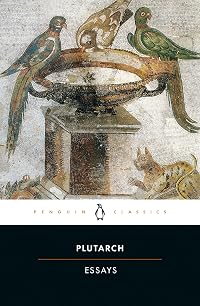
Essays
by Plutarch
On This Page
Description
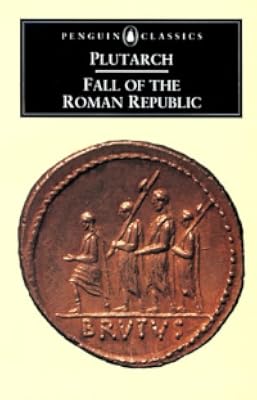
One of the greatest essayists of the Graeco-Roman world, Plutarch (c. AD 46 -120) used an encyclopedic knowledge of the Roman Empire to produce a compelling and individual voice. In this superb selection from his writings, he offers personal insights into moral subjects that include the virtue of listening, the danger of flattery and the avoidance of anger, alongside more speculative essays on themes as diverse as God's slowness to punish man, the use of reason by supposedly 'irrational' show more animals and the death of his own daughter. Brilliantly informed, these essays offer a treasure-trove of ancient wisdom, myth and philosophy, and a powerful insight into a deeply intelligent man. show lessTags
Recommendations





Member Reviews
Most were well written and interesting.
Ratings
Members
- Recently Added By
Lists

Ryan Holiday's Books To Base Your Life On
97 works; 2 members

el
1,139 works; 1 member
Author Information

1,628+ Works 26,045 Members
PLUTARCH. c.46--c.125 Considered by many to be the most important Greek writer of the early Roman period, Plutarch was a member of a well-to-do Greek family, a chief magistrate, a priest at Delphi, and an exceptionally well-read individual. His philosophical views were based on those of Plato and, although a Greek, he esteemed the achievements and show more attributes of the Romans. By the time Plutarch's works were published for the first time in the eleventh century, some had already been lost. He wrote innumerable essays on philosophical, historical, political, religious, and literary subjects, 78 of which survive today and are known collectively as the "Moralia." He is known primarily, however, for his Parallel Lives of Greeks and Romans, which consists of 50 biographies---23 of prominent Greeks, 23 of Roman leaders, and 4 separate lives---accompanied at intervals by short comparative essays. Although historical information is included in the work, Plutarch wrote it originally to inspire emulation in youth, so the emphasis is on character, moral choice, and anecdote. Sir Thomas North's 1579 translation into English of Parallel Lives became an important source for William Shakespeare which he used for three plays, Julius Caesar, Antony and Cleopatra, and Coriolanus. (Bowker Author Biography) show less
All Editions
Common Knowledge
- Canonical title
- Essays
Classifications
- Genre
- Fiction and Literature
- DDC/MDS
- 888.01 — Literature & rhetoric Classical & modern Greek literatures Classical Greek miscellaneous writings Greek miscellany Byzantine philosophy
- LCC
- PA4374 .M6 — Language and Literature Greek language and literature. Latin language and literature Greek literature Individual authors Plutarch
- BISAC
Statistics
- Members
- 313
- Popularity
- 101,921
- Reviews
- 1
- Rating
- (3.84)
- Languages
- English
- Media
- Paper, Ebook
- ISBNs
- 2
- ASINs
- 2