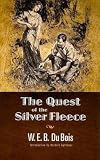
The Quest of the Silver Fleece
by W. E. B. Du Bois
On This Page
Description
Set in Alabama and Washington, D.C., in the early part of the twentieth century, W. E. B. Du Bois's first novel weaves the themes of racial equality and understanding through the stark reality of prejudice and bias. Originally published in 1911 and conceived immediately after The Souls of Black Folk, Du Bois turned to fiction to carry his message to a popular audience who were unfamiliar with his nonfiction works. Du Bois addresses the fact that, despite the legal emancipation of African show more Americans, the instruments of oppression, in both the economy and government, remained in good working order. At the time he was writing, powerful white industrialists controlled the cotton industry, the "silver fleece" that depended, as it did during slavery, on the physical labor of African Americans. White Americans also controlled local and national government.In the novel, Blessed "Bles" Alwyn, a young man seeking formal education to improve himself, is captivated by Zora, a vivacious, independent woman who lives outside society in a mysterious swamp. Faced with shocking events in Zora's past and ambivalence about how a black man should integrate into American society, Bles pursues his goals and ends up in Washington to assist on a senator's campaign. While in the city, he meets successful African Americans-and falls in love-but he ultimately recoils from the hypocrisies they must endure in order to be accepted in society. Instead, he is compelled to return to Alabama and Zora, where he must face his greatest challenges and fears.With its frank and clear language, The Quest of the Silver Fleece is a remarkable portrait of racial prejudice at the turn of the twentieth century. Through the characters, Du Bois demonstrates the efficacy of self-sufficiency for those who face discrimination while championing the benefits of strength in diversity to American society as a whole. show lessTags
Recommendations






















Member Reviews
I was unaware that W.E.B Du Bois had written a couple of novels, and scooped this one up when I chanced upon it at City Lights Bookstore. It was published in 1911, eight years after his landmark ‘The Souls of Black Folks’ and after he had helped found the NAACP. Not surprisingly, part of its power comes from how it examines life for African-Americans in the Jim Crow south, and the various forms of racism there and in the north.
To his credit, Du Bois is candid and yet restrained about the prejudice and violence of the period, and he accurately portrays the key objectives of the (pre-FDR/JFK/LBJ) Democratic party at this time: white supremacy and labor control. The latter meant keeping black people uneducated and in unfair tenant show more relationships, where all power and discretion relative to costs and loans were in the power of landowners. This was a period when public education, a great progressive reform, was criticized as “socialism,” and to see all this in fictional form after reading about it in history texts (e.g. Foner’s Reconstruction) amplified the power of the story. I also found Du Bois’ insights into how political and economic power was wielded to be quite perceptive. We see backroom deals, lobbyists in Washington, and business interests seeking to monopolize the cotton industry, all of which resonated, particularly given our own times.
Where the book falls down a bit is in the story constructed around the black experience and the mechanics of power. The first half or so is solid enough, centering on a couple of young blacks trying to go to school and raise cotton in the swamp (Bles and Zora), surrounded by an altruistic teacher (Miss Smith) and powerful landowners (the Cresswell family) who are approached by northerners (led by John Taylor) to try to control all aspects of the production of cotton. There are two marriages to cement the relationship, one between Taylor and the Cresswell’s daughter, and the other between Taylor’s sister (also a teacher) and the Cresswell’s son. Bles and Zora eventually go north to Washington D.C. separately, where each encounters the forces of progressivism and conservatism, driven by political maneuvering.
To really hit a home run Du Bois would have had to tighten things up relative to the plot, which gets melodramatic and more involved than it needed to be. It’s not that he doesn’t make interesting insights along the way, because he does, such as how Southern gentility and politeness towards women sometimes masks misogyny. There is also a fantastic bit of feminism running through this book in the strength of its female characters, even if there is the regrettable moment when Bles rejects Zora because she’s not a virgin (she’s been raped by one of the Cresswell’s). I just thought that the separate journeys north, the intrigues there, and then back south, where we can clearly see where it’s going, was too much.
Where it delivers, however, is in showing just how monumental the task for achieving the goal of equality was (and still is), when prevailing white opinion was not interested in that, and powerful political and economic forces resisted it. It all seems nearly hopeless, and yet the importance of simply acknowledging the reality of America can’t be underestimated. Du Bois’ book also has elements of hope in showing a path forward, through getting an education, being involved socially and politically, and sticking to one another. It’s not perfect, but certainly worth reading. show less
To his credit, Du Bois is candid and yet restrained about the prejudice and violence of the period, and he accurately portrays the key objectives of the (pre-FDR/JFK/LBJ) Democratic party at this time: white supremacy and labor control. The latter meant keeping black people uneducated and in unfair tenant show more relationships, where all power and discretion relative to costs and loans were in the power of landowners. This was a period when public education, a great progressive reform, was criticized as “socialism,” and to see all this in fictional form after reading about it in history texts (e.g. Foner’s Reconstruction) amplified the power of the story. I also found Du Bois’ insights into how political and economic power was wielded to be quite perceptive. We see backroom deals, lobbyists in Washington, and business interests seeking to monopolize the cotton industry, all of which resonated, particularly given our own times.
Where the book falls down a bit is in the story constructed around the black experience and the mechanics of power. The first half or so is solid enough, centering on a couple of young blacks trying to go to school and raise cotton in the swamp (Bles and Zora), surrounded by an altruistic teacher (Miss Smith) and powerful landowners (the Cresswell family) who are approached by northerners (led by John Taylor) to try to control all aspects of the production of cotton. There are two marriages to cement the relationship, one between Taylor and the Cresswell’s daughter, and the other between Taylor’s sister (also a teacher) and the Cresswell’s son. Bles and Zora eventually go north to Washington D.C. separately, where each encounters the forces of progressivism and conservatism, driven by political maneuvering.
To really hit a home run Du Bois would have had to tighten things up relative to the plot, which gets melodramatic and more involved than it needed to be. It’s not that he doesn’t make interesting insights along the way, because he does, such as how Southern gentility and politeness towards women sometimes masks misogyny. There is also a fantastic bit of feminism running through this book in the strength of its female characters, even if there is the regrettable moment when Bles rejects Zora because she’s not a virgin (she’s been raped by one of the Cresswell’s). I just thought that the separate journeys north, the intrigues there, and then back south, where we can clearly see where it’s going, was too much.
Where it delivers, however, is in showing just how monumental the task for achieving the goal of equality was (and still is), when prevailing white opinion was not interested in that, and powerful political and economic forces resisted it. It all seems nearly hopeless, and yet the importance of simply acknowledging the reality of America can’t be underestimated. Du Bois’ book also has elements of hope in showing a path forward, through getting an education, being involved socially and politically, and sticking to one another. It’s not perfect, but certainly worth reading. show less
"Night fell. The red waters of the swamp grew sinister and sullen. the tall pines lost their slimness and stood in wide blurred blotches all across the way, and a great shadowy bird arose, wheeled and melted, murmuring, into the black-green sky."
So begins this epic novel, first published in 1911 but possibly existing, at least in embryonic form, some years before.
On a personal, and entirely subjective, note, I read that paragraph, immediately fell in love with the book and have not had cause to revise my opinion.
In general, I am not particularly keen on political/politically-motivated novels (whether or not I agree with the writers` viewpoint), though I am prepared to make the odd exception (I thoroughly enjoyed Margery Allingham`s show more `Tiger in the Smoke`, though the author`s views seem to me to be those of a mad woman !).
This book seems to me to be primarily a work of literature and certainly not a simple work of propoganda (though I`d concede that the author`s viewpoint becomes more and more noticeable towards the end).
The silver fleece of the title is cotton, the setting is the deep south and the underlying themes are race relations, capitalism/labour relations and good old fashioned romance.
The plot is complicated, though not unnecessarily convoluted, and I will not try to summarise it here. The characters are well-depicted. One does catch glimpses of Du Bois himself here and there in his characters, especially the brusque but idealistic teacher Miss Smith, but no one character is a self-portrait. In fact the array of characters encountered during the course of the tale is one of it`s greatest strengths. It is pleasing that even the villains of the piece, Southern gentleman Colonel Cresswell and his dissolute son Harry, are not presented as mere ciphers, and the Colonel in particular is presented as having his own standards of ethics, in which he believes deeply, even though these are clearly not shared by the author or intended to be seen as admirable by the reader.
Arnold Rampersad in his introduction, claims that the novel suffers because characters are given unconvincingly `poetic` dialogue here and there. I was not conscious of this. I did feel that some dialogue was a little stilted and maybe a little artificial but then again, I do not know how people spoke in the Southern states of the US over 100 years ago.
My sole major reservation woul be that I have been reading books from the late 19th/early 20th century for literally years and am very accustomed to the writing of the time. A reader more accustomed to modern writing may struggle.
Having said that, this makes it into my personal top ten books easily ! show less
So begins this epic novel, first published in 1911 but possibly existing, at least in embryonic form, some years before.
On a personal, and entirely subjective, note, I read that paragraph, immediately fell in love with the book and have not had cause to revise my opinion.
In general, I am not particularly keen on political/politically-motivated novels (whether or not I agree with the writers` viewpoint), though I am prepared to make the odd exception (I thoroughly enjoyed Margery Allingham`s show more `Tiger in the Smoke`, though the author`s views seem to me to be those of a mad woman !).
This book seems to me to be primarily a work of literature and certainly not a simple work of propoganda (though I`d concede that the author`s viewpoint becomes more and more noticeable towards the end).
The silver fleece of the title is cotton, the setting is the deep south and the underlying themes are race relations, capitalism/labour relations and good old fashioned romance.
The plot is complicated, though not unnecessarily convoluted, and I will not try to summarise it here. The characters are well-depicted. One does catch glimpses of Du Bois himself here and there in his characters, especially the brusque but idealistic teacher Miss Smith, but no one character is a self-portrait. In fact the array of characters encountered during the course of the tale is one of it`s greatest strengths. It is pleasing that even the villains of the piece, Southern gentleman Colonel Cresswell and his dissolute son Harry, are not presented as mere ciphers, and the Colonel in particular is presented as having his own standards of ethics, in which he believes deeply, even though these are clearly not shared by the author or intended to be seen as admirable by the reader.
Arnold Rampersad in his introduction, claims that the novel suffers because characters are given unconvincingly `poetic` dialogue here and there. I was not conscious of this. I did feel that some dialogue was a little stilted and maybe a little artificial but then again, I do not know how people spoke in the Southern states of the US over 100 years ago.
My sole major reservation woul be that I have been reading books from the late 19th/early 20th century for literally years and am very accustomed to the writing of the time. A reader more accustomed to modern writing may struggle.
Having said that, this makes it into my personal top ten books easily ! show less
Ratings
Members
- Recently Added By
Author Information

186+ Works 13,020 Members
Civil rights leader and author, William Edward Burghardt Du Bois was born in Great Barrington, Massachusetts on February 23, 1868. He earned a B.A. from both Harvard and Fisk universities, an M.A. and Ph.D. from Harvard, and studied at the University of Berlin. He taught briefly at Wilberforce University before he came professor of history and show more economics at Atlanta University in Ohio (1896-1910). There, he wrote The Souls of Black Folk (1903), in which he pointed out that it was up to whites and blacks jointly to solve the problems created by the denial of civil rights to blacks. In 1905, Du Bois became a major figure in the Niagara Movement, a crusading effort to end discrimination. The organization collapsed, but it prepared the way for the founding of the National Association for the Advancement of Colored People (NAACP), in which Du Bois played a major role. In 1910, he became editor of the NAACP magazine, a position he held for more than 20 years. Du Bois returned to Atlanta University in 1932 and tried to implement a plan to make the Negro Land Grant Colleges centers of black power. Atlanta approved of his idea, but later retracted its support. When Du Bois tried to return to NAACP, it rejected him too. Active in several Pan-African Congresses, Du Bois came to know Fwame Nkrumah, the first president of Ghana, and Jono Kenyatta the president of Kenya. In 1961, the same year Du Bois joined the Communist party, Nkrumah invited him to Ghana as a director of an Encyclopedia Africana project. He died there on August 27, 1963, after becoming a citizen of that country. (Bowker Author Biography) show less
Some Editions
Awards and Honors
Awards
Series
Belongs to Publisher Series
Work Relationships
Is contained in
Common Knowledge
- Canonical title
- The Quest of the Silver Fleece
- Original publication date
- 1911
- Dedication
- To One whose name may not be written but to whose tireless faith the shaping of these cruder thoughts to forms more fitly perfect is doubtless due, this finished work is herewith dedicated
- First words
- Night fell.
- Last words
- (Click to show. Warning: May contain spoilers.)Let my people go O Infinite One, lest the world shudder at
The End
Classifications
Statistics
- Members
- 135
- Popularity
- 242,806
- Reviews
- 2
- Rating
- (3.73)
- Languages
- English
- Media
- Paper, Audiobook, Ebook
- ISBNs
- 44
- ASINs
- 9