On This Page
Description
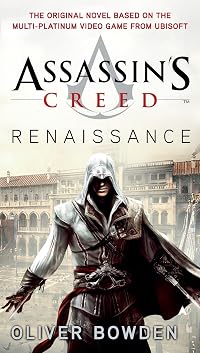
Betrayed by the ruling families of Italy, Ezio Auditore embarks upon an epic quest for vengeance. To eradicate corruption and restore his family's honor, he will learn the art of the Assassins.Along the way, Ezio will call upon the wisdom of such great minds as Leonardo da Vinci and Niccolò Machiavelli, knowing that survival is bound to the skills by which he must live.To his allies, he will become a force for change in his fight for freedom and justice. To his enemies, he will become a show more threat dedicated to the destruction of the tyrants abusing the people of Italy. So begins an epic story of power, revenge, and conspiracy. show lessTags
Recommendations



Member Recommendations
Member Reviews
I'm sure I would have reviewed this differently if I hadn't played the games. As it is, the bulk of this book is simply a retelling of the events that happened in Assassin's Creed II and some of the memories in Assassin's Creed: Brotherhood, and having played those, reading the book after the fact proved to be a vastly inferior experience.
This is why I don't usually read direct novelizations of movies or games, etc (with the exception of Star Wars: Ep. 1-6, but that's more about collecting the hardcovers more than anything). Why bother, when it's usually so much more satisfying to play the original video game, especially in the case of the action/adventure-oriented AC series? When I read video game tie-in novels, I expect more than just show more a rehash of events; I expect additions to the lore or the setting, even if they have to focus on other characters. Think the Mass Effect series or the Dragon Age series.
Otherwise, this book was relatively well-written. Oliver Bowden does a good job bringing the story to life with words, though the pacing felt a bit off. However, I can't fault the author much for story or plot decisions, as I'm guessing he had to stay as faithful as he could to game (another downside of direct novelizations), not to mention likely deal with a multitude of restrictions from Ubisoft.
My opinion? Skip this if you've played the game. Though, I have to say after reading this, I've gained a deeper appreciation for video-game storytelling. The industry has certainly come a long way in this regard, when the events of a game can actually be adapted into a realistic, legitimate and more than acceptable full-length novel. show less
This is why I don't usually read direct novelizations of movies or games, etc (with the exception of Star Wars: Ep. 1-6, but that's more about collecting the hardcovers more than anything). Why bother, when it's usually so much more satisfying to play the original video game, especially in the case of the action/adventure-oriented AC series? When I read video game tie-in novels, I expect more than just show more a rehash of events; I expect additions to the lore or the setting, even if they have to focus on other characters. Think the Mass Effect series or the Dragon Age series.
Otherwise, this book was relatively well-written. Oliver Bowden does a good job bringing the story to life with words, though the pacing felt a bit off. However, I can't fault the author much for story or plot decisions, as I'm guessing he had to stay as faithful as he could to game (another downside of direct novelizations), not to mention likely deal with a multitude of restrictions from Ubisoft.
My opinion? Skip this if you've played the game. Though, I have to say after reading this, I've gained a deeper appreciation for video-game storytelling. The industry has certainly come a long way in this regard, when the events of a game can actually be adapted into a realistic, legitimate and more than acceptable full-length novel. show less
Nel finale scade un po' troppo... All'inizio si mantiene sul genere storico (anche se con numerose licenze che tendevano al fantastico), ma alla fine abbiamo avuto una rivelazione fantascientifica alla Dan Brown e Il Codice da Vinci.
E, altra pecca, sono i personaggi che hanno uno spessore di un foglio di carta nel 90% dei casi.
Veramente carino, nel complesso, ma dalla fine mi aspettavo molto, molto di più. No, forse è proprio dal libro intero che mi aspettavo qualcosa di diverso. Vedremo con il secondo.
E, altra pecca, sono i personaggi che hanno uno spessore di un foglio di carta nel 90% dei casi.
Veramente carino, nel complesso, ma dalla fine mi aspettavo molto, molto di più. No, forse è proprio dal libro intero che mi aspettavo qualcosa di diverso. Vedremo con il secondo.
Assassin's Creed is easily one of my favorite games ever. As someone who has played the four main games in a row (aside from Bloodlines, Discovery and Altaïr's Chronicles), I thought that reading the books was essential for a full understanding of the game's story, regardless of all the reviews stating that the books suck. It happens that it isn't. Nevertheless, I didn't think it was THAT bad.
I have to agree with several comments saying that some important details have been grotesquely changed, like the fact that Ezio's Hidden Blade is used on the right arm rather than in the left arm (and indeed, there is a whole symbology behind this small detail). And I also have to admit that I expected much more of the story, specially regarding show more the historical facts. Instead, I found myself reading a book that is pretty much the game's script, which isn't completely bad since there were a couple of parts in the game I didn't fully understand and I thought that reading the book would be better than replaying the whole game all over again. Still, if I had to choose between replaying the game and reading this book, I would choose the first option. After playing the games, reading the book is a relatively dull experience. The action scenes' descriptions are not as epic as living the whole thing. Knowing a couple of Ezio's feelings is nice, but in the end the book doesn't give you a brand new experience of the Assassin's Creed's story. Moreover, the lack of the Animus parts does make the last part of the book senseless. I would say that people who have not played the game would feel lost.
One interesting aspect of the book is that the content that is originally on the game's downloadable contents (The Battle of Forlì) has been inserted into Renaissance. I didn't play the DLC, so it was nice to read about one of the best fights of lady Caterina Sforza. It's also worth mentioning that Cristina's memories, which only show in the game Assassin's Creed: Brotherhood is present in this book, so you might want to finish the game before reading this book lest you want to be spoiled.
Assassin's Creed: Renaissance is, at least for the ones who have been following up with the games, an interesting book. But if you're looking for a solid book that guides you through the History of Italy and the influence of the Templars in it, then you might want to skip this one. show less
I have to agree with several comments saying that some important details have been grotesquely changed, like the fact that Ezio's Hidden Blade is used on the right arm rather than in the left arm (and indeed, there is a whole symbology behind this small detail). And I also have to admit that I expected much more of the story, specially regarding show more the historical facts. Instead, I found myself reading a book that is pretty much the game's script, which isn't completely bad since there were a couple of parts in the game I didn't fully understand and I thought that reading the book would be better than replaying the whole game all over again. Still, if I had to choose between replaying the game and reading this book, I would choose the first option. After playing the games, reading the book is a relatively dull experience. The action scenes' descriptions are not as epic as living the whole thing. Knowing a couple of Ezio's feelings is nice, but in the end the book doesn't give you a brand new experience of the Assassin's Creed's story. Moreover, the lack of the Animus parts does make the last part of the book senseless. I would say that people who have not played the game would feel lost.
One interesting aspect of the book is that the content that is originally on the game's downloadable contents (The Battle of Forlì) has been inserted into Renaissance. I didn't play the DLC, so it was nice to read about one of the best fights of lady Caterina Sforza. It's also worth mentioning that Cristina's memories, which only show in the game Assassin's Creed: Brotherhood is present in this book, so you might want to finish the game before reading this book lest you want to be spoiled.
Assassin's Creed: Renaissance is, at least for the ones who have been following up with the games, an interesting book. But if you're looking for a solid book that guides you through the History of Italy and the influence of the Templars in it, then you might want to skip this one. show less
Really entertaining brain junk food. I've never played the video game but the book is actually pretty good. Just like a Dan Brown novel, there are a lot of chase scenes, secrets to solve and interesting people and places.
3.5 Stars
Read all my reviews on http://urlphantomhive.booklikes.com
I'll just admit it up front: Assassin's Creed II is one of my favourite games. I mean, it completely had me at renaissance Italy.
This book is quite literally the game, but then written down. Even all the complete uses exercises/lessons in the game have somehow made it into the book. Remember a task where all you need to do is carry a crate? No? Trust me, that's a task and it's in the book as well. Oh, Ezio, could you not find me more of this codex pages? It's in there.
There isn't too much to say about the story, since it's the game. I don't know if I would recommend this to someone who doesn't have nice memories to the game, because the writing is at best not really show more good. It feels weird, not fluent and the events are sometimes kind of thrown together. I think this would probably be due to the fact that their were very few new elements in the story. At times I cringed and even more times I just smiled, for as I realised I was reading a bad book, I couldn't stop but liking it. A lot.
And if you just don't have too much expectations, and just want an easy read, this might be a very enjoyable read. I will be reading at least the next book in the series. show less
Read all my reviews on http://urlphantomhive.booklikes.com
I'll just admit it up front: Assassin's Creed II is one of my favourite games. I mean, it completely had me at renaissance Italy.
This book is quite literally the game, but then written down. Even all the complete uses exercises/lessons in the game have somehow made it into the book. Remember a task where all you need to do is carry a crate? No? Trust me, that's a task and it's in the book as well. Oh, Ezio, could you not find me more of this codex pages? It's in there.
There isn't too much to say about the story, since it's the game. I don't know if I would recommend this to someone who doesn't have nice memories to the game, because the writing is at best not really show more good. It feels weird, not fluent and the events are sometimes kind of thrown together. I think this would probably be due to the fact that their were very few new elements in the story. At times I cringed and even more times I just smiled, for as I realised I was reading a bad book, I couldn't stop but liking it. A lot.
And if you just don't have too much expectations, and just want an easy read, this might be a very enjoyable read. I will be reading at least the next book in the series. show less
Rating: 2 out of 5
This book was a new experience for me, this is the first time that I’ve read a book based on a video game. I recently got into Assassin’s Creed: Odyssey, and I found that the game’s storyline to be quite engrossing. However, there were several references in the game to in-world mythology that I didn’t understand, and when I saw that there was an accompanying book series, I thought reading it would be a great way to familiarize myself with the franchise. The fact that this book was based on a game really showed through multiple elements. This was initially rather frustrating, but it picked up in the last third of the book.
Plot: 2 out of 5
This book's plot wasn’t really unusual, but the way it was presented show more was. It was really easy to tell when Altair was on ‘quests’ and other tasks that form the basis of most video games. As the book progressed, the quests became more integrated into the story and thus the plot elements became more coherent with one another. There were a couple of plot twists, but they weren’t exactly unexpected and as a consequence weren’t thrilling. Maria and Altair’s relationship was almost painful, there was a total lack of chemistry between them.
Setting: 1 out of 5
I’m assuming that the reason that not a single location was visually described is because this book is based on a video game, and if you played the game, you would have seen the locations already. However, a couple of descriptors not related to death would have been nice. Perhaps it was just lacking in my Kindle edition, but a map would have also been greatly appreciated. Hands down this was the biggest turn off with the book, and is what made reading it initially such a slog.
Characters: 2 out of 5
This is an aspect that this book could have excelled at. There were many opportunities to explain character behavior and develop motivations that wouldn’t have deviated from video game canon, but this did not occur. The main character, Altair, was particularly contradictory, especially in the first few chapters. The book starts off with him committing unnecessary violence and consequently being punished by the Order, however, he is frequently enraged when unnecessary violence is being committed by others. With a little bit of introspection this could have worked, but the way it was written was really flat.
Maria and Abbas were also poorly developed. Abbas’s character in particular wasn’t realistic.
Whilst Assassin apprentices, Abbas and Altair formed a close friendship. When Altair told Abbas that his father committed suicide, Abbas considers it slander and assaults Altair. This creates a ‘rivalry’ (?) between the two of them that comes into focus in the latter bit of the book. Abbas thinks that his father ran away, despite his essential possessions remaining at the Order’s stronghold. Any reasonable person would have bought the suicide story after connecting the dots
Maria and Altair become romantically involved. However, Maria’s rationale for her actions is poorly explained, as well as her attraction to Altair. Instead of being the strong female character she was supposed to be, she ends up just being a prisoner turned damsel-in-distress. Oh well.
Writing Style: 2 out of 5
This book was an easy read. If it wasn’t for the descriptions of violence and disembowelment it was basic enough to be a children’s book, Harry Potter and the Philosopher’s Stone had more nuanced language. Many sentences were overly short, and a bit blunt to the point of crassness. For example:
And when describing death:
Very blunt.
Also for the love of Pete, someone needs to tell the author that stabbing someone in the abdomen a single time would not lead to instantaneous death. I lost track of how many people immediately died through a single stab.
Personal Enjoyment: 3 out of 5
For all this books many failures, I actually enjoyed it. Especially the last third or so. It was initially a slog, but towards the end things started to click and it became quite entertaining.
Conclusion
Don’t read this book for its merits, read this book because you’re also interested in the video game and its world. This book was an easy to read. I may read the second book in the series, as it will pick up where this book left off.
Cross posted on my blog show less
This book was a new experience for me, this is the first time that I’ve read a book based on a video game. I recently got into Assassin’s Creed: Odyssey, and I found that the game’s storyline to be quite engrossing. However, there were several references in the game to in-world mythology that I didn’t understand, and when I saw that there was an accompanying book series, I thought reading it would be a great way to familiarize myself with the franchise. The fact that this book was based on a game really showed through multiple elements. This was initially rather frustrating, but it picked up in the last third of the book.
Plot: 2 out of 5
This book's plot wasn’t really unusual, but the way it was presented show more was. It was really easy to tell when Altair was on ‘quests’ and other tasks that form the basis of most video games. As the book progressed, the quests became more integrated into the story and thus the plot elements became more coherent with one another. There were a couple of plot twists, but they weren’t exactly unexpected and as a consequence weren’t thrilling. Maria and Altair’s relationship was almost painful, there was a total lack of chemistry between them.
Setting: 1 out of 5
I’m assuming that the reason that not a single location was visually described is because this book is based on a video game, and if you played the game, you would have seen the locations already. However, a couple of descriptors not related to death would have been nice. Perhaps it was just lacking in my Kindle edition, but a map would have also been greatly appreciated. Hands down this was the biggest turn off with the book, and is what made reading it initially such a slog.
Characters: 2 out of 5
This is an aspect that this book could have excelled at. There were many opportunities to explain character behavior and develop motivations that wouldn’t have deviated from video game canon, but this did not occur. The main character, Altair, was particularly contradictory, especially in the first few chapters. The book starts off with him committing unnecessary violence and consequently being punished by the Order, however, he is frequently enraged when unnecessary violence is being committed by others. With a little bit of introspection this could have worked, but the way it was written was really flat.
Maria and Abbas were also poorly developed. Abbas’s character in particular wasn’t realistic.
Maria and Altair become romantically involved. However, Maria’s rationale for her actions is poorly explained, as well as her attraction to Altair. Instead of being the strong female character she was supposed to be, she ends up just being a prisoner turned damsel-in-distress. Oh well.
Writing Style: 2 out of 5
This book was an easy read. If it wasn’t for the descriptions of violence and disembowelment it was basic enough to be a children’s book, Harry Potter and the Philosopher’s Stone had more nuanced language. Many sentences were overly short, and a bit blunt to the point of crassness. For example:
The smell of burning sickened him. The sight too. Of books being burned.
And when describing death:
He gurgled. Died.
Very blunt.
Also for the love of Pete, someone needs to tell the author that stabbing someone in the abdomen a single time would not lead to instantaneous death. I lost track of how many people immediately died through a single stab.
Personal Enjoyment: 3 out of 5
For all this books many failures, I actually enjoyed it. Especially the last third or so. It was initially a slog, but towards the end things started to click and it became quite entertaining.
Conclusion
Don’t read this book for its merits, read this book because you’re also interested in the video game and its world. This book was an easy to read. I may read the second book in the series, as it will pick up where this book left off.
Cross posted on my blog show less
Ezio Auditore ages quickly throughout the book, and readers get to witness his growth and maturity. Being a person who played this game, I found the book to be a bit boring at times since I already knew the story, but being able to experience Ezio's inner thoughts about events were refreshing. The pace at which years would pass between chapters would sometimes be hard to keep up with though. Ezio is much older and more experienced by the end of the novel though his work is farm from being done. The fact that he never runs out of enemies can become a bit tiring as well, but the book is well worth the read for avid fans of the franchise that don't mind dealing with a retelling of a story they already know all too well.
Members
- Recently Added By
Lists

Assassins
10 works; 4 members

LIDOS
37 works; 1 member

Kindle Fantasy/Science Fiction Re-Read
151 works; 1 member
Author Information
20 Works 5,244 Members
Some Editions
Series

Work Relationships
Is contained in
Is an adaptation of
Common Knowledge
- Canonical title
- Assassin's Creed: Renaissance
- Original title
- Assassin's Creed: Renaissance
- Original publication date
- 2009-11-20
- People/Characters
- Ezio Auditore da Firenze; Niccolò Machiavelli; Girolamo Savonarola; Rodrigo Borgia; Cesare Borgia; Lucrezia Borgia (show all 12); Caterina Sforza; Leonardo da Vinci; Mario Auditore da Monteriggioni; Claudia Auditore da Firenze; Cristina Vespucci; Alexander VI, Pope (Rodrigo de Borja or Borgia)
- Important places
- Florence, Tuscany, Italy; Venice, Veneto, Italy
- Epigraph
- While I thought that I was learning how to live, I have been learning how to die.
- Leonardo da Vinci - First words
- Torches gleamed and flickered high on the towers of the Palazzo Vecchio and the Bargello, and just a few lanterns shimmered in the cathedral square a little way to the north.
- Last words
- (Click to show. Warning: May contain spoilers.)There was a new world to be made.
- Original language*
- Englisch
*Some information comes from Common Knowledge in other languages. Click "Edit" for more information.
Classifications
Statistics
- Members
- 1,263
- Popularity
- 19,404
- Reviews
- 24
- Rating
- (3.35)
- Languages
- 15 — Czech, Dutch, English, Estonian, French, German, Greek, Hungarian, Italian, Polish, Portuguese, Romanian, Spanish, Turkish, Chinese, traditional
- Media
- Paper, Audiobook, Ebook
- ISBNs
- 46
- UPCs
- 1
- ASINs
- 15
