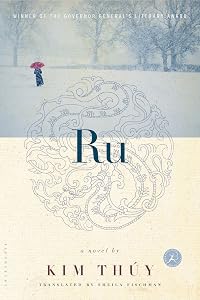
Ru
by Kim Thúy
On This Page
Description
A book of rare beauty: Ru is a lullaby of Vietnam and a love letter to a new homeland. Ru: In Vietnamese it means lullaby; in French it is a small stream, but also signifies a flow - of tears, blood, and money. Kim Thuy's Ru is literature at its most crystalline: the flow of a life on the tides of unrest and on to more peaceful waters. In vignettes of exquisite clarity, sharp observation and sly wit, we are carried along on an unforgettable journey from a palatial residence in Saigon to a show more crowded and muddy Malaysian refugee camp, and onward to a new life in Quebec. There, the young girl feels the embrace of a new community, and revels in the chance to be part of the American Dream. As an adult, the waters become rough again: now a mother of two, she must learn to shape her love around the younger boy's autism. Moving seamlessly from past to present, from history to memory and back again, Ru is a book that celebrates life in all its wonder: its moments of beauty and sensuality, brutality and sorrow, comfort and comedy. show lessTags
Recommendations
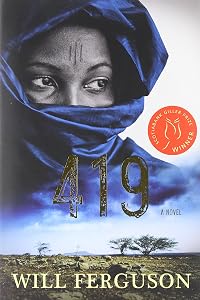
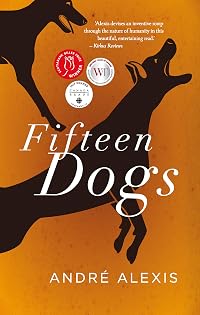
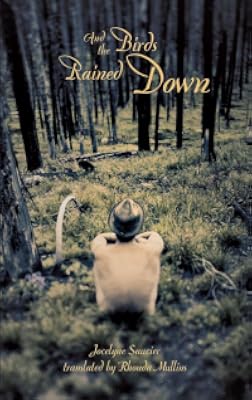
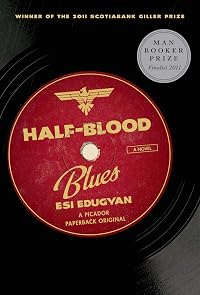

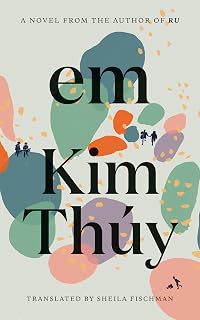











Member Recommendations
by Cecilturtle
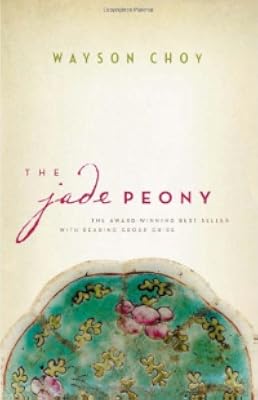
gypsysmom A young Cambodian girl's experience with the Khmer Rouge takeover

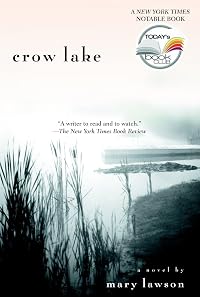
olonec Montreal, cultural themes
Member Reviews
So...we lost power for over 24 hours (super storm sandy) and i decided to re-read this beautiful novel.
Kim Thúy's novel, Ru was shortlisted for this year's Giller Award. Released in its original French in 2010, it won the French-language Governor-General’s Award that same year, and has secured foreign rights in 15 countries. (Though according to a rep at Random House Canada, I have been told a U.S. publication date has not been established.) The English translation has been crafted beautifully by Sheila Fischman. While I was reading, I sensed the tenderness and integrity Fischman brought to this project. (But I would now like to read Ru in French!)
Ru is a fictional memoir told in beautiful vignettes that weave us through An Tinh's show more escape from Vietnam to her time in a Malaysian refugee camp to her new life in Canada. The novel begins with a note on the meaning of ru. In French, it denotes a small stream or a flow – of water, blood, tears or almost anything else. In Vietnamese, ru means a lullaby.
The opening that follows, gives us a good idea of what's in store:
I came into the world during the Tet Offensive, in the early days of the Year of the Monkey, when the long chains of firecrackers draped in front of houses exploded polyphonically along with the sound of the machine guns.
I first saw the light of day in Saigon, where firecrackers, fragmented into a thousand shreds, coloured the ground red like the petals of cherry blossoms or like the blood of the two million soldiers deployed and scattered through the villages and cities of a Vietnam that had been ripped in two.
I was born in the shadow of skies adorned with fireworks, decorated with garlands of light, shot through with rockets and missiles. The purpose of my birth was to replace lives that had been lost. My life’s duty was to prolong that of my mother.
I love the form this book takes and feel that the way Thúy tells us this story really captures how we remember events from the past. Our recollections help form the big picture but it's the snippets of memory, of moments along the way, that piece together like a puzzle and create the full picture of a life. even in its entirety life can be messy but whole, disjointed and connected at the same time. but from the chaos and uncertainty, physical and moral strength and endurance can emerge and sustain us.
Thúy did a Q & A with CBC Books. show less
Kim Thúy's novel, Ru was shortlisted for this year's Giller Award. Released in its original French in 2010, it won the French-language Governor-General’s Award that same year, and has secured foreign rights in 15 countries. (Though according to a rep at Random House Canada, I have been told a U.S. publication date has not been established.) The English translation has been crafted beautifully by Sheila Fischman. While I was reading, I sensed the tenderness and integrity Fischman brought to this project. (But I would now like to read Ru in French!)
Ru is a fictional memoir told in beautiful vignettes that weave us through An Tinh's show more escape from Vietnam to her time in a Malaysian refugee camp to her new life in Canada. The novel begins with a note on the meaning of ru. In French, it denotes a small stream or a flow – of water, blood, tears or almost anything else. In Vietnamese, ru means a lullaby.
The opening that follows, gives us a good idea of what's in store:
I came into the world during the Tet Offensive, in the early days of the Year of the Monkey, when the long chains of firecrackers draped in front of houses exploded polyphonically along with the sound of the machine guns.
I first saw the light of day in Saigon, where firecrackers, fragmented into a thousand shreds, coloured the ground red like the petals of cherry blossoms or like the blood of the two million soldiers deployed and scattered through the villages and cities of a Vietnam that had been ripped in two.
I was born in the shadow of skies adorned with fireworks, decorated with garlands of light, shot through with rockets and missiles. The purpose of my birth was to replace lives that had been lost. My life’s duty was to prolong that of my mother.
I love the form this book takes and feel that the way Thúy tells us this story really captures how we remember events from the past. Our recollections help form the big picture but it's the snippets of memory, of moments along the way, that piece together like a puzzle and create the full picture of a life. even in its entirety life can be messy but whole, disjointed and connected at the same time. but from the chaos and uncertainty, physical and moral strength and endurance can emerge and sustain us.
Thúy did a Q & A with CBC Books. show less
In French, ru means a small stream, and figuratively, a flow, a discharge-- of tears, of blood, of money. In Vietnamese ru means a lullaby, to lull.
Tears, blood and money all figure in this novel about Nguyen an Tinh, a girl born in Saigon during the Tet Offensive, born to replace the lives of those lost in the conflicts and to metaphorically extend her mother's life. Nguyen's name means "peaceful interior", a mother's benediction that will never be realized.
When Nguyen was ten, her family escaped Vietnam on a derelict boat, washing up in Malaysia. From there, they arrived in Granby Quebec in the middle of winter. Life had already changed drastically for the young girl and her family with the fall of Saigon. A cultured French show more speaking family, a family that had told others what to do, they found themselves vilified and ordered around by the new regime, their house and property taken over. They still had a clear identity as Vietnamese, however.
Life in Canada changed her family forever. Her parents were overqualified for the French language course and underqualified for everything else. Unable to look ahead of themselves, they looked ahead of us, for us, their children. Coping with day to day life in their new world, however, robbed the children too of their identity and their own ability to look ahead.
How to eat with a fork, the dry Minute Rice prepared by well meaning strangers; how to distinguish the donated clothing by gender; how to know that there were different clothes for summer and winter, that you didn't just wear more clothes in winter; these were all perplexing questions that no one thought to explain to the family. Without a cultural knowledge of their new world, knowledge was absorbed randomly, odd facts and expressions collected from school, church, work and new friends.
Nguyen became suspended between two worlds: the old Vietnamese world that no longer existed as her family had known it and the new Canadian world where the future could not be known. Thuy portrays this state beautifully, in a way any immigrant, no matter from where, can understand, moving back and forth from past to future and back to the past again, but residing only in the present.
This is a novel without a plot, a flowing remembrance of the past in two worlds, a story told to the self to lull anxiety over the future. In the end, it is also an acknowledgement of the possibility of that future, a future where her children with their new French names will forge the links that will carry forward the lives of her mother and those who came before.
------
In 1979-1980, fifty thousand Vietnamese refugees came to Canada, many sponsored by individuals, churches or local organizations. Kim Thuy's family arrived in Quebec that year and [Ru] reflects that experience, just as her family reflects what happened to many of the children and grandchildren of those refugees. Kim became a lawyer, one brother a dentist, and the other an actuary. All told, over one hundred and thirty-five thousand refugees came to Canada from Vietnam, Laos and Cambodia. show less
Kim Thúy was ten when she fled Vietnam with her family in the wave of "boat people" fleeing the Communist reprisals after the fall of Saigon. After four months in a Malaysian refugee camp, her family was chosen for emigration to Canada based on her parent's French proficiency. They settled in Granby, Quebec (by chance the town my grandfather is from) and were warmly welcomed. Thúy attended the University of Montreal and then worked as an interpreter and translator for a Canadian firm based in Vietnam advising the Vietnamese government on their move toward capitalism. She later opened a restaurant in Montreal called Ru de Nam. Ru is her debut novel and highly autobiographical, referring to all the events above, as well as being the show more parent of an autistic child. The book won the Governor General’s Literary Award and the translation was a finalist for the Giller Prize.
In addition to a mesmerizing story, what draws me to Thúy's books is her writing. It's like reading poetry. Almost every page is a new "chapter", usually only a paragraph or two, and ends with an impactful sentence. Although a complete thought in themselves, they string together flawlessly, creating a beautiful stream of thought moving back and forth in time. I get swept along and usually finish her book in a sitting or two. Highly recommended. show less
In addition to a mesmerizing story, what draws me to Thúy's books is her writing. It's like reading poetry. Almost every page is a new "chapter", usually only a paragraph or two, and ends with an impactful sentence. Although a complete thought in themselves, they string together flawlessly, creating a beautiful stream of thought moving back and forth in time. I get swept along and usually finish her book in a sitting or two. Highly recommended. show less
Als Zehnjährige floh die Autorin gemeinsam mit ihren Eltern aus Vietnam und gelangte über Malaysia nach Kanada. In kurzen Stücken, die selten mehr als eine Seite umfassen, blickt die nunmehr 40jährige in diesem Buch in nicht chronologischer Reihenfolge zurück auf ihre Vergangenheit und die ihrer Familie. Viele dieser Erinnerungen bergen den Ansatz für den Sprung zu einer anderen in sich.
Ein Beispiel: Sie berichtet von Kindern der GIs in Vietnam, die zumeist Waisen und/oder Obdachlose wurden. Einem dieser ehemaligen Kinder, einer mittlerweile jungen, obdachlosen Frau, begegnet sie in New York ohne ihr helfen zu können. Dabei erinnert sie sich an einen Onkel, der in Princeton seinen Doktor in Statistik machte und sie fragt sich, ob show more er die Anzahl der Risiken und Hindernisse berechnen könnte, denen diese junge Frau ausgesetzt war. Davon ausgehend überlegt sie, ob ihm dies auch mit der Berechnung der Wahrscheinlichkeit des Überlebens von Herrn An möglich wäre. Auch Herr An, ein früherer Richter und Universitätsprofessor, ist ein Flüchtling, der Grauenvolles durchmachte und ihr 'die Nuancen gelehrt' hat so wie Herr Minh in ihr den Wunsch zu schreiben weckte. Der Herr Minh, der an der Sorbonne französische Literatur studiert hatte. Und so weiter...
Menschen und Geschehnisse aus der Vergangenheit wecken Erinnerungen an Bekannte aus jüngerer Zeit und andersherum. Und so entsteht nach und nach ein Bild eines vielschichtigen, bunten Lebens, das neben Leid und Schmerz auch viel Wärme und Freude erlebt hat. Besonders eindrucksvoll empfand ich die Liebe und Dankbarkeit zum Dasein, die immer wieder durch die poetischen Sätze hervorklingen trotz all der entsetzlichen Dinge, die Kim Thúy erlebt hat. Ein berührendes Buch! show less
Ein Beispiel: Sie berichtet von Kindern der GIs in Vietnam, die zumeist Waisen und/oder Obdachlose wurden. Einem dieser ehemaligen Kinder, einer mittlerweile jungen, obdachlosen Frau, begegnet sie in New York ohne ihr helfen zu können. Dabei erinnert sie sich an einen Onkel, der in Princeton seinen Doktor in Statistik machte und sie fragt sich, ob show more er die Anzahl der Risiken und Hindernisse berechnen könnte, denen diese junge Frau ausgesetzt war. Davon ausgehend überlegt sie, ob ihm dies auch mit der Berechnung der Wahrscheinlichkeit des Überlebens von Herrn An möglich wäre. Auch Herr An, ein früherer Richter und Universitätsprofessor, ist ein Flüchtling, der Grauenvolles durchmachte und ihr 'die Nuancen gelehrt' hat so wie Herr Minh in ihr den Wunsch zu schreiben weckte. Der Herr Minh, der an der Sorbonne französische Literatur studiert hatte. Und so weiter...
Menschen und Geschehnisse aus der Vergangenheit wecken Erinnerungen an Bekannte aus jüngerer Zeit und andersherum. Und so entsteht nach und nach ein Bild eines vielschichtigen, bunten Lebens, das neben Leid und Schmerz auch viel Wärme und Freude erlebt hat. Besonders eindrucksvoll empfand ich die Liebe und Dankbarkeit zum Dasein, die immer wieder durch die poetischen Sätze hervorklingen trotz all der entsetzlichen Dinge, die Kim Thúy erlebt hat. Ein berührendes Buch! show less
What a powerful little story. Every immigrant will be able to relate to this novel which describes a Vietnamese Boat Person's move to Canada and settling down. It is a poignant description of her childhood and the stark contrast between the life in Vietnam and the new life in Canada.
It is when she goes back to Vienam that she realizes that "the American dream had made me believe I could have everything." She felt the American dream had made her "weightier, more substantial."
Every page in the book is philosophical. One example is the vignette where in talking about one of the persons in her boat who did not make it, Thuy says, "He'd retraced his steps to fetch the gold taels he'd hidden in the boat's fuel tank. Perhaps the taels made him show more sink, perhaps they were too heavy to carry. Or else the current swallowed him as punishment for looking back, or to remind us that we must never regret what we've left behind."
I would recommend this book wholeheartedly. show less
It is when she goes back to Vienam that she realizes that "the American dream had made me believe I could have everything." She felt the American dream had made her "weightier, more substantial."
Every page in the book is philosophical. One example is the vignette where in talking about one of the persons in her boat who did not make it, Thuy says, "He'd retraced his steps to fetch the gold taels he'd hidden in the boat's fuel tank. Perhaps the taels made him show more sink, perhaps they were too heavy to carry. Or else the current swallowed him as punishment for looking back, or to remind us that we must never regret what we've left behind."
I would recommend this book wholeheartedly. show less
RU caught me up and kept me reading from page one. Written in small snippets detailing her life as a child in a privileged Saigon family that is finally forced to flee the country after the Communist takeover, author Kim Thuy also gives us glimpses into their horrifying experiences as boat people, then in a refugee camp in Malaysia, before final stops in Canada. The short sections here flow effortlessly from one to another, although the chronology skips haphazardly between various locales and years and extended family members. The title, 'ru,' means a small stream, or a flow in French (the language in which it was first published), while in Vietnamese it means a lull, or even a lullabye. Kim Thuy's story, which I suspect is highly show more autobiographical, does indeed flow naturally and gently, by subjective memories, and reads very much like a lengthy, meandering prose poem, giving us an artfully told tale of one family's long journey into a new life. RU is, I think, a must-read for anyone interested in the Vietnamese diaspora, a direct result of the years-long Vietnam war. (Called the American war by the Vietnamese.) I was enormously impressed by this little book. A magnificent achievement. My very highest recommendation.
- Tim Bazzett, author of the memoir, BOOKLOVER show less
- Tim Bazzett, author of the memoir, BOOKLOVER show less
How do you leave a country with only what you can carry on your body and make a new life in a new country using a new language? Through episodic memories that move back and forth through time, the narrator tells of her childhood in South Vietnam, of life in a reeducation camp, of a boat journey to a new land, of living in a refugee camp in Malaysia, of arriving in Canada and adjusting to a new culture and a new language, of returning to work in Vietnam years later, and of motherhood. Anyone old enough to remember images of the Vietnam War or the boat people will have no trouble visualizing what Thuy so movingly describes. It's short enough to read in a single sitting, and I think this factor is a key to its impact. Thuy pulls readers show more into her world and keeps them there just long enough to feel the weight of Vietnamese history before releasing them back to their own worlds.
We often forget about the existence of all those women who carried Vietnam on their backs while their husbands and sons carried weapons on theirs...They were so weighed down by all their grief that they couldn't pull themselves up, couldn't straighten their hunched backs, bowed under the weight of their sorrow. When the men emerged from the jungle and started to walk again along the earthen dikes around their rice fields, the women continued to bear the weight of Vietnam's inaudible history on their backs. Very often they passed away under that weight, in silence. show less
We often forget about the existence of all those women who carried Vietnam on their backs while their husbands and sons carried weapons on theirs...They were so weighed down by all their grief that they couldn't pull themselves up, couldn't straighten their hunched backs, bowed under the weight of their sorrow. When the men emerged from the jungle and started to walk again along the earthen dikes around their rice fields, the women continued to bear the weight of Vietnam's inaudible history on their backs. Very often they passed away under that weight, in silence. show less
Members
- Recently Added By
Published Reviews
To risk all on the sum of its parts might seem dangerous, but the material’s innate truth justifies its author’s faith and through skilful assembly a whistle-clean story emerges. And yet, the story matters less than the raw acceptance of its moments, often brutal, occasionally full of beauty, the unexpected glimpses recounted without judgement or sentimentality of a world we know only show more through hearsay. show less
added by lkernagh
Thúy's impressionistic approach means the book can feel rudderless, but the stories are poetic and powerful.
added by lkernagh
Subtlety of voice and effect is Thúy’s strongest hand. Never is there a sense of false drama or manipulation of pain for easy emotional gain. In strictly human terms, the book’s pivotal balance between endurance and despair is delicately, beautifully realized.
added by lkernagh
Lists

CBC Books - Canada's 100 (+ bonus 10): Which have you read?
110 works; 23 members

Recommend the 20 best books you've read in the last five years
2,168 works; 606 members

Best of World Literature
434 works; 51 members

Top Five Books of 2014
1,064 works; 398 members

Canada Reads Winners and Nominees
129 works; 9 members

CBC's Great Canadian Reading List
149 works; 5 members

Books Read in 2016
4,666 works; 197 members

First Novels
373 works; 17 members

IMPAC Dublin Literary Award 2014 longlist
150 works; 3 members

Translingualism
191 works; 4 members

Canadian Jurist-Novelists
313 works; 1 member
Author Information

11 Works 1,710 Members
Some Editions
Awards and Honors
Awards
Notable Lists
Series
Belongs to Publisher Series
Common Knowledge
- Original title
- ru
- Original publication date
- 2009
- People/Characters
- Nguyen An Tinh
- Important places
- Vietnam; Malaysia; Québec, Canada
- Important events*
- Guerre du Vietnam (1959 | 1975)
- Epigraph
- In French, ru means a small stream and, figuratively, a flow, a discharge -- of tears, of blood, of money. In Vietnamese, ru means a lullaby, to lull.
- Dedication
- Aux gens du pays.
- First words
- Je suis venue au monde pendant l'offensive du Têt, aux premiers jours de la nouvelle année du Singe, lorsque les longues chaînes de pétards accrochées devant les maisons explosaient en polyphonie avec le son des mitraill... (show all)ettes.
I came into the world during the Tet offensive, in the early days of the Year of the Monkey, when the long chains of firecrackers draped in front of houses exploded polyphonically along with the sound of machine guns. - Quotations
- "la vie est un combat où la tristesse entraine la défaite"
"j'avais oublié que l'amour vient de la tête et non pas du coeur"
We often forget about the existence of all those women who carried Vietnam on their backs while their husbands and sons carried weapons on theirs. We forget them because under their cone-shaped hats they did not look up at th... (show all)e sky...Those women let their sadness grow in the chambers of their hearts. They were so weighed down by all of their grief that they couldn't pull themselves up, couldn't straighten their hunched backs, bowed under the weight of their sorrow. When the men emerged from the jungle and started to walk again along the earthen dikes around their rice fields, the women continued to bear the weight of Vietnam's audible history on their backs. Very often they passed away under that weight, in silence.
But the young waiter reminded me that I couldn't have everything, that I no longer had the right to declare I was Vietnamese because I no longer had their fragility, their uncertainty, their fears. And he was right to remind ... (show all)me. - Last words
- (Click to show. Warning: May contain spoilers.)And also, where an outstretched hand is no longer a gesture but a moment of love, lasting until sleep, until waking, until everyday life.
- Blurbers
- Reisman, Heather
- Original language
- French
*Some information comes from Common Knowledge in other languages. Click "Edit" for more information.
Classifications
Statistics
- Members
- 1,024
- Popularity
- 25,313
- Reviews
- 63
- Rating
- (3.81)
- Languages
- 14 — Czech, Danish, Dutch, English, Estonian, Finnish, French, German, Italian, Polish, Spanish, Swedish, Turkish, Portuguese (Portugal)
- Media
- Paper, Audiobook, Ebook
- ISBNs
- 47
- ASINs
- 11