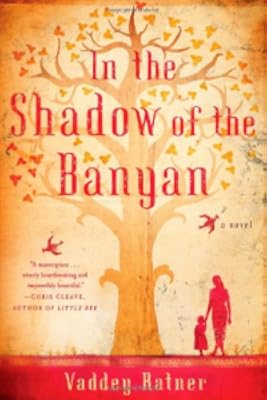
In the Shadow of the Banyan
by Vaddey Ratner
On This Page
Description
Told from the tender perspective of a young girl who comes of age amid the Cambodian killing fields, this novel is based on the author's personal story. For seven-year-old Raami, the shattering end of childhood begins with the footsteps of her father returning home in the early dawn hours bringing details of the civil war that has overwhelmed the streets of Phnom Penh, Cambodia's capital. Soon the family's world of carefully guarded royal privilege is swept up in the chaos of revolution and show more forced exodus. Over the next four years, as she endures the deaths of family members, starvation, and brutal forced labor, Raami clings to the only remaining vestige of childhood, the mythical legends and poems told to her by her father. In a climate of systematic violence where memory is sickness and justification for execution, Raami fights for her improbable survival. show lessTags
Recommendations





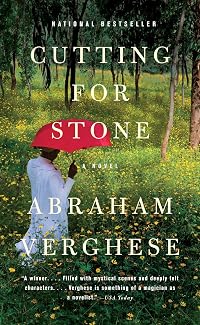
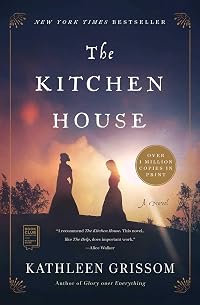
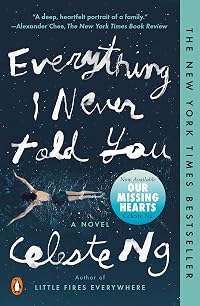


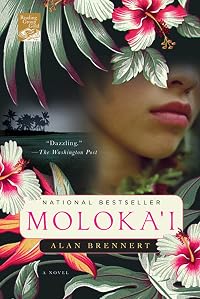








Member Recommendations
Member Reviews
This is going to be a quickie but wow, was this a terrific read. It documents the Khmer Rouge regime in Cambodia between 1975 and 1979. The story is told through the eyes of a seven-year-old girl, named Raami, who is the ideal narrator. The prose is beautiful, but the narrative is heart-rending. Keep plenty of tissues handy. Here are a couple nuggets:
“But the real reason we stayed, I sensed, was simply that we couldn’t bear to leave the place where Papa had last been, where the ground echoed with his footsteps, the trees heaved his sighs, and the pond mirrored his tranquility.”
“It was a sick sky. A sky burning with welts. Angry and red. The colors of rotting flesh, of dying and death, of one heaving last breath. Of rains that show more hadn’t come, and rains that came a long time ago.”
Edit | More show less
“But the real reason we stayed, I sensed, was simply that we couldn’t bear to leave the place where Papa had last been, where the ground echoed with his footsteps, the trees heaved his sighs, and the pond mirrored his tranquility.”
“It was a sick sky. A sky burning with welts. Angry and red. The colors of rotting flesh, of dying and death, of one heaving last breath. Of rains that show more hadn’t come, and rains that came a long time ago.”
Edit | More show less
Set during the horror of the Khmer Rouge, a young girl and her family are forcibly moved from Phnom Penh to a rural district where they can be re-educated among the peasant class. Raami has lived in a wealthy household, surrounded by an extended family, including members of the royal family. Her father, a poet and intellectual, initially supports the Revolution, but their status puts their lives at risk as the Khmer Rouge rise to power. Raami’s innocence is shattered by the brutality of the civil war, but in the midst of almost unbearable sorrow, she is lifted up by the poetry of her father, the stories of her heritage, and by the love of those who surround her.
Please read this book! It will break your heart, but the writing is show more positively luminous and the persistence of the human spirit will inspire you. I can’t wait to read Vaddey Ratner’s second book, Music of the Ghosts. show less
Please read this book! It will break your heart, but the writing is show more positively luminous and the persistence of the human spirit will inspire you. I can’t wait to read Vaddey Ratner’s second book, Music of the Ghosts. show less
Moving and tragic story of Raami, a seven-year-old girl, and her family, as they, along with the rest of the population, are forced by the Khmer Rouge to evacuate Phnom Penh. They are relocated a number of times, and endure violence, oppression, physical deprivations, mental anguish, separation, and deaths of loved ones. In the Shadow of the Banyan is based on the author’s experience as a small child in Cambodia. She wrote it to honor the lives of the estimated two million people, including some of her family members, who suffered and died in the Cambodian genocide of 1975-1979.
Ratner shows the brutality of the Khmer Rouge regime, referred to as the “Organization,” but at the same time points out the small bits of beauty that show more remain in the wake of destruction. The author adds fragments of poetry, Cambodian folk tales and legends, and examples of human kindness. These seem particularly appropriate to a young and innocent narrator who wants to be protected from harm and uses the stories as a form of escape. The child narrator is also the only drawback: she often exhibits wisdom and language beyond her years.
Themes include the power of storytelling, family relationships, memories, guilt, grief, and love. Vaddey Ratner’s writing style is simply beautiful. Heart-wrenching but ultimately hopeful, this story illustrates the desire to live even in the most horrific conditions. show less
Ratner shows the brutality of the Khmer Rouge regime, referred to as the “Organization,” but at the same time points out the small bits of beauty that show more remain in the wake of destruction. The author adds fragments of poetry, Cambodian folk tales and legends, and examples of human kindness. These seem particularly appropriate to a young and innocent narrator who wants to be protected from harm and uses the stories as a form of escape. The child narrator is also the only drawback: she often exhibits wisdom and language beyond her years.
Themes include the power of storytelling, family relationships, memories, guilt, grief, and love. Vaddey Ratner’s writing style is simply beautiful. Heart-wrenching but ultimately hopeful, this story illustrates the desire to live even in the most horrific conditions. show less
This is a feat of writing. In spite of the child’s-eye viewpoint, the author conveys the complexity and depth that are really essential to telling such a difficult story. Only in retrospect did I realize how closely I had followed Raami’s journey, and how much I learned from her even in moments where I “knew” more about what was happening than she did.
In the Shadow of the Banyan is a heartbreaking story of a minor royal Cambodian family caught up the disastrous social engineering of the Khmer Rogue in the mid 1970's. Based partially on the experiences of Ratner, herself being only five years old at the time when the Khmer Rogue came to power, this fictionalized account of the aristocracies and utter devastation of the Cambodian people have suffered through is beyond understanding. Ratner has done a wonderful job of breathing life into a period of Cambodia's darkest period. Chronicled from the perspective of a seven year old girl, whose family is violently uprooted from their city home and forced to work in the country as part of the idealized agrarian society the regime believes will show more return Cambodia back onto the right path, she gives first hand account of the struggle to adapt to ever changing whims of “Organization,” the lose of a beloved father, the separation of families, starvation, forced labor, and what it's like living knowing that one step out of line the Organization's ever changing rules results in torture in death. The tension knowing that at any moment the life you have built and rebuilt could be destroyed because you are today's enemy must have been overwhelming. And for much of the story there isn't a way out for this girl's family dark corrupt reality where death is all around them, but the overwhelming will to survive for her and her mother, if not for themselves than for all that they lost, gives them a chance a to triumph over extreme adversity and make their escape.
Ratner uses lines of poetry and flowery prose to create a serene atmosphere that is completely counter to devastation of the events taking place in the story. This gives the story a real sense of Buddhism; a peacefulness that's hard to describe concerting the topic. It can be surreal at times. Another thing I liked is the narrator, a child, is not the typical precocious child wise bound her years, instead her account reads like that of a child forced to grow up by her circumstances. It is a more adult like voice, but I think this only adds to her lose of innocence and her childhood. This is a beautifully written and heartbreaking account of the ugliness we humans can inflict on one another. show less
Ratner uses lines of poetry and flowery prose to create a serene atmosphere that is completely counter to devastation of the events taking place in the story. This gives the story a real sense of Buddhism; a peacefulness that's hard to describe concerting the topic. It can be surreal at times. Another thing I liked is the narrator, a child, is not the typical precocious child wise bound her years, instead her account reads like that of a child forced to grow up by her circumstances. It is a more adult like voice, but I think this only adds to her lose of innocence and her childhood. This is a beautifully written and heartbreaking account of the ugliness we humans can inflict on one another. show less
If we think about communism in Asia, as Americans we tend to focus on China or Korea or Vietnam. Very few people probably include Cambodia in that list and an even smaller handful of people are likely to have any knowledge of the Cambodian revolution and civil war in the 1970s, Pol Pot and the Khmer Rouge, the atrocities they perpetuated, and the genocide that followed their takeover of this South East Asian neighbor to Vietnam. Vaddey Ratner's lyrical and heartbreaking tale of a seven year old girl's view of the revolution, based loosely on her own terrible experiences living through that desperate time, brings the reality of the time to vivid life.
Raami is a young princess in the Cambodian royal family. Despite her leg brace, needed show more after suffering polio as a baby, she lives a privileged life with her graceful mother, sensitive and poetic father, and beautiful baby sister. But her educated and wealthy family is not blind or indifferent to the poverty and want that seems to be growing daily outside their door. And as loved as the royal family is in some quarters, when the revolution comes, they too are swept up in the exodus from the city, hiding their origins in order to survive and struggling to stay together. The situation escalates as they move from place to place, feeling the pinch of hunger and forced into meaningless backbreaking labor. And they are not spared the suffering, separation, and the deaths of those they love that people all across the country endure at the brutal hands of the Khmer Rouge.
Because Raami is merely a child, the narration captures the horrific alongside her innocence and lack of understanding of the bigger, more menacing reality. She is sustained by the memory of her father's lyrical poetry and the fanciful stories she's internalized. And she has the striking ability to notice the landscape and the beauty of nature all around her even in the midst of horrors. This perspective helps to temper the graphic and terrible experiences, muting them some for the reader as well. As Raami recounts the starvation and the inhumanity of the labor camps, the deaths, and the brutality, she also finds instances of good and kindness around her, counterbalancing the inhumanity of man.
The novel is beautifully written although it still remains difficult to read about the worst of the atrocities, even with the gentler perspective of a child. And it is hard to believe that all of this horror was packed into only four years because there's so much sorrow and pain. Ratner's first hand experience shines through the text and her ability to find the beauty in the Cambodia she left so long ago and which decimated her beloved family is astounding. She has written a novel that doesn't shy away from documenting the worst of humanity but also celebrates survival, the resilience of the human heart, and the enduring bonds of family and of love. You won't soon forget this one. show less
Raami is a young princess in the Cambodian royal family. Despite her leg brace, needed show more after suffering polio as a baby, she lives a privileged life with her graceful mother, sensitive and poetic father, and beautiful baby sister. But her educated and wealthy family is not blind or indifferent to the poverty and want that seems to be growing daily outside their door. And as loved as the royal family is in some quarters, when the revolution comes, they too are swept up in the exodus from the city, hiding their origins in order to survive and struggling to stay together. The situation escalates as they move from place to place, feeling the pinch of hunger and forced into meaningless backbreaking labor. And they are not spared the suffering, separation, and the deaths of those they love that people all across the country endure at the brutal hands of the Khmer Rouge.
Because Raami is merely a child, the narration captures the horrific alongside her innocence and lack of understanding of the bigger, more menacing reality. She is sustained by the memory of her father's lyrical poetry and the fanciful stories she's internalized. And she has the striking ability to notice the landscape and the beauty of nature all around her even in the midst of horrors. This perspective helps to temper the graphic and terrible experiences, muting them some for the reader as well. As Raami recounts the starvation and the inhumanity of the labor camps, the deaths, and the brutality, she also finds instances of good and kindness around her, counterbalancing the inhumanity of man.
The novel is beautifully written although it still remains difficult to read about the worst of the atrocities, even with the gentler perspective of a child. And it is hard to believe that all of this horror was packed into only four years because there's so much sorrow and pain. Ratner's first hand experience shines through the text and her ability to find the beauty in the Cambodia she left so long ago and which decimated her beloved family is astounding. She has written a novel that doesn't shy away from documenting the worst of humanity but also celebrates survival, the resilience of the human heart, and the enduring bonds of family and of love. You won't soon forget this one. show less
In this book, hope and change is not just an empty campaign promise. Hope and change are the difference between life and death. They keep it from being just another example of maudlin narrative that takes you down to the depths of deep despair, never to recover. Yes, there are heavy doses of hope and change and it is this promise of rebirth that, in the end, provides for one of the most satisfying endings of any book in my recent memory.
Raami is seven years old in 1975, living happily with her family in Phnom Penh, when her world comes crashing down around her. Civil war has broken out and with the rise of the Khmer Rouge she begins a four year existence filled with such horror, loss and deprivation that the extent of it would be show more unbelievable if it weren’t founded in historical fact. During the Khmer Rouge regime upwards of two million people lost their lives between 1975 and 1979. The survivors had endured hellish conditions where they saw their identities stripped away in favor of the “Organization,” as they were forced into unbearable labor.
Raami’s father, taken into custody at the beginning of the story as a member of the elite class that the “Organization” was swiftly eliminating, provides the memories that enable her to bear this time in her life. His stories, poetry and legends resonate with her and lift her up.
It doesn’t hurt that the author has the capability to string together the most luscious prose imaginable. I could quote reams and reams of her staggeringly beautiful language:
”From her corner, Tata watched the whole scene with wide-eyed dismay, as if death, like a stranger uprooted and misplaced, had appeared out of nowhere and taken up residence with us, competing for its shared space in this refuge already haunted by so many ghosts.” (Page 124)
Or maybe:
”As he neared, I saw that both his ankles were tied with an arm-length rope, which had the effect of making him waddle instead of walk. With his injuries, it seemed, he couldn’t run even if he wanted to. He brushed past our car. The soldiers took turns whacking him with the butts of their guns to hurry him on. He didn’t retaliate or react but plodded on, dragging his despair with him.” (Page 40)
Steeped in myth and legend, heartbreakingly sad, yet hopeful, In the Shadow of the Banyan is very highly recommended. show less
Raami is seven years old in 1975, living happily with her family in Phnom Penh, when her world comes crashing down around her. Civil war has broken out and with the rise of the Khmer Rouge she begins a four year existence filled with such horror, loss and deprivation that the extent of it would be show more unbelievable if it weren’t founded in historical fact. During the Khmer Rouge regime upwards of two million people lost their lives between 1975 and 1979. The survivors had endured hellish conditions where they saw their identities stripped away in favor of the “Organization,” as they were forced into unbearable labor.
Raami’s father, taken into custody at the beginning of the story as a member of the elite class that the “Organization” was swiftly eliminating, provides the memories that enable her to bear this time in her life. His stories, poetry and legends resonate with her and lift her up.
It doesn’t hurt that the author has the capability to string together the most luscious prose imaginable. I could quote reams and reams of her staggeringly beautiful language:
”From her corner, Tata watched the whole scene with wide-eyed dismay, as if death, like a stranger uprooted and misplaced, had appeared out of nowhere and taken up residence with us, competing for its shared space in this refuge already haunted by so many ghosts.” (Page 124)
Or maybe:
”As he neared, I saw that both his ankles were tied with an arm-length rope, which had the effect of making him waddle instead of walk. With his injuries, it seemed, he couldn’t run even if he wanted to. He brushed past our car. The soldiers took turns whacking him with the butts of their guns to hurry him on. He didn’t retaliate or react but plodded on, dragging his despair with him.” (Page 40)
Steeped in myth and legend, heartbreakingly sad, yet hopeful, In the Shadow of the Banyan is very highly recommended. show less
Members
- Recently Added By
Published Reviews
ThingScore 100
How is it that so much of this bleak novel is full of beauty, even joy? ...In interviews, Ratner has explained that she chose to write a novel rather than a memoir partly because she was too young at the time “to recall the exact details.” As a work of fiction, “In the Shadow of the Banyan” is less a testament to atrocity than a reconciliation with the past. At one point, Raami’s show more nanny tells her that stories “are like footpaths of the gods. They lead us back and forth across time and space and connect us to the entire universe.” What is remarkable, and honorable, here is the absence of anger, and the capacity — seemingly infinite — for empathy. show less
added by vancouverdeb
Lists

Top Five Books of 2013
1,562 works; 721 members

Recommend the 20 best books you've read in the last five years
2,168 works; 606 members

Asia
178 works; 7 members

First Novels
373 works; 17 members

Swinging Seventies
255 works; 18 members

Global Reads: Books Set in East Asia
139 works; 12 members

World Books
51 works; 4 members

Wishlist
48 works; 1 member
Author Information

2 Works 1,309 Members
Awards and Honors
Awards
Distinctions
Notable Lists
Common Knowledge
- Canonical title
- In the Shadow of the Banyan
- Original title
- In the shadow of the banyan
- Original publication date
- 2012-08-07
- People/Characters
- Raami; Mama - Aana; Papa - Neak Ang Mechas Sisowath Ayuravann; Radana; Om Bao; Grandmother Queen - "Sdechya" Preah Ang Mechas Ksatrey (show all 13); Old Boy; Tata; Big Uncle; Auntie India; Sotanavong; Satiyavong; Milk Mother
- Important places
- Cambodia; Phnom Penh; Mehong River
- Important events
- Khmer Rouge rule of 1975–1979
- Dedication
- For my mother In the memory of my father, Neak Ang Mechas Sisowath Ayuravann
- First words
- War entered my childhood world not with the blasts of rockets and bombs but with my father's footsteps as he walked through the hallway, passing my bedroom toward his.
- Last words
- (Click to show. Warning: May contain spoilers.)Its prophecy has become my story.
- Original language*
- Engels
*Some information comes from Common Knowledge in other languages. Click "Edit" for more information.
Classifications
Statistics
- Members
- 1,138
- Popularity
- 22,164
- Reviews
- 71
- Rating
- (4.10)
- Languages
- 8 — Dutch, English, French, German, Lithuanian, Norwegian (Bokmål), Spanish, Portuguese (Portugal)
- Media
- Paper, Audiobook, Ebook
- ISBNs
- 27
- ASINs
- 4