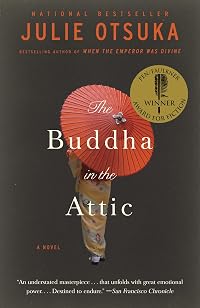
The Buddha in the Attic
by Julie Otsuka
On This Page
Description
Presents the stories of six Japanese mail-order brides whose new lives in early twentieth-century San Francisco are marked by backbreaking migrant work, cultural struggles, children who reject their heritage, and the prospect of wartime internment.Tags
Recommendations







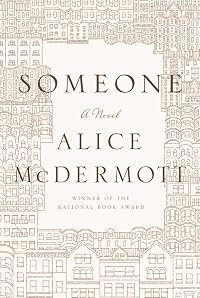
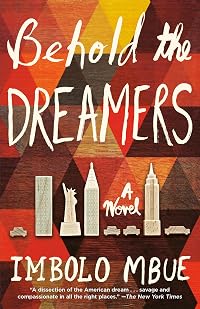
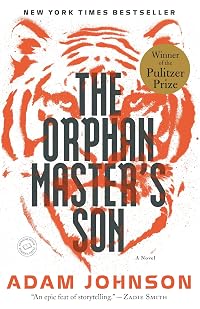
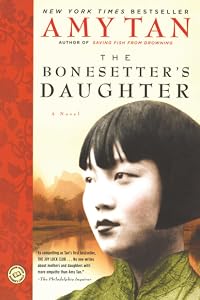
Member Recommendations
anonymous user A sweet love story but an eye-opener about Japanese and Chinese Americans at the time of Pearl Harbor attack
Also recommended by SqueakyChu
71
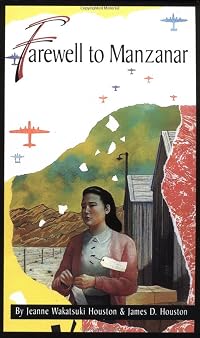
Farewell to Manzanar: A True Story of Japanese American Experience During and After the World War II Internment by Jeanne Wakatsuki Houston
speedy74 This book also provides information regarding the Japanese internment.
raidergirl3 nonlinear short chapters, immigrant experience
Limelite Not about the Japanese immigration experience, but set in San Francisco in the late 19th C., this novel evokes Chinatown and the impact Chinese and Americans had on each other depicted in a tightly personal experience. Readers will find common themes -- racism, struggle, isloation -- as in Otsuka's novella.
Member Reviews
This was a quick, powerful read.
Written in the first-person plural, the story is at once personal and essentially anonymous. It is not the story of just one person, but of a people. The use of the "we" brings attention to the "us" vs "them" nature of racism and prejudice, and in the last chapter when the "we" changes, it raises the question, "Who are 'we' anyway?"
Otsuka takes us through the lives of picture brides from Japan, from their nervous but hopeful journey across the ocean to the harsh realities of their lives in America to their internment---along with their husbands and children and grandchildren---because they are deemed a threat to national security after Pearl Harbor.
In the group at which we discussed this book, the show more conversation turned to why it is that we, even today, avoid seeing violations of civil rights and prejudicial treatment going on around us. Why, we asked ourselves, do we as a culture turn away rather than acting when we see injustice?
We talked about the recession and how we've got our own stuff to worry about. We talked about how busy people are and how uninformed. We talked about the consolidation of media power and the resulting shallowness and one-sidedness of the news we consume. We talked about the compartmentalization that happens in social media and web searches and online bookstores that are designed to show us more of what already interests us. We talked about the lack of community.
This was a comfortable, philosophical approach to our inaction. What was less comfortable was when I turned the question on myself.
When I see an injustice, why don't I act? I used to act. I used to get up in arms and demonstrate and write legislators and help set up panel discussions. Why don't I any more?
It's not that I'm uninformed. If anything, I think I'm better informed about issues than I was in my twenties during my activism heyday.
It's not that I don't care. Discussions at church about how the Ecuadorean population of a nearby town are being mistreated in the wake of a recent tragedy leave me in tears. I feel compelled to do something and yet when it comes time, I balk.
Why is this?
The only reason I can figure is fear. Fear of taking a stand, fear of arguing, fear of being yelled at. I have an introvert's trepidation about meeting new people and talking in front of groups that's just compounded by the fact that the "new people" are part of a foreign culture and many of them don't speak my first (and pretty much only) language.
I realize, too, that I'm afraid of intensity of emotion.
I watch activists speaking and they can hardly talk, the words are all fighting to get out of their mouths at the same time. They cry frequently. Their passion is evident.
I used to share that passion. In my twenties and early thirties, if someone mentioned birth, I had that same flood of words that crowded in my mouth. I could---and would---argue hammer and tongs about the evils of episiotomies and the importance of teaching doctors how to deliver breech babies vaginally rather than relying on surgery.
But in the years since my son was born, my passion has cooled. And I do not miss it.
I've made peace with many of my feelings about birth, and I don't want to go back to that out-of-control, all-consuming obsession with something I had little ability to change or even affect.
I'm enjoying the calm, and I'm afraid of getting pulled back into the intensity.
While I don't think the out-of-control type of passion is necessary for activism, I don't know how to be an activist without it. I want to be an equanimous activist. I want to stand in the river and let the current rush by me. But I've yet to figure out how to get into the river without the struggle, so I continue to stand on shore.
With all of the things I fear, the biggest is that if I were put to a moral test like those that so many faced during World War II, I would fail. show less
Written in the first-person plural, the story is at once personal and essentially anonymous. It is not the story of just one person, but of a people. The use of the "we" brings attention to the "us" vs "them" nature of racism and prejudice, and in the last chapter when the "we" changes, it raises the question, "Who are 'we' anyway?"
Otsuka takes us through the lives of picture brides from Japan, from their nervous but hopeful journey across the ocean to the harsh realities of their lives in America to their internment---along with their husbands and children and grandchildren---because they are deemed a threat to national security after Pearl Harbor.
In the group at which we discussed this book, the show more conversation turned to why it is that we, even today, avoid seeing violations of civil rights and prejudicial treatment going on around us. Why, we asked ourselves, do we as a culture turn away rather than acting when we see injustice?
We talked about the recession and how we've got our own stuff to worry about. We talked about how busy people are and how uninformed. We talked about the consolidation of media power and the resulting shallowness and one-sidedness of the news we consume. We talked about the compartmentalization that happens in social media and web searches and online bookstores that are designed to show us more of what already interests us. We talked about the lack of community.
This was a comfortable, philosophical approach to our inaction. What was less comfortable was when I turned the question on myself.
When I see an injustice, why don't I act? I used to act. I used to get up in arms and demonstrate and write legislators and help set up panel discussions. Why don't I any more?
It's not that I'm uninformed. If anything, I think I'm better informed about issues than I was in my twenties during my activism heyday.
It's not that I don't care. Discussions at church about how the Ecuadorean population of a nearby town are being mistreated in the wake of a recent tragedy leave me in tears. I feel compelled to do something and yet when it comes time, I balk.
Why is this?
The only reason I can figure is fear. Fear of taking a stand, fear of arguing, fear of being yelled at. I have an introvert's trepidation about meeting new people and talking in front of groups that's just compounded by the fact that the "new people" are part of a foreign culture and many of them don't speak my first (and pretty much only) language.
I realize, too, that I'm afraid of intensity of emotion.
I watch activists speaking and they can hardly talk, the words are all fighting to get out of their mouths at the same time. They cry frequently. Their passion is evident.
I used to share that passion. In my twenties and early thirties, if someone mentioned birth, I had that same flood of words that crowded in my mouth. I could---and would---argue hammer and tongs about the evils of episiotomies and the importance of teaching doctors how to deliver breech babies vaginally rather than relying on surgery.
But in the years since my son was born, my passion has cooled. And I do not miss it.
I've made peace with many of my feelings about birth, and I don't want to go back to that out-of-control, all-consuming obsession with something I had little ability to change or even affect.
I'm enjoying the calm, and I'm afraid of getting pulled back into the intensity.
While I don't think the out-of-control type of passion is necessary for activism, I don't know how to be an activist without it. I want to be an equanimous activist. I want to stand in the river and let the current rush by me. But I've yet to figure out how to get into the river without the struggle, so I continue to stand on shore.
With all of the things I fear, the biggest is that if I were put to a moral test like those that so many faced during World War II, I would fail. show less
Oh my, what a sad but important story, based on research and facts related to a dark part of American history, part of our history of racism that has not yet ended.
The Buddha in the Attic is about the wave of "picture brides" that in the early 1900s came to America from Japan to become wives of Japanese immigrant men living in California, marriages arranged via letter exchanges that were often filled with deceptions about their future husbands and about what their lives would be like in America. The reality would be sobering beyond what they could have imagined in their young girl hearts.
At first, the first person plural narration that Otsuka used was awkward for me, never following any particular immigrant, just sentences of show more experiences, one after another beginning with "We..." The poignant prose, though, kept me under her spell. Soon I got used to "we," lost my expectation of following a single person or family, and got into step with the march of sentences with many Japanese names, many American places, many experiences. Then, it hit me: Otsuka's choice was wise and apt. How else to tell the story of this incoming group as seen by Americans, lumped together as simply a different race, a different culture? Individuals were unseen. How else to convey that treatment of the Japanese as being as "Other," as unknowable? By telling so very many stories, not just one or even a few, Otsuka drives it into our hearts -- there were thousands of stories, of individuals never recognized, never respected. Following just one story would not have had the effect that all those "we's" did.
We (readers) follow their stories of the voyage, their hopes and their disappointments on seeing their new husbands. We follow them through wedding nights, marriages, their back-breaking labor in agriculture or as housecleaners or other lowly jobs. We read about suicides, affairs, and madness. We follow them through births and deaths of their children. We follow their strategies to not stand out more than they must. We follow them until they near acceptance, their dreams adjusted, and they acclimate to America and its racism.
Then, they disappeared. The Japanese especially on the coasts were shipped off, both the Japanese immigrants and the Japanese-American citizens. They were sent far inland, forced to leave all they had worked and built. They left sentimental items (including a buddha in the attic). They left pets and, worse, left sick children in hospitals.
Put on trains, they were forced to live in camps for the duration of WW II.
Trains. Camps. America.
No one protested on their behalf. Neighbors were mildly curious where their quiet neighbors were sent, greedy neighbors thieved their homes and businesses, some tried to stay in touch with letters and inquiries, and a small few missed them. But, before long, life simply moved on without their neighbors.
The Japanese American Memorial to Patriotism During World War II, from WTOP news article about the memorial and history, dateline August 15, 2019 show less
The Buddha in the Attic is about the wave of "picture brides" that in the early 1900s came to America from Japan to become wives of Japanese immigrant men living in California, marriages arranged via letter exchanges that were often filled with deceptions about their future husbands and about what their lives would be like in America. The reality would be sobering beyond what they could have imagined in their young girl hearts.
At first, the first person plural narration that Otsuka used was awkward for me, never following any particular immigrant, just sentences of show more experiences, one after another beginning with "We..." The poignant prose, though, kept me under her spell. Soon I got used to "we," lost my expectation of following a single person or family, and got into step with the march of sentences with many Japanese names, many American places, many experiences. Then, it hit me: Otsuka's choice was wise and apt. How else to tell the story of this incoming group as seen by Americans, lumped together as simply a different race, a different culture? Individuals were unseen. How else to convey that treatment of the Japanese as being as "Other," as unknowable? By telling so very many stories, not just one or even a few, Otsuka drives it into our hearts -- there were thousands of stories, of individuals never recognized, never respected. Following just one story would not have had the effect that all those "we's" did.
We (readers) follow their stories of the voyage, their hopes and their disappointments on seeing their new husbands. We follow them through wedding nights, marriages, their back-breaking labor in agriculture or as housecleaners or other lowly jobs. We read about suicides, affairs, and madness. We follow them through births and deaths of their children. We follow their strategies to not stand out more than they must. We follow them until they near acceptance, their dreams adjusted, and they acclimate to America and its racism.
Then, they disappeared. The Japanese especially on the coasts were shipped off, both the Japanese immigrants and the Japanese-American citizens. They were sent far inland, forced to leave all they had worked and built. They left sentimental items (including a buddha in the attic). They left pets and, worse, left sick children in hospitals.
Put on trains, they were forced to live in camps for the duration of WW II.
Trains. Camps. America.
No one protested on their behalf. Neighbors were mildly curious where their quiet neighbors were sent, greedy neighbors thieved their homes and businesses, some tried to stay in touch with letters and inquiries, and a small few missed them. But, before long, life simply moved on without their neighbors.
The Japanese American Memorial to Patriotism During World War II, from WTOP news article about the memorial and history, dateline August 15, 2019 show less
A group of women describe their collective experience coming on a ship to San Francisco, marrying men they’ve never met, working in demeaning and arduous industries, having children, keeping a household, and eventually being sent to concentration camps after the Japanese attack on Pearl Harbor.
In the early 1900s thousands of women came from Japan to the US and married Japanese-American men, sight unseen. The men had immigrated in the years before to work on the railroads and in agriculture, but it was illegal for them to marry anyone outside of their race and illegal for women to come to the US without being married. Because Buddhism was persecuted in Japan at the time, many of the women who chose to come to the US were Buddhist. They show more did choose to come here, but based on false information - the photos their husbands sent them were decades old and staged so they would believe they were coming to a big house and a land of opportunity, instead of racism and agricultural work or house cleaning or a brothel.
This is a very unique book and I love the way the story is told. The narration is in first-person-plural, so that every possible experience can be acknowledged without having to create an unrealistic fictional character to experience it all. “Some of us had eaten nothing but rice gruel as young girls and had slightly bowed legs, and some of us were only fourteen years old and were still young girls ourselves. Some of us came from the city and wore stylish city clothes, but many more of us came from the country and on the boat we wore the same old kimonos we’d been wearing for years.” It’s truly amazing to fit such a huge diversity of experiences - mostly bad but also some good - into a tiny volume. And whenall of the Japanese people are gone and the narration switches to their white neighbors ? It’s devastatingly sad. show less
In the early 1900s thousands of women came from Japan to the US and married Japanese-American men, sight unseen. The men had immigrated in the years before to work on the railroads and in agriculture, but it was illegal for them to marry anyone outside of their race and illegal for women to come to the US without being married. Because Buddhism was persecuted in Japan at the time, many of the women who chose to come to the US were Buddhist. They show more did choose to come here, but based on false information - the photos their husbands sent them were decades old and staged so they would believe they were coming to a big house and a land of opportunity, instead of racism and agricultural work or house cleaning or a brothel.
This is a very unique book and I love the way the story is told. The narration is in first-person-plural, so that every possible experience can be acknowledged without having to create an unrealistic fictional character to experience it all. “Some of us had eaten nothing but rice gruel as young girls and had slightly bowed legs, and some of us were only fourteen years old and were still young girls ourselves. Some of us came from the city and wore stylish city clothes, but many more of us came from the country and on the boat we wore the same old kimonos we’d been wearing for years.” It’s truly amazing to fit such a huge diversity of experiences - mostly bad but also some good - into a tiny volume. And when
Julie Otsuka's writing impresses me. I wish she were more prolific.
The Buddha in the Attic is written in the first person plural, a bold choice that works exceedingly well in this novel. By using the collective "we", the author is not only able to include a wide array of personal experiences in one narrative, but also includes us, the reader, in the experience.
On the boat we carried our husbands' pictures in tiny oval lockets that hung on long chains from our necks. We carried them in silk purses and old tea tins and red lacquer boxes and in the thick brown envelopes from America in which they had originally been sent. We carried them in the sleeves of our kimonos, which we touched often, just to make sure they were still there. We show more carried them pressed flat between the pages of Come, Japanese! and Guidance for Going to America and Ten Ways to Please a Man and old, well-worn volumes of the Buddhist sutras, and one of us, who was Christian, and ate meat, and prayed to a different and longer-haired god, carried hers between the pages of a King James Bible. And when we asked her which man she liked better—the man in the photograph or the Lord Jesus Himself—she smiled mysteriously and replied, "Him, of course."
The women are picture brides, and we accompany them on the boat across the Pacific and to their new lives with men they've never met. We share their disappointments and hard existence, and just when they start to be settled, they are uprooted again and sent to interment camps for the duration of WWII. Only then, in their absence, does the point of view shift to the white people in the towns they vacated. It's a moving piece of literature and an ode of sorts to the Japanese women who immigrated to the United States. show less
The Buddha in the Attic is written in the first person plural, a bold choice that works exceedingly well in this novel. By using the collective "we", the author is not only able to include a wide array of personal experiences in one narrative, but also includes us, the reader, in the experience.
On the boat we carried our husbands' pictures in tiny oval lockets that hung on long chains from our necks. We carried them in silk purses and old tea tins and red lacquer boxes and in the thick brown envelopes from America in which they had originally been sent. We carried them in the sleeves of our kimonos, which we touched often, just to make sure they were still there. We show more carried them pressed flat between the pages of Come, Japanese! and Guidance for Going to America and Ten Ways to Please a Man and old, well-worn volumes of the Buddhist sutras, and one of us, who was Christian, and ate meat, and prayed to a different and longer-haired god, carried hers between the pages of a King James Bible. And when we asked her which man she liked better—the man in the photograph or the Lord Jesus Himself—she smiled mysteriously and replied, "Him, of course."
The women are picture brides, and we accompany them on the boat across the Pacific and to their new lives with men they've never met. We share their disappointments and hard existence, and just when they start to be settled, they are uprooted again and sent to interment camps for the duration of WWII. Only then, in their absence, does the point of view shift to the white people in the towns they vacated. It's a moving piece of literature and an ode of sorts to the Japanese women who immigrated to the United States. show less
Less a novel than a tone poem, The Buddha in the Attic is narrated in the first person plural: “we”. These are the voices of the “picture brides”, Japanese women of early 20th century who sailed to California (passage paid by their future husbands) to marry the men who had sent for them. Like brushtrokes on cold pressed paper, the women lay down their varied stories in shades of hope, fear, dread and desire. They paint their departures from home, the ocean voyage, their arrival and the consummation of the bargains they had made with strangers. For some, the picture is bright and happy. For others, the picture is dark with drudgery and degradation. No names are given, no distinct personalities conferred; instead, the author show more conflates the voices into a chorus of ghosts. I could easily imagine it set to music.
I’m not sure of Ms Otsuka’s purpose: is she laying to rest the memories of these women, women who had no choice in their own destiny? Or is she resurrecting them in order to give voice to a forgotten generation, a generation that suffered cruelly from racism and poverty? Either way, The Buddha in the Attic is an elegant literary composition. Recommended for readers who enjoy style as well as content.
8 out 10. show less
I’m not sure of Ms Otsuka’s purpose: is she laying to rest the memories of these women, women who had no choice in their own destiny? Or is she resurrecting them in order to give voice to a forgotten generation, a generation that suffered cruelly from racism and poverty? Either way, The Buddha in the Attic is an elegant literary composition. Recommended for readers who enjoy style as well as content.
8 out 10. show less
This was a rare first person plural narrator that I found to be executed well and actually essential to the plot. How else to properly pay respect to a whole generation of picture brides in the early twentieth century, getting the reader invested in a life that would inevitably be cut short without leaving us unmoored in a narrative?
The plot hurtles through a carousel of lives, losing some, picking another up, following one through for longer, all the while presenting a unified and yet multitude of experiences. I only learnt some years ago that there was a huge migration of Japanese men to the Americas as cheap labour during the early 20th century. I appreciated how this book brought the women's experiences to the forefront, humanising show more and personalising the stories that history books had tended to relegate as a postscript to a postscript in American immigration history.
On the downside of knowing some history, I can't tell if the book intended for the reader to feel the tension of knowing what laid ahead for these women, specifically the internment camps in WWII. It was very good strategic planning to use the first person plural, that the narrative did not let the reader linger long on atrocities since the characters themselves also couldn't if they wanted to survive. They were mentioned almost as if being rattled off a list, to form a collective scar that underpinned all the characters' experiences, and to show how even though those stories cannot be truly told, those experiences reverberated through the surviving women. This book would be a very good introduction to a less-talked-about part of history, and very suitable to high schoolers and up. show less
The plot hurtles through a carousel of lives, losing some, picking another up, following one through for longer, all the while presenting a unified and yet multitude of experiences. I only learnt some years ago that there was a huge migration of Japanese men to the Americas as cheap labour during the early 20th century. I appreciated how this book brought the women's experiences to the forefront, humanising show more and personalising the stories that history books had tended to relegate as a postscript to a postscript in American immigration history.
On the downside of knowing some history, I can't tell if the book intended for the reader to feel the tension of knowing what laid ahead for these women, specifically the internment camps in WWII. It was very good strategic planning to use the first person plural, that the narrative did not let the reader linger long on atrocities since the characters themselves also couldn't if they wanted to survive. They were mentioned almost as if being rattled off a list, to form a collective scar that underpinned all the characters' experiences, and to show how even though those stories cannot be truly told, those experiences reverberated through the surviving women. This book would be a very good introduction to a less-talked-about part of history, and very suitable to high schoolers and up. show less
I LOVED this book. It shows us the lives of these anonymous women starting off from one similar point - mail order brides on a boat from Japan to America in the early 1900s - and how each experience could go lots of ways and they all are just one tiny thread in the tapestry of life. Here is an example:
"Some of us worked quickly to impress them. Some of us worked quickly just to show them that we could pick plums and top beets and sack onions and crate berries just as quickly if not more quickly than the men. Some of us worked quickly because we had spent our entire childhoods bent over barefoot in the rice paddies and already knew what to do. Some of us worked quickly because our husbands had warned us that if we did not they would send show more us home on the very next boat. I asked for a wife who was able and strong. Some of us came from the city, and worked slowly, because we had never before held a hoe. "Easiest job in America," we were told. Some of us had been sickly and weak all our lives but after one week in the lemon groves of Riverside we felt stronger than oxen. One of us collapsed before she had even finished weeding her first row."
A subtle book, with flashes of sadness and flashes of goodness, all building to a quiet intensity of emotion. By the end of the book I felt my heart racing because it felt like I had truly seen how life goes, the good and bad and the sheer blind chance of it all. show less
"Some of us worked quickly to impress them. Some of us worked quickly just to show them that we could pick plums and top beets and sack onions and crate berries just as quickly if not more quickly than the men. Some of us worked quickly because we had spent our entire childhoods bent over barefoot in the rice paddies and already knew what to do. Some of us worked quickly because our husbands had warned us that if we did not they would send show more us home on the very next boat. I asked for a wife who was able and strong. Some of us came from the city, and worked slowly, because we had never before held a hoe. "Easiest job in America," we were told. Some of us had been sickly and weak all our lives but after one week in the lemon groves of Riverside we felt stronger than oxen. One of us collapsed before she had even finished weeding her first row."
A subtle book, with flashes of sadness and flashes of goodness, all building to a quiet intensity of emotion. By the end of the book I felt my heart racing because it felt like I had truly seen how life goes, the good and bad and the sheer blind chance of it all. show less
Members
- Recently Added By
Published Reviews
ThingScore 63
This passage may give a clue as to how Julie Otsuka's book is to be read. She calls it a novel. It is closely and carefully based on factual history/ies. There are novelistically vivid faces, scenes, glimpses, voices, each for a moment only, so you cannot linger anywhere or with anyone. Information is given, a good deal of it, in the most gracefully invisible manner; and history is told. Yet show more the book has neither a novel's immediacy of individual experience, nor the broad overview of history. The tone is often incantatory, and though the language is direct, unconvoluted, almost without metaphor, its true and very unusual merit lies, I think, in that indefinable quality we call poetry.....I am sorry that after it, in the last chapter, she suddenly changes her narrative mode and ceases to follow her group of women. The point of view changes radically and "we" suddenly are the whites: "The Japanese have disappeared from our town." show less
added by vancouverdeb
Narrated in the first-person plural, The Buddha in the Attic is a slight, but powerfully moving piece of prose. It tells the story of a group of Japanese mail-order brides, from their journey to America, through marriage, work, childbirth and motherhood, until they and their entire communities are rounded up at the beginning of the war....Some might find the plurality of voice troubling, show more suggesting that it does little to restore individual identities to those whom history has forgotten, but I would argue the opposite. A host of individual characters and experiences crystallise as families and communities take root show less
added by vancouverdeb
But the book’s plural voice is particularly effective at capturing their long, giddy conversations on the ship as they wonder if American men really grow hair on their chests, put pianos in their front parlors and dance “cheek to cheek all night long” with their lucky wives....But no story in the conventional sense ever develops, and no individuals emerge for more than a show more paragraph....Had we known them as full individuals — as real and diverse and distinct — we couldn’t have whisked them away to concentration camps in the desert. A great novel should shatter our preconceptions, not just lacquer them with sorrow. show less
added by vancouverdeb
Lists

Best Contemporary Literary Fiction (Around the Last 30 Years)
400 works; 124 members

Recommend the 20 best books you've read in the last five years
2,168 works; 608 members

Top Five Books of 2013
1,562 works; 715 members

The Immigrant's Stories
74 works; 19 members

Historical Fiction
889 works; 91 members
National Book Award Finalists - Fiction
377 works; 12 members

Best books read in 2011
200 works; 50 members

Lithub: The 50 Best Contemporary Novels Under 200 Pages
50 works; 4 members

Books Read in 2023
5,638 works; 147 members

Top Five Books of 2015
811 works; 240 members

Pen/Faulkner Winners and Finalists
178 works; 9 members

International IMPAC Dublin Literary Award
179 works; 6 members

Best Japanese Fiction
41 works; 10 members
Overdue Podcast
808 works; 9 members

Nightmares Not Included
175 works; 3 members

.
184 works; 1 member

Best Books of the 2010s
20 works; 1 member

LitHub's Best Novels of the Decade 2010-2019
39 works; 1 member

To read
61 works; 1 member

Borrowed Books 2023 (Books We Have Read BUT do NOT Own)
41 works; 1 member

Asian American Literature
46 works; 6 members

Books Read in 2018
4,360 works; 110 members

"We" narration
49 works; 2 members

Books Read in 2013
1,630 works; 51 members

2025 Christmas Gifts
70 works; 19 members
Author Information

9+ Works 6,473 Members
Some Editions
Awards and Honors
Awards
Distinctions
Series
Belongs to Publisher Series
Common Knowledge
- Canonical title*
- Certaines n'avaient jamais vu la mer
- Original title
- The Buddha in the Attic
- Original publication date
- 2011-08-23
- Important places
- San Francisco, California, USA; Japan
- Epigraph
- There be of them, that have left a name behind them, that their praises might be reported. And some there be, which have no memorial; who are perished, as though they had never been; and are become as though they had never be... (show all)en born; and their children after them.
—ECCLESIASTICUS 44:8-9
Barn's burnt down—
now
I can see the moon.
—MASAHIDE - Dedication
- For Andy
- First words
- On the boat we were mostly virgins.
- Last words
- (Click to show. Warning: May contain spoilers.)All we know is that the Japanese are out there somewhere, in one place or another, and we shall probably not meet them again in this world.
- Original language
- English
- Canonical DDC/MDS
- 813.6
- Canonical LCC
- PS3615.T88
*Some information comes from Common Knowledge in other languages. Click "Edit" for more information.
Classifications
Statistics
- Members
- 3,028
- Popularity
- 5,895
- Reviews
- 222
- Rating
- (3.80)
- Languages
- 13 — Danish, Dutch, English, Estonian, French, German, Italian, Norwegian (Bokmål), Portuguese, Russian, Spanish, Swedish, Turkish
- Media
- Paper, Audiobook, Ebook
- ISBNs
- 44
- ASINs
- 17