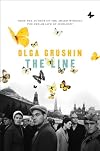
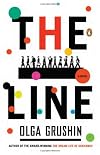
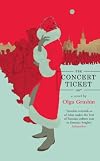
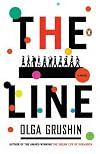
The Line
by Olga Grushin
On This Page
Description
The line begins to form on the whispered rumor that a famous exiled composer is returning to Moscow to conduct his last symphony. Tickets will be limited. Nameless faces join the line, jostling for preferred position. But as time passes and the seasons change and the ticket kiosk remains shuttered, these anonymous souls take on individual shape. Unlikely friendships are forged, long-buried memories spring to life, and a year-long wait is rewarded with unexpected acts of kindness that ease show more the bleakness of harshly lived lives. A disparate gaggle of strangers evolves into a community of friends united in their desire to experience music they have never been allowed to hear. show lessTags
Recommendations























Member Recommendations
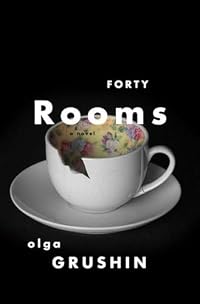
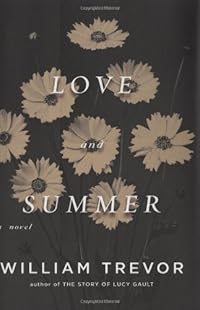
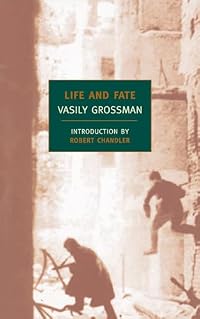
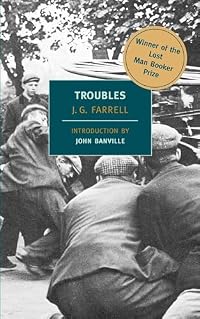
LynnB Both of these books deal with reactions to something new: a kiosk or a person who sits in his parked car. Both show how a sense of community develops around the new feature of the environment. Tepper is much lighter than The Line.
Member Reviews
It had appeared in the fall, but unlike other local kiosks, which, regularly and with no secrecy, dispensed cheap cigarettes and vegetables or, on thrilling and brief occasions chocolates and cosmetics, this kiosk had never sold anything at all, not even on those rare days when a fake blonde with a pasty face made surly appearances in the kiosk window. The woman would answer no questions, thereby deepening the general suspicion of some momentous mystery. As weeks went by, speculation and agitation only mounted. Rumors had spread...And the more Anna heard, the more filled she was with a sure presentiment of a change, whether small or boundless she did not know—but in any case, something, she thought, to make her and her family happier, show more or lend some simple beauty to her everyday life, or perhaps even infuse her entire existence, working into its minute cracks and voids, knitting it into a tighter, brighter, fuller fabric.
To borrow from Seinfeld, which claimed to be a show about nothing, this is a book seemingly about nothing. It's about a year in the life of a family—a year they spent waiting in line, at first for an unknown but imagined treat that turned out to be a ticket to a concert by a dissident composer whose music hasn't been heard for decades in the country of his birth. As the wait stretches into days, weeks, months, and seasons, nothing much changes at home where Anna, Sergei, and their son, Alexander, barely speak to each other or to Anna's mother, who lives with them. Yet in the year that their lives revolve around holding their place in line, they are each changed gradually by their experience of waiting and by the relationships they form with the strangers/neighbors who wait in the line with them.
If you crave fiction filled with action, this book probably isn't for you. If you like slower paced novels that develop slowly, give this one a try. It will be time well spent. show less
To borrow from Seinfeld, which claimed to be a show about nothing, this is a book seemingly about nothing. It's about a year in the life of a family—a year they spent waiting in line, at first for an unknown but imagined treat that turned out to be a ticket to a concert by a dissident composer whose music hasn't been heard for decades in the country of his birth. As the wait stretches into days, weeks, months, and seasons, nothing much changes at home where Anna, Sergei, and their son, Alexander, barely speak to each other or to Anna's mother, who lives with them. Yet in the year that their lives revolve around holding their place in line, they are each changed gradually by their experience of waiting and by the relationships they form with the strangers/neighbors who wait in the line with them.
If you crave fiction filled with action, this book probably isn't for you. If you like slower paced novels that develop slowly, give this one a try. It will be time well spent. show less
What an absolute treat... Even though, I would say, it's one of the saddest things I have ever read. The sadness is palpable throughout the novel. The grayness of life. The quiet desperation, maddening, but helpless. The constant mental struggle, in the face of the regime that suffocates any true talent - even with the seemingly optimistic denouement for the protagonist family. Grayness to which I can relate, having lived in that world...
And yet - a treat it is! It reads like a lyrical poem, melancholic, but with such exquisite turns of phrase - I couldn't help but noting them down, some are pure gems... The historical event on which it's based is also important. It didn't take long to decipher Stravinsky in "Selinsky"; the historical show more fiction part of it is touching - the old lady (a ballet dancer in her youth, and all that it entailed for her, all the consequences, the choices one makes in life...) is a character that appealed to me the most. And last but not least - the title, The Line ("...the orderly commas of bent backs marking the sidewalk in a depressingly long sentence..." - one of those gems I was talking about...) - what a significant title, in actual AND metaphorical sense. You have to have lived there to fully understand. show less
And yet - a treat it is! It reads like a lyrical poem, melancholic, but with such exquisite turns of phrase - I couldn't help but noting them down, some are pure gems... The historical event on which it's based is also important. It didn't take long to decipher Stravinsky in "Selinsky"; the historical show more fiction part of it is touching - the old lady (a ballet dancer in her youth, and all that it entailed for her, all the consequences, the choices one makes in life...) is a character that appealed to me the most. And last but not least - the title, The Line ("...the orderly commas of bent backs marking the sidewalk in a depressingly long sentence..." - one of those gems I was talking about...) - what a significant title, in actual AND metaphorical sense. You have to have lived there to fully understand. show less
"Who's last in line? Are you last in line? What are they selling?"
Thus begins the story of a family. A family whose lives unravel and are re-knit as they spend a year waiting in line. A line that builds community as the people who wait befriend one another and betray one another. A story that spans three generations and is filled with secrets and unseen connections. A book that is beautifully written, philosophical, and inspired by an incident in the life of Stravinsky.
Anna is a middle-aged teacher, struggling to find meaning and hope in a world that is gray with disinterest. Life in Soviet Russia is bleak, and standing in line is a time-wasting fact of life. But it is the only way to get food, goods, and the little luxuries that show more brighten existence. One evening she sees a line and hastens to join it, hoping for something good. Every day she returns to her place in the line, convinced that whatever she will be able to buy will change her life for the better.
Sergei, her husband, is a man disappointed with his life. A brilliant music student, he is relegated under the Soviets to playing the tuba in parades celebrating "The Change". He spells his wife in line when he learns that the line is for tickets to a musical performance by a Russian master who escaped to the West before the border closed. In turn, Sergei relies on his son, Alexander, to hold his place in line while he is at work. Alexander is a teenager desperate for action in a world so proscribed that change seems impossible.
Grushin is able to take the simple act of standing in line and create an entire world full of rich characters, intricate winding plots, and relationships which depict how everyone has the capacity for wrong-doing and for forgiveness. And her language is evocative and emotion-laden.
Anna had already left when he awoke the next morning. His head ached after a bumpy night filled with potholed dreams, though for just one instant, before his headache had set in, he seemed to sense a piercing vibration in the air, a lingering coda of a winding, heartrending melody that swiftly faded out of his reach before he could fully hear it in his daytime mind, its silver shadow diving deeper into the murk of the night’s oblivion. In the kitchen he discovered lukewarm tea, a slice of ossified toast, and a folded note addressed to him in Anna’s most elaborate script. He shoved the toast into the trash can, and the note, unread, into his jacket pocket, and left for work.
Beautiful dreams fade into mundane life, hopes linger but remain forever out of reach, and missed opportunities are created from miscommunication. The Line is a wonderful story, and I can’t wait to read Grushin’s other, first, novel, The Dream Life of Sukhanov. Heartily recommended. show less
Thus begins the story of a family. A family whose lives unravel and are re-knit as they spend a year waiting in line. A line that builds community as the people who wait befriend one another and betray one another. A story that spans three generations and is filled with secrets and unseen connections. A book that is beautifully written, philosophical, and inspired by an incident in the life of Stravinsky.
Anna is a middle-aged teacher, struggling to find meaning and hope in a world that is gray with disinterest. Life in Soviet Russia is bleak, and standing in line is a time-wasting fact of life. But it is the only way to get food, goods, and the little luxuries that show more brighten existence. One evening she sees a line and hastens to join it, hoping for something good. Every day she returns to her place in the line, convinced that whatever she will be able to buy will change her life for the better.
Sergei, her husband, is a man disappointed with his life. A brilliant music student, he is relegated under the Soviets to playing the tuba in parades celebrating "The Change". He spells his wife in line when he learns that the line is for tickets to a musical performance by a Russian master who escaped to the West before the border closed. In turn, Sergei relies on his son, Alexander, to hold his place in line while he is at work. Alexander is a teenager desperate for action in a world so proscribed that change seems impossible.
Grushin is able to take the simple act of standing in line and create an entire world full of rich characters, intricate winding plots, and relationships which depict how everyone has the capacity for wrong-doing and for forgiveness. And her language is evocative and emotion-laden.
Anna had already left when he awoke the next morning. His head ached after a bumpy night filled with potholed dreams, though for just one instant, before his headache had set in, he seemed to sense a piercing vibration in the air, a lingering coda of a winding, heartrending melody that swiftly faded out of his reach before he could fully hear it in his daytime mind, its silver shadow diving deeper into the murk of the night’s oblivion. In the kitchen he discovered lukewarm tea, a slice of ossified toast, and a folded note addressed to him in Anna’s most elaborate script. He shoved the toast into the trash can, and the note, unread, into his jacket pocket, and left for work.
Beautiful dreams fade into mundane life, hopes linger but remain forever out of reach, and missed opportunities are created from miscommunication. The Line is a wonderful story, and I can’t wait to read Grushin’s other, first, novel, The Dream Life of Sukhanov. Heartily recommended. show less
When I received this book from an Early Reviewers program, I didn't have any expectations, yet I was blown away! The precise, poetic style alone is noteworthy, a real pleasure to read as the seasons wane and ebb and the waiting evolves in waves and pulls. However, the great strength of this book is how Grushin recreated the absurdity of life: a line imposed and monitored by the State, events and obstacles that throw off plans, ruts, routines, habits that prevent from moving forward. Yet, despite all of this, the triumph of the human spirit, the ability to adapt, to forge new relationships, to forgive, to question and to try anew, the creativity, the love and the hope. I loved the little nothings that pulled all the characters together, show more the personalities, likable or not, which, each in their own way, can be redeemed, the glittering past, the gray present and the timid future. A rich fresco that is neither optimistic nor pessimistic, but that just is; a never-ending cycle that touches us all. A real lesson in life. show less
 This review was written for LibraryThing Early Reviewers.
Olga Grushin’s sophomore effort turns out to be a transformative novel based on the lowly line which begins to form at a kiosk in Soviet Russia. People begin to queue up before they even know what is being sold. In a place used to shortages of nearly everything, it doesn’t really matter what the line is actually for, it’s bound to be something that’s needed. Soon a rumor starts that the kiosk will sell tickets to a concert by a famous exiled composer, who will return for one last performance. The people have no idea that they will wait for almost a year before the 300 tickets are actually distributed. But during that year, the line changes from a horde of unnamed faces into a unique community as the people wait and are show more disappointed as, day to day, the kiosk remains unmanned with signs that only serve to frustrate: Closed for Accounting, Out with the Flu, Closed will reopen on Monday, etc.
But the line is a constant, day in and day out, and the community created there meshes into an eager assemblage, all hoping to get something out of the concert that will assure them a better, improved future. But as the seasons change, the wait begins to seem interminable:
”The people of the line had grown silent, weary, casting furtive glances at the faceless officials who prowled the sidewalks, yet at the same time, Anna sensed, there had been, since the beginning of fall, since the fall of darkness, an imperceptible drawing closer, quite as if their communal, increasingly dangerous wait had rubbed their souls raw, had made their emotions transparent, had marked them all with an invisible sign of shared time, of shared expectation, so that every once in awhile they could turn to one another with a kind of heedless, naked urgency and talk as they would talk only to their families, and perhaps not even to them, united by fear and hope and trust under black, pregnant skies.” (Page 257)
Beautifully written, the line becomes a metaphor for time, memory and life itself. Very highly recommended. show less
But the line is a constant, day in and day out, and the community created there meshes into an eager assemblage, all hoping to get something out of the concert that will assure them a better, improved future. But as the seasons change, the wait begins to seem interminable:
”The people of the line had grown silent, weary, casting furtive glances at the faceless officials who prowled the sidewalks, yet at the same time, Anna sensed, there had been, since the beginning of fall, since the fall of darkness, an imperceptible drawing closer, quite as if their communal, increasingly dangerous wait had rubbed their souls raw, had made their emotions transparent, had marked them all with an invisible sign of shared time, of shared expectation, so that every once in awhile they could turn to one another with a kind of heedless, naked urgency and talk as they would talk only to their families, and perhaps not even to them, united by fear and hope and trust under black, pregnant skies.” (Page 257)
Beautifully written, the line becomes a metaphor for time, memory and life itself. Very highly recommended. show less
In a Russian town under Soviet supervision, a kiosk appears and a queue accordingly forms. What is being sold? No one knows for sure but in a place and time of shortages and uncertainty, a line means that something is being sold. Rumors begin to develop that a famous expat Russian composer is coming back to his homeland to conduct a final symphony and this kiosk will be selling the very limited tickets. No one knows exactly when the performance will occur but the characters do not share the reader's skepticism at to whether it will occur. A community begins to form around the queue and we follow a year in the lives of some of its members, most notably Anna, Sergei, and their son Alexander. They each long for beauty and initially their show more willingness to stand in line is motivated only by individual dreams. However, as their efforts to retain their place in the line both go awry and succeed, we witness their subtle and incomplete transformation toward generosity of spirit.
Grushin, herself an expat living in the U.S., explores the experience of creating art from the physical and cultural location of outside. Members of the queue discuss their decision to wait for hours, days, indeed for months for tickets to the concert:
"He may well be a genius --- and I for one will gladly sacrifice my time for the pleasure of listening to his music --- but as he no longer stands on his native soil, his art can't possibly have roots. An artist creates true art for his people only so long as he lives, and suffers, among them."
"But surely you're following the letter, not the spirit, of the matter!" Sergei objected. "Take our greatest writers of the past century --- did most of them not spend years and years abroad, in the West? Yet no one questions their place in our culture ... What do you think?"
"I believe one can carry one's country within," she said with her usual soft-spoken conviction. "It's the depth of -- of one's affinity that matters, not one's address..."
It's impossible not to wonder what internal struggle Grushin has experienced since moving to the U.S.
Finally, there is the parable of the line itself, the choice to dedicate one's life completely to the line and to risk everything -- job, marriage, future -- waiting hopefully for a chance to purchase tickets to a brief concert. Says one queuer to another:
"But what would you be doing with your year if you weren't here? Let's face it, most likely you'd just be wasting it. In fact, this year of waiting hasn't been all that different from any other year of your life, has it -- a whole lot of doing nothing -- except now you can look forward to an hour of happiness at the end."
Such a simple statement to illustrate the entanglement of cynicism, hope for beauty, pleasure and reward, and longing for purpose and meaning.
The plot is occasionally almost slapstick-like in its circumstances: two people miss by a few moments meeting one another in the park and the consequences are grave, or potentially so. However, these circumstances come off as neither contrived nor funny (although Grushin's writing is not without a sense of ironic humor). Rather, they capture the capricious nature of hope and optimism, the dispassionate attitude of fate.
The narrative lost some of its power with me in the last quarter or so of the novel, but the ending is very satisfying. Overall, this is a notable effort and this is an author whose work I will read again. show less
Grushin, herself an expat living in the U.S., explores the experience of creating art from the physical and cultural location of outside. Members of the queue discuss their decision to wait for hours, days, indeed for months for tickets to the concert:
"He may well be a genius --- and I for one will gladly sacrifice my time for the pleasure of listening to his music --- but as he no longer stands on his native soil, his art can't possibly have roots. An artist creates true art for his people only so long as he lives, and suffers, among them."
"But surely you're following the letter, not the spirit, of the matter!" Sergei objected. "Take our greatest writers of the past century --- did most of them not spend years and years abroad, in the West? Yet no one questions their place in our culture ... What do you think?"
"I believe one can carry one's country within," she said with her usual soft-spoken conviction. "It's the depth of -- of one's affinity that matters, not one's address..."
It's impossible not to wonder what internal struggle Grushin has experienced since moving to the U.S.
Finally, there is the parable of the line itself, the choice to dedicate one's life completely to the line and to risk everything -- job, marriage, future -- waiting hopefully for a chance to purchase tickets to a brief concert. Says one queuer to another:
"But what would you be doing with your year if you weren't here? Let's face it, most likely you'd just be wasting it. In fact, this year of waiting hasn't been all that different from any other year of your life, has it -- a whole lot of doing nothing -- except now you can look forward to an hour of happiness at the end."
Such a simple statement to illustrate the entanglement of cynicism, hope for beauty, pleasure and reward, and longing for purpose and meaning.
The plot is occasionally almost slapstick-like in its circumstances: two people miss by a few moments meeting one another in the park and the consequences are grave, or potentially so. However, these circumstances come off as neither contrived nor funny (although Grushin's writing is not without a sense of ironic humor). Rather, they capture the capricious nature of hope and optimism, the dispassionate attitude of fate.
The narrative lost some of its power with me in the last quarter or so of the novel, but the ending is very satisfying. Overall, this is a notable effort and this is an author whose work I will read again. show less
I guess like others here, my first thought was not as good as...that's the trouble with creating a perfect work of art, one is haunted by it forever.
May I say this is 'not as good' but still SO, SO very good, that we are talking about giving this nine stars out of five, where we might have given Sukhanov ten.
Maybe the very big difference, the thing that makes one intuitively side with Sukhanov is that this novel has no one great character, rather, a group share centre stage equally. If you ask me, this just goes to show Grushin can do both of these constructions equally well. I think I was greedy to sink myself into a big character, the way one is greedy in one's younger years to be immersed in the enormity of The Russian Novel. The show more longer the better. The bigger the better. But you grow up and the finesse with which Grushin manages the five or so main characters of this book is a treat to behold. She is such a skilled craftsman, both in use of language and structure without ever losing sight of the story and the characters: you CAN have all of this, the idea that technique is something we have now in modern literature instead of story and character is shown by this writer to be ludicrous.
Rest is here:
https://alittleteaalittlechat.wordpress.com/2015/07/03/the-concert-ticket-by-olg... show less
May I say this is 'not as good' but still SO, SO very good, that we are talking about giving this nine stars out of five, where we might have given Sukhanov ten.
Maybe the very big difference, the thing that makes one intuitively side with Sukhanov is that this novel has no one great character, rather, a group share centre stage equally. If you ask me, this just goes to show Grushin can do both of these constructions equally well. I think I was greedy to sink myself into a big character, the way one is greedy in one's younger years to be immersed in the enormity of The Russian Novel. The show more longer the better. The bigger the better. But you grow up and the finesse with which Grushin manages the five or so main characters of this book is a treat to behold. She is such a skilled craftsman, both in use of language and structure without ever losing sight of the story and the characters: you CAN have all of this, the idea that technique is something we have now in modern literature instead of story and character is shown by this writer to be ludicrous.
Rest is here:
https://alittleteaalittlechat.wordpress.com/2015/07/03/the-concert-ticket-by-olg... show less
Members
- Recently Added By
Lists

A High School Trip to Russia
25 works; 3 members

Queues
9 works; 2 members
Talk Discussions
Past Discussions
brenzi's 2013 Reading - Opening Round in 75 Books Challenge for 2013 (January 2013)
Author Information

4+ Works 1,248 Members
Olga Grushin was born in Moscow, Russia in 1971. She moved to the United States as a teenager. Her first novel, The Dream Life of Sukhanov, won the New York Public Library Young Lions Fiction Award. Her other works include The Line and Forty Rooms. (Bowker Author Biography)
Common Knowledge
- Canonical title
- The Line
- Original title
- The Line
- Alternate titles
- The Concert Ticket
- Original publication date
- 2010-04
- People/Characters
- Anna; Sergei; Alexander
- Important places
- Russia
- Important events
- Russian Revolution
- Epigraph
- For we are saved by hope: but hope that is seen is not hope: for what a man seeth, why doth he yet hope for? But if hope for that we see not, then do we with patience wait for it. Romans 8:24-25
- Dedication
- In memoriam. Boris Grushin, My Father. I wish there had been more time.
- First words
- Who's last in line? Are you last in line? What are they selling?
- Last words
- (Click to show. Warning: May contain spoilers.)When the bells fell silent, the remaining men and women checked their watches, turned down the flaps of their hats, turned up their collars, and went off their separate ways, along darkened alleys, across snow-covered courtyards, calling out to one another: "Happy New Year!" and "See you tomorrow!"
- Blurbers
- Yardley, Jonathan; Kachka, Boris
Classifications
Statistics
- Members
- 259
- Popularity
- 124,510
- Reviews
- 34
- Rating
- (3.94)
- Languages
- Dutch, English, French
- Media
- Paper, Ebook
- ISBNs
- 10
- ASINs
- 5