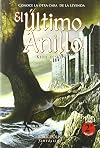
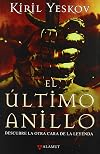
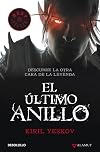
The Last Ringbearer
by Kiril Yeskov
On This Page
Description
A retelling of the Lord of the Rings from the POV of Sauron. *I do not own this book, this is simply a way of having the English translation in a book format as opposed to a .pdf on a screen. I own none of the characters, content or covers attached to this book. If you wish to have a copy, please contact me and I will send you the .pdf as it is not fair for me to make any profit from someone else's work.Tags
Recommendations

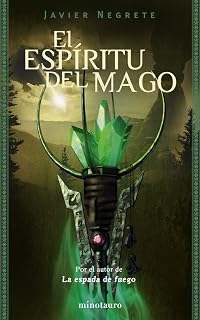
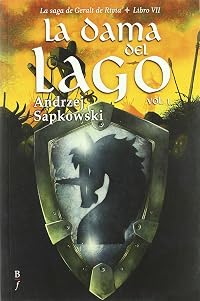

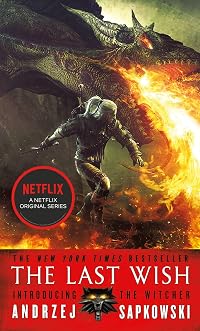

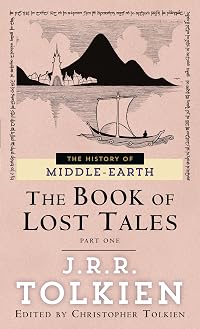



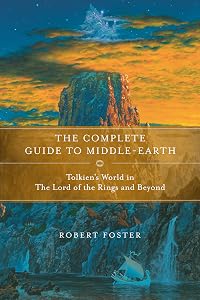











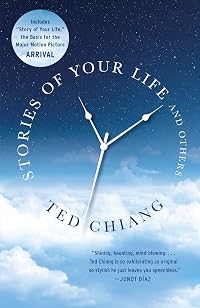
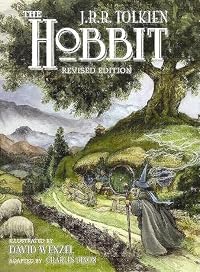
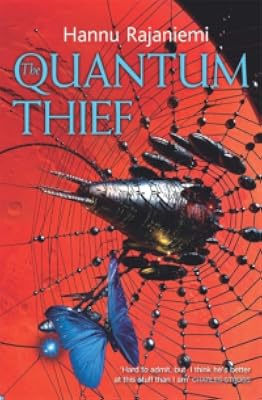


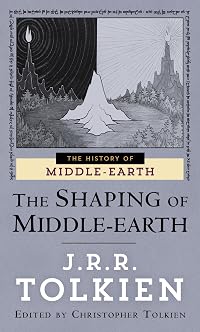
Member Recommendations
by anonymous user
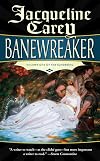
sandstone78 Both stories recast the basic plot of Lord of the Rings from the "evil" point of view. The Last Ringbearer is directly set in Middle Earth, while Banewreaker (and the other part of the Sundering duology, Godslayer) is in a different setting that features many parallels to Middle Earth.
Member Reviews
Even if your familiarity with Tolkein's Middle Earth is restricted to watching Peter Jackson's films (which I regard as more worthwhile than the books, at any rate) you will definitely get something from this.
Finally, something to do with the Lord of the Rings universe with which I can engage. Before I was resigned to opining, in a manner which was unwittingly hipster and irritating, "I actually prefer The Silmarillion". It's a re-imagining of the LOTR universe from a stance of rigour which extends beyond the common-room parlour-games of Tolkein's invented languages. Yeskov himself has written an essay explaining why he found it necessary to create this tale which tells of the events in and around the LOTR from the perspective of show more Mordor. It is no mistake that this work of revisionary fantasy comes from Russia, and parallels with Soviet propaganda, espionage, and the brutality of warfare elevate this far above fan fiction. It is a work of literature in its own right, not quite the Aeneid to Tolkein's Iliad and Odyssey, but not bloody far off it.
Excellent. show less
Finally, something to do with the Lord of the Rings universe with which I can engage. Before I was resigned to opining, in a manner which was unwittingly hipster and irritating, "I actually prefer The Silmarillion". It's a re-imagining of the LOTR universe from a stance of rigour which extends beyond the common-room parlour-games of Tolkein's invented languages. Yeskov himself has written an essay explaining why he found it necessary to create this tale which tells of the events in and around the LOTR from the perspective of show more Mordor. It is no mistake that this work of revisionary fantasy comes from Russia, and parallels with Soviet propaganda, espionage, and the brutality of warfare elevate this far above fan fiction. It is a work of literature in its own right, not quite the Aeneid to Tolkein's Iliad and Odyssey, but not bloody far off it.
Excellent. show less
This Russian reworking attracted some Anglosphere attention when a free English translation was published on LiveJournal a few years ago; it seemed appropriate to follow up my finally reading all six books of The Lord of the Rings. Yeskov presents The Lords of the Rings as propaganda written by the victorious Gondorian forces after the war. Aragorn is a conniving manipulator backed by the Elves, while Mordor is a bastion of rationality in a sea of magic-users and is on the verge of completing the industrial revolution. Gandalf, feeling threatened, deposes Saruman and orchestrates the collapse of Gondor.
Yeskov's rewriting is quite fun; I enjoyed picking out the details of the "new universe" as the story went. Aragron is a pretty show more threatening villain, a stone-cold thug backed by zombies who killed Denethor to secure the Gondorian throne. Orcs are just human beings of a different ethnicity (Orocuen), as are trolls, and probably hobbits, though we never see any hobbits. The Nazgûl are good wizards who planted rumors of an all-powerful Ring to try to break up the alliance between Aragorn and the Elves. (One of my favorite jokes is about what a bad job the Nazgûl going after the Ring in the Shire did.) Aragorn is the one who killed the "Witch-King" (no one more than a commander of a Mordorian regiment), and spreads a rumor that he was killed by a woman to humiliate him even after death.
Quite properly, Faramir is the same in all universes. He's forced into ceding his kingship to Aragorn and given a little principality, but he soon unites with Éowyn, a discarded lover of Aragorn, and begins a resistance against Aragorn's people. He's completely badass, and the relationship between them is quite well done.
The book, though, does not actually focus on most of this; it's just background fodder for Yeskov's story. The real story is that of Haladin, a Mordorian physician, and Tzerlag, a Mordorian scout, as well as Tangorn, a Gondorian noble who realizes the Elves are up to no good. The first quarter of the novel sees them in the desert, trying to evade Elvish capture and get away. It's a well-done wartime thriller. Then it becomes a quest novel, as Haladin learns how to banish magic from Middle-earth, and thus save rationality, if not his country. In subsequent quarters, we follow Faramir's attempts to escape Aragorn's control, a mission by Tangorn to Umbar, and the infiltration of Lórien itself. The first two quarters are definitely the best, as the further it goes on, the more it feels like a generic espionage novel. I like Haladin, Tzerlag, and Tangorn a lot: as pretty ordinary guys caught up in terrible events, it's hard not to.
The book has its odd moments, though. It's hard to know when to blame them on Yeskov or his (volunteer!) English translator Markov, though. There's an attempt to make the dialogue more casual, but it sits poorly with the long, expository dialogue characters speak in. You can have Gandalf talk like a violent thug, or you can have him deliver long speeches on the necessity of the Fall of Mordor. I'm not convinced you can do both; it's an awkward mix of generic standards.
Also awkward is Yeskov's constant bringing in of real-world references, especially from World War II and the Cold War. Whether you think his novels are good or not, you have to admit Tolkien did an amazing job building a linguistically coherent world, whereas Yeskov's world feels cheap by comparison. At one point, Éomer even mentions the differences between Christianity, Judaism, and Islam!
Also, though it's shorter by far than The Lord of the Rings I suspect, it goes on too long. Though the espionage tricks are fun, Yeskov is clearly more interested in them than I am.
I was trying to puzzle through why an espionage novel. If one is to unpack the rhetorical underpinnings of high fantasy, one of them is typically moral absolutism, I think: good is Good and bad is Evil. In Tolkien's story, the enemy country is led not just by a guy who wants something for his country different than our heroes', but basically Satan. Yeskov doesn't really undercut this, though, so much as reverse it: we end up with Good and Evil, just reversed.
So why deconstruct The Lord of the Rings by turning it into an espionage novel? The key, I think, is that though espionage stories can feature Good and Evil (though perhaps not always), Good and Evil are distinguished by their ultimate aims-- not their methods. When it comes down to it, each side is no better than the other in terms of what they do: "in order to win you have to walk over corpses and wade through unthinkable much, again and again -- a vicious circle." Yeskov seems unable to push the moral absolutism of Tolkien so far as to say there is not Good and Evil, but he does get it to saying that Good is often not any better than Evil. There's a recurrent saying about the ends justifying the means: "Stated generally, the problem lacks a solution." I take this to mean that whether the ends justify the means depends on what ends and what means. The rhetoric of espionage fiction is that often Good's ends do not seem to justify Good's means... but you gotta do it anyway if you want to live. show less
Yeskov's rewriting is quite fun; I enjoyed picking out the details of the "new universe" as the story went. Aragron is a pretty show more threatening villain, a stone-cold thug backed by zombies who killed Denethor to secure the Gondorian throne. Orcs are just human beings of a different ethnicity (Orocuen), as are trolls, and probably hobbits, though we never see any hobbits. The Nazgûl are good wizards who planted rumors of an all-powerful Ring to try to break up the alliance between Aragorn and the Elves. (One of my favorite jokes is about what a bad job the Nazgûl going after the Ring in the Shire did.) Aragorn is the one who killed the "Witch-King" (no one more than a commander of a Mordorian regiment), and spreads a rumor that he was killed by a woman to humiliate him even after death.
Quite properly, Faramir is the same in all universes. He's forced into ceding his kingship to Aragorn and given a little principality, but he soon unites with Éowyn, a discarded lover of Aragorn, and begins a resistance against Aragorn's people. He's completely badass, and the relationship between them is quite well done.
The book, though, does not actually focus on most of this; it's just background fodder for Yeskov's story. The real story is that of Haladin, a Mordorian physician, and Tzerlag, a Mordorian scout, as well as Tangorn, a Gondorian noble who realizes the Elves are up to no good. The first quarter of the novel sees them in the desert, trying to evade Elvish capture and get away. It's a well-done wartime thriller. Then it becomes a quest novel, as Haladin learns how to banish magic from Middle-earth, and thus save rationality, if not his country. In subsequent quarters, we follow Faramir's attempts to escape Aragorn's control, a mission by Tangorn to Umbar, and the infiltration of Lórien itself. The first two quarters are definitely the best, as the further it goes on, the more it feels like a generic espionage novel. I like Haladin, Tzerlag, and Tangorn a lot: as pretty ordinary guys caught up in terrible events, it's hard not to.
The book has its odd moments, though. It's hard to know when to blame them on Yeskov or his (volunteer!) English translator Markov, though. There's an attempt to make the dialogue more casual, but it sits poorly with the long, expository dialogue characters speak in. You can have Gandalf talk like a violent thug, or you can have him deliver long speeches on the necessity of the Fall of Mordor. I'm not convinced you can do both; it's an awkward mix of generic standards.
Also awkward is Yeskov's constant bringing in of real-world references, especially from World War II and the Cold War. Whether you think his novels are good or not, you have to admit Tolkien did an amazing job building a linguistically coherent world, whereas Yeskov's world feels cheap by comparison. At one point, Éomer even mentions the differences between Christianity, Judaism, and Islam!
Also, though it's shorter by far than The Lord of the Rings I suspect, it goes on too long. Though the espionage tricks are fun, Yeskov is clearly more interested in them than I am.
I was trying to puzzle through why an espionage novel. If one is to unpack the rhetorical underpinnings of high fantasy, one of them is typically moral absolutism, I think: good is Good and bad is Evil. In Tolkien's story, the enemy country is led not just by a guy who wants something for his country different than our heroes', but basically Satan. Yeskov doesn't really undercut this, though, so much as reverse it: we end up with Good and Evil, just reversed.
So why deconstruct The Lord of the Rings by turning it into an espionage novel? The key, I think, is that though espionage stories can feature Good and Evil (though perhaps not always), Good and Evil are distinguished by their ultimate aims-- not their methods. When it comes down to it, each side is no better than the other in terms of what they do: "in order to win you have to walk over corpses and wade through unthinkable much, again and again -- a vicious circle." Yeskov seems unable to push the moral absolutism of Tolkien so far as to say there is not Good and Evil, but he does get it to saying that Good is often not any better than Evil. There's a recurrent saying about the ends justifying the means: "Stated generally, the problem lacks a solution." I take this to mean that whether the ends justify the means depends on what ends and what means. The rhetoric of espionage fiction is that often Good's ends do not seem to justify Good's means... but you gotta do it anyway if you want to live. show less
It shares the same Middle Earth with the Tolkien books, but the feeling is completely different. I started reading this because the idea of a retelling of the Lord of the Rings story, from the bad guys' perspective, intrigued me. I was surprised that the novel stands quite well as a modern story on its own. It's well-written, funny at times, and it left me thinking about the world view that lies beneath Tolkien's books.
I read this book a few months ago, and I felt then that it was a harmless bit of fun: reversing good and evil; pointing out that the history books are written by the winners; and playing with Tolkein's apparent hostility to industry.
Looking back, I am wondering if it is all a bit more sinister. However, I can't work out what sort of sinister! Would I need to be a conspiracy theorist? A Stalinist? Anti-semitic? to work out what this book is really about?
I think I'll have to read it again, in a more suspicious mood.
Looking back, I am wondering if it is all a bit more sinister. However, I can't work out what sort of sinister! Would I need to be a conspiracy theorist? A Stalinist? Anti-semitic? to work out what this book is really about?
I think I'll have to read it again, in a more suspicious mood.
Take the Lord of the Rings, add the premise that "History is written by the victors," and consider further that:
* The elves are generally considered dangerous and untrustworthy
* The riders of Rohan are basically illiterate peasants, albeit very dangerous ones
* There is indication that Mordor has something to do with technological advances
This tale begins with a Mordorian military scouting unit that was out of contact at the time of the destruction of Sauron's forces. In keeping with "History written by victors,"
* The orcs, trolls, and such are neither inherently evil, nor stupid or incompetent; it's just that like the Huns of WWI, the writers characterized them thus.
* The *essentially* dangerous thing about Mordor wasn't the "evil show more magic," it was that Sauron was encouraging his subjects to pursue scientific innovation, which would eventually overrun illiterate others.
* Nazgul weren't evil; they were seeking to help to guide the innovative impulses. But to the writers of LOTR, that *was* evil...
* The new conflict is about the Mordorian unit seeking to destroy the Mirror of Galadriel, so as to prevent the Elves from transforming the world into a "dirty backwater of Aman," the magical world that they came from.
The bulk of this tale is a "spy war," where the members of the secret services of the various powers of Middle Earth thrust, parry, and deflect. There's a realism to this; surely Gondor, Mordor, and the elves all have spy masters that act against one another. Somewhat humorously, Rohan and the hobbits never play into this; the Shire is only just barely mentioned.
Politics makes for strange bedfellows, and there are some twisty trails before a conclusion is arrived at.
Quite entertaining! show less
* The elves are generally considered dangerous and untrustworthy
* The riders of Rohan are basically illiterate peasants, albeit very dangerous ones
* There is indication that Mordor has something to do with technological advances
This tale begins with a Mordorian military scouting unit that was out of contact at the time of the destruction of Sauron's forces. In keeping with "History written by victors,"
* The orcs, trolls, and such are neither inherently evil, nor stupid or incompetent; it's just that like the Huns of WWI, the writers characterized them thus.
* The *essentially* dangerous thing about Mordor wasn't the "evil show more magic," it was that Sauron was encouraging his subjects to pursue scientific innovation, which would eventually overrun illiterate others.
* Nazgul weren't evil; they were seeking to help to guide the innovative impulses. But to the writers of LOTR, that *was* evil...
* The new conflict is about the Mordorian unit seeking to destroy the Mirror of Galadriel, so as to prevent the Elves from transforming the world into a "dirty backwater of Aman," the magical world that they came from.
The bulk of this tale is a "spy war," where the members of the secret services of the various powers of Middle Earth thrust, parry, and deflect. There's a realism to this; surely Gondor, Mordor, and the elves all have spy masters that act against one another. Somewhat humorously, Rohan and the hobbits never play into this; the Shire is only just barely mentioned.
Politics makes for strange bedfellows, and there are some twisty trails before a conclusion is arrived at.
Quite entertaining! show less
This is not the kind of thing I usually like - What if the good guys were actually the bad guys? - and on top of that it's just not terribly well-written, although it's hard to tell how much of that is an artifact of translation. (Not all of it, I'm sure, but some of it probably is.) What it is is *fascinating,* though, an application of modern geopolitics to The Lord of the Rings. What happens to the story if you start with the baseline assumption that science and technological advancement are good and enforced cultural stagnation is bad? From there you get Mordor and Umbar as the cosmopolitan and intellectual centers of society, much in the style of the Middle East during Europe's Dark Ages, with Gondor as a corrupt backwater and show more Rohan the backwater of a backwater. The Orcs are not Orcs but humans of a different ethnic background; the Elves are Elves but even more alien and inhuman. As a book it's not terribly successful, and as a piece of fanfiction it's frankly ridiculous, but as a longform stream-of-consciousness what-if game of worldbuilding, it's addictive. And it's an important piece of modern-myth-making-history, which is why I read it in the first place, and why I kept going after the (frankly offputting) first couple of chapters. show less
This is an unauthorised sequel to / alternate history of The Lord Of The Rings, in which Orcs and Trolls are just other races of humans, dehumanised by the other side's propaganda. It has a lot of really interesting ideas in it, and does a wonderful job of fleshing out some parts of Middle-Earth that Tolkien didn't, and tying a radically different reading of the events of LoTR together coherently. The writing is patchy, with some wonderful passages (especially the desert scenes) and some rather clunky parts. Similarly some parts of Yeskov's additions to Middle-Earth feel deliciously alive and fitting, while others are either too blatantly a specific place on our Earth or a set of stereotypes about particular regions and their peoples. show more At times I got tired of following the multiple levels of spy-versus-spy or court intrigue, but on the whole this was a lot of fun to read. show less
Members
- Recently Added By
Published Reviews
ThingScore 75
Well, there's two sides to every story, or to quote a less banal maxim, history is written by the winners. That's the philosophy behind "The Last Ringbearer," a novel set during and after the end of the War of the Ring (the climactic battle at the end of "The Lord of the Rings") and told from the point of view of the losers. The novel was written by Kirill Yeskov, a Russian paleontologist, and show more published to acclaim in his homeland in 1999. Translations of the book have also appeared in other European nations, but fear of the vigilant and litigious Tolkien estate has heretofore prevented its publication in English. show less
added by private library
Lists

Parallel Novels
37 works; 6 members

Russian Literature
184 works; 32 members
Author Information
Some Editions
Awards and Honors
Work Relationships
Is a retelling of
Was inspired by
Common Knowledge
- Canonical title
- The Last Ringbearer
- Original title
- Последний кольценосец
- Original publication date
- 1999
- People/Characters
- Tzerlag; Haladdin; Tangorn; Aragorn II; Faramir; Éowyn (show all 10); Cheetah; Mongoose; Alviss; Eornis
- Important places
- Middle-earth (fictional); Emyn Arnen (fictional); Umbar (fictional); Caras Galadhon (fictional)
- First words
- Is there a sight more beautiful than a desert sunset, when the sun, as if ashamed of its
whitish daytime fierceness, lavishes a bounty of unimaginably tender and pure colors on its
guests? - Last words
- (Click to show. Warning: May contain spoilers.)In our case it translates to this: you don’t have to listen to me spin tall tales if you don’t like them.
Classifications
- Genres
- Fiction and Literature, Fantasy, General Fiction
- DDC/MDS
- 891.7342 — Literature & rhetoric Literatures of other languages East Indo-European and Celtic literatures Russian and East Slavic languages Russian fiction USSR 1917–1991 Early 20th century 1917–1945
- LCC
- PG3479.7 .S489 .P67 — Language and Literature Slavic languages and literatures. Baltic languages. Albanian language Slavic. Baltic. Albanian Russian literature Individual authors and works 1961-2000
- BISAC
Statistics
- Members
- 209
- Popularity
- 156,754
- Reviews
- 17
- Rating
- (3.56)
- Languages
- 5 — English, Polish, Portuguese, Russian, Spanish
- Media
- Paper
- ISBNs
- 10