On This Page
Description
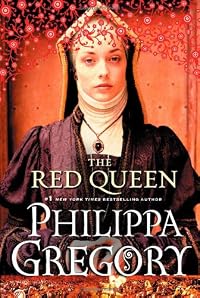
Determined to see her son Henry on the throne of England, pious Margaret Beaufort arranges politically advantageous marriages, sends her son out of the country for his safety, and lays secret plans for a battle between the houses of York and Lancaster.Tags
Recommendations








Member Recommendations


Member Reviews
Margaret Beaufort, the Red Queen of the title, was a driven and ambitious woman. From a young age she chafed at the restrictions her time placed on women, convinced that she was chosen by God to be the English equivalent of Joan of Arc. Her dream is to see her son, Henry, restored as the rightful King of England and eventually having everyone recognize that she is as great as she believes herself to be.
Sadly, the portrayal of this Red Queen is one-dimensional and Margaret comes across as almost a caricature, rather than a real person. Margaret was not a sympathetic person to start with, but Gregory reduces her to a woman completely blinded by her ambition. The few moments of humanity are so brief as to only emphasize the image of a show more cold-hearted monster.
I am a fan of historical fiction and had high hopes for this book when I saw the care Gregory took to be historically accurate. But in the end, I couldn't bring myself to care at all about Margaret or any of the other characters. I almost quit reading two-thirds of the way through because I knew what would happen and really wasn't interested in what else Margaret went through to achieve her ends.
For diehard fans of all things Tudor, this book is a must read. But those seeking a more subtle approach with well-rounded characterizations will likely be disappointed. show less
Sadly, the portrayal of this Red Queen is one-dimensional and Margaret comes across as almost a caricature, rather than a real person. Margaret was not a sympathetic person to start with, but Gregory reduces her to a woman completely blinded by her ambition. The few moments of humanity are so brief as to only emphasize the image of a show more cold-hearted monster.
I am a fan of historical fiction and had high hopes for this book when I saw the care Gregory took to be historically accurate. But in the end, I couldn't bring myself to care at all about Margaret or any of the other characters. I almost quit reading two-thirds of the way through because I knew what would happen and really wasn't interested in what else Margaret went through to achieve her ends.
For diehard fans of all things Tudor, this book is a must read. But those seeking a more subtle approach with well-rounded characterizations will likely be disappointed. show less
Margaret Beaufort was Henry VII's mother. Although she felt a calling to God, she was married at 12 years old, and had Henry was she was 13. From then on, her entire life was devoted to seeing Henry as King of England. But, this was during the Wars of the Roses – cousins fought over the English throne – so there were many other people vying for that crown. But, Margaret did what she had to do to make it happen.
Despite not liking Margaret (even in a novel!), I really liked this story. Obviously, I knew the outcome, but it was interesting to see how they got there. I have only just started reading about some of the people from this time period, so it was nice to round that out a bit more, as I hadn't yet read anything that focused on show more Margaret. I often get bored with descriptions of battles in books, but I actually found some of these quite interesting. I was a little disappointed that the author's note didn't describe what was or wasn't fictionalized, and I thought it ended a little abruptly (I would have liked to have learned the outcomes of a few of the other people – ones I didn't know anything about). Other than that, though, I really enjoyed it. show less
Despite not liking Margaret (even in a novel!), I really liked this story. Obviously, I knew the outcome, but it was interesting to see how they got there. I have only just started reading about some of the people from this time period, so it was nice to round that out a bit more, as I hadn't yet read anything that focused on show more Margaret. I often get bored with descriptions of battles in books, but I actually found some of these quite interesting. I was a little disappointed that the author's note didn't describe what was or wasn't fictionalized, and I thought it ended a little abruptly (I would have liked to have learned the outcomes of a few of the other people – ones I didn't know anything about). Other than that, though, I really enjoyed it. show less
Gregory's got mad historical fiction skills. Another fantastic book about the same events as The White Queen, told from the Lancaster perspective rather than the York. Margaret is an infuriating character, but I just couldn't seem to put her down. The suspense that Gregory builds at the end is intense. Definitely one of her better ones.
Oh book, book, book, book... you were so very close to being 4 stars. It was bumped down to three though and by no real fault of the author.
I will start by saying I did enjoy this book. I finished it within 2 days and, as usual, I loved the descriptions of the world. I had a love hate relationship with Lord Stanley and I really enjoyed hearing about Jacquetta's daughters and what had become of them.
The book was an easy read and kept a good pace. There was only one point where I felt that it slowed down a bit and I had to force myself not to skim some pages.
I do believe that people were very bored back then. It seems like there was a constant back and forth on who should be king and that might have been avoided if people weren't as show more bored. I mean I could be wrong. There could still be battles between the nobles of England to take over the throne. That's pretty much what the book comes down to though. I'm king, no I'm king, no I'm king, and so on and so forth. I like the intrigue and I like reading how characters deal with it but if that's not your thing skip this book!
Now onto the reason I gave this 3 instead of 4 stars. The main character, I hated her so much... flames there were flames around my face. Seriously though, I am a tolerant person. I even found Lord Stanley awesomely conniving and I enjoyed his back handedness. He was probably my favorite character in fact. What I cannot tolerate is hypocrites and people who don't own up to their own mistakes/faults. Margaret was that to an extreme I have rarely seen in any character. She would constantly berate others for various "sins" and go on about how saintly she was and how she had the voice of God and the Virgin Mary on her side. She had an obsession with Joan of Arc but not for the right reasons or the reasons she tried to claim. She was obsessed with Joan of Arc because she wanted the recognition and the power. She speaks ill of others for being vain or greedy but she was the most power hungry character in the whole book. There was one point where I thought she would realize that she had sinned. I thought finally she realized she was vain and had done awful things not because her son on the throne was God's will but because it was hers. Alas, she immediately said that the only reason she was being punished for sin was because she made the mistake of associating with others who had sinned. Really!? Really lady!??
Basically what it comes down to is this book is a great read about an awful woman. show less
I will start by saying I did enjoy this book. I finished it within 2 days and, as usual, I loved the descriptions of the world. I had a love hate relationship with Lord Stanley and I really enjoyed hearing about Jacquetta's daughters and what had become of them.
The book was an easy read and kept a good pace. There was only one point where I felt that it slowed down a bit and I had to force myself not to skim some pages.
I do believe that people were very bored back then. It seems like there was a constant back and forth on who should be king and that might have been avoided if people weren't as show more bored. I mean I could be wrong. There could still be battles between the nobles of England to take over the throne. That's pretty much what the book comes down to though. I'm king, no I'm king, no I'm king, and so on and so forth. I like the intrigue and I like reading how characters deal with it but if that's not your thing skip this book!
Now onto the reason I gave this 3 instead of 4 stars. The main character, I hated her so much... flames there were flames around my face. Seriously though, I am a tolerant person. I even found Lord Stanley awesomely conniving and I enjoyed his back handedness. He was probably my favorite character in fact. What I cannot tolerate is hypocrites and people who don't own up to their own mistakes/faults. Margaret was that to an extreme I have rarely seen in any character. She would constantly berate others for various "sins" and go on about how saintly she was and how she had the voice of God and the Virgin Mary on her side. She had an obsession with Joan of Arc but not for the right reasons or the reasons she tried to claim. She was obsessed with Joan of Arc because she wanted the recognition and the power. She speaks ill of others for being vain or greedy but she was the most power hungry character in the whole book. There was one point where I thought she would realize that she had sinned. I thought finally she realized she was vain and had done awful things not because her son on the throne was God's will but because it was hers. Alas, she immediately said that the only reason she was being punished for sin was because she made the mistake of associating with others who had sinned. Really!? Really lady!??
Basically what it comes down to is this book is a great read about an awful woman. show less
Philippa Gregory tackles the figure of Margaret Beaufort, the mother of Henry VII of England, in this novel chronicling the Wars of the Roses. While it is interesting to learn about Margaret, who married at an extremely young age and endured a difficult childbirth, she was far from a likable character. Margaret displays a self-righteous belief in the Lancaster cause and particularly that her son Henry is destined to be King of England. The ends justify the means to Margaret and she even orders the children of the rival York family murdered at one point to further her son's claim to the throne. I simply could not find much that was sympathetic about Margaret and I found myself hoping her enemies would put this woman in her place, simply show more because she was so unlikeable. show less
Having just finished The White Queen, the first in Ms. Gregory's Plantagenet series, the history behind The Red Queen was very familiar. However, that does not mean that my overall enjoyment of The Red Queen was diminished in any way. Rather, it provided a fascinating contrast and lesson on the importance of context. As I was reading, I could not help but think how truly interesting it would be to do a side-by-side comparison of the events, as told from each point of view. If anything, the two novels drive home the point that history changes drastically depending on the point of view telling it.
The portrayal of each woman is shockingly different. Whereas Elizabeth, according to Ms. Gregory, is beautiful and beloved, politically savvy show more and well-informed, Ms. Gregory portrays Margaret as cold and calculating and rather clueless about the politics involved to wrest power from the reigning family. She is surprisingly unsympathetic as she masks her grab for power as piety and rather scary in her unwavering belief that she alone is correct in her opinions and beliefs and everyone else is wrong. Also, the mystical elements that appear in the novel - Margaret's holy visions - are harsher, less visually lovely than Elizabeth's conjuring of water goddesses. Even the colors, white versus red, invoke a good vs. bad mentality between the two women. Overall, one walks away with the impression that Ms. Gregory was Team Elizabeth all the way.
Yet, from a historical story-telling perspective, Ms. Gregory is still on top of her game. I could feel the pain in my knees as I sat with Margaret for hours on end in prayer. I could smell the unwashed bodies of the poor and the soldiers, feel the anxiety at having to wait days and even weeks for news. The story itself is easy to understand, which in itself is a huge accomplishment because of the complexity and confusion of the era itself. As a counterpoint to The White Queen, The Red Queen accomplishes what it sets out to do. More importantly, The Red Queen is more effective at setting the stage for the third book and ends in such a way that waiting until The White Princess release date will be difficult.
Margaret herself is intriguing without the historical backdrop. Her extreme piety started at a young age, while subsequent tragedies all but forced her to become even more devout or lose faith in humanity completely. Married at age twelve, a mother by age thirteen after facing a prolonged and almost fatal delivery, her mother abandoned her to her fate after each of her marriages, all of which were for political reasons rather than for love. Most people would by crying foul if even one of these occurred to a young teenager today. Put together, they helped Margaret form into a formidable and power-hungry, if rather naive, woman.
It is a testament to Ms. Gregory's writing ability that I read the book in an entire weekend even though I personally did not like Margaret. Not only is it engaging and utterly thrilling, it is surprisingly suspenseful. With all the political maneuvering, it feels like the entire set-up is one big chess match, where the winner takes all and the loser faces the ultimate punishment. In a way, it really was a chess match to the real-life Elizabeth and Margaret, as one false move could have found them guilty of treason and hanged or worse. This constant threat is was very real, and Ms. Gregory does an outstanding job of making that threat a very prominent presence. The end result is a novel that propels the reader forward, eventually arriving breathlessly at the stunning ending anxious for the story to continue. The Red Queen is a treat for any historical fiction fan, let alone any Philippa Gregory fan. show less
The portrayal of each woman is shockingly different. Whereas Elizabeth, according to Ms. Gregory, is beautiful and beloved, politically savvy show more and well-informed, Ms. Gregory portrays Margaret as cold and calculating and rather clueless about the politics involved to wrest power from the reigning family. She is surprisingly unsympathetic as she masks her grab for power as piety and rather scary in her unwavering belief that she alone is correct in her opinions and beliefs and everyone else is wrong. Also, the mystical elements that appear in the novel - Margaret's holy visions - are harsher, less visually lovely than Elizabeth's conjuring of water goddesses. Even the colors, white versus red, invoke a good vs. bad mentality between the two women. Overall, one walks away with the impression that Ms. Gregory was Team Elizabeth all the way.
Yet, from a historical story-telling perspective, Ms. Gregory is still on top of her game. I could feel the pain in my knees as I sat with Margaret for hours on end in prayer. I could smell the unwashed bodies of the poor and the soldiers, feel the anxiety at having to wait days and even weeks for news. The story itself is easy to understand, which in itself is a huge accomplishment because of the complexity and confusion of the era itself. As a counterpoint to The White Queen, The Red Queen accomplishes what it sets out to do. More importantly, The Red Queen is more effective at setting the stage for the third book and ends in such a way that waiting until The White Princess release date will be difficult.
Margaret herself is intriguing without the historical backdrop. Her extreme piety started at a young age, while subsequent tragedies all but forced her to become even more devout or lose faith in humanity completely. Married at age twelve, a mother by age thirteen after facing a prolonged and almost fatal delivery, her mother abandoned her to her fate after each of her marriages, all of which were for political reasons rather than for love. Most people would by crying foul if even one of these occurred to a young teenager today. Put together, they helped Margaret form into a formidable and power-hungry, if rather naive, woman.
It is a testament to Ms. Gregory's writing ability that I read the book in an entire weekend even though I personally did not like Margaret. Not only is it engaging and utterly thrilling, it is surprisingly suspenseful. With all the political maneuvering, it feels like the entire set-up is one big chess match, where the winner takes all and the loser faces the ultimate punishment. In a way, it really was a chess match to the real-life Elizabeth and Margaret, as one false move could have found them guilty of treason and hanged or worse. This constant threat is was very real, and Ms. Gregory does an outstanding job of making that threat a very prominent presence. The end result is a novel that propels the reader forward, eventually arriving breathlessly at the stunning ending anxious for the story to continue. The Red Queen is a treat for any historical fiction fan, let alone any Philippa Gregory fan. show less
Lackluster execution of what fortunately is an interesting story. A telling of the War of the Roses and the Princes in the Tower from Margaret Beaufort, the Lancastrian heiress who ultimately becomes the mother of the boy who would become Henry VII and begin the Tudor dynasty. About on par with the first in this series 'The White Queen.' Except this time the protagonist is much more unlikable than Elizabeth Woodville.
I don't know - I swear I will never read another Phillipa Gregory due to the wooden dialogue, heavy-handed narrative, melodrama - but then somehow I read her again. The same flaws exist here and truly Maragaret Beaufort comes across as a dreadful, ridiculous woman. I feel as if she perhaps could have been a bit more nuanced show more with her character. But I liked her last husband and enjoyed this take on the mystery of the princes in the tower.
I suppose I'll keep reading the series as I find the War of the Roses fascinating but I just know there has got to be some meatier and more intelligent writing out there, isn't there? show less
I don't know - I swear I will never read another Phillipa Gregory due to the wooden dialogue, heavy-handed narrative, melodrama - but then somehow I read her again. The same flaws exist here and truly Maragaret Beaufort comes across as a dreadful, ridiculous woman. I feel as if she perhaps could have been a bit more nuanced show more with her character. But I liked her last husband and enjoyed this take on the mystery of the princes in the tower.
I suppose I'll keep reading the series as I find the War of the Roses fascinating but I just know there has got to be some meatier and more intelligent writing out there, isn't there? show less
Members
- Recently Added By
Lists

Female Protagonist
1,056 works; 56 members

Books Read in 2023
5,547 works; 145 members

2016 Book Club Choices
52 works; 7 members

Books with Noble Titles
179 works; 11 members

A Rainbow of Books: Colors in the Title
570 works; 24 members

Books with Colourful Titles
171 works; 8 members
Author Information

128+ Works 86,319 Members
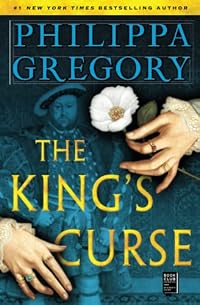
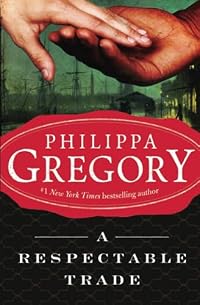
Philippa Gregory was born in Nairobi, Kenya on January 9, 1954. She received a B.A. in history at Sussex University in 1982 and a Ph.D. in 18th-century literature from the University of Edinburgh in 1984. She has taught at numerous universities and was made a fellow of Kingston University in 1994. Her historical novels include: Wideacre, The show more Queen's Fool, The Virgin's Lover, The Constant Princess, The Boleyn Inheritance, The Other Queen, The White Queen, The Red Queen, The Lady of the Rivers and The White Princess. She has also written several contemporary fiction works including Perfectly Correct, The Little House and Zelda's Cut. She adapted her novel A Respectable Trade, about the slave trade in England, into a four-part series for BBC television. Her script won an award from the Committee for Racial Equality. She won the Feminist Book Fortnight Award in 1990 and the Romantic Novelist of the Year Award in 2002. Her book, The Other Boleyn Girl, won the Parker Romantic Novel of the Year award and was adapted into a major feature film in 2008 starring Natalie Portman and Scarlett Johansson. The White Queen was adapted into an original cable series on the Starz nertwork in 2013 starring Max Irons and Rebecca Ferguson. Her title The Kings Curse made the New York Times bestseller list in 2014. Her title, The Taming of the Queen, made the New York Times bestseller list in 2015. Her latest bestseller is Three Sisters, Three Queens. Gregory also writes children's books, is a regular contributor to newspapers and magazines, a frequent broadcaster for radio and television, and runs a small charity that builds wells in schoolyards in Gambia. (Bowker Author Biography) show less
Some Editions
Awards and Honors
Awards
Distinctions
Series


Work Relationships
Is contained in
Philippa Gregory Cousins' War Series Box set: Includes White Queen, Red Queen, Lady of the Rivers, and Kingmaker's Daughter by Philippa Gregory
Philippa Gregory's The Cousins' War 3-Book Boxed Set: The Red Queen, The White Queen, and The Lady of the Rivers by Philippa Gregory
The Cousins' War Collection: White Queen, Red Queen, Lady of the Rivers, Kingmaker's Daughter, The White Princess by Philippa Gregory
Common Knowledge
- Canonical title
- The Red Queen
- Original title
- The Red Queen
- Original publication date
- 2010-08-03
- People/Characters
- Lady Margaret Beaufort; Henry VII, King of England; Henry VI, King of England; Thomas Stanley, 1st Earl of Derby
- Important places
- England, UK; Wales, UK; France
- Related movies
- The White Queen (2013 | IMDb)
- Dedication
- For Anthony
- First words
- The light of the open sky is brilliant after the darkness of the inner rooms. I blink and hear the roar of many voices. But this is not my army calling for me, this whisper growing to a rumble is not their roar of attack, the... (show all) drumming of their swords on shields. The rippling noise of linen in the wind is not my embroidered angels and lilies against the sky, but cursed English standards in the triumphant May breeze. This is a different sort of roar from our beloved hymns, this is a howl of people hungry for death: my death.
The light of the open sky is brilliant after the darkness of the inner rooms. - Last words
- (Click to show. Warning: May contain spoilers.)"I am My Lady, the King's Mother, now, and you shall curtsey to me, as low as to a queen of royal blood. This was my destiny: to put my son on the throne of England, and those who laughed at my visions nd doubted my vocation will call me My Lady, the King's Mother, and I shall sign myself Margaret Regina: Margaret R."
(Click to show. Warning: May contain spoilers.)"This was my destiny: to put my son on the throne of England, and those who laughed at my visions and doubted my vocation will call me My Lady, the King's Mother, and I shall sign myself Margaret Regina, Margaret R."
Classifications
Statistics
- Members
- 4,024
- Popularity
- 3,852
- Reviews
- 126
- Rating
- (3.60)
- Languages
- 11 — Danish, Dutch, English, Finnish, German, Hungarian, Italian, Portuguese, Romanian, Spanish, Swedish
- Media
- Paper, Audiobook, Ebook
- ISBNs
- 65
- ASINs
- 18