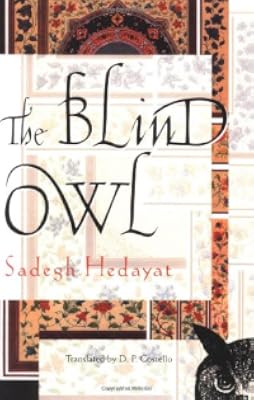
The Blind Owl
by Sadeq Hedayat
On This Page
Description
Widely regarded as Sadegh Hedayat's masterpiece, the Blind Owl is the most important work of literature to come out of Iran in the past century. On the surface this work seems to be a tale of doomed love, but with the turning of each page basic facts become obscure and the reader soon realizes this book is much more than a love story. Although the Blind Owl has been compared to the works of the Kafka, Rilke and Poe, this work defies categorization. Lescot's French translation made the Blind show more Owl world-famous, while D.P. Costello's English translation made it largely accessible. Sadly, this work has yet to find its way into the English pantheon of Classics. This 75th anniversary edition, translated by award-winning writer Naveed Noori and published in conjunction with the Hedayat Foundation, aims to change this and is notable for a number of firsts: *The only translation endorsed by the Sadegh Hedayat Foundation *The first translation to use the definitive Bombay edition (Hedayat's handwritten text) *The only available English translation by a native Persian and English speaker *The preface includes a detailed textual analysis of the Blind Owl Finally, by largely preserving the spirit as well as the structure of Hedayat's writing, this edition brings the English reader into the world of the Hedayat's Blind Owl as never before. Extensive footnotes (explaining Persian words, phrases, and customs ignored in previous translations) provide deeper understanding of this work for both the causal reader and the serious student of literature. show lessTags
Recommendations




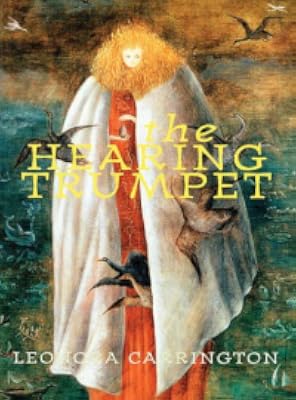


Member Recommendations
Member Reviews
The Blind Owl is a gorgeously written opium nightmare. The plot is circular and surreal and much of this slim book is taken up by the narrator’s claustrophobic musings on death and decay. Although it is divided into two parts - a present and a past - everything feels timeless and like something half-remembered out of a dream. The narrator overtly sets out to tell th story as one that is unbelievable and painful. He lives alone and paints pen cases for a living - always the same picture of an old man, a beautiful girl and a stream. One day, while retrieving something from a closet, he sees this picture come to life through a hole in the wall. But he can’t find the man or the girl outside and even the hole in his closet has show more disappeared. The narrator is tormented and frantically searches for this image - until one day the girl turns up at his doorstep. His story devolves into one of death, possession, and guilt and ends in a highly symbolic journey.
In the second half the narrator has jumped in time but still the same elements appear - the girl, the old man laughing, the same buildings and places and situations. Here, the narrator is an invalid with a scornful, unfaithful wife. But he’s still isolated, alienated and fixated on death. Events occur in a dreamlike and fateful manner. Claustrophobic, repetitive and nightmarish but undeniably well-written. show less
In the second half the narrator has jumped in time but still the same elements appear - the girl, the old man laughing, the same buildings and places and situations. Here, the narrator is an invalid with a scornful, unfaithful wife. But he’s still isolated, alienated and fixated on death. Events occur in a dreamlike and fateful manner. Claustrophobic, repetitive and nightmarish but undeniably well-written. show less
This is a fever-dream of a dark, compelling novel, and a reading experience that sucks one in until each moment is its own small psychological impact. A novel that was banned in Hedayat's home country of Iran, the work mounts gorgeous prose, a poetic sensibility, and a sometimes-style of repetition that makes one feel as if they're being sucked into a whirlpool of a story. It's a novel to be sucked into and experience...and perhaps to be read more than once if the darkness isn't too much.
Recommended.
Recommended.
I had read various things about this book that left me with a feeling of trepidation about reading it. It apparently has a reputation for encouraging suicide. Some consider its portrayal of women to be misogynistic. It deals with madness, drug addiction and murder in violent terms.
I wasn't expecting to enjoy it, but I did. It reminded me of the passages in Crime and Punishment where we experience Raskolnikov's delirium. The repetition and nightmarish quality also made me think of Kafka.
The narrator is unreliable. From the start he tells us that he is an opium addict and an alcoholic. The story he tells is disjointed, jumbled, part hallucination, and it's never clear whether any of it is true, because we never hear from anyone else. He's show more talking to his shadow which makes the shape of an owl on the wall.
As a testimony of someone who is severely mentally ill, it is compelling. The narrator is imprisoned inside his own mind, and in the story he tells this is represented by the room in which he is quarantined during an illness that seems to start when his adoptive mother dies. From the experience of viewing her body all his paranoia stems.
He believes his wife to be unfaithful, but I'm not convinced he really has a wife. He refers to her as a whore because he believes she forced him to have intercourse with her alongside her dead mother's body. He is obsessed with the butcher's shop across the street, and tells us that he killed his wife having witnessed the butcher slaughtering sheep. He relates a family history that is part ancient myth, explaining that he doesn't know who his father is. His hallucinations recur around the vision of a young girl he believes to be his wife but also his mother, dancing for a peddler that he believes is his father and uncle and his wife's father and a beggar in the street.
The narration reads to me like mania, the ravings of someone who believes the things their corrupted mind is telling them about the people around them. The narrator's conviction that his wife is unfaithful made sense to me, in relation to his mental illness. I didn't think it was misogyny. For that to be true, the narrator would have to clearly state that all women were whores. His delusion only makes him believe that of his wife. He is not coherent in his narration. His mind is a jumble tipped out onto the page. His delusion is what dictates his violent actions, including what we see as the rape and murder of his wife, but that he only sees as her accidental killing in a moment he doesn't fully remember happening.
Perhaps the translation I read is different to the one most often discussed online. I read the 75th anniversary edition translated by Naveed Noori and authorised by the Sadegh Hedayat Foundation. The claim of the translator is that his is most true to meaning, based as it is on the earliest known manuscript and not on later, possibly corrupt, editions. He claims to have retained the sense of frenzy from the original, whereas other translators have favoured narrative flow and inadvertently made the narrator seem a more reasonable man. I might seek out the Costello translation from 1957 for comparison.
I have no idea whether Hedayat intended the book to be an allegory for Persia/Iran under Reza Shah. I have no cultural reference points to recognise any allusions Hedayat made in the text (although the footnotes helped at times). I have no idea whether Hedayat himself was mentally ill. I read the book purely as a story and I do know that The Blind Owl is one of the most interesting treatments of mental illness in fiction that I have read. show less
I wasn't expecting to enjoy it, but I did. It reminded me of the passages in Crime and Punishment where we experience Raskolnikov's delirium. The repetition and nightmarish quality also made me think of Kafka.
The narrator is unreliable. From the start he tells us that he is an opium addict and an alcoholic. The story he tells is disjointed, jumbled, part hallucination, and it's never clear whether any of it is true, because we never hear from anyone else. He's show more talking to his shadow which makes the shape of an owl on the wall.
As a testimony of someone who is severely mentally ill, it is compelling. The narrator is imprisoned inside his own mind, and in the story he tells this is represented by the room in which he is quarantined during an illness that seems to start when his adoptive mother dies. From the experience of viewing her body all his paranoia stems.
He believes his wife to be unfaithful, but I'm not convinced he really has a wife. He refers to her as a whore because he believes she forced him to have intercourse with her alongside her dead mother's body. He is obsessed with the butcher's shop across the street, and tells us that he killed his wife having witnessed the butcher slaughtering sheep. He relates a family history that is part ancient myth, explaining that he doesn't know who his father is. His hallucinations recur around the vision of a young girl he believes to be his wife but also his mother, dancing for a peddler that he believes is his father and uncle and his wife's father and a beggar in the street.
The narration reads to me like mania, the ravings of someone who believes the things their corrupted mind is telling them about the people around them. The narrator's conviction that his wife is unfaithful made sense to me, in relation to his mental illness. I didn't think it was misogyny. For that to be true, the narrator would have to clearly state that all women were whores. His delusion only makes him believe that of his wife. He is not coherent in his narration. His mind is a jumble tipped out onto the page. His delusion is what dictates his violent actions, including what we see as the rape and murder of his wife, but that he only sees as her accidental killing in a moment he doesn't fully remember happening.
Perhaps the translation I read is different to the one most often discussed online. I read the 75th anniversary edition translated by Naveed Noori and authorised by the Sadegh Hedayat Foundation. The claim of the translator is that his is most true to meaning, based as it is on the earliest known manuscript and not on later, possibly corrupt, editions. He claims to have retained the sense of frenzy from the original, whereas other translators have favoured narrative flow and inadvertently made the narrator seem a more reasonable man. I might seek out the Costello translation from 1957 for comparison.
I have no idea whether Hedayat intended the book to be an allegory for Persia/Iran under Reza Shah. I have no cultural reference points to recognise any allusions Hedayat made in the text (although the footnotes helped at times). I have no idea whether Hedayat himself was mentally ill. I read the book purely as a story and I do know that The Blind Owl is one of the most interesting treatments of mental illness in fiction that I have read. show less
This was enthralling though I didn’t understand a darn thing. Is this a hallucination of a man on drugs? Is this a picture of increasing madness culminating in murder? Is the wife an innocent party married to a paranoid lunatic? Did nothing at all actually happen? The Blind Owl is a catastrophe you can’t look away from.
“Will anyone ever penetrate the secret of this disease which transcends ordinary experience, this reverberation of the shadow of the mind, which manifests itself in a state of coma like that between death and resurrection, when one is neither asleep nor awake?”
- [The Blind Owl]
Few books have affected me, or have had the power to attract and repulse me, as has [[Sadegh Hedayat]]'s The Blind Owl. It has recorded that portion of horror and loss, estrangement and grief beyond tears, found in accounts of schizophrenic cases and in the [Tibetan Book of the Dead]. It is a sustained hallucination. Like Julien Gracq’s Chateau d’Argol, The Blind Owl is more a grimoire than a novel – dark and cankered, a terrible gnostic text found in show more some waste place in a canopic jar.
It begins with the protest and the unraveling of identity:
“There are sores which slowly erode the mind in solitude like a kind of canker.”
“If I have made up my mind to write it is only in order to reveal myself to my shadow, that shadow which at this moment is stretched across the wall in the attitude of one devouring with insatiable appetite each word I write.”
A young man who designs pencases – always with the scene of a young girl offering flowers to old man in the garb of an Indian mendicant, sitting on the other side of a stream - is alone in his silent house. One evening his uncle, in the dress of an Indian mendicant, comes to visit and, wanting to show some hospitality, he remembers he has a bottle of wine up on a shelf that his mother gave him as a gift when he was born. He climbs on a stool to get the wine and sees, through a chink in the wall up there, the same scene played out in the landscape outside that he has been engraving on his pen sets. He pursues and encounters the enigmatic girl and the old man throughout the novel. The old man becomes a butcher, a hearse driver, his father, his uncle, his wife's partner in adultery – and himself. He occurs as both victim and murderer, youth and aged corpse, crawling with maggots. The girl reappears as his mother, his sister, his nurse and the trinate eternal female: sister-wife-whore (he refers to her throughout the narrative as “the whore”.) Her kiss, greatly desired, when received, “is bitter, like the stub end of a cucumber.”
“I was not in full control of myself, and it seemed that I knew her name from before. The evil in her eyes, her color, her scent and her movements were all familiar to me. It was as though my souls, in the life before this, in the world of imagination, had bordered on her soul and that both souls, of the same essence and substance, were destined for union.”
The wine is a sort of solvent – breaking down the ego and promoting convivial or communal being (as in the frequent and minatory appearances of the group of drunken policemen he hears out in the street from his sickbed singing “Let us drink the wine of the city of Rey. If we do not drink now, when shall we drink?”) – or it is a route to pure annihilation (at one point he says that it is cobra venom that his mother, a priestess in a Hindu snake cult, put aside for him on the day of his birth).
Mother Kali Durga, the milk of her black breasts, like wine, truly intoxicates:
"Anyway, why was this woman so very fond of me? Why did she think of herself as the companion of my sufferings? All that she had done was to thrust her bucket-like, black, wrinkled nipples into my mouth for pay. I wished her breasts were struck by leprosy. Now, looking at her breasts, I am nauseated even to think of having sucked the sap of her life through those breasts and that our body temperatures met and became one.”
And,
“This was the same creature that had poisoned my entire life; or maybe my life was originally susceptible to being poisoned, and I could not have had any life beside a poisoned life. Now here in my room she gave me her body and her shadow.”
That canker eroding the mind suggested not only of Maupassant’s and Vrubel’s ravenous ulcer (that, in devouring life, psychic and physic, gave gorgeous flesh to their respective demons), but something closer to home: the gnawing away of the umbilicus attaching the “soul” to the embodied-persona, to its history and its fate. The mind, in the dark, alone with itself, telling a story to itself. But the repetitive recitations are always punctuated by uncanny laughter. The Shadow on the wall of The Blind Owl (like the khaibit in the pharaonic tomb) is not a passive witness. It knows him where he is, and it is just that the narrator, in his terror, cannot see. The old man, like the khaibit-shadow, is not confined to time or space, and reappears at every turn in the story, and emits “a dry and repulsive laughter, a hybrid mocking laughter, which made one's hair stand on end” - as though to say "how long do you think you can stick to your story?" His story, which is his desire to know himself, so deadly serious, is shown to have no more substance than a dream.
It is superstition that owls cannot see in the light, that they can function only in the dark, where they see everything, like that other infamously ominous bird:
And the raven, never flitting, still is sitting, still is sitting
On the pallid bust of Pallas just above my chamber door;
And his eyes have all the seeming of a demon's that is dreaming.
And the lamp-light o'er him streaming throws his shadow on the floor;
And my soul from out that shadow that lies floating on the floor
Shall be lifted - nevermore!
There is much in The Blind Owl that puts it in company with the work of [[Edgar Alan Poe]] - the overwhelming gothic, funereal flair of worms, blood, graveyards, and corpses and terror. Unrelenting terror.
But in The Blind Owl, it is that fear is connate with and spawned by lust, sexual desire (rarely, if ever, found in Poe) and defines that “in between” lacuna of madness, of comatose space, that dream-time before incarnation or after death - which clinical history, if not the silent dead, has witnessed to be as real as this so-called human life, rudely born of dust or a clot, and in any event spat red and screaming, forth by day, out of the carnal abyss. What is to be known in this endlessly dissolving and resolving theatre of cosmic psychosis?
This book is corrosive and disturbing because it seems to say that the feared apocalypse is a sort of satire, an immanent acerbic laughter, not of mockery- more of negation, like the “neti, neti” of the [Upanishads]. It rings out against everything we think we are and everything we think we possess. In the onslaught of it, we must become buddhas or tragically mad.
[Iraj Bashiri], one of the two English translators of this book, comments that "The translation and the analysis of the works of Sadeq Hedayat occupied me for over ten years. That was some twenty years ago. It is wonderful that Time heals what Times bring us. Otherwise, life itself would become the burden Hedayat speaks about. Hedayat's is a dark world when you are in it. It haunts you for some time after you leave it. But eventually, it leaves you alone, if you leave it alone."
"Improvident art thou in dissipating thy great opportunity;
Mistaken, indeed, will thy purpose be now if thou returnest empty-handed from this life."
(Bardo Thodol) show less
- [The Blind Owl]
Few books have affected me, or have had the power to attract and repulse me, as has [[Sadegh Hedayat]]'s The Blind Owl. It has recorded that portion of horror and loss, estrangement and grief beyond tears, found in accounts of schizophrenic cases and in the [Tibetan Book of the Dead]. It is a sustained hallucination. Like Julien Gracq’s Chateau d’Argol, The Blind Owl is more a grimoire than a novel – dark and cankered, a terrible gnostic text found in show more some waste place in a canopic jar.
It begins with the protest and the unraveling of identity:
“There are sores which slowly erode the mind in solitude like a kind of canker.”
“If I have made up my mind to write it is only in order to reveal myself to my shadow, that shadow which at this moment is stretched across the wall in the attitude of one devouring with insatiable appetite each word I write.”
A young man who designs pencases – always with the scene of a young girl offering flowers to old man in the garb of an Indian mendicant, sitting on the other side of a stream - is alone in his silent house. One evening his uncle, in the dress of an Indian mendicant, comes to visit and, wanting to show some hospitality, he remembers he has a bottle of wine up on a shelf that his mother gave him as a gift when he was born. He climbs on a stool to get the wine and sees, through a chink in the wall up there, the same scene played out in the landscape outside that he has been engraving on his pen sets. He pursues and encounters the enigmatic girl and the old man throughout the novel. The old man becomes a butcher, a hearse driver, his father, his uncle, his wife's partner in adultery – and himself. He occurs as both victim and murderer, youth and aged corpse, crawling with maggots. The girl reappears as his mother, his sister, his nurse and the trinate eternal female: sister-wife-whore (he refers to her throughout the narrative as “the whore”.) Her kiss, greatly desired, when received, “is bitter, like the stub end of a cucumber.”
“I was not in full control of myself, and it seemed that I knew her name from before. The evil in her eyes, her color, her scent and her movements were all familiar to me. It was as though my souls, in the life before this, in the world of imagination, had bordered on her soul and that both souls, of the same essence and substance, were destined for union.”
The wine is a sort of solvent – breaking down the ego and promoting convivial or communal being (as in the frequent and minatory appearances of the group of drunken policemen he hears out in the street from his sickbed singing “Let us drink the wine of the city of Rey. If we do not drink now, when shall we drink?”) – or it is a route to pure annihilation (at one point he says that it is cobra venom that his mother, a priestess in a Hindu snake cult, put aside for him on the day of his birth).
Mother Kali Durga, the milk of her black breasts, like wine, truly intoxicates:
"Anyway, why was this woman so very fond of me? Why did she think of herself as the companion of my sufferings? All that she had done was to thrust her bucket-like, black, wrinkled nipples into my mouth for pay. I wished her breasts were struck by leprosy. Now, looking at her breasts, I am nauseated even to think of having sucked the sap of her life through those breasts and that our body temperatures met and became one.”
And,
“This was the same creature that had poisoned my entire life; or maybe my life was originally susceptible to being poisoned, and I could not have had any life beside a poisoned life. Now here in my room she gave me her body and her shadow.”
That canker eroding the mind suggested not only of Maupassant’s and Vrubel’s ravenous ulcer (that, in devouring life, psychic and physic, gave gorgeous flesh to their respective demons), but something closer to home: the gnawing away of the umbilicus attaching the “soul” to the embodied-persona, to its history and its fate. The mind, in the dark, alone with itself, telling a story to itself. But the repetitive recitations are always punctuated by uncanny laughter. The Shadow on the wall of The Blind Owl (like the khaibit in the pharaonic tomb) is not a passive witness. It knows him where he is, and it is just that the narrator, in his terror, cannot see. The old man, like the khaibit-shadow, is not confined to time or space, and reappears at every turn in the story, and emits “a dry and repulsive laughter, a hybrid mocking laughter, which made one's hair stand on end” - as though to say "how long do you think you can stick to your story?" His story, which is his desire to know himself, so deadly serious, is shown to have no more substance than a dream.
It is superstition that owls cannot see in the light, that they can function only in the dark, where they see everything, like that other infamously ominous bird:
And the raven, never flitting, still is sitting, still is sitting
On the pallid bust of Pallas just above my chamber door;
And his eyes have all the seeming of a demon's that is dreaming.
And the lamp-light o'er him streaming throws his shadow on the floor;
And my soul from out that shadow that lies floating on the floor
Shall be lifted - nevermore!
There is much in The Blind Owl that puts it in company with the work of [[Edgar Alan Poe]] - the overwhelming gothic, funereal flair of worms, blood, graveyards, and corpses and terror. Unrelenting terror.
But in The Blind Owl, it is that fear is connate with and spawned by lust, sexual desire (rarely, if ever, found in Poe) and defines that “in between” lacuna of madness, of comatose space, that dream-time before incarnation or after death - which clinical history, if not the silent dead, has witnessed to be as real as this so-called human life, rudely born of dust or a clot, and in any event spat red and screaming, forth by day, out of the carnal abyss. What is to be known in this endlessly dissolving and resolving theatre of cosmic psychosis?
This book is corrosive and disturbing because it seems to say that the feared apocalypse is a sort of satire, an immanent acerbic laughter, not of mockery- more of negation, like the “neti, neti” of the [Upanishads]. It rings out against everything we think we are and everything we think we possess. In the onslaught of it, we must become buddhas or tragically mad.
[Iraj Bashiri], one of the two English translators of this book, comments that "The translation and the analysis of the works of Sadeq Hedayat occupied me for over ten years. That was some twenty years ago. It is wonderful that Time heals what Times bring us. Otherwise, life itself would become the burden Hedayat speaks about. Hedayat's is a dark world when you are in it. It haunts you for some time after you leave it. But eventually, it leaves you alone, if you leave it alone."
"Improvident art thou in dissipating thy great opportunity;
Mistaken, indeed, will thy purpose be now if thou returnest empty-handed from this life."
(Bardo Thodol) show less
I'd like to say that this is the novel that Jackson Pollack would have written if his medium had been words instead of paint, but I don't think it is.
Reading The Blind Owl was like having a feverish hallucination, a nightmare too real to be a dream. It was like swallowing tea steeped in the bones of E. A. Poe, or gulping a liqueur distilled from the carapace of Gregor Samsa. It was like smoking a painting by Bosch, wallowing in the base line of "O Fortuna," fleeing the monster in the labyrinth only to circle back and embrace it--and discover that it is you.
Reading The Blind Owl was like having a feverish hallucination, a nightmare too real to be a dream. It was like swallowing tea steeped in the bones of E. A. Poe, or gulping a liqueur distilled from the carapace of Gregor Samsa. It was like smoking a painting by Bosch, wallowing in the base line of "O Fortuna," fleeing the monster in the labyrinth only to circle back and embrace it--and discover that it is you.
You won't find a darker novel than this, and scarcely one better written. It's strange and fascinating to realize that this work boasts best modern classic status in Iranian literature, despite having initially been suppressed there as a potential suicide threat to teenagers. It's encouraging to me that a modern culture exists in which such a gruesomely powerful brief for Death could finally be not only legitimized, but uniquely celebrated, for its literary merit.
Members
- Recently Added By
Published Reviews
ThingScore 75
A tale of one man’s isolation, the novel contains a maze of symbols, recurring images, social commentary, allusions to opium-induced states, contemplations of the human condition, interjections on art, and references to literary and religious texts—all of which have, for decades, made it fertile ground for critical interpretation.
added by paradoxosalpha
Lists

Middle East Fiction
179 works; 16 members

Books Read in 2023
5,547 works; 145 members

Literature in Translation
113 works; 5 members

1930s
262 works; 5 members

Cooper
79 works; 1 member

Best Horror Mega-List
342 works; 6 members

Schwob Nederland
207 works; 2 members

501 Must-Read Books
529 works; 72 members

A Novel Cure
742 works; 23 members
Jones and Newman's Horror: Another 100 Best Books
100 works; 7 members

Philip Ward's Lifetime Reading Plan
592 works; 22 members
Canon de la narrativa universal del s. XX (cicutadry)
499 works; 3 members
Talk Discussions
Past Discussions
The Blind Owl in The Chapel of the Abyss (July 2018)
Author Information

75+ Works 1,932 Members
Critics regard Sadiq Hidayat as one of the outstanding writers of the twentieth century. Known primarily for his short stories, he was influenced by Poe and Kafka. His stories plumb the depth of human motivation and seek out the meaning of life. Many critics regard his novel The Blind Owl (1937) as the masterpiece of all Persian fiction. His work show more evidences a deep pessimism, which eventually led him to suicide. (Bowker Author Biography) show less
Some Editions
Awards and Honors
Notable Lists
Series
Belongs to Publisher Series
Work Relationships
Is contained in
Common Knowledge
- Canonical title
- The Blind Owl
- Original title
- بوف کور
- Alternate titles
- The Blind Owl
- Original publication date
- 1937
- People/Characters
- Naneh-joon; Dugam Dasi
- Important events
- Sizdah Bedar
- First words
- In life there are certain sores that, like a canker, gnaw at the soul in solitude and diminish it.
(trans. Iraj Bashiri)
There are sores which slowly erode the mind in solitude like a kind of canker.
(trans. D. P. Costello)
In life there are wounds that like termites, slowly bore into and eat away at the isolated soul.
(trans. Sassan Tababatai - Last words
- (Click to show. Warning: May contain spoilers.)Two flies the color of golden bees were flying around me and small, white worms were wriggling on my body; a dead weight pressed against my chest...
(Click to show. Warning: May contain spoilers.)And on my chest I felt the weight of a woman's dead body ... (trans. D. P. Costello) - Original language
- Persian
Classifications
- Genres
- Fiction and Literature, General Fiction, Horror
- DDC/MDS
- 891.5533 — Literature & rhetoric Literatures of other languages East Indo-European and Celtic literatures Iranian literatures Modern Persian / Farsi literature (8th century CE to present) Persian fiction 1900–2000
- LCC
- PK6561 .H43 .B813 — Language and Literature Indo-Iranian languages and literatures Indo-Iranian philology and literature Iranian philology and literature New Persian Literature Individual authors or works
- BISAC
Statistics
- Members
- 1,467
- Popularity
- 15,915
- Reviews
- 43
- Rating
- (3.81)
- Languages
- 13 — Dutch, English, Estonian, Finnish, French, German, Italian, Farsi/Persian, Romanian, Russian, Spanish, Swedish, Turkish
- Media
- Paper, Audiobook, Ebook
- ISBNs
- 52
- UPCs
- 1
- ASINs
- 8