Giacomo Joyce
by James Joyce 
On This Page
Description
Joyce's fictionalized autobiographical love story is presented together with textual and documentary notes.Tags
Recommendations



















Member Reviews
Pretty much the definition of "transitional", I better be careful not to write too much here or else the amount of words here will dwarf the amount of words featured in this slim volume. I don't know if I've historically liked or been able to appreciate works as short as this off the bat and maybe that's what's happening now. I think with T.S. Eliot's Prufrock And Other Observations, for example, I probably like it better after I read Poems and The Waste Land, both of which were later packaged with it. This book does further develop the stream-of-conscious or inner monologue technique that would lead to Ulysses more than A Portrait Of The Artist As A Young Man. But the work is obviously lacking when stacked up against those more show more formidable masterpieces. Perhaps Joyce wanted to condense but when he got to a certain point of condensation the technique proved ineffective. This work is most comparable to Chamber Music and Pomes Penyeach, and much like those works there's simply too many elements missing for it to be true vintage Joyce. None of these shorter pieces match up to Prufrock and Other Observations or The Waste Land, and the reason for that given Joyce's prodigious acumen, which for most of Ulysses actually eclipses all of Eliot's work, is unknown. What you end up with is something surprisingly dull and even seemingly formless like Joyce's sub-Ibsen expression Exiles, arguably the worst of what I call his apocrypha. In all contexts, this seems no more than an exercise anticipating the incredible emotional ground Ulysses would cover. show less
Giacomo Joyce is the link connecting A Portrait of the Artist as a Young Man and Ulysses, it pivots between the end of one and the beginning of the second. It is a love poem that is never recited and an attempt by Joyce at the sentimental education of a dark lady, and at the same time this is also his farewell to one phase of his life, whilst at the same time exploring a new form of imaginative expression. It was written in Trieste, possibly around July/August 1914 and was left there by Joyce, later being rescued by his brother Stanislaus, after it was acquired by an anonymous collector
“My words in her mind: cold polished stones sinking
through a quagmire.
Those quiet cold fingers have touched the pages, foul
and fair, on which my show more shame shall glow for ever. Quiet
and cold and pure fingers. Have they never erred?
Her body has no smell: an odourless flower.
On the stairs. A cold frail hand: shyness, silence: dark
languor-flooded eyes: weariness.”
Giacomo is a beautifully written episode of autofiction, covering an illicit love affair he had in Trieste, it was never published during his lifetime because of potential repercussions.
This book is a short story of 16 pages, it’s a fragment of a dream, it’s a series of sketches, each a love note, a promise, a wish. This book is poetry where desire is the omnipresent deity. But this is desire as reminiscence of past love and of a lost past.
“ Before his death Joyce said he would write something very simple and very short, he was thinking perhaps of how he had solidified the small fragile, transitory perfection of his Triestine pupil into the small, fragile enduring perfection of Giacomo Joyce”
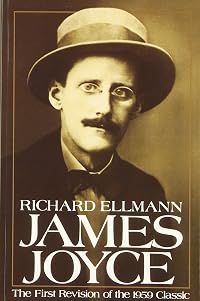
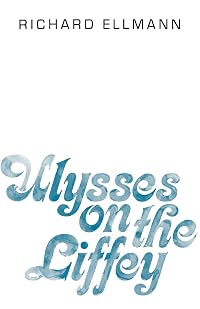
The copy of this book that I have, has an introduction by Richard Ellmann, facsimiles of the notebook pages (16 page story/poem) & notes on the work
. Giacomo" is the Italian form of the author's forename, James
http://parrishlantern.blogspot.co.uk/2011/07/james-joyce.html show less
“My words in her mind: cold polished stones sinking
through a quagmire.
Those quiet cold fingers have touched the pages, foul
and fair, on which my show more shame shall glow for ever. Quiet
and cold and pure fingers. Have they never erred?
Her body has no smell: an odourless flower.
On the stairs. A cold frail hand: shyness, silence: dark
languor-flooded eyes: weariness.”
Giacomo is a beautifully written episode of autofiction, covering an illicit love affair he had in Trieste, it was never published during his lifetime because of potential repercussions.
This book is a short story of 16 pages, it’s a fragment of a dream, it’s a series of sketches, each a love note, a promise, a wish. This book is poetry where desire is the omnipresent deity. But this is desire as reminiscence of past love and of a lost past.
“ Before his death Joyce said he would write something very simple and very short, he was thinking perhaps of how he had solidified the small fragile, transitory perfection of his Triestine pupil into the small, fragile enduring perfection of Giacomo Joyce”
The copy of this book that I have, has an introduction by Richard Ellmann, facsimiles of the notebook pages (16 page story/poem) & notes on the work
. Giacomo" is the Italian form of the author's forename, James
http://parrishlantern.blogspot.co.uk/2011/07/james-joyce.html show less
Love me. Love my umbrella.
Uma das frases mais bonitas que eu já li. Mas, como acontece freqüentemente, você tem que ter lido o livro todo pra entender o motivo.
Uma das frases mais bonitas que eu já li. Mas, como acontece freqüentemente, você tem que ter lido o livro todo pra entender o motivo.
James Joyce e shkroi këtë skicë të hollë dashurie në korrik – gusht 1914. Sipas Richard Ellmann – it, biografi unik i autorit, faktet e shumta e përcaktojnë këtë periudhë si të qenësishme, megjithëse dorëshkrimi, ndryshe nga veprat e tjera të Joyce – it, nuk ka dalë.
Autori e pati lënë dorëshkrimin – të hartuar në fletë të trasha letre mat e me bojë të zezë – në duart e të vëllait, Stanislaus – it, pasi u largua nga Triesteja në vitin 1909. Mbetet nga të rrallat shkrime të tij që u botua pas vdekjes.
Autori e pati lënë dorëshkrimin – të hartuar në fletë të trasha letre mat e me bojë të zezë – në duart e të vëllait, Stanislaus – it, pasi u largua nga Triesteja në vitin 1909. Mbetet nga të rrallat shkrime të tij që u botua pas vdekjes.
Ratings
Members
- Recently Added By
Lists

University literature
145 works; 5 members

Literary Works Read in College
316 works; 15 members

Alphabetical Books
211 works; 3 members

Books You Read For University
184 works; 3 members

Books Read in 2025
4,128 works; 98 members
Author Information

498+ Works 92,872 Members
James Joyce was born on February 2, 1882, in Dublin, Ireland, into a large Catholic family. Joyce was a very good pupil, studying poetics, languages, and philosophy at Clongowes Wood College, Belvedere College, and the Royal University in Dublin. Joyce taught school in Dalkey, Ireland, before marrying in 1904. Joyce lived in Zurich and Triest, show more teaching languages at Berlitz schools, and then settled in Paris in 1920 where he figured prominently in the Parisian literary scene, as witnessed by Ernest Hemingway's A Moveable Feast. Joyce's collection of fine short stories, Dubliners, was published in 1914, to critical acclaim. Joyce's major works include A Portrait of the Artist as a Young Man, Ulysses, Finnegans Wake, and Stephen Hero. Ulysses, published in 1922, is considered one of the greatest English novels of the 20th century. The book simply chronicles one day in the fictional life of Leopold Bloom, but it introduces stream of consciousness as a literary method and broaches many subjects controversial to its day. As avant-garde as Ulysses was, Finnegans Wake is even more challenging to the reader as an important modernist work. Joyce died just two years after its publication, in 1941. (Bowker Author Biography) show less
James Joyce has a Legacy Library. Legacy libraries are the personal libraries of famous readers, entered by LibraryThing members from the Legacy Libraries group.
Some Editions
Series
Belongs to Publisher Series
Work Relationships
Is contained in
Classifications
Statistics
- Members
- 307
- Popularity
- 104,886
- Reviews
- 4
- Rating
- (3.53)
- Languages
- 15 — Catalan, Czech, Danish, Dutch, English, German, Galician, Italian, Lithuanian, Multiple languages, Norwegian (Bokmål), Portuguese, Spanish, Swedish, Turkish
- Media
- Paper, Ebook
- ISBNs
- 27
- ASINs
- 5