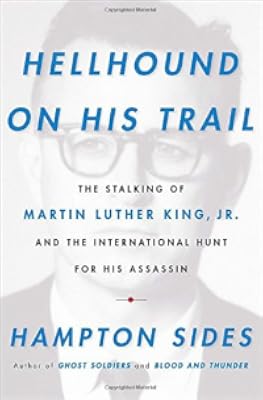
Hellhound on His Trail: The Stalking of Martin Luther King, Jr., and the International Hunt for His Assassin
by Hampton Sides
On This Page
Description
April, 1967: a prison escape. James Earl Ray, nondescript thief and con man, drifts through the South, into Mexico, and then Los Angeles, where he is galvanized by George Wallace's racist presidential campaign. February, 1968: a Memphis garbage strike. Martin Luther King joins the sanitation workers' cause, but their march turns violent. King vows to return to Memphis in April. Historian Sides follows Ray and King as they crisscross the country, one stalking the other, until the drifter show more catches up with his prey. Against the backdrop of the resulting nationwide riots and the pathos of King's funeral, Sides gives us a cross-cut narrative of the assassin's flight and the 65-day search that led investigators to Canada, Portugal, and England--a massive manhunt ironically led by Hoover's FBI. Drawing on previously unpublished material, this nonfiction thriller illuminates how history is so often a matter of the petty bringing down the great.--From publisher description. show lessTags
Recommendations










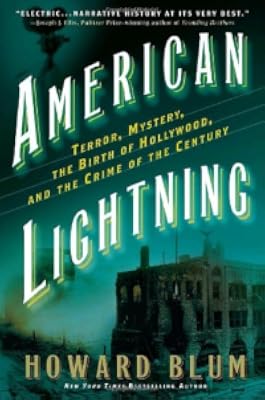



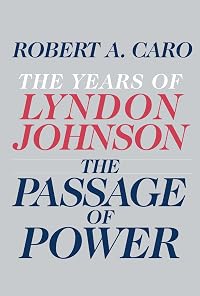


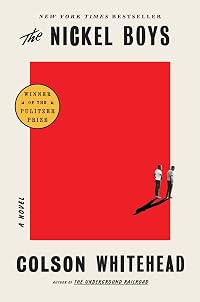


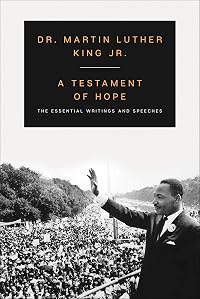








Member Recommendations


Member Reviews
Fascinating account of Martin Luther King, Jr.'s last days, and of the activities of his killer, James Earl Ray, a/k/a Eric S. Galt et al., before and after the assassination until he was finally apprehended by an astute Scotland Yard detective just before he would have boarded a plane in London bound for Brussels and (he hoped) eventually Rhodesia where extradition would not have been possible. There's a lot more of interest in the book as well, and it got me thinking about how disconnected I was from the world in 1968. Although naturally I was aware of the assassination, and I remember seeing photos of Ray after he was caught and during his trial, I am amazed now to realize that I was in Washington, DC, on our Senior Class trip less show more than 3 weeks before the shooting in Memphis. I was probably in the National Cathedral about a week before MLK gave his final Sunday sermon there just days before he died. (I've been digging around in old scrapbooks and memory books today, and I found a ticket stub from Ford's Theater dated March 23, 1968.) There were fires and looting and race-related violence in the aftermath in Washington, not to mention, a bit later, Resurrection City in the backyard of the White House. And while that was still going on, the assassination of Robert Kennedy and his funeral. It never registered with me on a personal level until now that these things were happening in places I had so recently visited --the Mall, the White House, the National Cathedral, Arlington National Cemetery. The book is very well written, in what the author terms a "novelistic" style, without too much attribution or reference to sources in the body of the text. There is an extensive section of notes, however, and the author's references are thoroughly documented. I am now quite interested in reading more by Hampton Sides, who goes on my list of favorite non-fiction authors, along with Shelby Foote and David McCullough.
March 2017 show less
March 2017 show less
Forget about spoilers. Hampton Sides has done the seemingly impossible: created a heart-pounding, electrifying account of the stalking of Martin Luther King, Jr. in 1968 and the manhunt for his killer. But everyone knows the outcome. King was shot dead by James Earl Ray who was arrested several weeks later in London’s Heathrow Airport. Everybody knows that. So how exactly did Sides keep the suspense ratcheted up until the very last page? This is a true crime story like no other.
I’m still fairly numb from reading this driving narrative non-fiction of a time I remember very well. Sides did a superb job of getting at the psychology of the man found guilty of killing the African-American icon. Throughout the book, James Earl Ray appears show more to be a cypher, a non-entity. As the narrative opens, the prisoner who escapes underneath a truckload of bread is only identified as prisoner 416-J. From then on, we only know him by the many assumed names he goes by for the next year. We never see the name James Earl Ray until close to the end of the book. By doing this I think Sides has managed to show what an insignificant being this man was, shrewd one moment and horrendously stupid the next. After escaping he wanders from Missouri through the American South to Mexico and California, with no visible means of support, before returning a year later to Alabama/Georgia and Memphis where he stalks King. Along the way, we get to not know a guy who says very little, gets to know no one and has an unending supply of funds. He manages to stay in one sleazy motel room or flophouse after another. He’s drawn to the seamy side of life but doesn’t really fit in there either, in his neat suit coat, white shirt and tie.
Sides alternates this compelling narrative with descriptions of King’s frustrations with the pace of the civil rights movement and dissension within the ranks, his vitriolic disagreements with President Lyndon Johnson’s spending on the Viet Nam War while poverty runs rampant in the U.S., and J. Edgar Hoover’s surveillance of King’s activities and his visceral hatred of King.
Once Ray commits the crime for which he initiated the greatest FBI manhunt in history, Sides highlights his every move, his apparent mistakes, his flight to Atlanta, Detroit, Windsor, Toronto, London, Portugal and his final apprehension by Scotland Yard at Heathrow where he is trying to board a plane for Brussels so he can eventually escape to Rhodesia, which has both apartheid and no extradition policy. At no time does the suspense let up---the driving narrative is palpable.
Hampton Sides apparently does not buy any of the conspiracy theories out there but his narrative did bring up some questions. Where was Ray getting all the money he needed to survive? Someone must have been helping him. Who? How does a man shoot a high-powered rifle, that he purchased just a couple of days before King was shot, with deadly accuracy, while standing in a cramped bathtub in a rooming house? And if the FBI was keeping King under surveillance, as has been documented, where were they while King was being stalked? But this book doesn’t address those questions. It just sits in Ray’s back pocket and follows along and oh my, what a ride it is. Highly recommended. show less
I’m still fairly numb from reading this driving narrative non-fiction of a time I remember very well. Sides did a superb job of getting at the psychology of the man found guilty of killing the African-American icon. Throughout the book, James Earl Ray appears show more to be a cypher, a non-entity. As the narrative opens, the prisoner who escapes underneath a truckload of bread is only identified as prisoner 416-J. From then on, we only know him by the many assumed names he goes by for the next year. We never see the name James Earl Ray until close to the end of the book. By doing this I think Sides has managed to show what an insignificant being this man was, shrewd one moment and horrendously stupid the next. After escaping he wanders from Missouri through the American South to Mexico and California, with no visible means of support, before returning a year later to Alabama/Georgia and Memphis where he stalks King. Along the way, we get to not know a guy who says very little, gets to know no one and has an unending supply of funds. He manages to stay in one sleazy motel room or flophouse after another. He’s drawn to the seamy side of life but doesn’t really fit in there either, in his neat suit coat, white shirt and tie.
Sides alternates this compelling narrative with descriptions of King’s frustrations with the pace of the civil rights movement and dissension within the ranks, his vitriolic disagreements with President Lyndon Johnson’s spending on the Viet Nam War while poverty runs rampant in the U.S., and J. Edgar Hoover’s surveillance of King’s activities and his visceral hatred of King.
Once Ray commits the crime for which he initiated the greatest FBI manhunt in history, Sides highlights his every move, his apparent mistakes, his flight to Atlanta, Detroit, Windsor, Toronto, London, Portugal and his final apprehension by Scotland Yard at Heathrow where he is trying to board a plane for Brussels so he can eventually escape to Rhodesia, which has both apartheid and no extradition policy. At no time does the suspense let up---the driving narrative is palpable.
Hampton Sides apparently does not buy any of the conspiracy theories out there but his narrative did bring up some questions. Where was Ray getting all the money he needed to survive? Someone must have been helping him. Who? How does a man shoot a high-powered rifle, that he purchased just a couple of days before King was shot, with deadly accuracy, while standing in a cramped bathtub in a rooming house? And if the FBI was keeping King under surveillance, as has been documented, where were they while King was being stalked? But this book doesn’t address those questions. It just sits in Ray’s back pocket and follows along and oh my, what a ride it is. Highly recommended. show less
Ask most people "Who is Eric Starvo Galt?" and you will receive a not unexpected blank look. But mention James Earl Ray and you will receive a much different reaction.
This book chronicles the interwoven lives of Dr. Martin Luther King Jr. and James Earl Ray during the few months prior to Dr. King's assassination, through the heinous act itself, until Ray is finally hunted down and brought to justice.
I have to commend the author for neither deifying Dr. King; nor stereotyping Mr. Ray. Chapters alternate throughout the book, telling the different stories as they happened. I thought the story was even handed and fair throughout. Well researched and documented, even though I am aware of what transpired, I still found myself turning the show more pages as if this was a thrilling novel.
My feelings are best summed up by the following exchange between Andrew Young and Dexter King, Dr. King's seven year old son."Uncle Andy, this man didn't know our Daddy, did he?" speaking of King's killer. "Why do you say that?" Young asked. "Because if he had, he wouldn't have shot him. He was just an ignorant man who didn't know any better." Out of the mouth of babes...
A fascinating inside look into one of America's darkest hours and the struggle to provide some measure of closure to an act that had the potential to turn America's racial struggle into a full blown civil war. show less
This book chronicles the interwoven lives of Dr. Martin Luther King Jr. and James Earl Ray during the few months prior to Dr. King's assassination, through the heinous act itself, until Ray is finally hunted down and brought to justice.
I have to commend the author for neither deifying Dr. King; nor stereotyping Mr. Ray. Chapters alternate throughout the book, telling the different stories as they happened. I thought the story was even handed and fair throughout. Well researched and documented, even though I am aware of what transpired, I still found myself turning the show more pages as if this was a thrilling novel.
My feelings are best summed up by the following exchange between Andrew Young and Dexter King, Dr. King's seven year old son."Uncle Andy, this man didn't know our Daddy, did he?" speaking of King's killer. "Why do you say that?" Young asked. "Because if he had, he wouldn't have shot him. He was just an ignorant man who didn't know any better." Out of the mouth of babes...
A fascinating inside look into one of America's darkest hours and the struggle to provide some measure of closure to an act that had the potential to turn America's racial struggle into a full blown civil war. show less
Everyone knows how Martin Luther King died but this book grabs and holds our interest with a mystery that remains unsolved: who was James Earl Ray and why did he do it? Hampton Sides reveals Ray to be a contradictory multifaceted figure. A little crazy, possibly conspiratorial, and a sad American archetype. Overall this was a fantastic book, cleverly structured and told with novelistic detail and pacing, Sides is a master craftsman, it's a nearly perfect book. Recommend it highly, it's more than just a true crime story, it shows MLK in an intimate light as a normal human being, flaws and all, which makes his death that much more immediate and real, and not a remote historical event.
I thoroughly enjoyed this book, which I picked up after I heard the author interviewed on NPR. It's the fascinating tale of an oddly forgettable man--James Earl Ray, the assassin of Martin Luther King Jr. Ray used a number of aliases both before and after the crime, and in the narrative Sides refers to Ray by his name du jour, whether that's Eric Galt or Ramon Sneyd or any of his other pseudonyms. This technique is not as distracting as it sounds. If you like true crime or history, this book is definitely worth reading.
This book is one of the few definitive works on the assassination of Martin Luther King. One of its predecessors, Gerald Posner's Killing the Dream debunks claims that King's murder was the result of an elaborate conspiracy. Hampton Sides' Hellhound... gives the backstory into who (the assassin) James Ray was, what motivated him, how he planned and carried out the murder, and how he managed to evade capture for the two months afterwards.
The book carefully traces the events leading up to the assassination -- the weeks during which the Rev. King traveled from city to city, struggling to maintain the commitment of the civil rights movement to non- violence, while Ray stalked his intended victim, culminating in that tragic day in Memphis. show more Following the murder, Ray (under the name Eric Galt) barely manages to elude the city police, and what results is the most massive manhunt in US history. Piece by piece the FBI builds its file, follows Ray to Canada, and finally to England, where he is captured by Scotland Yard. Although some argued the FBI did not pursue the case aggressively, such claims get absolutely no support here. In Sides' account, the search for the killer involved thousands of agents, multiple countries, and every investigative resource that could be brought to bear. Ray himself gets much attention, and he fits the mold we Americans have come to know well -- uneducated, unintelligent, a loner, a petty criminal who is in and out of prison -- yet to my mind (as a reader) he remains an enigma. The question of where he got the money to survive during his desperate flight is not explicitly addressed; presumably Ray had enough saved from his previous criminal exploits.
Hampton Sides adopted a matter - of - fact journalistic style that sticks closely to the established facts. I am grateful that the author refused to use such devices as made- up dialogue, unwarranted speculation, and accounts of what the protagonist was (supposedly) thinking. The result is low key in tone but exciting in content. Endnotes to the book offer detailed documentation of the text. I doubt that this work will change the minds of conspiracy theorists (who, in Sides' words, believe that "every organization this side of the Boy Scouts of America was involved in King's death.") However, for readers interested in a detailed, responsible, and well- paced account of the assassination and its aftermath, they could hardly ask for more than this excellent book show less
The book carefully traces the events leading up to the assassination -- the weeks during which the Rev. King traveled from city to city, struggling to maintain the commitment of the civil rights movement to non- violence, while Ray stalked his intended victim, culminating in that tragic day in Memphis. show more Following the murder, Ray (under the name Eric Galt) barely manages to elude the city police, and what results is the most massive manhunt in US history. Piece by piece the FBI builds its file, follows Ray to Canada, and finally to England, where he is captured by Scotland Yard. Although some argued the FBI did not pursue the case aggressively, such claims get absolutely no support here. In Sides' account, the search for the killer involved thousands of agents, multiple countries, and every investigative resource that could be brought to bear. Ray himself gets much attention, and he fits the mold we Americans have come to know well -- uneducated, unintelligent, a loner, a petty criminal who is in and out of prison -- yet to my mind (as a reader) he remains an enigma. The question of where he got the money to survive during his desperate flight is not explicitly addressed; presumably Ray had enough saved from his previous criminal exploits.
Hampton Sides adopted a matter - of - fact journalistic style that sticks closely to the established facts. I am grateful that the author refused to use such devices as made- up dialogue, unwarranted speculation, and accounts of what the protagonist was (supposedly) thinking. The result is low key in tone but exciting in content. Endnotes to the book offer detailed documentation of the text. I doubt that this work will change the minds of conspiracy theorists (who, in Sides' words, believe that "every organization this side of the Boy Scouts of America was involved in King's death.") However, for readers interested in a detailed, responsible, and well- paced account of the assassination and its aftermath, they could hardly ask for more than this excellent book show less
I thought this was an excellent portrail of the assassination of Martin Luther King, and the tracking down of his murderer, James Earl Ray. Aside from knowing the names of those two individuals involved, I knew little of the story behind the stalking and shooting of MLK in Memphis, and how Ray was tracked down by the FBI, the Canadian Royal Mounted Police, and Scotland Yard. A surprising aside in the book was the somewhat shameful behavior of Jesse Jackson after the shooting and his bending of the facts for personal gain. The book was filled with details and facts of James Earl Ray's life just before and just after the shooting, showing painstaking research by Mr. Sides. The book reminded me of Swanson's book "Manhunt" which covers the show more tracking of John Wilkes Booth after the assassination of President Lincoln. show less
Members
- Recently Added By
Lists

Top Five Books of 2019
5 works; 1 member

Top Five Books of 2019
387 works; 107 members
Author Information

Hampton Sides, contributing editor of "Outside" & editor of "The Wild File," is also the author of "Ghost Soldiers". He lives in Santa Fe, New Mexico. (Publisher Provided) Hampton Sides received a BA in history from Yale University. He is editor-at-large for Outside Magazine and has also written for National Geographic, The New Yorker, Esquire, show more Preservation, and Men's Journal. His magazine work has been nominated twice for National Magazine Awards for feature writing. He is the author of several books including Ghost Soldiers, Blood and Thunder, Hellhound on His Trail, and In the Kingdom of Ice. (Bowker Author Biography) show less
Some Editions
Awards and Honors
Awards
Distinctions
Notable Lists
Common Knowledge
- Canonical title
- Hellhound on His Trail: The Stalking of Martin Luther King, Jr., and the International Hunt for His Assassin
- Alternate titles
- Hellhound on His Trail: The Electrifying Account of the Largest Manhunt in American History
- Original publication date
- 2010-04-27
- People/Characters
- Martin Luther King, Jr.; Eric Galt; J. Edgar Hoover; Coretta Scott King; Ralph Abernathy; Jesse Jackson
- Important places
- Memphis, Tennessee, USA
- Important events
- Assassination of Martin Luther King, Jr. ( [1968]); Poor People's Campaign (1968)
- Related movies
- Roads to Memphis (2010)
- Epigraph
- Discrimination is a hellhound that gnaws at Negroes in every waking moment of their lives.- Martin Luther King Jr. (1967)
And the days keep on worrying me There's a hellhound on my trail.- Robert Johnson (1937)
Book One: When I took up the cross I recognized its meaning...The cross is something that you bear and ultimately you die on. ~Martin Luther King, Jr. (1967)
Book Two: For murder, though it hath no tongue, will speak with miraculous organ. Shakespeare, Hamlet
Book Three: Thy chase had a beast in view; Thy wars brought nothing about; Thy lovers were all untrue. `Tis well an old age is out, And time to begin a new. ~John Dryden, "The Secular Mosque" - Dedication
- For McCall, Graham, and Griffin
The future looks bright - First words
- (Prologue) The prison bakers sweated in the glare of the ovens, making bread for the hungry men of the honor farm.
In early May 1967, three hundred miles downstream from St. Louis, the citizens of Memphis stood along the cobblestoned banks, enjoying the musky coolness of the river. - Last words
- (Click to show. Warning: May contain spoilers.)"...But it's not the end of the world. There's tomorrow."
- Publisher's editor
- Bill Thomas
Classifications
- Genres
- History, Nonfiction, General Nonfiction, Politics and Government, Biography & Memoir
- DDC/MDS
- 364.1524092 — Society, government, & culture Social problems and social services Crime Criminal offenses Offenses against the person Homicide Assassination
- LCC
- E185.97 .K5 .S534 — History of the United States United States Elements in the population Afro-Americans Biography. Genealogy
- BISAC
Statistics
- Members
- 1,035
- Popularity
- 24,962
- Reviews
- 47
- Rating
- (4.29)
- Languages
- English, Polish
- Media
- Paper, Audiobook, Ebook
- ISBNs
- 14
- ASINs
- 14