On This Page
Description
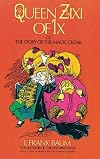
A magic cloak is an important item to a peasant boy who becomes king by being the forty-seventh person to enter the city after the old ruler dies.Tags
Recommendations












Member Reviews
My son and I tend to read "borderlands of Oz" books when we're stuck waiting for Oz books. Unfortunately, it took much longer than I expected to get The Hungry Tiger of Oz, and The Master Key alone was not enough to cover the gap. After not particularly enjoying Master Key or The Enchanted Island of Yew (which we had read to cover the gap between Grampa and Lost King), I wasn't looking forward to reading a third borderlands book in quick succession.
Queen Zixi was one of Baum's last attempts at a non-Oz fantasy, but you can tell by the title how he was attempting to cash in on Oz's success, with a country name not too far off Oz in form. Like some of Baum's other early work (e.g., Magical Monarch of Mo) it feels less American and less show more modern. It opens in the Forest of Burzee (previously established in Life and Adventures of Santa Claus), where a group of fairies under Queen Lulea weave a magic cloak that can grant a mortal bearer one wish; one fairy is then sent into the country of Noland to give it to someone sad.
Meanwhile, a pair of children named Timothy and Margaret (but usually called "Bud" and "Fluff") are orphaned, and travel with their Aunt Rivette to the capital city, Nole. There, the king of Noland has recently died without heir, meaning the forty-seventh person to come through the city's east gate will become the new monarch. On the way, Fluff is given the magic cloak and she wishes to be happy; Bud ends up being the forty-seventh person, making him king and Fluff princess. The book has three distinct parts: 1) Bud and Fluff becoming and settling into the roles in the palace, 2) Queen Zixi's attempts to steal the magic cloak from Princess Fluff, including war, and 3) the invasion of Noland by the strange Roly-Rogues.
I don't think Noland and Ix quite have the sparkle of Oz, they are pretty generic vaguely medieval magic kingdoms, but overall this book might be Baum's most successful non-Oz fantasy. Two ordinary children (I used country accents for both) becoming rulers of a country is fun idea. There's some good fantasy humor when the magic cloak is passed through the various denizens of the palace who, ignorant of its power, keep wishing for different things, meaning that Bud and Fluff's aunt gets wings, and the lord high general (who has a short man complex) ends up ten feet tall, and the lord high executioner obtains an extendable arm, and so on. This is pretty fun stuff, and it's nice to have protagonists for whom something is actually at stake—arguably the biggest difference between Baum's good fantasies (e.g., this, Oz, Sky Island) and his ones I have not enjoyed (e.g., Master Key, Yew, Sea Fairies).
Similar things go for Queen Zixi's attempts to capture the magic cloak and the invasion of the Roly-Rogues. The latter are nicely imaginative creatures, and they pose a real threat to Noland. Zixi is one of Baum's more interesting witch characters: she's given herself a long life and ruled wisely, but in a mirror, she looks her real 683 years, and thus when she hears of a magic cloak, wants to wish for being able to deceive mirrors, too. So the normally kind ruler becomes a harsher one, but by the end of the novel she learns her lesson.
(That said, like in a lot of Baum novels, there are a lot of hinted-at geopolitics. Zixi has lead her people in hundred of battles, and there is some kind of preexisting enmity between Noland and Ix that means Zixi can't just ask for the cloak. On the other hand, Zixi has never lost a battle, so surely all those hundred battles can't be against Noland. Later maps would place Ix between Noland and Ev, the country where Ozma takes place, so has Ix fought a number of wars with Ev? Or maybe Ix has faced sea raids from places like Regos and Coregos; this novel does establish that Ix has a merchant fleet of some kind. In my reading, I turned Queen Lulea into Queen Lurline, the fairy queen from Burzee mentioned in many Oz novels. It's interesting to note that this novel establishes that fairies have a dislike for witch magic, given how much in the Oz novels the fairy Ozma depends on the magic of Glinda, a witch.)
I think my son liked it; he was particularly into the comedy about what the people did with the cloak, while he as usual didn't like hearing about bad things like Zixi stealing the cloak. Overall, I enjoyed it. It doesn't quite have the sparkle of weirdness than an Oz novel does, but it's fun, it has good jokes, and if it doesn't have a unified plot, it does have three individual ones. Baum never returned to any of the lands he established in his non-Oz fantasies, and this is one of the rare times I wish he did. I'd like to see King Bud grow up a bit, and for him, Fluff, Aunt Rivette, Zixi, and their various advisors face down some other kind of threat—and this time with no magic cloak to help! show less
Queen Zixi was one of Baum's last attempts at a non-Oz fantasy, but you can tell by the title how he was attempting to cash in on Oz's success, with a country name not too far off Oz in form. Like some of Baum's other early work (e.g., Magical Monarch of Mo) it feels less American and less show more modern. It opens in the Forest of Burzee (previously established in Life and Adventures of Santa Claus), where a group of fairies under Queen Lulea weave a magic cloak that can grant a mortal bearer one wish; one fairy is then sent into the country of Noland to give it to someone sad.
Meanwhile, a pair of children named Timothy and Margaret (but usually called "Bud" and "Fluff") are orphaned, and travel with their Aunt Rivette to the capital city, Nole. There, the king of Noland has recently died without heir, meaning the forty-seventh person to come through the city's east gate will become the new monarch. On the way, Fluff is given the magic cloak and she wishes to be happy; Bud ends up being the forty-seventh person, making him king and Fluff princess. The book has three distinct parts: 1) Bud and Fluff becoming and settling into the roles in the palace, 2) Queen Zixi's attempts to steal the magic cloak from Princess Fluff, including war, and 3) the invasion of Noland by the strange Roly-Rogues.
I don't think Noland and Ix quite have the sparkle of Oz, they are pretty generic vaguely medieval magic kingdoms, but overall this book might be Baum's most successful non-Oz fantasy. Two ordinary children (I used country accents for both) becoming rulers of a country is fun idea. There's some good fantasy humor when the magic cloak is passed through the various denizens of the palace who, ignorant of its power, keep wishing for different things, meaning that Bud and Fluff's aunt gets wings, and the lord high general (who has a short man complex) ends up ten feet tall, and the lord high executioner obtains an extendable arm, and so on. This is pretty fun stuff, and it's nice to have protagonists for whom something is actually at stake—arguably the biggest difference between Baum's good fantasies (e.g., this, Oz, Sky Island) and his ones I have not enjoyed (e.g., Master Key, Yew, Sea Fairies).
Similar things go for Queen Zixi's attempts to capture the magic cloak and the invasion of the Roly-Rogues. The latter are nicely imaginative creatures, and they pose a real threat to Noland. Zixi is one of Baum's more interesting witch characters: she's given herself a long life and ruled wisely, but in a mirror, she looks her real 683 years, and thus when she hears of a magic cloak, wants to wish for being able to deceive mirrors, too. So the normally kind ruler becomes a harsher one, but by the end of the novel she learns her lesson.
(That said, like in a lot of Baum novels, there are a lot of hinted-at geopolitics. Zixi has lead her people in hundred of battles, and there is some kind of preexisting enmity between Noland and Ix that means Zixi can't just ask for the cloak. On the other hand, Zixi has never lost a battle, so surely all those hundred battles can't be against Noland. Later maps would place Ix between Noland and Ev, the country where Ozma takes place, so has Ix fought a number of wars with Ev? Or maybe Ix has faced sea raids from places like Regos and Coregos; this novel does establish that Ix has a merchant fleet of some kind. In my reading, I turned Queen Lulea into Queen Lurline, the fairy queen from Burzee mentioned in many Oz novels. It's interesting to note that this novel establishes that fairies have a dislike for witch magic, given how much in the Oz novels the fairy Ozma depends on the magic of Glinda, a witch.)
I think my son liked it; he was particularly into the comedy about what the people did with the cloak, while he as usual didn't like hearing about bad things like Zixi stealing the cloak. Overall, I enjoyed it. It doesn't quite have the sparkle of weirdness than an Oz novel does, but it's fun, it has good jokes, and if it doesn't have a unified plot, it does have three individual ones. Baum never returned to any of the lands he established in his non-Oz fantasies, and this is one of the rare times I wish he did. I'd like to see King Bud grow up a bit, and for him, Fluff, Aunt Rivette, Zixi, and their various advisors face down some other kind of threat—and this time with no magic cloak to help! show less
I don't know what it is about Edwardian children's literature. As a child I enjoyed all of the examples I read (so far as I can remember); re-reading them as an adult, I find them unpleasantly preposterous, stuffy, or preachy. The examples I've read newly as an adult are about evenly split between pleasant and unpleasant.
Zixi is about ¹/₃ pleasant and ²/₃ unpleasant, the latter because it is preposterous and slightly preachy. The preposterousness is astounding: certain spherical villains at one point have arms long enough to capture people, and three paragraphs later have arms barely long enough for them to fold their own hands. Had Baum no respect for children's ability to think? There's a fair amount of deus ex machina, too.
Zixi is about ¹/₃ pleasant and ²/₃ unpleasant, the latter because it is preposterous and slightly preachy. The preposterousness is astounding: certain spherical villains at one point have arms long enough to capture people, and three paragraphs later have arms barely long enough for them to fold their own hands. Had Baum no respect for children's ability to think? There's a fair amount of deus ex machina, too.
One of Baum's best novels ,besides the Wizard of Oz books, this stand alone story is chock full of moral teachings that everyone (children and adults alike) should know. Some of them can be summarized as follows: Don't Be A Jerk. Be Careful What You Wish For. The Easy Way Is Not Always The Best Way.
I have been a fan of Baum's Oz series for a long time, so I decided it was about time to give some of his other works a chance. I found that my university had a copy of this particular book, so I checked it out. It was a rather interesting read because I realized I was so familiar with the characters of Oz that I was expecting for them to show up, but they never did. I applaud Baum for creating another world, even if it was never as popular as Oz. He creates a wonderful children's story here that has the exact charm as any of his stories about Oz. He truly is a wonderful writer and can drag you into the nonsense that he creates for these worlds with almost no effort.
L. Frank Baum is well known for his book “The Wizard of Oz” and other books in the series.
The fairy tale takes place in the kingdom of Noland, next to the Kingdom of Ix. It is a tale of a boy who becomes king of Noland under unusual circumstance. He isn’t prepared for it, as he comes from a poor family and little education.
There is a magic wishing cloak, the Queen Zixi who wants the cloak, five high counselors – Tullydub, Tollydob, Tillydib, Tallydab and Tellydeb, the king’s valet Jikki, Aunt Rivette and more colourful and unusual characters. It is a fairy tale to the nth degree. Adventure, magic, comedy and more are found as you read.
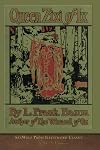
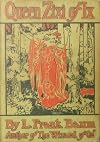
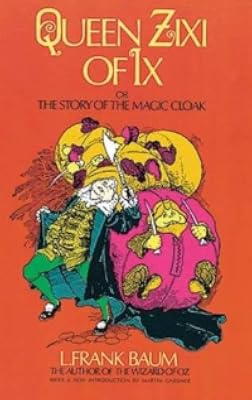
What sets it off are the 90 illustrations from the original first publishing of the story. show more The story was serialized between 1904-1905 and the drawings were done for the serial. They are in black and white with much detail. show less
The fairy tale takes place in the kingdom of Noland, next to the Kingdom of Ix. It is a tale of a boy who becomes king of Noland under unusual circumstance. He isn’t prepared for it, as he comes from a poor family and little education.
There is a magic wishing cloak, the Queen Zixi who wants the cloak, five high counselors – Tullydub, Tollydob, Tillydib, Tallydab and Tellydeb, the king’s valet Jikki, Aunt Rivette and more colourful and unusual characters. It is a fairy tale to the nth degree. Adventure, magic, comedy and more are found as you read.
What sets it off are the 90 illustrations from the original first publishing of the story. show more The story was serialized between 1904-1905 and the drawings were done for the serial. They are in black and white with much detail. show less
One of Baum's best novels ,besides the Wizard of Oz books, this stand alone story is chock full of moral teachings that everyone (children and adults alike) should know. Some of them can be summarized as follows: Don't Be A Jerk. Be Careful What You Wish For. The Easy Way Is Not Always The Best Way.
An enchanted cloak is woven by fairies and given to a poor orphan girl. The fantastical adventures and oddities that surround the cloak take flight throughout the story.
Members
- Recently Added By
Lists

Books Read in 2020
4,379 works; 124 members

Children's Literature 1900 - 1950 in order
413 works; 8 members

Books Read in 2025
4,128 works; 98 members
Author Information

606+ Works 72,904 Members
Best known as the author of the Wizard of Oz series, Lyman Frank Baum was born on May 15, 1856, in New York. When Baum was a young man, his father, who had made a fortune in oil, gave him several theaters in New York and Pennsylvania to manage. Eventually, Baum had his first taste of success as a writer when he staged The Maid of Arran, a show more melodrama he had written and scored. Married in 1882 to Maud Gage, whose mother was an influential suffragette, the two had four sons. Baum often entertained his children with nursery rhymes and in 1897 published a compilation titled Mother Goose in Prose, which was illustrated by Maxfield Parrish. The project was followed by three other picture books of rhymes, illustrated by William Wallace Denslow. The success of the nursery rhymes persuaded Baum to craft a novel out of one of the stories, which he titled The Wonderful Wizard of Oz. Some critics have suggested that Baum modeled the character of the Wizard on himself. Other books for children followed the original Oz book, and Baum continued to produce the popular Oz books until his death in 1919. The series was so popular that after Baum's death and by special arrangement, Oz books continued to be written for the series by other authors. Glinda of Oz, the last Oz book that Baum wrote, was published in 1920. (Bowker Author Biography) show less
Some Editions
Series

Belongs to Publisher Series
Work Relationships
Is contained in
Common Knowledge
- Canonical title
- Queen Zixi of Ix
- Original title
- Queen Zixi of Ix, or The Story of the Magic Cloak
- Alternate titles
- The Story of the Magic Cloak
- Original publication date
- 1905
- Related movies
- The Magic Cloak (1914 | IMDb)
- Dedication
- TO MY SON
FRANK JOSLYN BAUM - First words
- The fairies assembled one moonlit night in a pretty clearing of the ancient forest of Burzee.
Classifications
- Genres
- Fiction and Literature, Kids, Fantasy
- DDC/MDS
- 813.4 — Literature & rhetoric American literature in English American fiction in English Later 19th Century 1861-1900
- LCC
- PZ8 .B327 .Q — Language and Literature Fiction and juvenile belles lettres Fiction and juvenile belles lettres Juvenile belles lettres
- BISAC
Statistics
- Members
- 320
- Popularity
- 100,402
- Reviews
- 8
- Rating
- (3.93)
- Languages
- English, German
- Media
- Paper, Audiobook, Ebook
- ISBNs
- 30
- UPCs
- 1
- ASINs
- 11