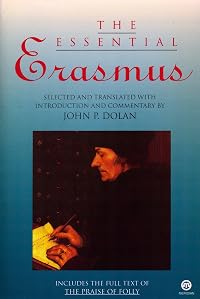
The Essential Erasmus
by Desiderius Erasmus, John P. Dolan (Editor)
On This Page
Description
In his own day a center of controversy, in the four hundred years since his death known too often solely as an apostle of mockery and irreverence, Erasmus can be seen today in a new light--as a humanist whose concen is at once contemporary and Christian. The Essential Erasmus is the first single volume in English to show the full spectrum of this Renaissance man's thought, which is no less profound because it is expressed with the grace, wit, and ironic detachment only a great writer can show more achieve. Contains the full text of In Praise of Folly show lessTags
Recommendations




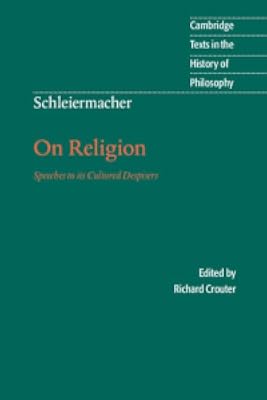

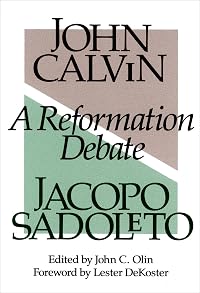
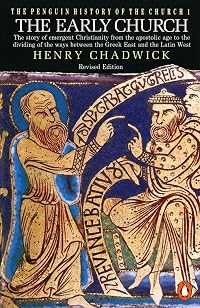
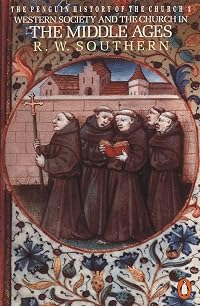











Member Reviews
Members
- Recently Added By
Lists

Christianity Books You've Read
179 works; 19 members
GreatBooks Worldview Academy Lists
133 works; 4 members

Literary Works Read in College
316 works; 15 members

Books in the Bibliography of The History of Hell by Alice K. Turner
155 works; 1 member
Author Information

609+ Works 10,287 Members
Desiderius Erasmus was born, probably in 1469, in Rotterdam, Holland. He studied in Paris, traveled in England, Germany, and Italy, and wrote in Latin. Living at the time of the Renaissance when most intellectual concepts were being examined, Erasmus was a great admirer of the ancient writers and edited many of their works. Erasmus remained a show more Roman Catholic, but believed that many of the priests and theologians had distorted the simple teachings of Jesus. He published an edition of the New Testament-the first edition in the original Greek-in order to make clear the essential teachings of Christianity. Erasmus liked above all things clear and honest thinking; he despised intolerance and persecution. He was the greatest of the humanists because his books, more effectively than any others, propagated a humane philosophy of life, teaching that one's chief duties are to be intelligent, open-minded, and charitable. The most famous and the most influential of Erasumus' books were The Praise of Folly (1509) and Colloquies (1518). These works, written in lively, colloquial, and witty Latin, expressed his ideas on the manners and customs of his time. Erasmus exerted a powerful influence not only through his books, but also through the private letters that he wrote to a great number of humanist scholars in all parts of Western Europe. He carried on extensive correspondences with Thomas More of England. More than 1500 of his letters survive today. Erasmus died in Basel, Switzerland, on July 12, 1536. (Bowker Author Biography) show less
Work Relationships
Common Knowledge
- Canonical title
- The Essential Erasmus
- Original publication date
- 1964
Classifications
- Genres
- Religion & Spirituality, Nonfiction, Philosophy, History
- DDC/MDS
- 230.2 — Religion Christianity Christianity Pre-reformation and Roman Catholic
- LCC
- PA8502 .E5 .D6 — Language and Literature Greek language and literature. Latin language and literature Medieval and modern Latin literature Individual authors
- BISAC
Statistics
- Members
- 659
- Popularity
- 43,804
- Reviews
- 1
- Rating
- (3.55)
- Languages
- English
- Media
- Paper
- ISBNs
- 8
- ASINs
- 18