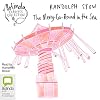
The Merry-Go-Round in the Sea
by Randolph Stow
On This Page
Description
In 1941, Rob Coram is six. The war feels far removed from Geraldton in Western Australia. But when his favourite older cousin Rick leaves to join the army, the war takes a step closer. When Rick returns several years later, he has changed and the old merry-go-round that represents Rob's dream of utopia begins to disintegrate before his eyes. The Merry-Go-Round in the Sea allows us a precious glimpse into a simpler kind of childhood in a country that no longer exists.Tags
Recommendations





















Member Recommendations

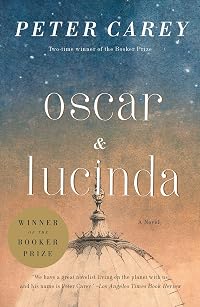
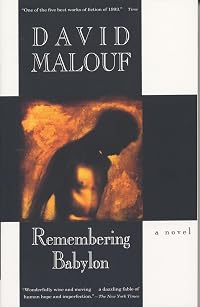
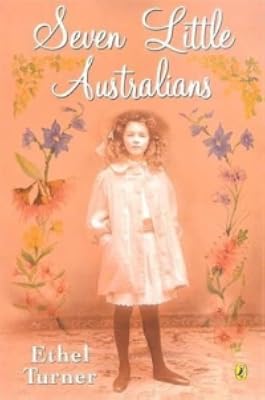
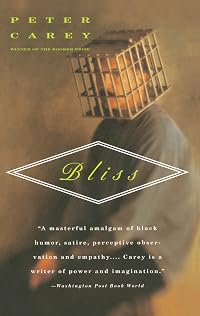
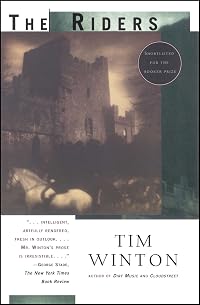
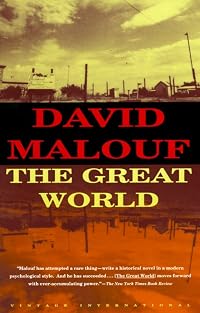
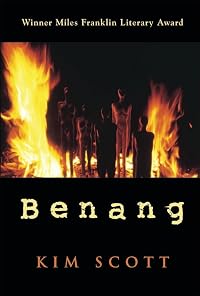
tandah Similar themes - the coming of age of some Australians; pre-dating the coming of age of Australia.
tandah Contrasts middle class with poorer class, but also a WA coming of age.
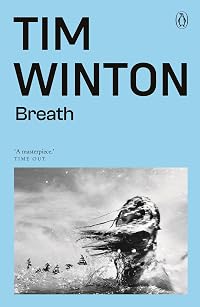
Breath by Tim Winton
tandah Another WA coming of age, set in another beachside regional town in WA - contrast with Merry-go-round in the sea is that it is contemporary.
Member Reviews
This is a delicately written novel about a sprawling family in a sprawling landscape in the 1940s.
It is a story of a large land-owning family in Western Australia during World War II and centers on two main characters, Rob and Rick. Rob is a naive child, constantly referred to by the writer as “the boy”. He admires an older cousin, Rick who is sent to war in S.E. Asia in 1941. Rick spends most of the war in Changi as a POW where he is starved and tortured by Japanese soldiers.
In Western Australia, the family faces the fear of a Japanese invasion and at one point it’s relocated away from the coast for its safety. While life goes on, there is the ever-present threat of invasion, and for the boy Rob the absence of his cousin Rick is show more all-consuming.
On returning to Australia, Rick is a broken man. Empty. The boy quizzes Rick on life in general and the war in particular. Rick can be harsh to the boy. He is no longer the same Rick that Rob knew. Conversations between them are constantly interrupted by Stow’s prose which glorifies the Australian landscape.
“No one else thinks like that, “ he said. “ Dunno”, Rick said indifferent. He mimicked Jane again, ‘You may not realize it, but you talk just like Hitler’, nah forget it”. The hill beyond the orchard was a copper pink now, grass-heads caught the light. The sheep hardly moved. The trees hardly moved.
The jolts from stark reality to flattering descriptions of the Australian bush keep the reader alert. It seems like a deliberate technique, but I’m not sure of the reason.
For most of the book, there is the ever-present awareness of the war in S.E. Asia. While most of the book is about the boy’ s life on the station (ranch) there are contemporaneous scenes of Rick’s life in Changi. But always the book drifts back to Stow‘s love of the Australian bush.
I can identify with him here. Stow spent most of his last years in England, and I feel that his memories of Australia are made more vivid by his time away. Certainly, I had problems with his use of the vernacular, a lot of which I didn’t recognise, but accept that it was of the time. I noticed that the descriptions of the local aborigines changed from the early 1940s where the N-word and “boong” were apparently used, to the late 1940s where the actual tribe-name of Yamaji is given. I wonder if this was true of the 1940s or whether that’s how Stow saw it when he wrote the book in London in the mid 60s. Or was it to reflect how “the boy” changed. Or Rick? I have never heard the N-word used for aborigines in Australia although I have heard other racist terms used in hate. In Stow’s book racist terms are not used in hatred but they appear to be merely the words people used for Australia’s first people, who by the way play no part in the story
I’d liked the description of state school life in Geraldton and Perth. Boys spoke roughly and didn’t wear shoes to school. This brought a smile to my face; a memory. I actually went to State school in Perth for six months in the late 1950s and was amazed to see that the boys didn’t wear shoes to school. At the time I thought it was because they were poor, but after reading Stow’s account it’s seems it was just how they dressed. The school scenes seem spot on. Here are Rob and his mates on August 6 1945:
On the way to school, the boys were very quiet. “Spose they were asking for it,” Grahame Martin said. “Spose so”. “Yeah course they were,” Kevin O’Hara said. “Look at what they done to all the prisoners”. ”But that was the soldiers who did that,”Rob said. “These people were just civilians.” “I don’t know why they didn’t drop it on Tokyo” Donny Web said, “and get bloody old Tojo and Hirohito.”.
There is more to the book than descriptions of the cousins, the Australian bush and the POW‘s in Changi. I felt that the character of the older cousin Rick echoes Stow’s view of Australia, and this is particularly evident in how the book ends. And yes, there is, if not a plot, a story.
I recommend this book and gave it four stars. show less
It is a story of a large land-owning family in Western Australia during World War II and centers on two main characters, Rob and Rick. Rob is a naive child, constantly referred to by the writer as “the boy”. He admires an older cousin, Rick who is sent to war in S.E. Asia in 1941. Rick spends most of the war in Changi as a POW where he is starved and tortured by Japanese soldiers.
In Western Australia, the family faces the fear of a Japanese invasion and at one point it’s relocated away from the coast for its safety. While life goes on, there is the ever-present threat of invasion, and for the boy Rob the absence of his cousin Rick is show more all-consuming.
On returning to Australia, Rick is a broken man. Empty. The boy quizzes Rick on life in general and the war in particular. Rick can be harsh to the boy. He is no longer the same Rick that Rob knew. Conversations between them are constantly interrupted by Stow’s prose which glorifies the Australian landscape.
“No one else thinks like that, “ he said. “ Dunno”, Rick said indifferent. He mimicked Jane again, ‘You may not realize it, but you talk just like Hitler’, nah forget it”. The hill beyond the orchard was a copper pink now, grass-heads caught the light. The sheep hardly moved. The trees hardly moved.
The jolts from stark reality to flattering descriptions of the Australian bush keep the reader alert. It seems like a deliberate technique, but I’m not sure of the reason.
For most of the book, there is the ever-present awareness of the war in S.E. Asia. While most of the book is about the boy’ s life on the station (ranch) there are contemporaneous scenes of Rick’s life in Changi. But always the book drifts back to Stow‘s love of the Australian bush.
I can identify with him here. Stow spent most of his last years in England, and I feel that his memories of Australia are made more vivid by his time away. Certainly, I had problems with his use of the vernacular, a lot of which I didn’t recognise, but accept that it was of the time. I noticed that the descriptions of the local aborigines changed from the early 1940s where the N-word and “boong” were apparently used, to the late 1940s where the actual tribe-name of Yamaji is given. I wonder if this was true of the 1940s or whether that’s how Stow saw it when he wrote the book in London in the mid 60s. Or was it to reflect how “the boy” changed. Or Rick? I have never heard the N-word used for aborigines in Australia although I have heard other racist terms used in hate. In Stow’s book racist terms are not used in hatred but they appear to be merely the words people used for Australia’s first people, who by the way play no part in the story
I’d liked the description of state school life in Geraldton and Perth. Boys spoke roughly and didn’t wear shoes to school. This brought a smile to my face; a memory. I actually went to State school in Perth for six months in the late 1950s and was amazed to see that the boys didn’t wear shoes to school. At the time I thought it was because they were poor, but after reading Stow’s account it’s seems it was just how they dressed. The school scenes seem spot on. Here are Rob and his mates on August 6 1945:
On the way to school, the boys were very quiet. “Spose they were asking for it,” Grahame Martin said. “Spose so”. “Yeah course they were,” Kevin O’Hara said. “Look at what they done to all the prisoners”. ”But that was the soldiers who did that,”Rob said. “These people were just civilians.” “I don’t know why they didn’t drop it on Tokyo” Donny Web said, “and get bloody old Tojo and Hirohito.”.
There is more to the book than descriptions of the cousins, the Australian bush and the POW‘s in Changi. I felt that the character of the older cousin Rick echoes Stow’s view of Australia, and this is particularly evident in how the book ends. And yes, there is, if not a plot, a story.
I recommend this book and gave it four stars. show less
Whilst a book many Australian's read at school as part of their curriculum, would not be appropriate to see this as a children's book (akin to reading 'Pride and Prejudice' or 'Hamlet'). The following 'review' is really just a snatch of observations. But it is a wonderful book and I recommend it to anyone who enjoys a read that engages the senses.
There are a few themes but growing up/getting older/being mature is tied in with nationalism/being Australian/insularity and wanting more without knowing what 'more is' except escape from here.
The books title, and metaphor, the merry-go-round is aligned to a poem written by Rick to Rob upon his return home following 4-years incaceration as a POW in Burma during WW2:
'Thy firmness makes my circle show more just,
And makes me end, where I begun'
The plot covers Rob's early life, 6 o 14, during which his older, much admired cousin Rick is captured by the Japanese and is absent. Rob is entranced by life on the farm, the Australian bush and poetry. Whilst young, he has great sensitivity for the beauty and poetry of rural and natural Australia, and regrets being a 'townie'. Rick, upon returning to the family property and his studies as a lawyer is struggling to adjust to the innocence and ignorance or insularity of his family and the community. Whilst clearly being part of the country he feel an outsider, and cannot settle down. It seems, apart from his brutual education, he is suffering from a post-traumatic stress, indicated in his moods, art and relationships.
Rob whilst open to the influences of the outside world, struggles with change, in particular with Rick's departure. He feels he needs Rick to grow up. Rob's own father, a lawyer who left the army, also suffers from depression, and saves Rob's life twice (coincidently in the water), but Rob cannot connect with him. We learn little about Rob's father, but he provides a parallel and contrast to the more vocal and admired Rick.
The book is written beautifully, often poetic and visual. The characters, apart from snatches of racism, are gentle and understated. Australia is painted as a beautiful, child-like in its innocence, willing itself to ignore its recent brutal history.
One of the qualities I really liked about this book was that at various times there was a set up which I felt would lead to some sexual/violent/nasty development to take place, and it just doesn't. It was a relief.
The author Randolph Stow grew up in Geraldton, WA where this book is set. He is around the same age as the central character Rob. Both he and Rob's father were lawyers, and both he and Rob have a poetic bent and a love of the bush. Randolph Stow finally escaped Australia and returned just once to accept a literary award. show less
There are a few themes but growing up/getting older/being mature is tied in with nationalism/being Australian/insularity and wanting more without knowing what 'more is' except escape from here.
The books title, and metaphor, the merry-go-round is aligned to a poem written by Rick to Rob upon his return home following 4-years incaceration as a POW in Burma during WW2:
'Thy firmness makes my circle show more just,
And makes me end, where I begun'
The plot covers Rob's early life, 6 o 14, during which his older, much admired cousin Rick is captured by the Japanese and is absent. Rob is entranced by life on the farm, the Australian bush and poetry. Whilst young, he has great sensitivity for the beauty and poetry of rural and natural Australia, and regrets being a 'townie'. Rick, upon returning to the family property and his studies as a lawyer is struggling to adjust to the innocence and ignorance or insularity of his family and the community. Whilst clearly being part of the country he feel an outsider, and cannot settle down. It seems, apart from his brutual education, he is suffering from a post-traumatic stress, indicated in his moods, art and relationships.
Rob whilst open to the influences of the outside world, struggles with change, in particular with Rick's departure. He feels he needs Rick to grow up. Rob's own father, a lawyer who left the army, also suffers from depression, and saves Rob's life twice (coincidently in the water), but Rob cannot connect with him. We learn little about Rob's father, but he provides a parallel and contrast to the more vocal and admired Rick.
The book is written beautifully, often poetic and visual. The characters, apart from snatches of racism, are gentle and understated. Australia is painted as a beautiful, child-like in its innocence, willing itself to ignore its recent brutal history.
One of the qualities I really liked about this book was that at various times there was a set up which I felt would lead to some sexual/violent/nasty development to take place, and it just doesn't. It was a relief.
The author Randolph Stow grew up in Geraldton, WA where this book is set. He is around the same age as the central character Rob. Both he and Rob's father were lawyers, and both he and Rob have a poetic bent and a love of the bush. Randolph Stow finally escaped Australia and returned just once to accept a literary award. show less
An Australian writer who is new to me but both prolific and very highly regarded. The German word that would describe this book is probably bildungsroman: a coming-of-age story ostensibly about Rob (six when the book opens, fourteen when it ends) who idolizes his older cousin Rick. Rick is absent for much of the book because he is a Japanese POW in World War Two. The tale describes Rob’s day-to-day life in his small hometown and at family sheep stations in western Australia. Although I was never captivated by Stow’s writing (more than any other Australian writer I’ve read, he makes use of Australian idioms), he is nevertheless masterful at depicting the life of a maturing young boy and, even more, providing a sense of place. He show more has a gift for imagery and, indeed, the book is in some ways a love letter to place. In fact, it’s this very aspect of the book that I find puzzling because Stow left Australia in his early thirties and stayed away for the last 36 years of his life (he died in England in 2010 at the age of 74). Toward the end of the book, the focus largely shifts from Rob to his cousin Rick and Stow moves from nostalgia to poignancy. Much as I was impressed the first two-thirds of the book, I thought he hit his stride in this last portion. I never loved the work but still consider it a very impressive novel and wouldn’t hesitate to recommend it. show less
A beautiful book about hero worship from the point of view of a young lad for his older cousin. A great novel set in Western Australia. It glorifies the natural world. Rob, the young lad, discovers over time the frustration of established family beliefs. He comes to see his idol, cousin Rick, as a flawed character, the result of post-traumatic stress disorder as a Japanese prisoner-of-war.
The Merry-go-Round in the Sea describes an Australia that has long gone,(1941-1949). Rick decides to leave Geraldton, WA.
"I can't stand,' Rick said, 'this-ah, this arrogant mediocrity. The shoddiness and the wowserism and the smug wild-boyos in the bars. And the unspeakable bloody boredom of belonging to a country that keeps up a sort of chorus: Relax, show more mate, relax, don't make the pace too hot. Relax, you bastard, before you get clobbered."
Go out an find this book. show less
The Merry-go-Round in the Sea describes an Australia that has long gone,(1941-1949). Rick decides to leave Geraldton, WA.
"I can't stand,' Rick said, 'this-ah, this arrogant mediocrity. The shoddiness and the wowserism and the smug wild-boyos in the bars. And the unspeakable bloody boredom of belonging to a country that keeps up a sort of chorus: Relax, show more mate, relax, don't make the pace too hot. Relax, you bastard, before you get clobbered."
Go out an find this book. show less
Understated and meditative, and perhaps deceptively simple at first, this account of a young Australian boy’s childhood in and around Geraldtown, Western Australia, and his reactions to his older cousin’s wartime imprisonment by the Japanese, was gut-wrenching to me as much for what it didn’t say as for what it did. It’s not a story in which a lot happens, but I loved the way in which it depicted a rural Australia of yesteryear, and the melancholy atmosphere it evoked.
This book beautifully evokes a time and place that has long since passed. The simple rural lifestyle of an extended family on the Western Coast of Australia. Rob Coram idolises his older cousin Rick and is sad when he goes off to war. Rick is imprisoned at Changi but survives and returns home a changed man. A very nostalgic book. Some lovely banter on the droving trip between Rick and his mate Hugh.
Members
- Recently Added By
Lists

Top Five Books of 2021
604 works; 181 members

School Made Us Read It
380 works; 196 members

Fiction With Familiar Settings
280 works; 93 members
Author Information

22+ Works 1,003 Members
Born in Western Australia and educated at the university there, Stow wrote his first novels while he was an undergraduate. He has lived in England since 1966. His third novel, To the Islands (1958), received Australia's distinguished Miles Franklin Award for Fiction, a high honor for so young a writer. The novel unfolds the surreal saga of show more Herriot, a disillusioned missionary whose loss of faith compels him to embark on a pilgrimage of self-discovery through the desert to the Aboriginal islands of the dead. The desert landscape also serves as the setting for Tourmaline (1963), a fable in which a water diviner comes to a drought-ridden settlement promising water but discovering gold. The Merry-Go-Round in the Sea (1965) relies much less on the allusive symbolism characteristic of Stow's other work; instead, it records a boy's transition to adolescence against the background of a remote settlement on the far side of Australia. In The Visitants (1979) Stow fictionalizes his experiences as an assistant to the government anthropologist of Papua, New Guinea, but this metaphysical adventure in the tropics has little to do with autobiography. Suburbs of Hell (1984) reveals a series of brutal, motiveless murders that take place in an English village. Also set in England and making use of British myth, The Girl Green as Elderflower (1980) traces the recuperation of a man who has experienced strange things in his past. Stow's work is widely admired, both in Australia and abroad, for the expression of Taoist philosophy, a heightened artistry, an extended use of symbolism, and surreal qualities, even as it handles mainly Australian materials. Critics consider Stow an important influence on younger writers who have followed him in breaking away from the realistic molds that long constricted Australian fiction. In 2015 his novel Tourmaline will be adapted into a film. (Publisher Provided) show less
Some Editions
Series
Belongs to Publisher Series
Common Knowledge
- Original publication date
- 1965
- People/Characters
- Rob Coram; Rick Maplestead
- Important places
- Australia
- Dedication
- For my sister
and all the cousins
Classifications
Statistics
- Members
- 296
- Popularity
- 108,612
- Reviews
- 12
- Rating
- (3.96)
- Languages
- English
- Media
- Paper, Audiobook, Ebook
- ISBNs
- 15
- ASINs
- 8