On This Page
Description
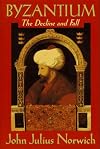
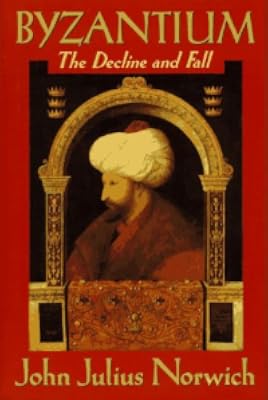
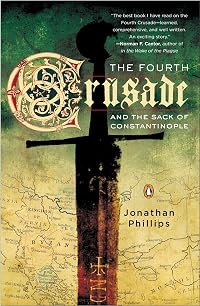
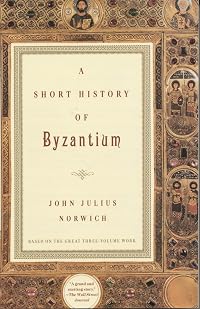
For 1,123 years, Constantinople remained the capital of the Byzantine Empire - the longest-lived and most continuously inspired Christian empire in the world. In this, the third and final volume of John Julius Norwich's magnificent and moving history, he tells of the dire consequences of the defeat by the Seljuk Turks at the battle of Manzikert in 1071; of the Fourth Crusade, whose Crusaders - led by the octogenarian Doge of Venice - turned their attention away from the Holy Places to hurl show more themselves against Constantinople, sacking the city and setting up a succession of Frankish thugs on the imperial throne; and of the two-hundred-year struggle by the restored Empire against the inexorable advance of the Ottoman Turks. show lessTags
Recommendations










Member Reviews
I'll treat the three volume as one, as the latter parts would make little or no sense without having read the earlier ones.
It's an epic tale of an empire lasting over 1100 years and has all the requirements of an epic. There are good kings and bad kings, benevolent kings and mad kings all mixed up together. There's sucess, reversal and ultimately failure and the loss of the inpregnigible city. To have withstood almost enemy for over a millennium is a pretty impressive defensive record. To say nothing of the artistic and cultural achievements. And all this through a time when the western world was retreating into the dark ages.
It's a subject I knew very little about and this series was highly informative, as well as being a fairly show more entertaining read. Obviously written by somone with a passion for their subject, and communicating this to the reader with lots of little details that bring it vividly to life. show less
It's an epic tale of an empire lasting over 1100 years and has all the requirements of an epic. There are good kings and bad kings, benevolent kings and mad kings all mixed up together. There's sucess, reversal and ultimately failure and the loss of the inpregnigible city. To have withstood almost enemy for over a millennium is a pretty impressive defensive record. To say nothing of the artistic and cultural achievements. And all this through a time when the western world was retreating into the dark ages.
It's a subject I knew very little about and this series was highly informative, as well as being a fairly show more entertaining read. Obviously written by somone with a passion for their subject, and communicating this to the reader with lots of little details that bring it vividly to life. show less
Norwich has a lively style, and his book covering this sad period moves along smartly. It's the end of a good series, and I'm glad that it was popular.
John Julius Norwich provides in his trilogy an excellent overview of Byzantine civilization. For the general reader looking to get the whole picture, or for the scholar probing into a new field, this book is an excellent introduction. For someone already well acquainted with the Byzantines, this is a narrative history, useful for quick consultation but not as deep in any particular subject as you would probably require.
Termine con Bizancio. Buenisimo como los otros dos tomos. La historia de una decadencia que sobrecoje no solo en cuanto la ceguera de sus líderes sino también al final por el valor a lo sísifo de revelarse contra lo inevitable. con la gracia e ironia de Norwich, muy bueno. En algunas cosas frente a la ceguera de occidente y otros errores recuerda la marcha de la locura de Tuchmann en cuantro las tesis de las grandes derrotas
Jul 26, 2016Spanish
Ratings
Members
- Recently Added By
Lists

r/AskHistorians' Recommended Books
1,068 works; 19 members

r/History Recommended Reading List
603 works; 12 members
Author Information

102+ Works 12,686 Members
John Julius Norwich was born in the United Kingdom on September 15, 1929. He served in the Royal Navy before receiving a degree in French and Russian at New College, Oxford. After graduation, he joined the H. M. Foreign Service and served in Belgrade, Beirut, and as a member of British delegation to the Disarmament Conference in Geneva. In 1954, show more he inherited the title of Viscount Norwich. In 1964, he resigned from the Foreign Service to become a writer. He was a historian, travel writer, and television personality. His books included The Normans in the South, A History of Venice, The Italian World, Venice: A Traveller's Companion, 50 Years of Glyndebourne: An Illustrated History, A Short History of Byzantium, Absolute Monarchs: A History of the Papacy, Sicily: An Island at the Crossroads of History, and A History of France. He and H. C. Robbins Landon wrote Five Centuries of Music in Venice. Norwich was the host of the BBC radio panel game My Word! from 1978 to 1982. He wrote and presented more than 30 television documentaries including Maestro, The Fall of Constantinople, Napoleon's Hundred Days, Cortés and Montezuma, Maximilian of Mexico, The Knights of Malta, The Treasure Houses of Britain, and The Death of the Prince Imperial in the Zulu War. In 1993, he was appointed CVO for having curated an exhibition at the Victoria and Albert Museum to mark the 40th anniversary of the Queen's accession to the throne. In 2015, he was awarded the Biographers' Club award for his lifetime service to biography. He died on June 1, 2018 at the age of 88. (Bowker Author Biography) show less
Series

Work Relationships
Is contained in
Common Knowledge
- Original publication date
- 1995-10-13
- People/Characters
- Enrico Dandolo
- Important places
- Byzantium; Constantinople, Byzantine Empire; Greece
- Important events
- Fall of Constantinople (1453)
- First words
- So wrote Edward Gibbon, describing the moment when he finally completed The History of the Decline and Fall of the Roman Empire.
- Last words
- (Click to show. Warning: May contain spoilers.)and why, excepting only the Great Church of St Sophia itself, it is the Land Walls - broken, battered, but still marching from sea to sea - that stand as the city's grandest and most tragic monument.
- Original language
- English
Classifications
- Genres
- History, Nonfiction, General Nonfiction, Religion & Spirituality
- DDC/MDS
- 949.5 — History & geography History of Europe Greece, Albania, Yugoslavia, Serbia, Romania, Bulgaria Greece and the Byzantine Empire
- LCC
- DF601 .N67 — History of Europe, Asia, Africa and Oceania Greece History of Greece Medieval Greece. Byzantine Empire, 323-1453 History 1057-1453
- BISAC
Statistics
- Members
- 892
- Popularity
- 30,359
- Reviews
- 4
- Rating
- (4.21)
- Languages
- English, German, Spanish, Turkish
- Media
- Paper
- ISBNs
- 6
- ASINs
- 4