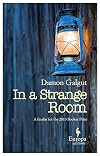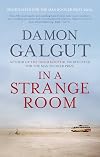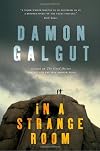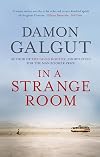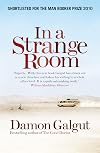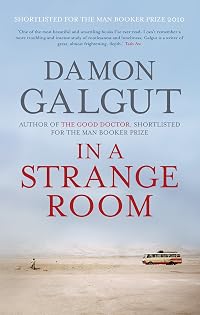
In a Strange Room
by Damon Galgut
On This Page
Description
A young loner travels across eastern Africa, Europe, and India. Unsure what he's after, and reluctant to return home, he follows the paths of travelers he meets along the way. Treated as a lover, a follower, a guardian, each new encounter-with an enigmatic stranger, a group of careless backpackers, a woman on the verge-leads him closer to confronting his own identity. Traversing the quiet of wilderness and the frenzy of border crossings, every new direction is tinged with surmounting show more mourning, as he is propelled toward a tragic conclusion. show lessTags
Recommendations
































Member Reviews
Novel in three parts, each recounting a journey by protagonist Damon – one to Greece, one to southern Africa, and one to India. In the first part, which begins in Greece in 1993, Damon meets Reiner, a German, and they eventually reconnect and journey through Lesotho together. In the second, Damon follows a group of tourists as they backpack through Malawi, Tanzania, and Kenya. In the third, Damon travels to Switzerland to visit his friend Jerome, then travels with his troubled friend, Anna, to India. Though Damon has the best of intentions, each journey ends in misfortune.
It is unusual in its voice, regularly switching between first person and third, and present and past tense. I assume that it is intended to convey the tone of a show more memoir, with the narrator looking back on his younger self, as indicated in this passage from the first section:
“He gets to the ruins in the middle of the afernoon. I can’t even remember now what they are, the remains of some big but obscure building, there was a fence that had to be climbed, there was a fear of dogs but no dogs appeared, he stumbles around among rocks and pillars and ledges, he tries to imagine how it was but history resists imagining. He sits on the edge of a raised stone floor and stares out unseeingly into the hills around him and now he is thinking of things that happened in the past. Looking back at him through time, I remember him remembering, and I’m more present in the scene than he was. But memory has its own distances, in part he is me entirely, in part he is a stranger I am watching.”
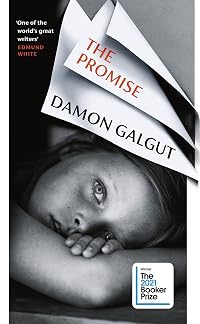
To me it reads as a journey of self-discovery, where lessons are learned on what not to do in the future. It seems full of missed opportunities to form deeper connections with others. I first read this author’s The Promise, which won the Booker Prize in 2021. I really enjoyed this one and plan to seek out more of his work. show less
It is unusual in its voice, regularly switching between first person and third, and present and past tense. I assume that it is intended to convey the tone of a show more memoir, with the narrator looking back on his younger self, as indicated in this passage from the first section:
“He gets to the ruins in the middle of the afernoon. I can’t even remember now what they are, the remains of some big but obscure building, there was a fence that had to be climbed, there was a fear of dogs but no dogs appeared, he stumbles around among rocks and pillars and ledges, he tries to imagine how it was but history resists imagining. He sits on the edge of a raised stone floor and stares out unseeingly into the hills around him and now he is thinking of things that happened in the past. Looking back at him through time, I remember him remembering, and I’m more present in the scene than he was. But memory has its own distances, in part he is me entirely, in part he is a stranger I am watching.”
To me it reads as a journey of self-discovery, where lessons are learned on what not to do in the future. It seems full of missed opportunities to form deeper connections with others. I first read this author’s The Promise, which won the Booker Prize in 2021. I really enjoyed this one and plan to seek out more of his work. show less
Two men, travelling in opposite directions, met each other on the road between Mycenae and Sparta. They chatted a few minutes as walkers on an empty trail do, and then each continued on his way. That night, the unnamed South African found the German, Reiner, in his room at the hostel. They spent two days together before continuing on their separate journeys.
They wrote each other for the next two years, and then decided to embark on a walking trip together. Lesotho was the country chosen. In this first of the three recorded journeys, the narrator, whom we come to know as Damon, is young, unsure of himself. For this journey, he calls himself 'The Follower'. As they walked, Reiner took more and more control of the trip, slowly and oh so show more assuredly. Damon, furious, repressed his growing rage. Can there be conflict if one side refuses to engage? "... in the end you are always more tormented by what you didn't do than what you did, actions already performed can always be rationalized in time, the neglected deed might have changed the world.".
A few years went by and a more mature, more assured Damon was now travelling in Zimbabwe, but still just as lonely. This trip was more promising, but there was a restlessness, a constant need to move on. Zambia, Malawi, small groups of travellers forming and reforming. "It's all touching and happy, but he's the odd one out here, he keeps a distance between himself and them, no matter how friendly they are." He is, after all, South African, and they all know how messed up that is.
Like the first journey, this trip offers promise, so much so that looking back, Damon will eventually see himself as 'The Lover.' He eventually found a trio with whom to travel: Swiss twins and an older French man. Here too though nothing can be said directly. The limitation this time was language. Damon could never speak directly to Jerome. His words were always translated and mediated through the French man. Once again there is the matter of external control as the older man only once left Damon and Jerome alone together. Damon, still suffering from paralyzing self doubt, could not overcome his fear of forming any kind of bond. In Tanzania, the trio invited him to Greece. "He shakes his head, his voice won't work properly. 'I must go back.' "
Arrangements were made for the future; "There is always another time, next month, next year, when things will be different."
By the time Damon embarked on his third journey, he was middle-aged. Over the years his travel pattern had changed: less restless, more focussed. However, for a man like Damon, this presented a new problem, that of forming connections with people and places he had visited before. This time he was travelling back to India, in the role of 'The Guardian'. His companion was a good friend, Anna, taking a time-out from her lover and her job. Damon knew of her mental health problems, knew he was to keep her on track with medications and away from alcohol and recreational drugs. What he was not prepared for was full blown psychosis and India's health care system. Rage once more, confrontation. Another parting, more letters.
Galgut's writing is powerful. The reader sees Damon through both his own narrative voice and that of Damon writing as a third person narrator, sometimes using present tense, sometime past. Over time, this allows Damon to grow and mature. His decisions and actions may not always be those a particular reader would choose. Some will be frustrated with him. Despite that, [In a Strange Room] is nevertheless compelling reading. All readers can recognize Damon's lament: "... in the end you are always more tormented by what you didn't do than what you did..." show less
They wrote each other for the next two years, and then decided to embark on a walking trip together. Lesotho was the country chosen. In this first of the three recorded journeys, the narrator, whom we come to know as Damon, is young, unsure of himself. For this journey, he calls himself 'The Follower'. As they walked, Reiner took more and more control of the trip, slowly and oh so show more assuredly. Damon, furious, repressed his growing rage. Can there be conflict if one side refuses to engage? "... in the end you are always more tormented by what you didn't do than what you did, actions already performed can always be rationalized in time, the neglected deed might have changed the world.".
A few years went by and a more mature, more assured Damon was now travelling in Zimbabwe, but still just as lonely. This trip was more promising, but there was a restlessness, a constant need to move on. Zambia, Malawi, small groups of travellers forming and reforming. "It's all touching and happy, but he's the odd one out here, he keeps a distance between himself and them, no matter how friendly they are." He is, after all, South African, and they all know how messed up that is.
Like the first journey, this trip offers promise, so much so that looking back, Damon will eventually see himself as 'The Lover.' He eventually found a trio with whom to travel: Swiss twins and an older French man. Here too though nothing can be said directly. The limitation this time was language. Damon could never speak directly to Jerome. His words were always translated and mediated through the French man. Once again there is the matter of external control as the older man only once left Damon and Jerome alone together. Damon, still suffering from paralyzing self doubt, could not overcome his fear of forming any kind of bond. In Tanzania, the trio invited him to Greece. "He shakes his head, his voice won't work properly. 'I must go back.' "
Arrangements were made for the future; "There is always another time, next month, next year, when things will be different."
By the time Damon embarked on his third journey, he was middle-aged. Over the years his travel pattern had changed: less restless, more focussed. However, for a man like Damon, this presented a new problem, that of forming connections with people and places he had visited before. This time he was travelling back to India, in the role of 'The Guardian'. His companion was a good friend, Anna, taking a time-out from her lover and her job. Damon knew of her mental health problems, knew he was to keep her on track with medications and away from alcohol and recreational drugs. What he was not prepared for was full blown psychosis and India's health care system. Rage once more, confrontation. Another parting, more letters.
Galgut's writing is powerful. The reader sees Damon through both his own narrative voice and that of Damon writing as a third person narrator, sometimes using present tense, sometime past. Over time, this allows Damon to grow and mature. His decisions and actions may not always be those a particular reader would choose. Some will be frustrated with him. Despite that, [In a Strange Room] is nevertheless compelling reading. All readers can recognize Damon's lament: "... in the end you are always more tormented by what you didn't do than what you did..." show less
A strange and unsettling read but worth the time. Definitely on the experimental side, the narrator is named Damon and sometimes speaks in the 3rd person and sometimes the 1st and may or may not be the author. It is three distinct stories but the first two stick together a bit more than the third but I enjoyed the whole reading experience. The writing is excellent and it creates an atmosphere that I really enjoyed.
I finished In a Strange Room by Damon Galgut. Wow. The book centers on a fictional character, yet Galgut refers to him as both 'he' and 'I' at various points in the text, making it feel like it's really not fiction at all, but rather autobiographical. It also makes you feel close to the main character, then very far away, & back again. He also doesn't use traditional punctuation (i.e., quotes, question marks), but it fits perfectly w/ the flow of his narrative.
The prose seems simple enough, telling 3 separate stories of a South African backpacker's travels in the world & the people he encounters/is with/drifts away from on these trips. He's an astute observer of humans, himself especially, & has a fine touch at conveying the myriad show more emotions of travel, encountering others (some good, some bad), the lonliness, the musings of someone traveling alone w/ no specific schedule or destination in mind. Overall, there is a melancholy tone to the book, yet it's riveting, simple, and straight-forward at the same time.
I love to travel, though I've never really done backpacking per se. Reading this book makes me wish American culture in general embraced this idea more (which seems so prevalent in many European countries & various other countries as well). It's not just a journey to a place, it's a journey through oneself. show less
The prose seems simple enough, telling 3 separate stories of a South African backpacker's travels in the world & the people he encounters/is with/drifts away from on these trips. He's an astute observer of humans, himself especially, & has a fine touch at conveying the myriad show more emotions of travel, encountering others (some good, some bad), the lonliness, the musings of someone traveling alone w/ no specific schedule or destination in mind. Overall, there is a melancholy tone to the book, yet it's riveting, simple, and straight-forward at the same time.
I love to travel, though I've never really done backpacking per se. Reading this book makes me wish American culture in general embraced this idea more (which seems so prevalent in many European countries & various other countries as well). It's not just a journey to a place, it's a journey through oneself. show less
A finely-written collection of three short stories about travelling, loneliness, and memory. Unlike in the Booker-winning Sense Of An Ending, Galgut finds an effective and interesting way of toying with the reader, by flipping from the first to third person even within sentences - the narrator too is watching the scenes play out, trying hard to remember (although when it comes to some names and incidents his mind falls short). The final third stood out as the best, and had me wishing the story had a book of its own rather than a measly 60 pages. I was also baffled by how the protagonist could afford all these trips - but it didn't prevent me from enjoying the journey(s).
This is the third Galgut novel I've read. I thoroughly enjoyed The Good Doctor but was disappointed by The Imposter, so this was a pleasing return to form. In a Strange Room feels like three separate novellas all connected by the thread of the narrator's travelling wanderlust. There is some unusual prose construction at work, with Galgut swapping between first and third person narration, sometimes in the same paragraph. At first this feels confusing, but as the novel develops it somehow works in an interesting way, with the narrator juxtaposing himself between being in the middle of the action in the first person and observing from afar as a distant memory in the third person.
This is a novel of place more than plot, of edgy travels and show more the transience of relationships formed with other travellers, intense in their brevity, all-consuming at the time yet ultimately destined to become relegated to distant memories. The sense of place in Africa and India in particular was particularly well evoked, less on the basis of landscapes but more from a successful imparting of the feel of being in a foreign place, the heady mix of the thrill and danger of the unknown, and the strange intensity of human bonds formed which could never survive on home soil. Each of the three sections has it's own sub-plot, with the narrator taking on the role of follower, lover and guardian in each. Sharing his own Christian name, the narrator is clearly more than a touch autobiographical, which only adds to the mystery.
There's a clever sense of the foreboding to Galgut's writing - if it was a film there would be constant sinister music playing in the background, and that chill works very well, turning me into a slightly nervous reader cautiously turning the pages. It's an odd thing - his plots aren't really driven to a climax, yet he manages to keep me feeling slightly displaced and jittery throughout.
4 stars - an interesting and surprising writer. show less
This is a novel of place more than plot, of edgy travels and show more the transience of relationships formed with other travellers, intense in their brevity, all-consuming at the time yet ultimately destined to become relegated to distant memories. The sense of place in Africa and India in particular was particularly well evoked, less on the basis of landscapes but more from a successful imparting of the feel of being in a foreign place, the heady mix of the thrill and danger of the unknown, and the strange intensity of human bonds formed which could never survive on home soil. Each of the three sections has it's own sub-plot, with the narrator taking on the role of follower, lover and guardian in each. Sharing his own Christian name, the narrator is clearly more than a touch autobiographical, which only adds to the mystery.
There's a clever sense of the foreboding to Galgut's writing - if it was a film there would be constant sinister music playing in the background, and that chill works very well, turning me into a slightly nervous reader cautiously turning the pages. It's an odd thing - his plots aren't really driven to a climax, yet he manages to keep me feeling slightly displaced and jittery throughout.
4 stars - an interesting and surprising writer. show less
This is an extraordinarily beautiful book. The first two sections are quiet and luminous, then Galgut kicks it in to high gear for the searing drama of the third. The book presents itself as a novel but is more like interconnected novellas; the third story in particular could stand on its own. I felt both scarred and healed when I finished it. It will stay with me for a long time!
http://www.bostonbibliophile.com/2013/01/review-in-strange-room-by-damon-galgut....
http://www.bostonbibliophile.com/2013/01/review-in-strange-room-by-damon-galgut....
Members
- Recently Added By
Lists

Booker Prize
491 works; 62 members

Best African Books
126 works; 46 members

Man Booker Prize Longlist 2010
12 works; 2 members

Booker Prize Shortlist: Titles Not Yet Read
161 works; 4 members

Not the NYT list of top 100 21st century books
100 works; 6 members
Author Information

14+ Works 3,856 Members
Awards and Honors
Awards
Common Knowledge
- Canonical title
- In a Strange Room
- Original title
- In a Strange Room
- Original publication date
- 2010
- People/Characters
- Damon; Reiner; Jerome; Anna
- Important places
- Greece; South Africa
- First words
- It happens like this. He sets out in the afternoon on the track that has been shown to him and soon he leaves the little town behind.
- Quotations
- Something in him has changed, he can't seem to connect properly with the world. He feels this not as a failure of the world but as a massive failing in himself, he would like to change it but doesn't know how. In his clearest... (show all) moments he thinks that he has lost the ability to love, people or places or things, most of all the person and place and thing that he is. Without love nothing has value, nothing can be made to matter very much. In this state travel isn't celebration but a kind of mourning, a way of dissipating yourself. He moves around from one place to another, not driven by curiosity but by the bored anguish of staying still.
In a strange room, you must empty yourself for sleep. And before you are emptied for sleep, what are you. And when you are emptied for sleep, you are not. And when you are filled with sleep, you never were.
Maybe when two people meet for the first time all the possible variations on destiny are contained in their separate natures. These two will be drawn together, those two will be repulsed, most will pass politely with av... (show all)erted gaze and hurry on alone.
Jerome, if I can't make you live in words, if you are only the dim evocation of a face under a fringe of hair, and the others too, Alic and Christian and Roderigo, if you are names without a nature, it's not because I don't r... (show all)emember, no, the opposite is true, you are remembered in me as an endless stirring and turning. "But it's for this precisely that you must forgive me, because in every story of obsession there is only one character, only one plot." I am writing about myself alone, it's all I know, and for this reason I have always failed in every love, which is to say at the very heart of my life.
never repeated, never return. Except in memory. - Last words
- (Click to show. Warning: May contain spoilers.)He dries his eyes and picks up a tiny stone from the ground, one like millions of others all around, and slips it into his pocket as he walks towards the gate.
- Blurbers
- Battersby, Eileen; Dyer, Geoff; Milan, Rian; Jones, Russell Celyn; Abell, Stephen; Massie, Allan
Classifications
Statistics
- Members
- 741
- Popularity
- 38,136
- Reviews
- 41
- Rating
- (3.76)
- Languages
- 9 — Catalan, Dutch, English, French, German, Italian, Portuguese, Spanish, Turkish
- Media
- Paper, Audiobook, Ebook
- ISBNs
- 28
- ASINs
- 9