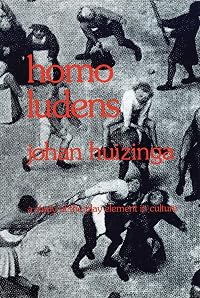
Homo Ludens: A Study of the Play-Element in Culture
by Johan Huizinga
On This Page
Description
Huizinga examines the role of play in law, war, science, poetry, philosophy and artTags
Recommendations

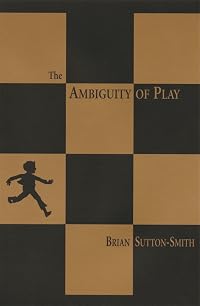
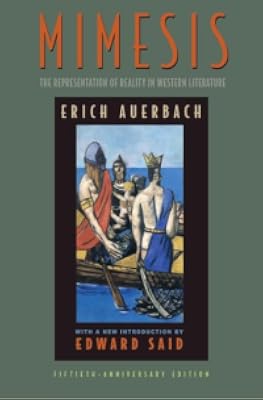
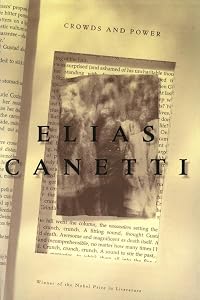
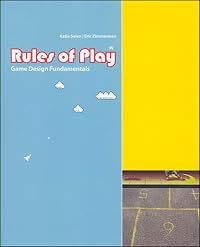




Member Recommendations

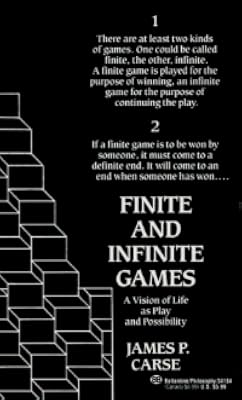
hbobrien When Minkin talks about "ludics," he's explicitly referring to Huizinga.
Member Reviews
We at least implicitly know that playing (“ludens” in Latin), in some sense of the word, is an important part of our lives — games, sports, laughter and joking, entertainment, . . . . Maybe we don’t give it its due, though. How intrinsic is it to human nature and human cultures?
That’s where Johan Huizinga steps in. Huizinga was a Dutch historian, writing in 1938. Not an auspicious time for play in Europe, on the eve of World War II.
His thesis is that play is integral to virtually all aspects of human culture, and that its vestiges can be found in contemporary cultural practices, including in the areas of law, war, knowledge, literature, and of course games and sports. In many of those areas, play has become, probably to our show more detriment, overshadowed and diminished by our “serious” selves.
The terms “play” and “serious” here require some elaboration to make sense of Huizinga’s claims. He doesn’t think that “play” and “serious” are mutually exclusive — “It is rather that civilization gradually brings about a certain division between two modes of mental life which we distinguish as play and seriousness respectively, but which originally formed a continuous mental medium wherein that civilization arose.”
“Play” itself he defines as “an activity which proceeds within certain limits of time and space, in a visible order, according to rules freely accepted, and outside the sphere of necessity or material utility. The play-mood is one of rapture and enthusiasm, and is sacred or festive in accordance with the occasion. A feeling of exaltation and tension accompanies the action, mirth and relaxation follow.”
That sort of play can be quite “serious” as in the athletic contest, the “agon,” of ancient Greece. Ritual combats, like jousting tournaments, or, if you want to stretch a little bit, our own violent sports. The point of those contests includes honor and glory, not just domination and gain.
Even war can be a “contest” of honor, in this way of thinking. In contemporary times, though, he says, “It remained for the theory of ‘total war’ to banish war’s cultural function and extinguish the last vestige of the play-element.”
Other kinds of contests fit into Huizinga’s picture as well. He cites “slanging” in particular as a way of carrying out disputes, even legal disputes — pretty much a match of skill in name calling and baseless accusation, but where all parties know that they are at play, that it’s all “not meant” in some sense. Trash talk that’s over when the dust settles.
Literature and philosophy also fall into play categories. The play of words in poetry, or the play of reasoning in the sophists, or in Plato’s dialogues, or Parmenides’ “proem.” The challenges of riddles, which Huizinga also cites as having so much a major place in ancient cultures. And, of course, games seem intrinsic to mathematics.
We can argue the application of the term “play,” and Huizinga’s interpretation does seem very broad, relative to my own intuitions of play as “for fun” and without consequence. But there is something here, in the playful attitude we can go about the day to day, and even the momentous.
Certainly, it is hard to justify applying the term “play” to the wars, the legal courts, and other parts of our own culture. Of course, that is part of Huizinga’s point, that we have banished the element of play. Whether it ever really was there, or whether the Greek agon, the medieval joust, or the “lower” culture practices of ancient life were actually just barbaric, sadistic, and unfair — that’s something to think about.
But there is something to his insight. “Play” isn’t valued. A “playful” attitude isn’t valued in business, sometimes even in sports.
Rather than Huizinga’s historical/anthropological approach, or maybe in addition to it, I’d like to see a treatment of “play” from psychological and development terms, and from more straight-ahead sociological ones. Why do we disvalue play? How do we beat it out of ourselves as we grow up? How did we beat it out of adult life in particular? Why do we, at best, shunt it off to exclusive “play” activities and not let it infuse “serious” activities?
One word of warning about the book. It's a bit . . . turgid. Hence the three stars rather than, probably, four. Ironic that a book about play just isn't all that playful! Be prepared. This is an academic work of the 1930s. show less
That’s where Johan Huizinga steps in. Huizinga was a Dutch historian, writing in 1938. Not an auspicious time for play in Europe, on the eve of World War II.
His thesis is that play is integral to virtually all aspects of human culture, and that its vestiges can be found in contemporary cultural practices, including in the areas of law, war, knowledge, literature, and of course games and sports. In many of those areas, play has become, probably to our show more detriment, overshadowed and diminished by our “serious” selves.
The terms “play” and “serious” here require some elaboration to make sense of Huizinga’s claims. He doesn’t think that “play” and “serious” are mutually exclusive — “It is rather that civilization gradually brings about a certain division between two modes of mental life which we distinguish as play and seriousness respectively, but which originally formed a continuous mental medium wherein that civilization arose.”
“Play” itself he defines as “an activity which proceeds within certain limits of time and space, in a visible order, according to rules freely accepted, and outside the sphere of necessity or material utility. The play-mood is one of rapture and enthusiasm, and is sacred or festive in accordance with the occasion. A feeling of exaltation and tension accompanies the action, mirth and relaxation follow.”
That sort of play can be quite “serious” as in the athletic contest, the “agon,” of ancient Greece. Ritual combats, like jousting tournaments, or, if you want to stretch a little bit, our own violent sports. The point of those contests includes honor and glory, not just domination and gain.
Even war can be a “contest” of honor, in this way of thinking. In contemporary times, though, he says, “It remained for the theory of ‘total war’ to banish war’s cultural function and extinguish the last vestige of the play-element.”
Other kinds of contests fit into Huizinga’s picture as well. He cites “slanging” in particular as a way of carrying out disputes, even legal disputes — pretty much a match of skill in name calling and baseless accusation, but where all parties know that they are at play, that it’s all “not meant” in some sense. Trash talk that’s over when the dust settles.
Literature and philosophy also fall into play categories. The play of words in poetry, or the play of reasoning in the sophists, or in Plato’s dialogues, or Parmenides’ “proem.” The challenges of riddles, which Huizinga also cites as having so much a major place in ancient cultures. And, of course, games seem intrinsic to mathematics.
We can argue the application of the term “play,” and Huizinga’s interpretation does seem very broad, relative to my own intuitions of play as “for fun” and without consequence. But there is something here, in the playful attitude we can go about the day to day, and even the momentous.
Certainly, it is hard to justify applying the term “play” to the wars, the legal courts, and other parts of our own culture. Of course, that is part of Huizinga’s point, that we have banished the element of play. Whether it ever really was there, or whether the Greek agon, the medieval joust, or the “lower” culture practices of ancient life were actually just barbaric, sadistic, and unfair — that’s something to think about.
But there is something to his insight. “Play” isn’t valued. A “playful” attitude isn’t valued in business, sometimes even in sports.
Rather than Huizinga’s historical/anthropological approach, or maybe in addition to it, I’d like to see a treatment of “play” from psychological and development terms, and from more straight-ahead sociological ones. Why do we disvalue play? How do we beat it out of ourselves as we grow up? How did we beat it out of adult life in particular? Why do we, at best, shunt it off to exclusive “play” activities and not let it infuse “serious” activities?
One word of warning about the book. It's a bit . . . turgid. Hence the three stars rather than, probably, four. Ironic that a book about play just isn't all that playful! Be prepared. This is an academic work of the 1930s. show less
Homo Ludens or "Man the Player", written in 1938 by Dutch historian, cultural theorist and professor Johan Huizinga, discusses the importance of the play element of culture and society. Huizinga uses the term "Play Theory" within the book to define the conceptual space in which play occurs.
One of the most significant (human and cultural) aspects of play is that it is fun. Huizinga suggests that play is primary to and a necessary (though not sufficient) condition of the generation of culture. In his discussion of this Huizinga has much to say about the words for play in different languages. Perhaps the most extraordinary remark concerns the Latin language. “It is remarkable that ludus, as the general term for play, has not only not show more passed into the Romance languages but has left hardly any traces there, so far as I can see". The cultural aspects of play range widely over law, war, poetry and philosophy. While ludus is seen as fundamental for human civilization and even myth-making it is the beginnings of play in the observation of the activity of animals that impressed me. Huizinga makes it clear that animals played first - this along with his other observations make the book a fascinating take on an essential aspect of human activity. show less
One of the most significant (human and cultural) aspects of play is that it is fun. Huizinga suggests that play is primary to and a necessary (though not sufficient) condition of the generation of culture. In his discussion of this Huizinga has much to say about the words for play in different languages. Perhaps the most extraordinary remark concerns the Latin language. “It is remarkable that ludus, as the general term for play, has not only not show more passed into the Romance languages but has left hardly any traces there, so far as I can see". The cultural aspects of play range widely over law, war, poetry and philosophy. While ludus is seen as fundamental for human civilization and even myth-making it is the beginnings of play in the observation of the activity of animals that impressed me. Huizinga makes it clear that animals played first - this along with his other observations make the book a fascinating take on an essential aspect of human activity. show less
il sottotitolo è ancora più inquietante del titolo e recita: "il gioco come funzione sociale". Libro serio serissimo, ma se per voi giocare sta nelle lista delle prime cinque cose che vorreste fare sempre nella vita non potete evitare questo classico. E scoprirete che tutti, ma proprio tutti qualche gioco lo fanno perchè non c'è vita senza gara, non c'è gara senza regole, non c'è cambiamento di regole senza nuovo gioco.
I have been interested in games, gaming, and gamification for both personal enjoyment and academic reasons. Repeatedly, I have seen references to Homo Ludens: A Study of the Play-Element in Culture by Johan Huizinga. It is a foundational study on play, which is foundational to playing games. I wasn’t prepared for such a heavy read. But it was well worth it. Read more
Just as the title describes, this book is a study of how our culture, in all its aspects, has been influenced by the instinct of play. I used this book to jump-start a paper in college, and remember little of it except that it helped solidify my impression that the element of play is very important to our sanity, both as individuals and as a culture.
This book is one of the few available that try to put play into a cultural and historical context.
Journalist Tom Chatfield of Prospect has chosen to discuss Johan Huizinga's Homo Ludens, on FiveBooks as one of the top five on his subject - Computer Games,, saying that:
It’s a book about the way that play precedes culture, and is a distinct and very complicated human phenomenon, which the author sees as giving rise to much that we think of as civilisation, as encoding a set of human values, ideas and ways of being in the world.”
The full interview is available here: http://five-books.com/interviews/tom-chatfield
It’s a book about the way that play precedes culture, and is a distinct and very complicated human phenomenon, which the author sees as giving rise to much that we think of as civilisation, as encoding a set of human values, ideas and ways of being in the world.”
The full interview is available here: http://five-books.com/interviews/tom-chatfield
Members
- Recently Added By
Lists

Books Referenced by Izetbegovic's Islam Between East and West
233 works; 2 members

Biblioteca de não ficção
41 works; 1 member

Books Cited in Blueprint by Nicholas Christakis
261 works; 1 member
Author Information

81+ Works 6,438 Members
Some Editions
Awards and Honors
Notable Lists
Series
Belongs to Publisher Series
Work Relationships
Common Knowledge
- Canonical title
- Homo Ludens: A Study of the Play-Element in Culture
- Original title
- Homo ludens: Proeve eener bepaling van het spel-element der cultuur
- Alternate titles*
- Homo Ludens: A Study of the Play-Element in Culture; Homo ludens : kísérlet a kultúra játék-elemeinek meghatározására; Homo ludens : mėginimas apibrėžti kultūros žaidimini̜ elementa̜; Homo ludens : Versuch einer Bestimmung des Spielelements der Kultur; Homo ludens : fungsi dan hakekat permainan dalam budaya; Homo ludens : o jogo como elemento da cultura (show all 14); Homo ludens : el juego como elemento de la historia; Homo ludens : essai sur la fonction sociale du jeu; Leikkivä ihminen : yritys kulttuurin leikkiaineksen määrittelemiseksi; Homo ludens : izsledvane na igrovija element na kulturata; 人 : 游戏者 : 对文化中游戏因素的研究 Ren : you xi zhe : dui wen hua zhong you xi yin su de yan jiu; Homo rūdensu : jinrui bunka to yūgi; Homo ludens : încercare de determinare a elementului ludic al culturii; Homo Ludens : Oyunun Toplumsal İşlevi Üzerine Bir Deneme
- Original publication date
- 1938 (Dutch) (Dutch); 1950 (English) (English); 1944 (German) (German)
- Original language*
- Nederlands
*Some information comes from Common Knowledge in other languages. Click "Edit" for more information.
Classifications
Statistics
- Members
- 1,426
- Popularity
- 16,573
- Reviews
- 13
- Rating
- (3.93)
- Languages
- 22 — Bulgarian, Czech, Danish, Dutch, English, Estonian, Finnish, French, German, Greek, Hebrew, Hungarian, Indonesian, Italian, Japanese, Polish, Romanian, Russian, Spanish, Swedish, Turkish, Portuguese (Portugal)
- Media
- Paper, Audiobook, Ebook
- ISBNs
- 73
- UPCs
- 1
- ASINs
- 21