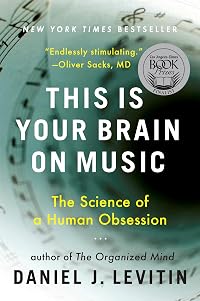
This Is Your Brain on Music: The Science of a Human Obsession
by Daniel J. Levitin
On This Page
Description
Explores the relationship between the mind and music by drawing on recent findings in the fields of neuroscience and evolutionary psychology to discuss such topics as the sources of musical tastes and the brain's responses to music.Tags
Recommendations


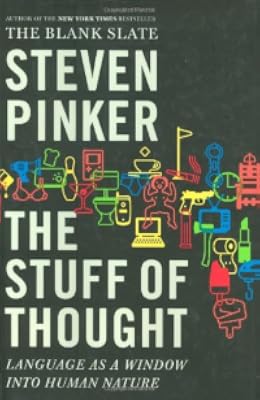
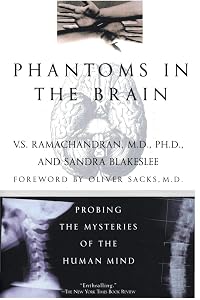
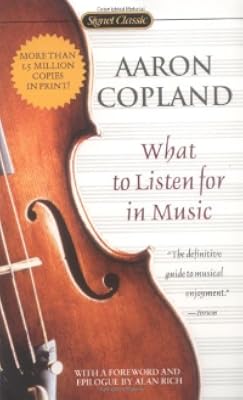
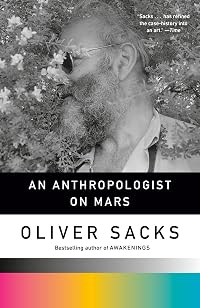
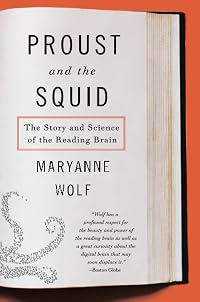
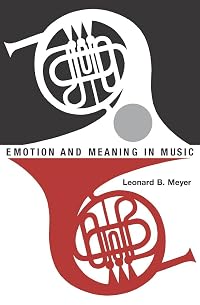
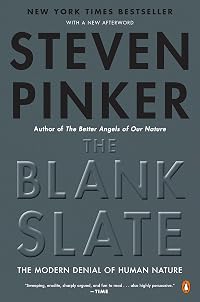
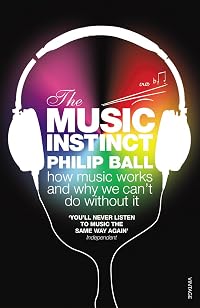


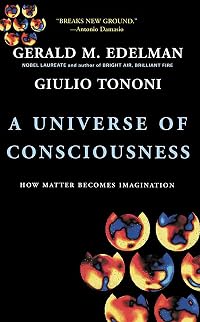
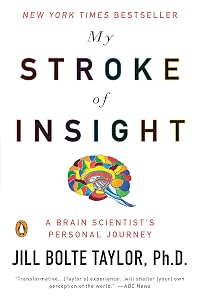
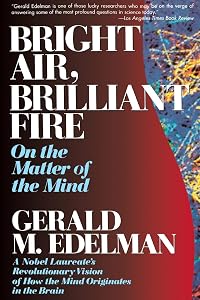
Member Recommendations
Member Reviews
Daniel J. Levitin’s This Is Your Brain On Music: The Science of a Human Obsession is a fascinating study about what happens in the brain when we listen to music. Levitin, a neuroscientist and former session musician and producer, has crafted an excellent study that both scientists and lay readers whose grasp of science is somewhat limited will find informative.
Perhaps best of all, Levitin’s book doesn’t ruin the enjoyment of listening to music.
Levitin primarily takes a thematic approach in examining how the brain functions when listening to music. Although the first chapter, which explains the basics of music like pitch, timbre, meter, may be sow-going for the musically-challenged, the remaining chapters are enlightening. With show more topics including how the brain remembers and recalls music, why music can impact our moods, and why musical preferences can vary from person to person, Levitin explains the processes occurring in the brain without overwhelming the reader with overly-technical and academically-dry details.
Perhaps the most interesting chapter is the final one, which makes a case for the evolutionary origins of music, arguing against scientists who believe music was a happy accident or an unplanned byproduct of language development. Levitin shows how music may have played a role in human survival and evolution, including aiding in cognitive development, serving as a key factor in promoting early human interactions, and giving musical males an extra advantage in the grand reproductive race.
Written for non-experts who might not know the difference between a hippocampus and a hippopotamus, This Is Your Brain On Music successfully manages to explain how we listen to music without reducing music to a series of neurons and brain waves. Levitin writes in an intelligent but not overbearing or condescending tone; his passion for music is apparent throughout the book. An excellent integration of science and music, Levitin’s book examines the brain’s role in listening to and processing music without downplaying any of the emotions we experience when listening to music. I enjoyed the book, particularly the science of the brain and its relation to music. show less
Perhaps best of all, Levitin’s book doesn’t ruin the enjoyment of listening to music.
Levitin primarily takes a thematic approach in examining how the brain functions when listening to music. Although the first chapter, which explains the basics of music like pitch, timbre, meter, may be sow-going for the musically-challenged, the remaining chapters are enlightening. With show more topics including how the brain remembers and recalls music, why music can impact our moods, and why musical preferences can vary from person to person, Levitin explains the processes occurring in the brain without overwhelming the reader with overly-technical and academically-dry details.
Perhaps the most interesting chapter is the final one, which makes a case for the evolutionary origins of music, arguing against scientists who believe music was a happy accident or an unplanned byproduct of language development. Levitin shows how music may have played a role in human survival and evolution, including aiding in cognitive development, serving as a key factor in promoting early human interactions, and giving musical males an extra advantage in the grand reproductive race.
Written for non-experts who might not know the difference between a hippocampus and a hippopotamus, This Is Your Brain On Music successfully manages to explain how we listen to music without reducing music to a series of neurons and brain waves. Levitin writes in an intelligent but not overbearing or condescending tone; his passion for music is apparent throughout the book. An excellent integration of science and music, Levitin’s book examines the brain’s role in listening to and processing music without downplaying any of the emotions we experience when listening to music. I enjoyed the book, particularly the science of the brain and its relation to music. show less
A good addition to the evolving study of how the brain processes music. A lot of it can be skipped if you have some music theory knowledge, it is aimed at a wide audience. Like most popular research writing the author takes a particular stand, in this case for an evolutionary need for music. He makes a good argument for this, and it seems to explain why music is so universally loved in every society.
Musicians are constantly toying with us. They roll a melody up and down a musical rollercoaster. They take us on unexpected sidetracks. They bounce themes from one instrument to another like kids playing hackey sack. And sometimes they smuggle other tunes (themes or motifs) into their melodies to knock us off our guard. Somehow we keep up with their games, catching and interpreting hundreds of minor cues per second, and reconstruct their art as emotion. Joy. Sadness. Loss. Hope. Love.
Daniel Levitin carries on wonderful discussions like these in This is Your Brain on Music, a book I picked up because of the title but stuck with because of the subject. Levitin is a former studio musician and sound engineer who worked with many of the top show more pop acts of the 70s, 80s, and 90s, but followed an academic calling when a fascination for the complex interplay between sound and the human brain caught his attention. The result is a unique study of how the human brain reacts to music. And how cool is it that the same guy can tell you about a dinner he had with Francis Crick (the co-discoverer of DNA) in one chapter and about hanging out at home with Joni Mitchell (blues singer of “Both Sides Now”) in the next?
Not only do we remember the words and tune to Bruce Springsteen’s “Born in the USA”, but we can automatically mimic the places his voice becomes gravelly. Why? What happens to the brain at 115 decibels that makes so many people prefer music cranked up to that volume? Why do so many people hate fingernails on a chalkboard? How on earth can we recognize a song like the Eagles’ “Hotel California” after listening to it for only a tenth of a second, or recorded by a dreary orchestra and played through a cheap elevator speaker? Why do some songs, rhythms, or instruments instill feelings in us so easily? How do they prompt memories? Why is music so enjoyable? And why do we get “ear worms” — 15 second song snippets that we can’t seem to get our minds to stop playing over and over? And over.
Levitin wrote his narrative in a way that respected both the music and the latest science research. He’s a musician, after all, with a deep appreciation for the art. And his neuroscience isn’t all mathematics. Music is filled with math and theory, but Levitin doesn’t dwell on it. He runs through a ‘Music Theory 101′ review in the first two chapters so you know what an octave is, the differences between pitch, tempo, and timbre, and what role chords play. It’s complicated in spots, but it’s just to get you up to speed so he could talk to you later using the right vocabulary.
Late in the book, Levitin delves into the invention of music and the evolution of the human brain. He went over my head several times, but whenever he started to lose me in brain/music jargon he pulled me right back with examples from songs everyone would know — ubiquitous songs from classic rock, country, jazz, or folk: Chuck Berry’s “Roll Over Beethoven”, Dave Brubeck’s “Take Five”, Rogers & Hammerstein’s “My Favorite Things”, Sting’s “Every Breath You Take”, the Beatles “Yesterday”.
Many of the songs he mentioned were already on my iPod. I listened to them anew with an ear out for the twists he suggested. I still felt the same emotion from the music, but the excursions into music theory and neuroscience added just a bit more depth to the experience. Music is a wonderful thing and the human brain is astounding. This was the first book I’ve read that covered both topics at the same time.
Find more of my reviews at Mostly NF. show less
Daniel Levitin carries on wonderful discussions like these in This is Your Brain on Music, a book I picked up because of the title but stuck with because of the subject. Levitin is a former studio musician and sound engineer who worked with many of the top show more pop acts of the 70s, 80s, and 90s, but followed an academic calling when a fascination for the complex interplay between sound and the human brain caught his attention. The result is a unique study of how the human brain reacts to music. And how cool is it that the same guy can tell you about a dinner he had with Francis Crick (the co-discoverer of DNA) in one chapter and about hanging out at home with Joni Mitchell (blues singer of “Both Sides Now”) in the next?
Not only do we remember the words and tune to Bruce Springsteen’s “Born in the USA”, but we can automatically mimic the places his voice becomes gravelly. Why? What happens to the brain at 115 decibels that makes so many people prefer music cranked up to that volume? Why do so many people hate fingernails on a chalkboard? How on earth can we recognize a song like the Eagles’ “Hotel California” after listening to it for only a tenth of a second, or recorded by a dreary orchestra and played through a cheap elevator speaker? Why do some songs, rhythms, or instruments instill feelings in us so easily? How do they prompt memories? Why is music so enjoyable? And why do we get “ear worms” — 15 second song snippets that we can’t seem to get our minds to stop playing over and over? And over.
Levitin wrote his narrative in a way that respected both the music and the latest science research. He’s a musician, after all, with a deep appreciation for the art. And his neuroscience isn’t all mathematics. Music is filled with math and theory, but Levitin doesn’t dwell on it. He runs through a ‘Music Theory 101′ review in the first two chapters so you know what an octave is, the differences between pitch, tempo, and timbre, and what role chords play. It’s complicated in spots, but it’s just to get you up to speed so he could talk to you later using the right vocabulary.
Late in the book, Levitin delves into the invention of music and the evolution of the human brain. He went over my head several times, but whenever he started to lose me in brain/music jargon he pulled me right back with examples from songs everyone would know — ubiquitous songs from classic rock, country, jazz, or folk: Chuck Berry’s “Roll Over Beethoven”, Dave Brubeck’s “Take Five”, Rogers & Hammerstein’s “My Favorite Things”, Sting’s “Every Breath You Take”, the Beatles “Yesterday”.
Many of the songs he mentioned were already on my iPod. I listened to them anew with an ear out for the twists he suggested. I still felt the same emotion from the music, but the excursions into music theory and neuroscience added just a bit more depth to the experience. Music is a wonderful thing and the human brain is astounding. This was the first book I’ve read that covered both topics at the same time.
Find more of my reviews at Mostly NF. show less
Pop Science, meet Pop Music. Pop Music, Pop Science.
It’s fun to hear how precisely specialists deploy concepts like pitch, timbre and rhythm in trying to explain how music works, and how intricately laboratory experiments can simulate/stimulate brain activity, but the brain is not the mind, and even (or especially) cognitive neuroscientists won't crack the ineffability of music. The chapter on the origins of music shows just how speculative and tentative the science is. What would Junior Kimbrough say?
It’s fun to hear how precisely specialists deploy concepts like pitch, timbre and rhythm in trying to explain how music works, and how intricately laboratory experiments can simulate/stimulate brain activity, but the brain is not the mind, and even (or especially) cognitive neuroscientists won't crack the ineffability of music. The chapter on the origins of music shows just how speculative and tentative the science is. What would Junior Kimbrough say?
The interest that I held in This is Your Brain on Music: The Science of a Human Obsession goes beyond the typical novel or non-fiction piece of work. When I picked it up at Barnes & Noble and read the inside flap, my hot damn! alert went off. When I read the Introduction, it may be safe to say that my heart palpitated. Since about the age of eight or so, I've been a music fan of abnormal proportions. Saying it was/is my "thing" is an understatement. I had over 2000 CDs until recently when I took them all digital and distributed the physical discs to friends, stores, and others. When I was teased with, "Levitin unravels the mystery of our perennial love affair with music", I was sold.
I'm pleased to say that This is Your Brain... far show more surpassed my expectations. It seemed that every page held something else for me to learn. I got a two chapter primer in music theory (so THAT'S how that works!). I got two or three chapters on the brain's reaction to music and how the two party together. This was followed by a chapter or two on what gives music the ability to trigger emotions. Finally, it closed with a chapter on music's role in human evolution.
Let's just say that if you love music, you should read the book. If you love science, you should read the book. If you love music and science, open another tab in your browser and order this thing NOW. As a fan of both, it hit the sweet spot for me.
Interestingly enough, it goes beyond just the music aspect though. In providing a context for most of the research that Levitin describes, he gives some other scientific tidbits that expanded my understanding of things such as the theory of evolution, the brain development of children, the evolution of dietary cravings, the adoption of spoken languages, etc. One such passage is, "Humans didn't evolve a liking for cheesecake, but we did evolve a liking for fats and sugars, which were in short supply during our evolutionary history. Humans evolved a neural mechanism that caused our reward centers to fire when eating sugars and fats because in the small quantities they were available, they were beneficial to our well being." While these passages weren't rocket science, when I came across them, I'd say - Now I know!
I'm a curious person who likes to make sense of things. It's fun for me to learn about how things became the way they are and how they tie together. When it comes to music and our connectedness to it, this book gets top marks. I have only one word for it - BRILLIANT.
It will be re-read on multiple occassions in the future. show less
I'm pleased to say that This is Your Brain... far show more surpassed my expectations. It seemed that every page held something else for me to learn. I got a two chapter primer in music theory (so THAT'S how that works!). I got two or three chapters on the brain's reaction to music and how the two party together. This was followed by a chapter or two on what gives music the ability to trigger emotions. Finally, it closed with a chapter on music's role in human evolution.
Let's just say that if you love music, you should read the book. If you love science, you should read the book. If you love music and science, open another tab in your browser and order this thing NOW. As a fan of both, it hit the sweet spot for me.
Interestingly enough, it goes beyond just the music aspect though. In providing a context for most of the research that Levitin describes, he gives some other scientific tidbits that expanded my understanding of things such as the theory of evolution, the brain development of children, the evolution of dietary cravings, the adoption of spoken languages, etc. One such passage is, "Humans didn't evolve a liking for cheesecake, but we did evolve a liking for fats and sugars, which were in short supply during our evolutionary history. Humans evolved a neural mechanism that caused our reward centers to fire when eating sugars and fats because in the small quantities they were available, they were beneficial to our well being." While these passages weren't rocket science, when I came across them, I'd say - Now I know!
I'm a curious person who likes to make sense of things. It's fun for me to learn about how things became the way they are and how they tie together. When it comes to music and our connectedness to it, this book gets top marks. I have only one word for it - BRILLIANT.
It will be re-read on multiple occassions in the future. show less
Yet another book I picked up on an Audible sale. I really do get exposed to a lot of things I might not read otherwise because I can’t resist thinking I’m getting a bargain. :-)
From the author’s perspective I may be the ideal reader this book, “an exploration of the relationship between music and the mind”. In my youth I played piano and clarinet, studied some music theory, and minored in music history as an undergraduate. I am married to a cognitive psychologist, which has resulted in my absorbing a certain amount of information about how the brain works (by osmosis - and from grading Intro Psych quizzes). So I have some background in both sides of the music/brain equation.
Would this book appeal to other lay readers, the show more author’s stated target audience? If they had a background in music OR cognition and a genuine interest in how they fit together, probably. If they had no music training and knew nothing about cognitive psychology, I think they would need a deep desire to know more to make this a rewarding read. Although Leviton explains the basic elements of music in detail, I imagine I would have found it challenging to absorb it all with no previous background. Add in the descriptions of the functionality of the different areas of the brain, and it’s a lot of academic information to digest.
In other words, I don’t think I would have enjoyed it as much as I did if it was ALL new to me and I had only a passing interest in the topic. At times it lagged a bit. Levitin is very careful to give credit to all of the composers, performers and scientists he references in the book, which is commendable, but it does slow down the reading. And I could have done without his gratuitous name-dropping. I’m happy for him that he had Francis Crick’s endorsement to pursue one line of his research, but spending half a chapter setting up the circumstances of their meeting was, for me, a waste of my listening time.
Which brings me to something else. I definitely recommend listening to this rather than reading it in print. In the opening sections on music especially, he illustrates some of his points by playing a chord or tapping out a rhythm, helpful to cement concepts that will arise later in the book.
It was interesting to learn the brain functions that cause us to bond most closely to the music we enjoyed in our teens or as young adults, or why some chords and chord progressions are inherently pleasing and others are more challenging. And why we are less likely to enjoy music styles that are new to us as we age.
I listen to less music now than I did years ago, largely because I spend more time with audiobooks. When I do listen, it’s typically to music I’m familiar with, whether it’s my 60’s-70’s playlist, or the trio in the last act of Der Rosenkavalier, which never fails to bring tears to my eyes.
And now I know why. show less
From the author’s perspective I may be the ideal reader this book, “an exploration of the relationship between music and the mind”. In my youth I played piano and clarinet, studied some music theory, and minored in music history as an undergraduate. I am married to a cognitive psychologist, which has resulted in my absorbing a certain amount of information about how the brain works (by osmosis - and from grading Intro Psych quizzes). So I have some background in both sides of the music/brain equation.
Would this book appeal to other lay readers, the show more author’s stated target audience? If they had a background in music OR cognition and a genuine interest in how they fit together, probably. If they had no music training and knew nothing about cognitive psychology, I think they would need a deep desire to know more to make this a rewarding read. Although Leviton explains the basic elements of music in detail, I imagine I would have found it challenging to absorb it all with no previous background. Add in the descriptions of the functionality of the different areas of the brain, and it’s a lot of academic information to digest.
In other words, I don’t think I would have enjoyed it as much as I did if it was ALL new to me and I had only a passing interest in the topic. At times it lagged a bit. Levitin is very careful to give credit to all of the composers, performers and scientists he references in the book, which is commendable, but it does slow down the reading. And I could have done without his gratuitous name-dropping. I’m happy for him that he had Francis Crick’s endorsement to pursue one line of his research, but spending half a chapter setting up the circumstances of their meeting was, for me, a waste of my listening time.
Which brings me to something else. I definitely recommend listening to this rather than reading it in print. In the opening sections on music especially, he illustrates some of his points by playing a chord or tapping out a rhythm, helpful to cement concepts that will arise later in the book.
It was interesting to learn the brain functions that cause us to bond most closely to the music we enjoyed in our teens or as young adults, or why some chords and chord progressions are inherently pleasing and others are more challenging. And why we are less likely to enjoy music styles that are new to us as we age.
I listen to less music now than I did years ago, largely because I spend more time with audiobooks. When I do listen, it’s typically to music I’m familiar with, whether it’s my 60’s-70’s playlist, or the trio in the last act of Der Rosenkavalier, which never fails to bring tears to my eyes.
And now I know why. show less
Daniel J. Levitin is a musician, musical producer, and neuroscientist. He takes the reader through an analysis of human responsiveness to music, and why we react so intensely to certain types. He starts with the basic definitions of musical terms, such as contour, loudness, meter, pitch, reverberation, rhythm, special location, tempo, and timbre. If you have studied music or music theory, you will already be familiar with these terms. He explains the functions of various regions of the brain with respect to music appreciation. He reviews studies in neuroscience.
It gets a bit technical in places, and I think it requires a significant interest in science in order to fully enjoy it. I particularly appreciated the analysis of famous songs show more and compositions, and why they appeal to us. He asserts that appreciation for music bears a close connection to the brain’s ability to predict what will come next. Certain composers excel at producing these pleasing sequences. He also explains the role of memory and heredity (and much more). It will appeal to those who want a logical analysis of what is essentially an emotional response.
“From a one-dimensional continuum of molecules vibrating at different speeds, our brains construct a rich, multidimensional pitch space with three, four, or even five dimensions…. If our brain is adding this many dimensions to what is out there in the world, this can help explain the deep reactions we have to sounds that are properly constructed and skillfully combined.” show less
It gets a bit technical in places, and I think it requires a significant interest in science in order to fully enjoy it. I particularly appreciated the analysis of famous songs show more and compositions, and why they appeal to us. He asserts that appreciation for music bears a close connection to the brain’s ability to predict what will come next. Certain composers excel at producing these pleasing sequences. He also explains the role of memory and heredity (and much more). It will appeal to those who want a logical analysis of what is essentially an emotional response.
“From a one-dimensional continuum of molecules vibrating at different speeds, our brains construct a rich, multidimensional pitch space with three, four, or even five dimensions…. If our brain is adding this many dimensions to what is out there in the world, this can help explain the deep reactions we have to sounds that are properly constructed and skillfully combined.” show less
Members
- Recently Added By
Lists

To Read - Non Fiction
46 works; 4 members

Non-Fiction Worth Reading
1,025 works; 264 members

Best non-fiction music books
35 works; 3 members

Science: Health & Medical
100 works; 1 member

culture
320 works; 1 member

Books With the Most Memorable Titles
478 works; 158 members

Non-Fiction
68 works; 1 member
Author Information

15 Works 9,015 Members
Daniel J. Levitin was born on December 27, 1957 in San Francisco, California. He studied electrical engineering at the Massachusetts Institute of Technology and music at the Berkley College of Music before dropping out of college to become a record producer and professional musician. He returned to school in his thirties, where he studied show more cognitive psychology/cognitive science, receiving a B.A. from Stanford University in 1992 and a M.Sc. in 1993 and Ph.D. in 1996 from the University of Oregon. He is a cognitive psychologist, neuroscientist, and author. He runs the Levitin Laboratory for Musical Perception, Cognition, and Expertise at McGill University. He has published extensively in scientific journals and music trade magazines such as Grammy and Billboard. He is also the author of several books including This Is Your Brain on Music, The World in Six Songs, and The Organized Mind: Thinking Straight in the Age of Information Overload. (Bowker Author Biography) show less
Awards and Honors
Work Relationships
Common Knowledge
- Original publication date
- 2006-08-03
- Epigraph
- Introduction
I love Music and I love Science—Why Would I Want to Mix the Two
I love science, and it pains me to think that so many are terrified of the subject or feel that choosing science means you cannot... (show all) also choose compassion, or the arts, or be awed by nature. Science is not meant to cure us of mystery, but to reinvent and reinvigorate it.
—Robert Sapolsky, Why Zebras Don't Get Ulcers, p. xii - First words
- In the summer of 1969, when I was eleven, I bought a stereo system at the local hi-fi shop.
- Last words
- (Click to show. Warning: May contain spoilers.)As a tool for activation of specific thoughts, music is not as good as language. As a tool for arousing feelings and emotions, music is better than language. The combination of the two—as best exemplified in a love song—is the best courtship display of all.
- Blurbers
- Byrne, David; Sacks, Oliver; Klein, Howie; Pearlman, Sandy; Cook, Perry R.; Appleton, Jon (show all 13); Pearl, Nancy; Haimovitz, Matt; Schroeder, Steven; DeVito, Don; Marston, Will; Posner, Michael I.; Rothenberg, David
Classifications
- Genres
- Music, Science & Nature, General Nonfiction, Nonfiction
- DDC/MDS
- 781.11 — Arts & recreation Music General principles and musical forms Basic principles of music Psychological principles of music
- LCC
- ML3830 .L38 — Music Literature on music Literature on music Philosophical and societal aspects of music. Physics Psychology
- BISAC
Statistics
- Members
- 4,683
- Popularity
- 3,094
- Reviews
- 75
- Rating
- (3.68)
- Languages
- 13 — Chinese, Dutch, English, Finnish, French, German, Italian, Korean, Polish, Romanian, Spanish, Turkish, Portuguese (Portugal)
- Media
- Paper, Audiobook, Ebook
- ISBNs
- 45
- UPCs
- 1
- ASINs
- 22