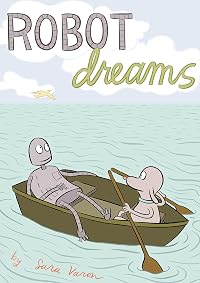
Robot Dreams
by Sara Varon
On This Page
Description
The enduring friendship between a dog and a robot is portrayed in this wordless graphic novel.Tags
Recommendations










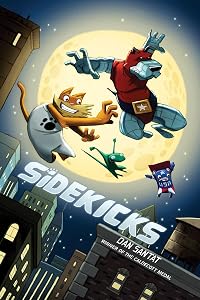

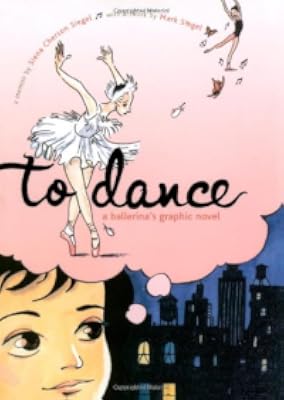
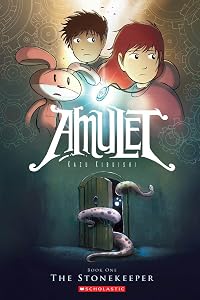
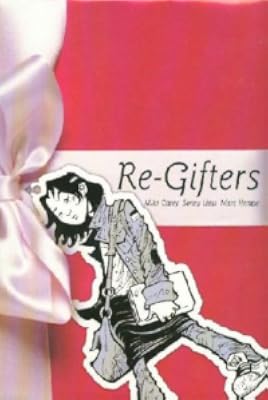

Member Recommendations
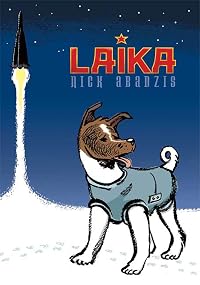
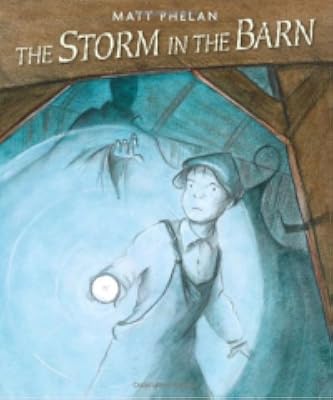
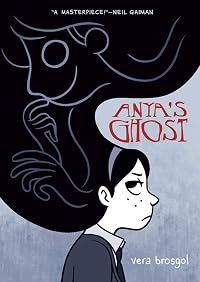
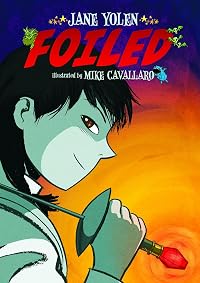
TomWaitsTables Another magical wordless masterpiece.
Member Reviews
Don't let the childlike drawings or graphic novel format deceive you: Robot Dreams is not for the faint of heart. A wordless novel that uses pictures to tell the story of an unlikely friendship between a robot and a dog, Robot Dreams is a powerful commentary on love and loss. I found myself captivated by the story and read this book in one sitting. Sara Varon proves that stories are more than just words, and that there is no wrong way to tackle difficult topics. A compelling read, this book is perfect for a class library and I would readily recommend it to students interested in comic books. Additionally, I can see myself using this as a teaching tool for lessons on visual story-telling.
I imagine that this book has different meanings to different readers, maybe even to the same reader depending upon his or her mood at the time of reading it. Without words, it's not always easy to surmise the motivations behind the dog character in the story, or even really the robot character's feelings, and different interpretations could very well change whether it's a tragedy or not.
For me, I felt a terrible sense of sadness as I read, because the separation of the two friends so early in the book and their subsequent loneliness, as I saw it, was quite keen.
But the illustrations are fantastic, with a good style to match the story, and the perfect coloring choices. It's a fairly contemporary not-quite-pastel color scheme, round show more shapes with fat lines, which keep a soft feeling - something harsh or ascetic wouldn't allow the "sweet" part of "bittersweet" to come out. show less
For me, I felt a terrible sense of sadness as I read, because the separation of the two friends so early in the book and their subsequent loneliness, as I saw it, was quite keen.
But the illustrations are fantastic, with a good style to match the story, and the perfect coloring choices. It's a fairly contemporary not-quite-pastel color scheme, round show more shapes with fat lines, which keep a soft feeling - something harsh or ascetic wouldn't allow the "sweet" part of "bittersweet" to come out. show less
Robot Dreams by Sara Varon was sold to me as being a cute little story about a dog who builds a robot so that he has a friend. I was hoping for something with The Wild Robot vibes but I actually found it to be disturbingly macabre and callous. This is a children's graphic novel and yet it explores some really dark themes (in itself not a problem but this was creepier than most). Did I mention that it was entirely wordless? I'm not certain if it's a gift or a curse that Varon possesses to entirely unnerve me without using a single, solitary word. Without giving the entire plot away (this is a very short book by the way), a dog builds himself a robot friend and the two of them are inseparable...until the robot gets rusty at the beach and show more the dog abandons him there. Yes, he left his very best friend behind at the beach. The next day the beach is closed for the winter and the entire area is fenced off. (That's one strict town!) So now the robot is left on the beach to rust while the dog tries to make a new friend. There are mishaps on both sides of this relationship as the robot is beset by weather, a group of boaters who partially disassemble him, and eventually a junk collector. The dog keeps making friends with those who either can't or won't stick around and he's back at square one without any friends at all. Like I said this is not sweet bedtime reading. If you're looking for a creepy existential crisis well you've hit the jackpot. If you wanted a cutesy little graphic novel you've made a horrible, horrible mistake. 1/10 show less
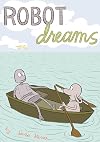
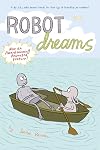
There is something magical about an effective story told with no words. Pixar, Shaun Tan, and now Sara Varon, have moved me beyond measure with their work that uses art instead of words. Looking at that cover...I don't know about you, but my immediate thoughts are that this is a kids book. And yes, it is. My daughter enjoyed it. However, it is one of those books that is deceptive. It looks simple. It IS simple. But the story...it packs a punch.
The reason this story works for me is, even though it is fantastical (at least for me it is. Do you own a robot? A walking, human-like dog? If so, were do you get such things???), it is relatable. The dog. He is lonely. He wants a friend. So he buys a robot. He puts him together. He has a friend! show more So they go to the beach. And something bad happens. The pair are separated. Feelings are hurt. Actions are regretted. Through no fault of the dog, more like a lack of knowledge, the robot is hurt. Irreparably.
Kids can relate. I can relate. You can, probably, relate.
And it sounds sad. But no. No! It is beautiful!
Through this mistake, the dog and the robot learn. The dog learns from his mistakes. He comes to know himself better and changes based on the hurt he caused himself and his robot. In turn, the robot also learns. As he lays there, daydreaming is days away, he learns about himself and changes based on the hurt he received. They become better "people." A lesson for everyone, not just children.
Again, I stand amazed at the power in this tiny book with no words. And Sara Varon has a diehard new fan. First Second is such a terrific publisher! show less
The reason this story works for me is, even though it is fantastical (at least for me it is. Do you own a robot? A walking, human-like dog? If so, were do you get such things???), it is relatable. The dog. He is lonely. He wants a friend. So he buys a robot. He puts him together. He has a friend! show more So they go to the beach. And something bad happens. The pair are separated. Feelings are hurt. Actions are regretted. Through no fault of the dog, more like a lack of knowledge, the robot is hurt. Irreparably.
Kids can relate. I can relate. You can, probably, relate.
And it sounds sad. But no. No! It is beautiful!
Through this mistake, the dog and the robot learn. The dog learns from his mistakes. He comes to know himself better and changes based on the hurt he caused himself and his robot. In turn, the robot also learns. As he lays there, daydreaming is days away, he learns about himself and changes based on the hurt he received. They become better "people." A lesson for everyone, not just children.
Again, I stand amazed at the power in this tiny book with no words. And Sara Varon has a diehard new fan. First Second is such a terrific publisher! show less
At a glance, this is a quick, wordless comic about a dog and his robot friend, and how the robot got rusty at the beach. But the kick in the gut is that after the robot gets rusty, Dog doesn't know what to do. So he leaves. And tries to make new friends, all of whom abandon him in some way or another (the duck family that flies south, the snowman who melts, the anteaters whose epicurean tastes don't agree with Dog's stomach). All the while, Robot lies on the beach, dreaming of salvation so he can go find his friend again.
What I particularly liked (in addition to the art) is that we manage to have a happy ending--Robot's salvation and both making new friends--without the expected ending. No, Dog doesn't rescue Robot, though he at least show more tries. For a book so cute, I'm left wanting to cry over the bittersweet ending, the fragility of relationships, the impermanence of friendship, the reality of loss despite the best intentions. show less
What I particularly liked (in addition to the art) is that we manage to have a happy ending--Robot's salvation and both making new friends--without the expected ending. No, Dog doesn't rescue Robot, though he at least show more tries. For a book so cute, I'm left wanting to cry over the bittersweet ending, the fragility of relationships, the impermanence of friendship, the reality of loss despite the best intentions. show less
This is a wordless graphic novel for kids that I read with my girls (9 and 6), with equal parts pleasure and dread, because I didn’t know while I was reading it whether it would have a happy ending. A dog mail orders and builds a robot friend and together they embark on adventures. They are separated by bad luck (even my kids knew that robots shouldn’t swim in the ocean or they would rust) and time, and most of the book consists of the bittersweet efforts of the two trying to resurrect their friendship -- the robot in his rust-encrusted dreams and the dog in his efforts to find replacement friends. The ending is not happy, and not sad, but thoughtful, hopeful, and melancholic. I enjoyed the super simple graphics, the expressive show more characters, and the exploration of what friendship means, but my kids did not get the simple happy ending they craved. show less
Best friends dog and robot. It looks like a charming little story for kids about a dog and his robot best friend, told all in pictures without any dialogue. And sure, it works on that level. But there is a real emotional depth, too.
Members
- Recently Added By
Lists

Macmillan Publishers
129 works; 3 members

Wordless Books
157 works; 15 members
Author Information

13+ Works 1,834 Members
Awards and Honors
Awards
Work Relationships
Has the adaptation
Common Knowledge
- Canonical title*
- Rêves de robot
- People/Characters
- Dog; Robot
- Important places
- Brooklyn, New York, New York, USA
- Related movies
- Robot Dreams (2023 | IMDb)
- Dedication
- Special thanks to my Mom, Maureen Panzera, & Tanya McKinnon
*Some information comes from Common Knowledge in other languages. Click "Edit" for more information.
Classifications
- Genres
- Graphic Novels & Comics, Tween, Kids
- DDC/MDS
- 741.5973 — Arts & recreation Drawing & decorative arts Drawing Comic books, graphic novels, fotonovelas, cartoons, caricatures, comic strips History, geographic treatment, biography North American United States (General)
- LCC
- PZ7 .V4453 .R — Language and Literature Fiction and juvenile belles lettres Fiction and juvenile belles lettres Juvenile belles lettres
- BISAC
Statistics
- Members
- 826
- Popularity
- 33,527
- Reviews
- 84
- Rating
- (3.87)
- Languages
- English, French, Italian, Spanish
- Media
- Paper, Ebook
- ISBNs
- 15
- ASINs
- 1