
The Historian's Craft
by Marc Bloch
On This Page
Description
This work, by the co-founder of the "Annales School" deals with the uses and methods of history. It is useful for students of history, teachers of historiography and all those interested in the writings of the Annales school.Tags
Recommendations















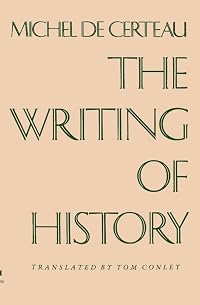
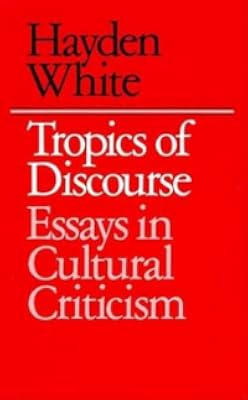

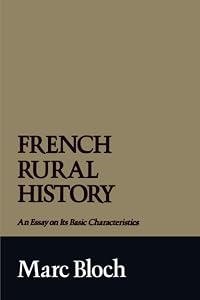
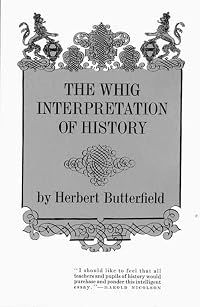



Member Recommendations
Member Reviews
L'ho letto, l'ho riletto, l'ho criticato, l'ho rivoltato come un calzino (notare l'usura della copertina scannerizzata).
Non si allontana mai dalla mia vista. E' come un vecchio nonno saggio che, con grande semplicità, al bisogno, mi ricorda il rigore di un mestiere difficile.
Ma non è un testo per addetti ai lavori. E' per chi ama interrogarsi sullo scorrere del tempo e sul posto che ciascuno di noi vi occupa. E' una delle migliori illustrazioni che io conosca di ciò che afferma anche il mitico Francesco: "la storia siamo NOI, nessuno si senta escluso".
Non si allontana mai dalla mia vista. E' come un vecchio nonno saggio che, con grande semplicità, al bisogno, mi ricorda il rigore di un mestiere difficile.
Ma non è un testo per addetti ai lavori. E' per chi ama interrogarsi sullo scorrere del tempo e sul posto che ciascuno di noi vi occupa. E' una delle migliori illustrazioni che io conosca di ciò che afferma anche il mitico Francesco: "la storia siamo NOI, nessuno si senta escluso".
Fuzilado pelos nazistas em 16 de junho de 1944 próximo a Lyon, Marc Bloch deixava inacabado um livro de metodologia, Apologia da história - publicado pela primeira vez em 1949 por Lucien Febvre. Essa nova edição da obra póstuma de Marc Bloch, organizada e anotada por seu filho primogênito Étienne, apresenta o texto em sua integralidade e sem modificação alguma. Inclui também o prefácio de Jacques Le Goff à edição francesa e uma apresentação à edição brasileira, feita pela professora Lilia Moritz Schwarcz. Como ponto de partida, Bloch aproveita a interrogação de um filho que lhe pergunta para que serve a história. Essa confidência familiar já revela de saída o cerne de uma de suas convicções: a obrigação de o show more historiador difundir e esclarecer. Ele deve, nas palavras do autor, "saber falar, no mesmo tom, aos doutos e aos estudantes". Um livro que permanece hoje em dia - quando o jargão hermético invadiu tantos livros de história - de uma atualidade espantosa. "Esse livro inacabado é um ato completo de história." Jacques Le Goff show less
The work we have here is a translation of a French work on the methods & practice of history written by Mr. Bloch. Unfinished at the time of his murder at the hands of the Nazis, it remains an interesting look of a French historian's view of history & how history should be approached. His reflections consists of five chapters with the fifth remaining unfinished (completed by another historian). He covers a wide range of how history was written earlier to the present day (up to the 1940s). He points out that much of the earlier history fell far short of accuracy or driven by the need to either cover up or embellish, creating difficulties for successive historians of getting to what really happened. He suggests that historians must show more observe, have a critical eye, & analyze what is before them. For example, primary documents are considered to be essential yet they are to be regarded with caution depending on what possible motives the authors have in writing them. There is much more & it is sad that the author's life was cut short as he had so much more to say but we shall never know. show less
(notes written 1955)
Few of his points were entirely new to me, but he did put many of them extremely well, eg:
"In any study seeking the origins of a human activity, there lurks the same danger of confusing ancestry with explanation."
The demonstration that the problems of recording the past are no different in kind from those of recording the present.
"Historical research has gradually been led to place more and more confidence in the second category of evidence, the evidence of witnesses in spite of themselves."
Every historian should explain how he reaches his results. It won't be dull: it is the ready-made article that is dull.
The passage on how footnotes should be used - it is only honest to give references; but it is lazy to put the show more main argument in footnotes.
Dealing with forgeries: "By its very nature, one fraud begets another."
Though immediate causes of events are often uncertain, the fundamental causes are less likely to be so.
Two things may discredit documents: if they are suspiciously divergent or suspiciously similar.
In linguistics, probabilities are not generally upset by human factors: but this is not true of most of the disciplines allied to history.
Many of his examples also are excellent, especially in the section on criticism of evidence:
In villages, children are brought up chiefly by their grandparents. Hence the traditionalisation of peasant societies.
"The Company of Jesus does not permit the profane an access to its collections" [no further explanation given]
Mabillon's De Re Diplomatica, 1681, established criticism of documents.
A list of famous forgeries on p. 94: in late 18th-early 19th centuries, and in 8th to 12th centuries, reached epidemic proportions.
Account of Vrain-Lucas' forgery of documents proving Pascal anticipated Newton, with additional forgeries to meet each objection as it arose.
Errors do not take on life unless they harmonize with popular prejudices: eg clouds are still the same shapeas in the Middle Ages, but we no longer see magic swords in them.
The description of the spread of rumours in the trenches: monastic chronicles were built up on a similar network of oral transmissions.
The most restrained texts are not always the oldest: "The most fabulous of the Passions of St George is the first in date; taking up the old account afterward, the successive biographers have sacrificed, one after the other, those features whose unrestrained fantasy shocked them."
HC Lea noticed that when Templars from different houses were examined by one inquisitor their confessions took the same form; while Templars from the same house examined by different inquisitors confessed to different things.
The earliest known charter in French is of 1204.
Remarkable similarities between Jesuates of fourteenth century and Jesuits: if we did not know the facts to be true, we should suspect they must be two accounts of the same thing.
Condorcet on Middle Ages: "Europe, squeezed between sacerdotal tyranny and military despotism, waits amidst blood and tears for the moment when the new enlightenment will enable it to rise again to liberty, humanity, and virtue." show less
Few of his points were entirely new to me, but he did put many of them extremely well, eg:
"In any study seeking the origins of a human activity, there lurks the same danger of confusing ancestry with explanation."
The demonstration that the problems of recording the past are no different in kind from those of recording the present.
"Historical research has gradually been led to place more and more confidence in the second category of evidence, the evidence of witnesses in spite of themselves."
Every historian should explain how he reaches his results. It won't be dull: it is the ready-made article that is dull.
The passage on how footnotes should be used - it is only honest to give references; but it is lazy to put the show more main argument in footnotes.
Dealing with forgeries: "By its very nature, one fraud begets another."
Though immediate causes of events are often uncertain, the fundamental causes are less likely to be so.
Two things may discredit documents: if they are suspiciously divergent or suspiciously similar.
In linguistics, probabilities are not generally upset by human factors: but this is not true of most of the disciplines allied to history.
Many of his examples also are excellent, especially in the section on criticism of evidence:
In villages, children are brought up chiefly by their grandparents. Hence the traditionalisation of peasant societies.
"The Company of Jesus does not permit the profane an access to its collections" [no further explanation given]
Mabillon's De Re Diplomatica, 1681, established criticism of documents.
A list of famous forgeries on p. 94: in late 18th-early 19th centuries, and in 8th to 12th centuries, reached epidemic proportions.
Account of Vrain-Lucas' forgery of documents proving Pascal anticipated Newton, with additional forgeries to meet each objection as it arose.
Errors do not take on life unless they harmonize with popular prejudices: eg clouds are still the same shapeas in the Middle Ages, but we no longer see magic swords in them.
The description of the spread of rumours in the trenches: monastic chronicles were built up on a similar network of oral transmissions.
The most restrained texts are not always the oldest: "The most fabulous of the Passions of St George is the first in date; taking up the old account afterward, the successive biographers have sacrificed, one after the other, those features whose unrestrained fantasy shocked them."
HC Lea noticed that when Templars from different houses were examined by one inquisitor their confessions took the same form; while Templars from the same house examined by different inquisitors confessed to different things.
The earliest known charter in French is of 1204.
Remarkable similarities between Jesuates of fourteenth century and Jesuits: if we did not know the facts to be true, we should suspect they must be two accounts of the same thing.
Condorcet on Middle Ages: "Europe, squeezed between sacerdotal tyranny and military despotism, waits amidst blood and tears for the moment when the new enlightenment will enable it to rise again to liberty, humanity, and virtue." show less
The historian's Craft is the prove of the awareness of man than ever before that they are living and making history
900 BLO 1
How to write about history.
Members
- Recently Added By
Lists

r/History Recommended Reading List
603 works; 12 members

Maestros
15 works; 1 member


r/AskHistorians' Recommended Books
1,068 works; 19 members

Author Information

Some Editions
Awards and Honors
Series
Belongs to Publisher Series
Work Relationships
Is contained in
Common Knowledge
- Canonical title
- The Historian's Craft
- Original title
- Apologie pour l'histoire ou métier d'historien
- Original publication date
- 1949
- First words*
- il termine "storia è antichissimo: così antico che talvolta se n'è sentito il peso.
- Last words*
- (Click to show. Warning: May contain spoilers.)Per dirla in una parola, le cause in storia non più che altrove, non si postulano. Si cercano...
- Original language*
- Francese
- Disambiguation notice
- Original title: Apologie pour l'Histoire, ou Metier d'Historien
*Some information comes from Common Knowledge in other languages. Click "Edit" for more information.
Classifications
Statistics
- Members
- 1,326
- Popularity
- 18,168
- Reviews
- 19
- Rating
- (4.10)
- Languages
- 17 — Catalan, Danish, Dutch, English, Estonian, Finnish, French, German, Greek, Hungarian, Italian, Japanese, Polish, Portuguese, Russian, Spanish, Swedish
- Media
- Paper, Ebook
- ISBNs
- 61
- ASINs
- 23