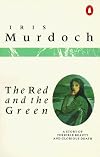
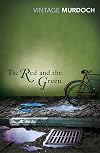
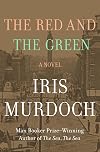
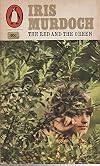
The Red and the Green
by Iris Murdoch 
On This Page
Description
On the eve of the Easter Rising, a divided Irish family is pushed to the brink of destructionIn the dark days of the First World War, tensions between Catholic Pat Dumay and his Protestant cousin Andrew Chase-White threaten to tear their family apart along political and religious lines. As Ireland moves ever closer to the deadly Easter rebellion, the family is engulfed in an epic drama of love, loyalty, and loss that will change their lives forever.The rain-soaked streets of Murdoch's 1916 show more Ireland leap off the page in this gripping story of a familyand a countryon the cusp of a momentous turning point in history. show lessTags
Recommendations


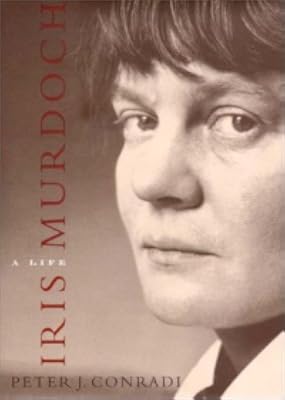













Member Recommendations
cf66 Molto diversi narrativamente, si rifanno allo stesso momento storico
Member Reviews
This was nutty, in a very good way—a combination historical novel about the week leading up to the Irish Easter Rebellion in 1916/extremely thwarted bedroom farce, laced through with a big dose of dark Catholic satire: Everyone in it wants to subject themselves to a stern master of some kind, no one gets laid, there is a lot of last-minute martyrdom, and the character who is the most sympathetic (and who is one of the few who makes out well in the end) is the biggest coward. If that sounds mean or tedious, though, it's not. But scathing, yeah, tempered with these absolutely stunning descriptions of the land, the sea, and the houses of Dublin in 1916. Absolutely worth a read, but whatever you might expect from it, it's probably not.
Gobsmacked. A broiling bunch of characters--it isn't easy being in any of their minds--yet in the end I cared very much about their fates. The Easter Rising is more than a backdrop; their relationship to Ireland and to each other as Irishmen and Irishwomen is at the very crux of the book. Painful, yet one I would be sorry to have missed. A favourite Murdoch.
As far as I know this is Murdoch's only foray into historical fiction. You could argue, for her just barely as this would have been her parents' and grandparents' generation experiencing the Easter Uprising of April 1916 (a mad bid for immediate independence). The story covers the week before the uprising and is focussed on an Anglo-irish family with roots deep enough to be (mostly) fully identified with the struggle, albeit with ragged edges. Some of the family has become Catholic, the more Anglo have remained Protestant. The focal point is Pat Dumay, one of the older cousins in this group of interrelated families, there is also Frances, another cousin Andrew and Pat's younger brother Cathal all of them in their teens or early show more twenties. Frances and Andrew (who is in the British army on leave) are assumed to be affianced in all but name, even though they are distantly related. In the older generation there is a still beautiful aunt and a religious aunt, a ne'er do well uncle (Barney, perhaps the character I liked the most, he was quite humorous) and a well-to-do and sensible uncle, a full cast in other words but they are one and all caught up in the swirl of events of that week, helpless to save themselves from the inevitable --not unlike the way the great yellow boulders Murdoch describes along the Dublin shore will destroy anything that gets caught among them. It is a "harder" book than many of Murdoch's in that it really is "about" something definite, and yet it also contains many of the classic Murdochian hallmarks, an enchantress, a charismatic, ruthless, and sexually ambiguous man (Pat Dumay) with whom everyone is secretly obsessed. The story builds also in classic Murdoch fashion to a crisis both comical and sad. And there are many memorable houses each with their own personalities, a Murdoch feature I treasure. Are there some Joycean echoes here and there in loving descriptions of Dublin? I think so, and the cadence at the end recalled to me, "The Dead." To be sure, it is a book for the habituated Murdochian and/or those interested in that moment in Irish history. **** show less
Historical fiction set in Ireland during the lead-up to the 1916 Easter Uprising. It features three primary protagonists and a large cast of supporting characters, many of whom are related to each other. Andrew Chase-White is Irish but has lived in England most of his life and is an officer in the British Army. Pat Dumay is an Irish Catholic member of the Sinn Féin. Aunt Millie tries to seduce her nephews and pretty much any other man in her vicinity, leading to a bit of comic relief when they all show up in the same place at once. It is mostly about relationships between the various cousins, aunts, and uncles of the family.
It is densely written, making it feel longer than its pages, and slow in developing. The family members get show more caught in the vortex and seem to be unable to stop the momentum, which builds toward a tragic event. This book has both sad and humorous moments. For me, it was an uneven reading experience. There were times when I was riveted and other times when I found my attention wandering. I think it would have helped if some of the events told in the epilogue were included in the primary narrative. I liked it but it is not my favorite of Murdoch’s works. show less
It is densely written, making it feel longer than its pages, and slow in developing. The family members get show more caught in the vortex and seem to be unable to stop the momentum, which builds toward a tragic event. This book has both sad and humorous moments. For me, it was an uneven reading experience. There were times when I was riveted and other times when I found my attention wandering. I think it would have helped if some of the events told in the epilogue were included in the primary narrative. I liked it but it is not my favorite of Murdoch’s works. show less
Summary: The tangled lives and loves of a Dublin Irish family at the time of the Irish Rebellion of Easter Monday 1916.
I’ve appreciated some of the philosophically-oriented writings of Iris Murdoch. So, I thought I would sample one of her novels. It may be that others she has written are better. I’ll be upfront and say I was not impressed with this one. Others have won awards, so I may not give up without trying one of these.
The seting of the novel is the lead up to the Easter Monday Irish Rebellion of 1916. Andrew Chase-White, on leave after a war injury, joins his recently widowed mother Hilda on a visit to their relations in Dublin. She’s planning to live there. While raised an English Protestant, he is connected to the web of show more tangled relations that make up this extended family. Andrew’s grandmother’s first husband had two children, Brian and Millie. Millie had no children while Brian married his sister-in-law, Kathleen Kinnard, having two sons, Pat and Cathal, before he died. Kathleen remarried Andrew’s uncle Barnabas Drumm, an aimless scholar who had at one time hoped to be a priest. The other Kinnard sister, Heather, had married Christopher Bellman. They had one daughter, Frances, who Andrew grew up with and is expected to marry. Christopher is also a widower. So, do you have all that straight?
So much of this novel revolves around troubled sexuality. Andrew really loves Frances but he can’t imagine having sex with her. She seems to be the only one with sense, and refuses his proposal. At one point, someone comments that Pat isn’t interested in girls. Only in the Irish Republic.
Millie craves the affection of lots of men and nearly every male in this book finds his way to her bed. Barnabas, in a loveless marriage with a wife devoted to religious causes, regularly takes comfort with her. So does Frances father, Christopher Bellman, who is willing to marry her and help her out of financial straits. She also has her flirtations with younger men, including both Andrew and Pat. Both seek her out on the same night. This results in one of the more hilarious scenes when Christopher, riding through the rain, shows up as well. At the same time, there is a quasi-incestuous character to all of this.
But remember that Irish Rebellion? Both Pat and his younger brother Cathal are Volunteers in the cause with Pat as one of the leaders. Pat even stores a cache of weapons with Millie. Murdoch captures the passion for freedom from English rule combined with the inept leadership of the Rebellion. Pat intuits the futility of their plans and tries to keep his younger brother out of the fighting.
The English-Irish tension is also evident between Andrew and Pat. Andrew has always wanted acceptance by Pat. The tension comes to the head in a surprise confrontation on the day of the Rebellion.
I felt like there was too much going on with all the tangled relationships. Barney seemed pathetic, Millie desperate, Christopher just sad and Kathleen something of a stereotype. Perhaps Murdoch’s point was what a muddled mess we make of our relations. All the glorious talk of patriotism conceals an underbelly of frustrated desire and longing. I wonder why Murdoch didn’t just focus on the tension between Andrew and Pat, who represent the Red and the Green. That’s not the novel she wrote however and this one left me wondering what it was all about. show less
I’ve appreciated some of the philosophically-oriented writings of Iris Murdoch. So, I thought I would sample one of her novels. It may be that others she has written are better. I’ll be upfront and say I was not impressed with this one. Others have won awards, so I may not give up without trying one of these.
The seting of the novel is the lead up to the Easter Monday Irish Rebellion of 1916. Andrew Chase-White, on leave after a war injury, joins his recently widowed mother Hilda on a visit to their relations in Dublin. She’s planning to live there. While raised an English Protestant, he is connected to the web of show more tangled relations that make up this extended family. Andrew’s grandmother’s first husband had two children, Brian and Millie. Millie had no children while Brian married his sister-in-law, Kathleen Kinnard, having two sons, Pat and Cathal, before he died. Kathleen remarried Andrew’s uncle Barnabas Drumm, an aimless scholar who had at one time hoped to be a priest. The other Kinnard sister, Heather, had married Christopher Bellman. They had one daughter, Frances, who Andrew grew up with and is expected to marry. Christopher is also a widower. So, do you have all that straight?
So much of this novel revolves around troubled sexuality. Andrew really loves Frances but he can’t imagine having sex with her. She seems to be the only one with sense, and refuses his proposal. At one point, someone comments that Pat isn’t interested in girls. Only in the Irish Republic.
Millie craves the affection of lots of men and nearly every male in this book finds his way to her bed. Barnabas, in a loveless marriage with a wife devoted to religious causes, regularly takes comfort with her. So does Frances father, Christopher Bellman, who is willing to marry her and help her out of financial straits. She also has her flirtations with younger men, including both Andrew and Pat. Both seek her out on the same night. This results in one of the more hilarious scenes when Christopher, riding through the rain, shows up as well. At the same time, there is a quasi-incestuous character to all of this.
But remember that Irish Rebellion? Both Pat and his younger brother Cathal are Volunteers in the cause with Pat as one of the leaders. Pat even stores a cache of weapons with Millie. Murdoch captures the passion for freedom from English rule combined with the inept leadership of the Rebellion. Pat intuits the futility of their plans and tries to keep his younger brother out of the fighting.
The English-Irish tension is also evident between Andrew and Pat. Andrew has always wanted acceptance by Pat. The tension comes to the head in a surprise confrontation on the day of the Rebellion.
I felt like there was too much going on with all the tangled relationships. Barney seemed pathetic, Millie desperate, Christopher just sad and Kathleen something of a stereotype. Perhaps Murdoch’s point was what a muddled mess we make of our relations. All the glorious talk of patriotism conceals an underbelly of frustrated desire and longing. I wonder why Murdoch didn’t just focus on the tension between Andrew and Pat, who represent the Red and the Green. That’s not the novel she wrote however and this one left me wondering what it was all about. show less
Historical fiction set in Ireland during the lead-up to the 1916 Easter Uprising. It features three primary protagonists and a large cast of supporting characters, many of whom are related to each other. Andrew Chase-White is Irish but has lived in England most of his life and is an officer in the British Army. Pat Dumay is an Irish Catholic member of the Sinn Féin. Aunt Millie tries to seduce her nephews and pretty much any other man in her vicinity, leading to a bit of comic relief when they all show up in the same place at once. It is mostly about relationships between the various cousins, aunts, and uncles of the family.
It is densely written, making it feel longer than its pages, and slow in developing. The family members get show more caught in the vortex and seem to be unable to stop the momentum, which builds toward a tragic event. This book has both sad and humorous moments. For me, it was an uneven reading experience. There were times when I was riveted and other times when I found my attention wandering. I think it would have helped if some of the events told in the epilogue were included in the primary narrative. I liked it but it is not my favorite of Murdoch’s works. show less
It is densely written, making it feel longer than its pages, and slow in developing. The family members get show more caught in the vortex and seem to be unable to stop the momentum, which builds toward a tragic event. This book has both sad and humorous moments. For me, it was an uneven reading experience. There were times when I was riveted and other times when I found my attention wandering. I think it would have helped if some of the events told in the epilogue were included in the primary narrative. I liked it but it is not my favorite of Murdoch’s works. show less
An intricate plot that enmeshes close family in the week before the Irish Uprising at Easter 1916. The usual mix of types and driven individuals you find in Murdoch's novels. It could almost be described as a historical novel. Irish and Dublin weather, houses, landscapes etc. are all described with an accuracy that is the hallmark of her novel writing. I enjoyed the gathering pace of the novel as the fuse towards the Noon uprising burnt on relentlessly, and the fates of the characters became inevitable.
Members
- Recently Added By
Lists

Pleasant Surprises: Books That Exceeded Our Expectations
418 works; 142 members

Books You Read During High School (For School)
301 works; 53 members

Revolutions
72 works; 5 members

School Made Us Read It
380 works; 196 members
Author Information

80+ Works 29,359 Members
Iris Murdoch was one of the twentieth century's most prominent novelists, winner of the Booker Prize for The Sea. She died in 1999. (Publisher Provided) Iris Murdoch was born in Dublin, Ireland on July 15, 1919. She was educated at Badminton School in Bristol and Oxford University, where she read classics, ancient history, and philosophy. After show more several government jobs, she returned to academic life, studying philosophy at Newnham College, Cambridge. In 1948, she became a fellow and tutor at St. Anne's College, Oxford. She also taught at the Royal College of Art in London. A professional philosopher, she began writing novels as a hobby, but quickly established herself as a genuine literary talent. She wrote over 25 novels during her lifetime including Under the Net, A Severed Head, The Unicorn, and Of the Nice and the Good. She won several awards including the James Tait Black Memorial Prize for The Black Prince in 1973 and the Booker Prize for The Sea, The Sea in 1978. She died on February 8, 1999 at the age of 79. (Bowker Author Biography) show less
Iris Murdoch has a Legacy Library. Legacy libraries are the personal libraries of famous readers, entered by LibraryThing members from the Legacy Libraries group.
Some Editions
Series
Belongs to Publisher Series
Work Relationships
Common Knowledge
- Original title
- The Red and the Green
- Original publication date
- 1965
- Important places
- Dublin, Ireland
- Important events
- Easter Rising (1916)
- Dedication
- To Philippa Foot
- First words
- Ten more glorious days without horses!
- Last words
- (Click to show. Warning: May contain spoilers.)Tears flowed more freely now; and she heard drumming in her ears, heard, as she had heard it all through that dreadful week in nineteen-sixteen, battering and breaking her heart, the thunder of the English guns.
Classifications
Statistics
- Members
- 603
- Popularity
- 48,675
- Reviews
- 12
- Rating
- (3.41)
- Languages
- 7 — Danish, Dutch, English, Estonian, French, Italian, Russian
- Media
- Paper, Audiobook, Ebook
- ISBNs
- 15
- ASINs
- 19