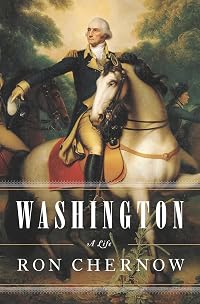
Washington: A Life
by Ron Chernow
On This Page
Description
In "Washington : a Life" celebrated biographer Ron Chernow provides a richly nuanced portrait of the father of our nation, dashing forever the stereotype of a stolid, unemotional man, and revealing an astute and surprising portrait of a canny political genius who knew how to inspire people.Tags
Recommendations
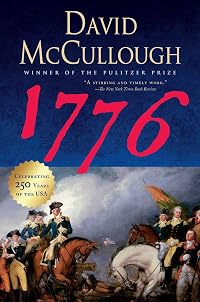
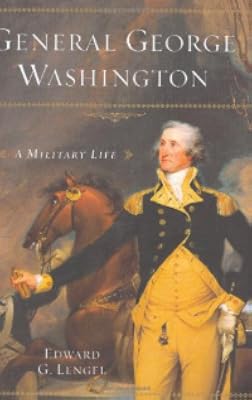

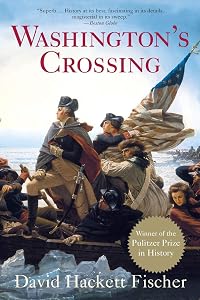
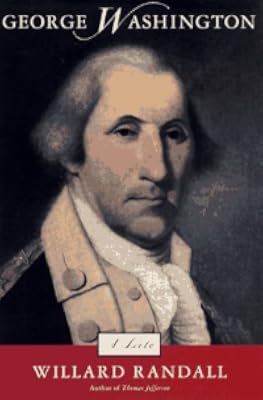

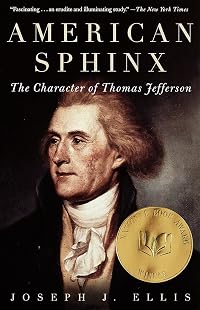
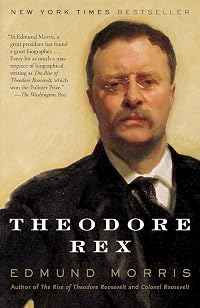
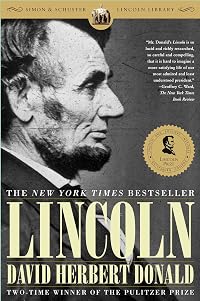

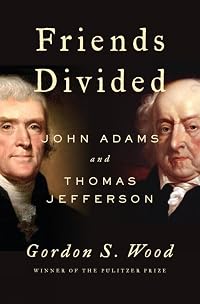
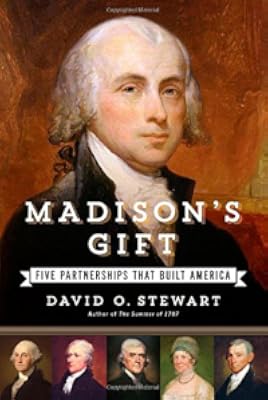
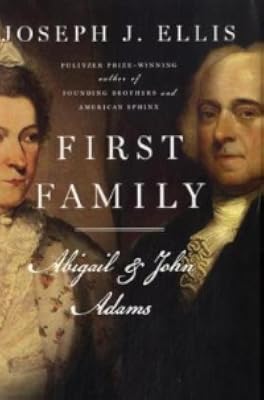
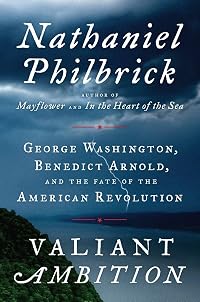
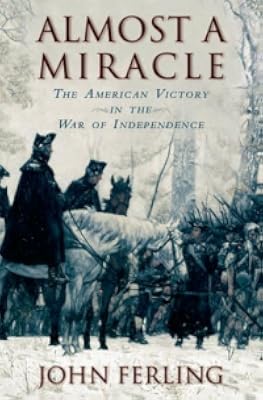



Member Recommendations
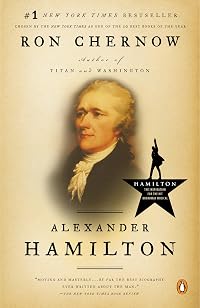
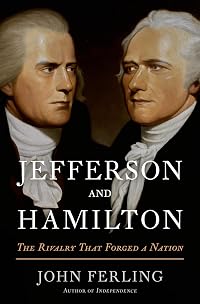
mattries37315 A short, yet informative book about the general officers under Washington during the American Revolution.

Bretzky1 Still the best Washington biography.
Member Reviews
Extremely detailed cradle-to-grave biography of George Washington that provides an excellent idea of his character and how he was perceived during his lifetime. Chernow is a beautiful writer with a great grasp of language. He captures scenes from Washington’s life in vivid detail. It is told in six parts:
- “The Frontiersman” tells of his ancestry, early life, participation in the British military in the French and Indian War, and introduction to his future wife, Martha Dandridge Custis.
- “The Planter” relates his return to Mount Vernon and introduces the issue of slave ownership.
- “The General” describes many people who will play key roles in the American Revolution (including especially Alexander Hamilton, Henry Knox, show more Nathanael Greene, and the Marquis de Lafayette) and covers Washington’s style of command, battles, horrible conditions faced by his troops, and eventual victory.
- “The Statesman” depicts Washington’s life after the Revolutionary War, the droves of visitors he hosted at his home, his aversion to mass popularity, leadership at the Constitutional Convention, the struggle for ratification, and election as the first President of the United States.
- “The President” recounts the eight years of Washington’s presidency – policies, appointments, actions, disagreements with Thomas Jefferson and James Madison, Whiskey Rebellion, Jay Treaty with Great Britain,
- “The Legend” provides an account of Washington’s final years, his death, how his slaves were eventually freed, and how his image was burnished after his death.
-
Chernow excels at providing the context for all of these sections. We learn quite a bit about Washington’s family relationships, especially his mother, wife, stepchildren, step-grandchildren, and the many relatives he helped support and brought into his home.
Luckily, Washington left massive amounts of documentation and Chernow has fashioned this information into a relatable narrative, combining history, biography, and storytelling. It contains an amazing amount of information beautifully conveyed in one volume with only occasional digressions. It is a massive tome, coming in around 900 pages, so it requires a significant time commitment. It is, in my opinion, well worth it. show less
- “The Frontiersman” tells of his ancestry, early life, participation in the British military in the French and Indian War, and introduction to his future wife, Martha Dandridge Custis.
- “The Planter” relates his return to Mount Vernon and introduces the issue of slave ownership.
- “The General” describes many people who will play key roles in the American Revolution (including especially Alexander Hamilton, Henry Knox, show more Nathanael Greene, and the Marquis de Lafayette) and covers Washington’s style of command, battles, horrible conditions faced by his troops, and eventual victory.
- “The Statesman” depicts Washington’s life after the Revolutionary War, the droves of visitors he hosted at his home, his aversion to mass popularity, leadership at the Constitutional Convention, the struggle for ratification, and election as the first President of the United States.
- “The President” recounts the eight years of Washington’s presidency – policies, appointments, actions, disagreements with Thomas Jefferson and James Madison, Whiskey Rebellion, Jay Treaty with Great Britain,
- “The Legend” provides an account of Washington’s final years, his death, how his slaves were eventually freed, and how his image was burnished after his death.
-
Chernow excels at providing the context for all of these sections. We learn quite a bit about Washington’s family relationships, especially his mother, wife, stepchildren, step-grandchildren, and the many relatives he helped support and brought into his home.
Luckily, Washington left massive amounts of documentation and Chernow has fashioned this information into a relatable narrative, combining history, biography, and storytelling. It contains an amazing amount of information beautifully conveyed in one volume with only occasional digressions. It is a massive tome, coming in around 900 pages, so it requires a significant time commitment. It is, in my opinion, well worth it. show less
Chernow, Ron. Washington: A Life. Penguin, 2010.
When he took up writing the life of George Washington, Ron Chernow had already written a well-reviewed biography of Nelson Rockefeller and the life of Alexander Hamilton that so inspired Lin-Manuel Miranda. Washington was a natural choice for Chernow’s next major biographical project. He begins with a description of the famous portraits of Washington done by Gilbert Stuart in the 1790s that Chernow says reveal a man concealing intense, often conflicting emotions under an icy reserve. That tension, Chernow says, is the key to the strengths and weaknesses of Washington’s character.
Washington had to learn self-control in dealing with his demanding, unaffectionate mother. Chernow could show more find no evidence that she ever said a loving word to her famous son. She resented the public and military obligations that drew him away from home where he would not be under her control and manage her farm for her. He always behaved with perfect, polite formality toward her and never let show the anger he must have felt. To strike out at her would have been unseemly.
Reputation mattered to Washington. He never wanted anyone to say that he had not done his duty by his mother. As a young man he craved military advancement and honor. In fact, the English may have only themselves to blame for his taking up arms against them rather than commanding redcoats in the Revolution. In the French and Indian War, he fought bravely, and for the most part, competently for the British, but his British superiors never gave him the respect he thought he had earned.
He was always brave and lucky in battle. During the French and Indian War and the Revolution, he had horses shot out from under him and bullet holes in his coat, but he escaped without a scratch. His performance as general was mixed. He was no tactical genius, but he had undeniable charisma and command presence. He demanded loyalty from his troops and was severe with those he thought violated his trust.
His true genius, Chernow argues, was not as a soldier but as a politician, and his chief virtue as a politician was the ability to hold his tongue, so that every word he uttered demanded attention. He was the temperamental opposite of John Adams, who said of him after his death: “That he is too illiterate, unlearned, unread for his station was equally past dispute.” Washington, though, often said such things about himself. He never accepted a position without telling people he felt inadequate and unprepared for the job he was about to undertake.
Chernow was at his best analyzing Washington’s contradictory and compartmentalized feelings about slavery. Intellectually, he thought slavery was a bad institution and favored its gradual elimination. At the same time, he had no doubt that he was culturally and intellectually superior to the people he owned and that he deserved the privilege he got from their labor. As he had with the soldiers under his command, he expected and demanded loyalty from the enslaved people under his care. He diligently pursued and punished slaves and indentured servants who ran away. He provided better food, clothing, and medical care than many other planters, but he could never understand why so many of the people he seldom referred to as slaves did not see his care for their freedom as a fair exchange. In his will, he did not free the slaves he owned until Martha’s death, leaving her in the care of people who had reason to hope she died quickly.
Mysteries remain. Martha burned all her correspondence with her husband, leaving future biographers gnashing their teeth. George was always something of a flirt and was infatuated with Sally Fairfax, the wife of a neighboring planter. Whether the relationship ever became physical is something snoops like me would like to know.
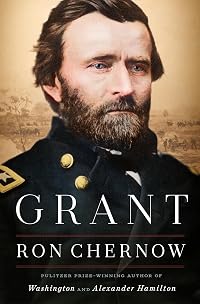
Chernow knows what he is doing as a biographer. Now, on to his biography of Grant. 5 stars. show less
When he took up writing the life of George Washington, Ron Chernow had already written a well-reviewed biography of Nelson Rockefeller and the life of Alexander Hamilton that so inspired Lin-Manuel Miranda. Washington was a natural choice for Chernow’s next major biographical project. He begins with a description of the famous portraits of Washington done by Gilbert Stuart in the 1790s that Chernow says reveal a man concealing intense, often conflicting emotions under an icy reserve. That tension, Chernow says, is the key to the strengths and weaknesses of Washington’s character.
Washington had to learn self-control in dealing with his demanding, unaffectionate mother. Chernow could show more find no evidence that she ever said a loving word to her famous son. She resented the public and military obligations that drew him away from home where he would not be under her control and manage her farm for her. He always behaved with perfect, polite formality toward her and never let show the anger he must have felt. To strike out at her would have been unseemly.
Reputation mattered to Washington. He never wanted anyone to say that he had not done his duty by his mother. As a young man he craved military advancement and honor. In fact, the English may have only themselves to blame for his taking up arms against them rather than commanding redcoats in the Revolution. In the French and Indian War, he fought bravely, and for the most part, competently for the British, but his British superiors never gave him the respect he thought he had earned.
He was always brave and lucky in battle. During the French and Indian War and the Revolution, he had horses shot out from under him and bullet holes in his coat, but he escaped without a scratch. His performance as general was mixed. He was no tactical genius, but he had undeniable charisma and command presence. He demanded loyalty from his troops and was severe with those he thought violated his trust.
His true genius, Chernow argues, was not as a soldier but as a politician, and his chief virtue as a politician was the ability to hold his tongue, so that every word he uttered demanded attention. He was the temperamental opposite of John Adams, who said of him after his death: “That he is too illiterate, unlearned, unread for his station was equally past dispute.” Washington, though, often said such things about himself. He never accepted a position without telling people he felt inadequate and unprepared for the job he was about to undertake.
Chernow was at his best analyzing Washington’s contradictory and compartmentalized feelings about slavery. Intellectually, he thought slavery was a bad institution and favored its gradual elimination. At the same time, he had no doubt that he was culturally and intellectually superior to the people he owned and that he deserved the privilege he got from their labor. As he had with the soldiers under his command, he expected and demanded loyalty from the enslaved people under his care. He diligently pursued and punished slaves and indentured servants who ran away. He provided better food, clothing, and medical care than many other planters, but he could never understand why so many of the people he seldom referred to as slaves did not see his care for their freedom as a fair exchange. In his will, he did not free the slaves he owned until Martha’s death, leaving her in the care of people who had reason to hope she died quickly.
Mysteries remain. Martha burned all her correspondence with her husband, leaving future biographers gnashing their teeth. George was always something of a flirt and was infatuated with Sally Fairfax, the wife of a neighboring planter. Whether the relationship ever became physical is something snoops like me would like to know.
Chernow knows what he is doing as a biographer. Now, on to his biography of Grant. 5 stars. show less
Ron Chernow knows his research and writes one impressive biography. Granted, his chosen subject was one hell of an impressive man. Washington always looms just a bit larger than every other founding father and president, but it is not until Chernow reveals the details where the reasons why this is become obvious. Of even greater importance to a biography of any magnitude, Chernow does not rest on Washington’s laurels. It would be so easy to focus on the lengthy list of accomplishments Washington achieved during his lifetime, but Chernow devotes just as much time to his foibles as to his successes. This balanced review does more to humanize this larger-than-life man than any fable about the cherry tree.
How to describe this massive tome show more of a biography? I don’t think you can. There is SO much information between its pages, and all of it is interesting. From his humble beginnings and lack of formal education to his rancorous relationship with his mother to his eye for all the pretty ladies to his role in starting the French and Indian War to his life as a plantation owner to his life-long struggles with money, Chernow details it all. Yet, he never bogs down into the details. For example, Chernow does not rehash every single battle of the Revolutionary War in which Washington played a part, nor does he detail every single decision made during his presidency. Instead, Chernow focuses on the decisions which played key roles in deciding the country’s fate and the obstacles Washington faced at almost every turn, which is a daunting task in its own right given just what he faced.
If there is one thing that you can take away from reading Washington: A Life it is the fact that there are very few men in history who could have done what Washington did. He had the weight of the country on his shoulders for most of his life and never let the pressure show. He sacrificed essentially his entire life to serve the public at great physical and monetary cost. He did so knowing that history did indeed have its eye on him and that whatever he did would be remembered forever, and this shows in his every action and public decision made on behalf of the country. We ask a lot of our presidents for their four-to-eight years in office, and we watch them age drastically during that time. Washington gave forty-five years; the toll he bore had to have been unbearable and yet he did it with a grace and dignity that remains his greatest legacy.
As for the details of that service, there are key points that struck me as particularly powerful. He faced a traitor’s death were the British to have caught him. He had to fight with and for a collection of men who had no loyalty to him or to the country. He had to do this knowing that he had no food or clothing, no gunpowder or ammunition, and no pay with which to entice these men to stay after their contracts ended. He ended up earning their loyalty, but he fought a harder and longer battle to provision his men than he ever did against the British.
We take it for granted now the rituals used during political proceedings and certain political events, yet Washington had no examples he could use for his own events. Not only was he the first person to ever hold the office, but what he did would establish how future presidents would hold office – a fact of which he was keenly aware. Every action he took during his two terms in office were designed to avoid comparisons to monarchical rule and were done with the future in mind. It is an astonishing feat of self-awareness and selflessness that still amazes me.
As if that was not enough, Washington had to battle the political storms constantly brewing around him without getting caught up in the storm and damaging the country – the one thing he held above every ideal. The fighting while he was in office was particularly brutal and probably his most dangerous, as the two sides fought over how the country itself should be run. It is also this battle that leads me to declare that the founding fathers were some of the very first Mean Girls. (Holy shit. It is a wonder we ever became a powerful nation the way Jefferson and his Republicans sniped and defamed Hamilton and his Federalists and vice versa. It also makes our current political issues seem like just another day in Washington because really, nothing has changed in the way the two parties interact.)
No matter how interesting the subject, and really, you cannot get much better than George Washington, a biographer must still write well in order to maintain a reader’s interest. This is something at which Chernow excels, as he balances fact with supposition, negativity versus gushy adoration, and descriptive passages versus direct sources. His sentences can be a bit long, but it is obvious he chose each word with care. He very rarely strays beyond the point at hand, keeping tangents to a minimum. It speaks volumes about the author when you wish a book this long was even longer just so you could learn even more about the subject, and I finished Washington wishing there were more to it.
While many people tend to shy away from big books and especially nonfiction big books, to ignore Chernow’s Washington biography would be a shame. Not only is it supremely well-written and full of fascinating tidbits about George Washington, Hamilton fans will get a kick out of the connections between the two. There is a surprising amount of crossover, but I find the parts which show where the two diverge even more interesting. Chernow has a healthy respect for Washington that never borders into fawning, as some have said about Chernow’s Hamilton biography. (At the same time, he does not hide his feelings very well. Chernow’s opinions of John Adams are quite hilarious in their blatant disregard.) Washington: A Life is a great biography and a perfect alternative to round out the Hamilton craze. show less
How to describe this massive tome show more of a biography? I don’t think you can. There is SO much information between its pages, and all of it is interesting. From his humble beginnings and lack of formal education to his rancorous relationship with his mother to his eye for all the pretty ladies to his role in starting the French and Indian War to his life as a plantation owner to his life-long struggles with money, Chernow details it all. Yet, he never bogs down into the details. For example, Chernow does not rehash every single battle of the Revolutionary War in which Washington played a part, nor does he detail every single decision made during his presidency. Instead, Chernow focuses on the decisions which played key roles in deciding the country’s fate and the obstacles Washington faced at almost every turn, which is a daunting task in its own right given just what he faced.
If there is one thing that you can take away from reading Washington: A Life it is the fact that there are very few men in history who could have done what Washington did. He had the weight of the country on his shoulders for most of his life and never let the pressure show. He sacrificed essentially his entire life to serve the public at great physical and monetary cost. He did so knowing that history did indeed have its eye on him and that whatever he did would be remembered forever, and this shows in his every action and public decision made on behalf of the country. We ask a lot of our presidents for their four-to-eight years in office, and we watch them age drastically during that time. Washington gave forty-five years; the toll he bore had to have been unbearable and yet he did it with a grace and dignity that remains his greatest legacy.
As for the details of that service, there are key points that struck me as particularly powerful. He faced a traitor’s death were the British to have caught him. He had to fight with and for a collection of men who had no loyalty to him or to the country. He had to do this knowing that he had no food or clothing, no gunpowder or ammunition, and no pay with which to entice these men to stay after their contracts ended. He ended up earning their loyalty, but he fought a harder and longer battle to provision his men than he ever did against the British.
We take it for granted now the rituals used during political proceedings and certain political events, yet Washington had no examples he could use for his own events. Not only was he the first person to ever hold the office, but what he did would establish how future presidents would hold office – a fact of which he was keenly aware. Every action he took during his two terms in office were designed to avoid comparisons to monarchical rule and were done with the future in mind. It is an astonishing feat of self-awareness and selflessness that still amazes me.
As if that was not enough, Washington had to battle the political storms constantly brewing around him without getting caught up in the storm and damaging the country – the one thing he held above every ideal. The fighting while he was in office was particularly brutal and probably his most dangerous, as the two sides fought over how the country itself should be run. It is also this battle that leads me to declare that the founding fathers were some of the very first Mean Girls. (Holy shit. It is a wonder we ever became a powerful nation the way Jefferson and his Republicans sniped and defamed Hamilton and his Federalists and vice versa. It also makes our current political issues seem like just another day in Washington because really, nothing has changed in the way the two parties interact.)
No matter how interesting the subject, and really, you cannot get much better than George Washington, a biographer must still write well in order to maintain a reader’s interest. This is something at which Chernow excels, as he balances fact with supposition, negativity versus gushy adoration, and descriptive passages versus direct sources. His sentences can be a bit long, but it is obvious he chose each word with care. He very rarely strays beyond the point at hand, keeping tangents to a minimum. It speaks volumes about the author when you wish a book this long was even longer just so you could learn even more about the subject, and I finished Washington wishing there were more to it.
While many people tend to shy away from big books and especially nonfiction big books, to ignore Chernow’s Washington biography would be a shame. Not only is it supremely well-written and full of fascinating tidbits about George Washington, Hamilton fans will get a kick out of the connections between the two. There is a surprising amount of crossover, but I find the parts which show where the two diverge even more interesting. Chernow has a healthy respect for Washington that never borders into fawning, as some have said about Chernow’s Hamilton biography. (At the same time, he does not hide his feelings very well. Chernow’s opinions of John Adams are quite hilarious in their blatant disregard.) Washington: A Life is a great biography and a perfect alternative to round out the Hamilton craze. show less
A magisterial book, one which deserves a far more magisterial review than I am capable of giving it, Ron Chernow's Pulitzer Prize-winning biography of George Washington is as well written as it is informative, and, despite its length, never once fails to keep the reader involved in its unfolding story. And what a story it is! The name of Washington needs no introduction - memorialized in our history, in the very name of our capital city, as well as the name of one of our fifty states, it is everywhere to be found - but the man Washington is another matter. Curiously distant, often obscured, even when omnipresent, Washington often seems - or, he has seemed to me, at least - either a pattern card of every virtue, as in Parson Weems' show more nineteenth century hagiography (from which we derive that apocryphal tale of the cherry tree, and which I once read for a college course on the intellectual history of 19th century America), or a sort of anonymous stand-in for the idea of the Founding Fathers. A cardboard place-holder, ever ready to be trotted out, whether for adulation or criticism.
Washington: A Life rescues it subject from this curious veil that has been thrown over his life, excavating the human story behind the historical legend and symbol, and delivering a fascinating, at times poignant, and often inspirational portrait of the extraordinary man who did so much for America, not just in the fight for independence from Britain, but in the establishment of the early republic, and the shaping of her governmental practices. Washington emerges here as a human being, with real human emotions and very real human flaws. Intensely aware that he was lacking a college education - something for which he always felt the need to compensate, throughout his life - and resentful of his inferior status as a Colonial, and the second-class treatment he received as a result, while serving as an officer in the British Army during the French and Indian War, Washington emerges as a man with certain persistent insecurities. Insecurities that all the glory in the world, won on the battlefield and off, could not erase.
A man with great physical courage - stories abound of Washington's leadership from the front, and his seeming imperviousness to the bullets that tore through his clothing, and shot down his horses - an incredibly generous nature (how many orphaned family members did this man adopt?!?), and a strong sense of right and wrong, he nevertheless had some glaring moral weaknesses, chief amongst them his ambiguous views and actions, concerning the institution of slavery. A kind "master" in some ways, Washington could also be... well, a bit of a slave-driver (this was true with his non-slave employees as well), and while he slowly came to believe, through his involvement in the American Revolution, that slavery was both morally wrong and economically inefficient, he lacked the resolve to speak out against it publicly, and confined his own actions, as a result of the stirrings of conscience, to the posthumous freeing of his own slaves.
Divided into six sections, devoted to Washington as a frontiersman, planter, general, statesman, president, and legend, the book opens with Washington's family history - ironically, an ancestor had been persecuted by another anti-Royalist group, the English Puritans! - briefly explores his youth (about which little is really known), and then jumps into his military service in the French and Indian War. Chernow unfolds the tale of Washington's growing sense of ill-usage, as a result of army practices which discriminated against colonial officers (unequal pay and advancement, despite the same service, and sometimes superior performance), and the ways in which this personal sense of injustice gave way to anger at more abstract injustices - anger more motivated by idealism, than personal interest. Washington's odd relationship with his mother, to whom he was always punctiliously respectful, and with whom he had at best a troubled peace, is also discussed.
Washington's role as commander of the Continental Army during the Revolution ("The General"), is given the most attention, in terms of the number of pages devoted to it, and here the story becomes especially engrossing! Having grown up in a town that was the site of a Revolutionary era battle - my childhood home was located on the hill where Washington's forces were encamped, during The Battle of White Plains, and, like all schoolchildren in the area, I was taken to see Washington's Headquarters, in North White Plains, on a school field-trip - I found this section especially interesting, particularly when it mentioned places I have seen. I learned so much that I either hadn't known, or had only incompletely known - familiar with the tale of Benedict Arnold's betrayal of West Point and Washington, I hadn't been aware that he went on to serve the British, after that betrayal, in Virginia; although aware of the misery that the Continental Army endured during their winter at Valley Forge (which I have visited), I had not been aware that subsequent winters, although not as well known, were equally grim - and gained a much better feeling for the conflict, and for Washington's central role in it, than I had had before.
The sections devoted to Washington's involvement in the Constitutional Convention, and to his two terms as President, are likewise illuminating, revealing so much about this incredibly important period, when everything - the form our government would take, and then, how our Constitution would be interpreted by the first executive and legislative branches - was still up in the air. Here the reader really sees how Washington's virtues - his honorable nature, determination to walk a middle road, and include all sides in the decision-making process, and (most of all) his disinterest in personal power - steered the newborn country through those dangerous first years. That Washington continued to serve the public, despite worsening health, and a desire for retirement, is most admirable. That he tried to stay true to his vision of "gentlemanly politics," while those around him descended into spiteful bickering - Madison and Jefferson in particular, do not come off looking very well here! - is moving, somehow. Chernow's judgment, that Washington would never have become president, in a party politics system, but that he was just the man needed, in that time and place, is spot on, I think.
Despite his flaws, and Chernow is frank in his portrayal of those flaws - there is no adulation here, just honest assessment - I found much to admire in Washington, and came away from his story with a renewed respect for him, and gratitude for the Revolutionary generation, and what they accomplished. In particular, I was struck by the manner in which Washington responded to some of his own weaknesses, compensating for them, without allowing them to twist him, as they might have done with a lesser man. Although conscious of the deficiencies in his own education, Washington gathered the most brilliant minds around him, and rather than being afraid of being shown up by these luminaries, genuinely welcomed, and relied upon their counsel.
Although a man of strong passions - something Chernow very convincingly depicts, in contradiction to more traditional reports, which envision Washington as very staid - Washington devoted himself to that indispensable virtue of self control, something I respect very much indeed. His concern for the public good was unparalleled, even in his extraordinary generation of public servants, and his sense of the nation as a whole - the way in which he refused to look only at what was beneficial for Virginia, and for southern slaveholders - was prophetic. One sees already, in his later falling out with Jefferson, and almost all of his fellow Virginians, the seeds of the coming Civil War, and the conflicting interests that almost pulled the nation in two.
Having long been convinced of my relative ignorance of American history, but being unwilling to commit myself to any sort of text book, I have thought for some time now to read a biography for each president, and thereby progress naturally through the historical record, while also enjoying the life stories of this group of extraordinary men. Imagine my surprise when, mentioning this plan to others, I discovered a group of family and friends who were interested in joining me! And so the "Presidential Book-Club" was formed, and this, Chernow's Washington: A Life was chosen, as our first selection. Educational and entertaining, it proved an inspired choice, and led to some wonderful discussions, in our first meeting! I am immensely happy to have read it, and to have started this project. Now... on to David McCullough's John Adams! show less
Washington: A Life rescues it subject from this curious veil that has been thrown over his life, excavating the human story behind the historical legend and symbol, and delivering a fascinating, at times poignant, and often inspirational portrait of the extraordinary man who did so much for America, not just in the fight for independence from Britain, but in the establishment of the early republic, and the shaping of her governmental practices. Washington emerges here as a human being, with real human emotions and very real human flaws. Intensely aware that he was lacking a college education - something for which he always felt the need to compensate, throughout his life - and resentful of his inferior status as a Colonial, and the second-class treatment he received as a result, while serving as an officer in the British Army during the French and Indian War, Washington emerges as a man with certain persistent insecurities. Insecurities that all the glory in the world, won on the battlefield and off, could not erase.
A man with great physical courage - stories abound of Washington's leadership from the front, and his seeming imperviousness to the bullets that tore through his clothing, and shot down his horses - an incredibly generous nature (how many orphaned family members did this man adopt?!?), and a strong sense of right and wrong, he nevertheless had some glaring moral weaknesses, chief amongst them his ambiguous views and actions, concerning the institution of slavery. A kind "master" in some ways, Washington could also be... well, a bit of a slave-driver (this was true with his non-slave employees as well), and while he slowly came to believe, through his involvement in the American Revolution, that slavery was both morally wrong and economically inefficient, he lacked the resolve to speak out against it publicly, and confined his own actions, as a result of the stirrings of conscience, to the posthumous freeing of his own slaves.
Divided into six sections, devoted to Washington as a frontiersman, planter, general, statesman, president, and legend, the book opens with Washington's family history - ironically, an ancestor had been persecuted by another anti-Royalist group, the English Puritans! - briefly explores his youth (about which little is really known), and then jumps into his military service in the French and Indian War. Chernow unfolds the tale of Washington's growing sense of ill-usage, as a result of army practices which discriminated against colonial officers (unequal pay and advancement, despite the same service, and sometimes superior performance), and the ways in which this personal sense of injustice gave way to anger at more abstract injustices - anger more motivated by idealism, than personal interest. Washington's odd relationship with his mother, to whom he was always punctiliously respectful, and with whom he had at best a troubled peace, is also discussed.
Washington's role as commander of the Continental Army during the Revolution ("The General"), is given the most attention, in terms of the number of pages devoted to it, and here the story becomes especially engrossing! Having grown up in a town that was the site of a Revolutionary era battle - my childhood home was located on the hill where Washington's forces were encamped, during The Battle of White Plains, and, like all schoolchildren in the area, I was taken to see Washington's Headquarters, in North White Plains, on a school field-trip - I found this section especially interesting, particularly when it mentioned places I have seen. I learned so much that I either hadn't known, or had only incompletely known - familiar with the tale of Benedict Arnold's betrayal of West Point and Washington, I hadn't been aware that he went on to serve the British, after that betrayal, in Virginia; although aware of the misery that the Continental Army endured during their winter at Valley Forge (which I have visited), I had not been aware that subsequent winters, although not as well known, were equally grim - and gained a much better feeling for the conflict, and for Washington's central role in it, than I had had before.
The sections devoted to Washington's involvement in the Constitutional Convention, and to his two terms as President, are likewise illuminating, revealing so much about this incredibly important period, when everything - the form our government would take, and then, how our Constitution would be interpreted by the first executive and legislative branches - was still up in the air. Here the reader really sees how Washington's virtues - his honorable nature, determination to walk a middle road, and include all sides in the decision-making process, and (most of all) his disinterest in personal power - steered the newborn country through those dangerous first years. That Washington continued to serve the public, despite worsening health, and a desire for retirement, is most admirable. That he tried to stay true to his vision of "gentlemanly politics," while those around him descended into spiteful bickering - Madison and Jefferson in particular, do not come off looking very well here! - is moving, somehow. Chernow's judgment, that Washington would never have become president, in a party politics system, but that he was just the man needed, in that time and place, is spot on, I think.
Despite his flaws, and Chernow is frank in his portrayal of those flaws - there is no adulation here, just honest assessment - I found much to admire in Washington, and came away from his story with a renewed respect for him, and gratitude for the Revolutionary generation, and what they accomplished. In particular, I was struck by the manner in which Washington responded to some of his own weaknesses, compensating for them, without allowing them to twist him, as they might have done with a lesser man. Although conscious of the deficiencies in his own education, Washington gathered the most brilliant minds around him, and rather than being afraid of being shown up by these luminaries, genuinely welcomed, and relied upon their counsel.
Although a man of strong passions - something Chernow very convincingly depicts, in contradiction to more traditional reports, which envision Washington as very staid - Washington devoted himself to that indispensable virtue of self control, something I respect very much indeed. His concern for the public good was unparalleled, even in his extraordinary generation of public servants, and his sense of the nation as a whole - the way in which he refused to look only at what was beneficial for Virginia, and for southern slaveholders - was prophetic. One sees already, in his later falling out with Jefferson, and almost all of his fellow Virginians, the seeds of the coming Civil War, and the conflicting interests that almost pulled the nation in two.
Having long been convinced of my relative ignorance of American history, but being unwilling to commit myself to any sort of text book, I have thought for some time now to read a biography for each president, and thereby progress naturally through the historical record, while also enjoying the life stories of this group of extraordinary men. Imagine my surprise when, mentioning this plan to others, I discovered a group of family and friends who were interested in joining me! And so the "Presidential Book-Club" was formed, and this, Chernow's Washington: A Life was chosen, as our first selection. Educational and entertaining, it proved an inspired choice, and led to some wonderful discussions, in our first meeting! I am immensely happy to have read it, and to have started this project. Now... on to David McCullough's John Adams! show less
Ron Chernow is best known for his biography of Alexander Hamilton, partly because it’s an excellent book but also because it inspired the Broadway hit “Hamilton.” Chernow’s biography of George Washington is also excellent, but I doubt Lin-Manuel Miranda is writing a musical. I struggle to imagine a song-and-dance routine about the stoical planter, general, and president who often wielded power through silence.
This aura of quiet, godlike command makes Washington a difficult figure for biographers. He had none of the irrepressible acidity of Adams, the glorious chaos of Jackson, or the homespun craftiness of Lincoln. He self-consciously strove to cultivate both an inner reality and a public image of immovable rectitude, leaving show more historians grasping after the man beneath the civic deity.
Chernow makes no mystery of his intention to lay hold of Washington the man. Chernow, though conversant with the landmark biographies produced by Freeman, Flexner, and Ellis, declares in his opening pages a plan to draw from Washington’s depths the humanity so often submerged both by world-historical events and by the defensive entrenchments the man himself dug around his reputation.
In my estimation, Chernow largely succeeds. For example, one of the themes that surfaces throughout is the fact that Washington liked the ladies, and the ladies liked him. He was an avid dancer who never lacked for partners, never failed to attract a coterie of admirers, and never missed an opportunity to play the gallant. He had a magnetism that sculptures and paintings are hard-pressed to translate.
Where Chernow may succeed too well is in his recurrent emphasis on Washington’s anger. It’s true Washington had a temper, and that he strove with broad success to keep it leashed under pressures most of us can’t fathom. Chernow is right to balance the distorted image of perfect stillness that often prevails; but I feel that he slightly overbalances, to the point that Washington sometimes seems so angry and humorless that it’s hard to understand why he inspired such confidence in his own time.
In terms of balancing the record, though, Chernow handles the problem of slavery admirably. We tend to think that previous generations weren’t as enlightened as ourselves; but even in Washington’s own lifetime, the bonds of union were fraying along the seams of human bondage. No one failed to sense the contradiction that a war for liberty had been won by a slaveholding nation.
The historical principle of judging people by the standards of their own time therefore doesn’t excuse Washington. As a large slaveholder, he grew to hate slavery as an economic and moral albatross around his neck and a blight on the nation. Yet he never saw his way clear to ending his reliance on it, however laudable his astonishing act of freeing his slaves in his will. He bent over backward to avoid selling slaves or breaking up families, but in a handful of cases shipped recalcitrant slaves to Caribbean hellscapes as punishment and deterrent.
The truth is that Washington was a great man and a guiding light of liberty, and he was also an enslaver of men who believed freeing his slaves would ruin him. His greatness does not forgive his failure, nor does his failure destroy his greatness. Chernow strikes this balance better than anyone I’ve read, and that alone is worth the time required by this long but exceptionally well-written biography. show less
This aura of quiet, godlike command makes Washington a difficult figure for biographers. He had none of the irrepressible acidity of Adams, the glorious chaos of Jackson, or the homespun craftiness of Lincoln. He self-consciously strove to cultivate both an inner reality and a public image of immovable rectitude, leaving show more historians grasping after the man beneath the civic deity.
Chernow makes no mystery of his intention to lay hold of Washington the man. Chernow, though conversant with the landmark biographies produced by Freeman, Flexner, and Ellis, declares in his opening pages a plan to draw from Washington’s depths the humanity so often submerged both by world-historical events and by the defensive entrenchments the man himself dug around his reputation.
In my estimation, Chernow largely succeeds. For example, one of the themes that surfaces throughout is the fact that Washington liked the ladies, and the ladies liked him. He was an avid dancer who never lacked for partners, never failed to attract a coterie of admirers, and never missed an opportunity to play the gallant. He had a magnetism that sculptures and paintings are hard-pressed to translate.
Where Chernow may succeed too well is in his recurrent emphasis on Washington’s anger. It’s true Washington had a temper, and that he strove with broad success to keep it leashed under pressures most of us can’t fathom. Chernow is right to balance the distorted image of perfect stillness that often prevails; but I feel that he slightly overbalances, to the point that Washington sometimes seems so angry and humorless that it’s hard to understand why he inspired such confidence in his own time.
In terms of balancing the record, though, Chernow handles the problem of slavery admirably. We tend to think that previous generations weren’t as enlightened as ourselves; but even in Washington’s own lifetime, the bonds of union were fraying along the seams of human bondage. No one failed to sense the contradiction that a war for liberty had been won by a slaveholding nation.
The historical principle of judging people by the standards of their own time therefore doesn’t excuse Washington. As a large slaveholder, he grew to hate slavery as an economic and moral albatross around his neck and a blight on the nation. Yet he never saw his way clear to ending his reliance on it, however laudable his astonishing act of freeing his slaves in his will. He bent over backward to avoid selling slaves or breaking up families, but in a handful of cases shipped recalcitrant slaves to Caribbean hellscapes as punishment and deterrent.
The truth is that Washington was a great man and a guiding light of liberty, and he was also an enslaver of men who believed freeing his slaves would ruin him. His greatness does not forgive his failure, nor does his failure destroy his greatness. Chernow strikes this balance better than anyone I’ve read, and that alone is worth the time required by this long but exceptionally well-written biography. show less
What a time to choose to read a biography of Washington, a man whose integrity is inspiring. Perhaps I knew I needed a boost and some reassurance about what this Union is all about. Chernow has done his utmost to present us the human, not a demigod or an icon. But here's the rub: Washington was, in fact, incredible. His warts are few. With the exception of his fear of taking the Big Step vis-a-vis slavery he behaved about as "perfectly" as a human being can. He had an uncanny gift for mobilizing and inspiring the people around him. Yuh, what we would call charisma, but not of the glam sort we all seem to have some kind of weakness for nowadays. His was the glam of reserve and of intensity. Among other skills, he was a truly brilliant show more listener] . The crucial piece here was that as a young man he was repeatedly disappointed (understatement) by the British who would not promote him as an officer, would not treat him as an equal. Inside the reserve was pride and ambition to a great degree. It does seem a case of the right person in the right place at the right time and with exactly the right experiences to make him determined and the right skills to succeed. We were given a leader whose personal ambitions were held in check by his innate goodness and common sense, who kept his personal and public goals and selves distinct--indeed he nurtured, at all times, even in the midst of battle (indoors or out) his vision of himself as the serene gentleman farmer, it was his lifeline to sanity.
Once the colonies had committed to being a Union, working together, he never looked back and every choice he made took into consideration whether it would be good or bad for the fledgling country. This includes, regrettably, his choices about slavery. As he became more firmly a Federalist (more power to central government, taxes, military etc--but remember, he was making nothing into something) this issue was, as he saw it, the one thing that could divide the young country into two countries. And he was determined not to let this happen. He had a vision of the United States being a great power, the equal of the British Empire (and remember, he did have kind of a grudge). I could go on and on about the complexities of his life both as the commander of the army and later as President.
Another unexpected reassurance came from reading about the relentless criticism Washington had to endure from the press. Truly scurrilous and scandalous accusations were constantly hurled at him (such as, that he was a secret monarchist!) and although it upset and irritated him, he believed that in a democracy the press simply had to be permitted to rant and rave, that you have to have faith that "the people" finally, will come to their senses and discern the nonsense from the facts. The moment this is threatened, this freedom, he felt, then the rights of the people would be threatened. This is just one of many examples of his almost unbelievable quality of ethical strength.
I read [Washington: A Life] ten to twenty pages at a time over a six week period, I can't imagine trying to absorb it any other way, but it was well worth the effort. I don't know if all the stars are for Chernow or for Washington!
Finally, many years ago, seven or eight, I read the enthralling bio of John Adams by [[David McCullough]] and finished it on July 4 which, I learned, was the day Adams (and Jefferson) died in 1826 Well, imagine the frisson I felt yesterday (December 14) as I read the last pages of Washington's life learning he died on the 14th December 1799. ***** show less
Once the colonies had committed to being a Union, working together, he never looked back and every choice he made took into consideration whether it would be good or bad for the fledgling country. This includes, regrettably, his choices about slavery. As he became more firmly a Federalist (more power to central government, taxes, military etc--but remember, he was making nothing into something) this issue was, as he saw it, the one thing that could divide the young country into two countries. And he was determined not to let this happen. He had a vision of the United States being a great power, the equal of the British Empire (and remember, he did have kind of a grudge). I could go on and on about the complexities of his life both as the commander of the army and later as President.
Another unexpected reassurance came from reading about the relentless criticism Washington had to endure from the press. Truly scurrilous and scandalous accusations were constantly hurled at him (such as, that he was a secret monarchist!) and although it upset and irritated him, he believed that in a democracy the press simply had to be permitted to rant and rave, that you have to have faith that "the people" finally, will come to their senses and discern the nonsense from the facts. The moment this is threatened, this freedom, he felt, then the rights of the people would be threatened. This is just one of many examples of his almost unbelievable quality of ethical strength.
I read [Washington: A Life] ten to twenty pages at a time over a six week period, I can't imagine trying to absorb it any other way, but it was well worth the effort. I don't know if all the stars are for Chernow or for Washington!
Finally, many years ago, seven or eight, I read the enthralling bio of John Adams by [[David McCullough]] and finished it on July 4 which, I learned, was the day Adams (and Jefferson) died in 1826 Well, imagine the frisson I felt yesterday (December 14) as I read the last pages of Washington's life learning he died on the 14th December 1799. ***** show less
Summary: A one volume biography focusing on the character and emotional life and the qualities that enabled him to lead so effectively as general, in presiding over the Constitutional Convention and serving as first president.
Once again, winter found me working through a Ron Chernow biography, in this case, Washington, his study of the inner life and leadership of this Founder. Chernow's contention is that Washington wasn't the dull, stuffy figure he often is portrayed as, but a man of robust physical character, great ambition in both business and politics, and passionate in his affections--warm with family and trusted associates, flirtatious with women, and stern with his workers and slaves.
Throughout his life, he endured deplorable show more physical conditions on surveying trips, military expeditions, and travels, and even on his own farm, surviving numerous illnesses. Apart from his final illness, the more he was outdoors, the healthier he was. In battle, he was fearless, completely unconcerned by his own safety, and seemingly preserved by some kind of providence from harm. He was a magnificent horseman, usually entering a town on horseback, even as President. He paid careful attention to the tailoring of his uniforms, consciously aware of his appearance.
As a young officer under the British, he complained about unequal pay, sought promotion, and alienated the British. Over time, he learned to control his ambitions and his restraint and self-command seems to have been key in his command of others. Perhaps his greatest accomplishment in the War of Independence was not the battles he fought (apart from Trenton) but that he held the army together despite inadequate supplies and poor or non-existent pay, long enough for the French alliance to pay off at Yorktown. He was a man of few words among those who were far more verbose at the Constitutional Convention. His impartial work as President of the Convention and quiet diplomacy behind the scenes brought the process to completion.
A combination of well-timed deaths and inheritances, and enterprise in acquiring lands allowed Washington to amass develop Mt. Vernon, as well as extensive holdings in the Ohio country. His lack of self-regard, and devotion to national service meant few years of enjoyment, and the neglect of his properties to his great financial loss. Only as President did he accept a salary--defraying his own expenses in all the other positions he held. While a formidable leader trusted by all at first, he used all his abilities of tact and restraint to keep the disparate spirits of a Hamilton and Jefferson in harness for most of his presidency, even while criticized by both men and their partisans. He kept a country just getting on its feet from getting embroiled in foreign conflict. One of the saddest things for him was that he could not prevent the rise of partisan divides.
Washington was a man of integrity and convictions. While Parson Weems tale of Washington cutting down the cherry tree and then confessing his crimes was not true, he was scrupulously careful with things like money and promises to care for his wards, even when this cost money that was in scarce supply. Equally, his strong convictions about America's weak state under the Articles of Confederation and his persistent efforts to promote the Constitutional Convention and the ratification of the constitution contributed immeasurably to the success of these efforts.
Chernow portrays Washington as a man of passion. He could be deeply moved in speaking farewell to the country at the end of his presidency, and at other significant milestones. He was a ladies man who would count the number of women in the room and dance the night away with them. With two women, Sally Fairfax and Elizabeth Willing Powel, he had more serious flirtations, at least in letters. It appears that things never got further than that. George and Martha had a deep bond, and I wonder if she was shrewd enough to keep him in check, but never estranged. She stayed with him through the hard winters of the war and he deferred to her on many matters of social life.
Washington could be harsh on subordinates, demanding of them the meticulous attention and service he demanded of himself. He was estranged from long time friend Henry Knox when Knox had a lapse of diligence due to personal affairs during the Whiskey rebellion. He was hard on his overseers.
Washington reflected the dilemmas that have been inherent in our national life. He was disturbed by the treatment of Native Americans but had no compunctions about sending General Anthony Wayne to subdue the tribes in the Northwest Territory so settlement could proceed. He wrestled with slavery throughout his life as a plantation owner, vigorously tracking down runaway slaves while trying to be a benevolent owner. One exceptional mark of his integrity was that his will provided for the emancipation of his slaves, education of young slaves, and provision for elderly slaves--far ahead of other southern plantation owners. Washington also struggled with the sectional differences already present and the tension between the strong federal government proposed by Hamilton and the agrarian republicanism of a Jefferson. Given all this, I wonder whether would would have ever become the United States without him.
While Chernow gives us all the events of his life, he also offers us insights into the man, hardly perfect, but hardly the stuffy and dull figure we might consider him, alongside a Hamilton or a Jefferson. There certainly is warrant to the attribution to Washington of indispensability. He did what others could only build on in holding together an army, bringing together a Constitutional Convention, and establishing a strong presidency while relinquishing its power willingly and peacefully. He did this through courage, integrity, warm relationships, firmness and resolve, and even charm.
Chernow does all this with a flow of prose that seems to make 800 pages of text fly, leaving this reader not wanting it to end. When one reviews the acknowledgements, notes, and bibliography, it becomes apparent that he has woven extensive primary and secondary sources and other research skillfully into a flowing and fascinating narrative. After his work on Washington and Grant, I wonder who he will write about next. One thing I know, if I'm around, it will be at the top of my reading pile! show less
Once again, winter found me working through a Ron Chernow biography, in this case, Washington, his study of the inner life and leadership of this Founder. Chernow's contention is that Washington wasn't the dull, stuffy figure he often is portrayed as, but a man of robust physical character, great ambition in both business and politics, and passionate in his affections--warm with family and trusted associates, flirtatious with women, and stern with his workers and slaves.
Throughout his life, he endured deplorable show more physical conditions on surveying trips, military expeditions, and travels, and even on his own farm, surviving numerous illnesses. Apart from his final illness, the more he was outdoors, the healthier he was. In battle, he was fearless, completely unconcerned by his own safety, and seemingly preserved by some kind of providence from harm. He was a magnificent horseman, usually entering a town on horseback, even as President. He paid careful attention to the tailoring of his uniforms, consciously aware of his appearance.
As a young officer under the British, he complained about unequal pay, sought promotion, and alienated the British. Over time, he learned to control his ambitions and his restraint and self-command seems to have been key in his command of others. Perhaps his greatest accomplishment in the War of Independence was not the battles he fought (apart from Trenton) but that he held the army together despite inadequate supplies and poor or non-existent pay, long enough for the French alliance to pay off at Yorktown. He was a man of few words among those who were far more verbose at the Constitutional Convention. His impartial work as President of the Convention and quiet diplomacy behind the scenes brought the process to completion.
A combination of well-timed deaths and inheritances, and enterprise in acquiring lands allowed Washington to amass develop Mt. Vernon, as well as extensive holdings in the Ohio country. His lack of self-regard, and devotion to national service meant few years of enjoyment, and the neglect of his properties to his great financial loss. Only as President did he accept a salary--defraying his own expenses in all the other positions he held. While a formidable leader trusted by all at first, he used all his abilities of tact and restraint to keep the disparate spirits of a Hamilton and Jefferson in harness for most of his presidency, even while criticized by both men and their partisans. He kept a country just getting on its feet from getting embroiled in foreign conflict. One of the saddest things for him was that he could not prevent the rise of partisan divides.
Washington was a man of integrity and convictions. While Parson Weems tale of Washington cutting down the cherry tree and then confessing his crimes was not true, he was scrupulously careful with things like money and promises to care for his wards, even when this cost money that was in scarce supply. Equally, his strong convictions about America's weak state under the Articles of Confederation and his persistent efforts to promote the Constitutional Convention and the ratification of the constitution contributed immeasurably to the success of these efforts.
Chernow portrays Washington as a man of passion. He could be deeply moved in speaking farewell to the country at the end of his presidency, and at other significant milestones. He was a ladies man who would count the number of women in the room and dance the night away with them. With two women, Sally Fairfax and Elizabeth Willing Powel, he had more serious flirtations, at least in letters. It appears that things never got further than that. George and Martha had a deep bond, and I wonder if she was shrewd enough to keep him in check, but never estranged. She stayed with him through the hard winters of the war and he deferred to her on many matters of social life.
Washington could be harsh on subordinates, demanding of them the meticulous attention and service he demanded of himself. He was estranged from long time friend Henry Knox when Knox had a lapse of diligence due to personal affairs during the Whiskey rebellion. He was hard on his overseers.
Washington reflected the dilemmas that have been inherent in our national life. He was disturbed by the treatment of Native Americans but had no compunctions about sending General Anthony Wayne to subdue the tribes in the Northwest Territory so settlement could proceed. He wrestled with slavery throughout his life as a plantation owner, vigorously tracking down runaway slaves while trying to be a benevolent owner. One exceptional mark of his integrity was that his will provided for the emancipation of his slaves, education of young slaves, and provision for elderly slaves--far ahead of other southern plantation owners. Washington also struggled with the sectional differences already present and the tension between the strong federal government proposed by Hamilton and the agrarian republicanism of a Jefferson. Given all this, I wonder whether would would have ever become the United States without him.
While Chernow gives us all the events of his life, he also offers us insights into the man, hardly perfect, but hardly the stuffy and dull figure we might consider him, alongside a Hamilton or a Jefferson. There certainly is warrant to the attribution to Washington of indispensability. He did what others could only build on in holding together an army, bringing together a Constitutional Convention, and establishing a strong presidency while relinquishing its power willingly and peacefully. He did this through courage, integrity, warm relationships, firmness and resolve, and even charm.
Chernow does all this with a flow of prose that seems to make 800 pages of text fly, leaving this reader not wanting it to end. When one reviews the acknowledgements, notes, and bibliography, it becomes apparent that he has woven extensive primary and secondary sources and other research skillfully into a flowing and fascinating narrative. After his work on Washington and Grant, I wonder who he will write about next. One thing I know, if I'm around, it will be at the top of my reading pile! show less
Members
- Recently Added By
Published Reviews
ThingScore 75
At 900-odd densely packed pages, “Washington” can be arid at times. But it’s also deeply rewarding as a whole, and it does genuinely amplify and recast our perceptions of Washington’s importance.
added by Shortride
Lists

Best Biographies, Autobiographies and Memoirs
465 works; 160 members

Best U.S. History Books (1754-1828)
363 works; 18 members

"I'd Group-Read That"
20 works; 6 members

Founding Father
104 works; 11 members

French and Indian War through the War of 1812 (non-fiction)
31 works; 3 members

Best Biographies
216 works; 26 members

The Presidents
42 works; 2 members

Best Biographies of U.S. Presidents
61 works; 6 members

Top Five Books of 2015
811 works; 240 members

Top Five Books of 2014
1,064 works; 397 members
Presidential Books
15 works; 2 members
George Washington Books
12 works; 1 member

al.vick-wishlist-history
70 works; 2 members

Phi Beta Kappa reading list
260 works; 8 members

Obama Reads
181 works; 3 members

Books Read in 2020
4,379 works; 123 members
Biographies of American Presidents
39 works; 4 members

Books recommended by Barack Obama
295 works; 28 members

2008-2012 Notable Books for Adults
127 works; 10 members

Books Read in 2014
2,343 works; 89 members

Books Read in 2017
4,249 works; 129 members
Author Information

20+ Works 22,688 Members
Educated at Yale and Cambridge University in England, Ron Chernow is a biographer who specializes in hard-hitting exposes on historical business figures. Among Chernow's early accomplishments was his unmasking of corruption in Chinatown for New York magazine in 1973. In the book The House of Morgan, winner of the National Book Award in 1990, show more Chernow outlines the extraordinary path of J.P. Morgan's empire and its influence on the American banking industry. Chernow is also the author of Titan: The Life of John D. Rockefeller, which chronicles the life and times of the richest man in the United States in the early 1900s. His other work includes The Warburgs, The Death of a Banker, Alexander Hamilton, Washington: A Life, and Grant. Chernow is regular guest on the National Public Radio programs Fresh Air with Terry Gross and All Things Considered. (Bowker Author Biography) show less
Some Editions
Awards and Honors
Awards
Distinctions
Common Knowledge
- Original publication date
- 2010-10-05
- People/Characters
- George Washington; John Adams; Abigail Adams; Benedict Arnold; Thomas Jefferson; Lord Cornwallis (show all 18); Alexander Hamilton; Benjamin Franklin; John Hancock; John Jay; Henry Knox; James Madison; Martha Custis Washington; Mary Ball Washington; Billy Lee; Sally Fairfax; George William Fairfax; Marquis de Lafayette
- Important places
- Mount Vernon, Virginia, USA; Alexandria, Virginia, USA; Boston, Massachusetts, USA; New York, New York, USA; Philadelphia, Pennsylvania, USA; Potomac River (show all 7); Valley Forge, Pennsylvania, USA
- Important events
- American Revolution 1775-1783; Continental Congress; Second Continental Congress
- Epigraph
- Simple truth is his best, his greatest eulogy.
- Abigail Adams, speaking of George Washington after his death - Dedication
- To Valerie, in memoriam
- First words
- (Prelude) In March 1793 Gilbert Stuart crossed the North Atlantic for the express purpose of painting President George Washington, the supreme prize of the age for any ambitious portrait artist.
The crowded career of George Washington afforded him little leisure to indulge his vanity or gratify his curiosity by conducting genealogical research into his family. - Last words
- (Click to show. Warning: May contain spoilers.)Finally, after many detours, many wanderings, and many triumphs, George and Martha Washington had come home to rest at Mount Vernon for good.
- Publisher's editor
- Godoff, Ann; Whalen, Lindsay; Locke, Tracy; Hutson, Sarah; Biehl, Janet; Giffords, Bruce
- Blurbers
- McCullough, David; Caro, Robert A.; Ellis, Joseph J.; Morgan, Edmund
- Original language
- English
Classifications
- Genres
- Biography & Memoir, History, General Nonfiction, Nonfiction
- DDC/MDS
- 973.41092 — History & geography History of North America United States Constitutional period (1789-1809) George Washington, 1st Term (1789-1793)
- LCC
- E312 .C495 — History of the United States United States Revolution to the Civil War, 1775/1783-1861 By period 1789-1809. Constitutional period Washington's administrations, 1789-1797
- BISAC
Statistics
- Members
- 3,809
- Popularity
- 4,175
- Reviews
- 97
- Rating
- (4.38)
- Languages
- English
- Media
- Paper, Audiobook, Ebook
- ISBNs
- 19
- UPCs
- 1
- ASINs
- 14