Kakapo Rescue: Saving the World's Strangest Parrot
by Sy Montgomery, Nic Bishop (Photographer)
Scientists in the Field
On This Page
Description
On remote Codfish Island off the southern coast of New Zealand live the last 91 kakapo parrots on earth. Originally this bird numbered in the millions before humans brought predators to the islands. Now on the isolated island refuge, a team of scientists is trying to restore the kakapo population.Tags
Recommendations
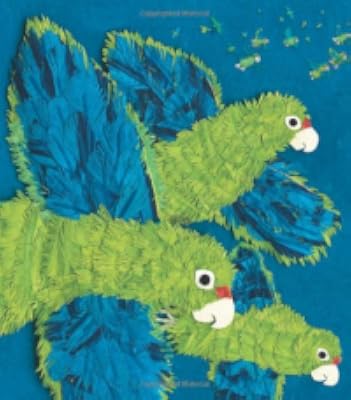





Member Recommendations
Member Reviews
Montgomery, Sy. (2010). Kakapo Rescue. Boston: Houghton Mifflin. 74 pp. ISBN 978-0-618-49417-0 (Hard Cover); $18.00.
Kakapo parrots (pronounced KAR ka poe) are so endangered that if one wishes to visit them on their New Zealand island, one must submit to a rigorous sterilization procedure, along with all luggage, equipment, and clothing, before being allowed on the island with the less than one hundred surviving parrots.
The kakapo parrot, like many island birds was once numerous. This parrot is the world’s heaviest parrot, weighing as much as nine pounds. Long ago it lost the ability to fly. It also has a strong, pleasant, honey-like odor. When Europeans introduced rats and cats and other predators, the kakapo almost went the way of show more the dodo or the passenger pigeon. Its inability to fly, its heavy body, and its strong odor virtually planted a bull’s eye on it for the humans who gobbled it up and for the exploding number of introduced animals that also enjoyed a kakapo dinner. Montgomery writes engaging, conversational text that conveys accurate information in clear, limpid prose. Kakapo Rescue reads like an adventure story. We have adventure, tragedy, fear, and finally a glimmer of hope for the fewer than one hundred remaining kakapo parrots. Along the way readers are blessed with more of Nic Bishop’s amazing, sensitive, and informational photography.
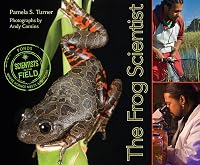
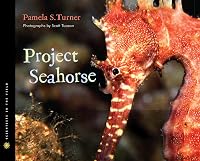
While this book is the best of the four Scientists In the Field books this year, readers will not be at all sorry if they add the other three: Bat Scientists by Mary Kay Carson, The Hive Detectives: Chronicle of a Honey Bee Catastrophe by Loree Griffin Burns and Project Seahorse by Pamela S. Turner (who wrote The Frog Scientist for this series last year—one of my favorite books). I can’t think of a single book in this entire series that I would be hesitant to recommend. Houghton Mifflin is to be commended for regularly producing such excellent nonfiction books for students of all ages. show less
Kakapo parrots (pronounced KAR ka poe) are so endangered that if one wishes to visit them on their New Zealand island, one must submit to a rigorous sterilization procedure, along with all luggage, equipment, and clothing, before being allowed on the island with the less than one hundred surviving parrots.
The kakapo parrot, like many island birds was once numerous. This parrot is the world’s heaviest parrot, weighing as much as nine pounds. Long ago it lost the ability to fly. It also has a strong, pleasant, honey-like odor. When Europeans introduced rats and cats and other predators, the kakapo almost went the way of show more the dodo or the passenger pigeon. Its inability to fly, its heavy body, and its strong odor virtually planted a bull’s eye on it for the humans who gobbled it up and for the exploding number of introduced animals that also enjoyed a kakapo dinner. Montgomery writes engaging, conversational text that conveys accurate information in clear, limpid prose. Kakapo Rescue reads like an adventure story. We have adventure, tragedy, fear, and finally a glimmer of hope for the fewer than one hundred remaining kakapo parrots. Along the way readers are blessed with more of Nic Bishop’s amazing, sensitive, and informational photography.
While this book is the best of the four Scientists In the Field books this year, readers will not be at all sorry if they add the other three: Bat Scientists by Mary Kay Carson, The Hive Detectives: Chronicle of a Honey Bee Catastrophe by Loree Griffin Burns and Project Seahorse by Pamela S. Turner (who wrote The Frog Scientist for this series last year—one of my favorite books). I can’t think of a single book in this entire series that I would be hesitant to recommend. Houghton Mifflin is to be commended for regularly producing such excellent nonfiction books for students of all ages. show less
Science as a verb. The nitty-gritty, the hard work, the attention to detail, the heartbreak.... This book is absolutely not just for kids, or just for parrot fans.
Anyone looking for a career, or a second career, should consider what they can do for the creatures our human self-centeredness has displaced. This book, without being annoyingly preachy, makes it clear why.
Btw, as of Jan. 12, 2018, the population count of Kakapos is at 151... great progress!
And, on a tangential note outside the book, if you don't follow species' recoveries, you might be surprised to learn how much we've been able to help whooping cranes, California condors, and American bison, for example. Look 'em up.
Anyone looking for a career, or a second career, should consider what they can do for the creatures our human self-centeredness has displaced. This book, without being annoyingly preachy, makes it clear why.
Btw, as of Jan. 12, 2018, the population count of Kakapos is at 151... great progress!
And, on a tangential note outside the book, if you don't follow species' recoveries, you might be surprised to learn how much we've been able to help whooping cranes, California condors, and American bison, for example. Look 'em up.
If you held a gun to my head (please don't) and made me pick my favorite bird, I'd probably choose the kakapo. Kakapo are large flightless green parrots from New Zealand that apparently smell like honey and are highly endangered.
In this book, Sy Montgomery (one of my favorite authors) chronicles her visit to Codfish Island in New Zealand, where scientists and volunteers are trying to bring the species back from the brink of extinction. She's accompanied by a photographer, Nic Bishop, who takes the images for the book (how do I get this job?). During their time there, they hike through the grueling yet magical wilderness of the island, meet kakapo chicks, and get to know some of the incredible scientists and volunteers that keep the show more project going, among having other adventures. And they even have a magical experience with a kakapo named Sinbad.
The incredible work that it takes to try to bring a species like this back is mind-blowing. I think Montgomery does a good job of explaining this. The kakapo is yet another species that likely wouldn't survive if it weren't for human intervention. I could go on and on about that specific topic but I won't do that here. Check out Jon Mooallem's [b:Wild Ones: A Sometimes Dismaying, Weirdly Reassuring Story About Looking at People Looking at Animals in America|16158510|Wild Ones A Sometimes Dismaying, Weirdly Reassuring Story About Looking at People Looking at Animals in America|Jon Mooallem|https://images.gr-assets.com/books/1356487562s/16158510.jpg|21998926] for more on that subject.
The book is aimed towards a younger audience, I would guess pre-middle school? But as there aren't any other accessible books about kakapo, I had to get my hands on this. I really want to read [b:Kakapo: Rescued From The Brink Of Extinction|10774504|Kakapo Rescued From The Brink Of Extinction|Alison Ballance|https://images.gr-assets.com/books/1331886375s/10774504.jpg|15686268] but I haven't been able to find it anywhere in the U.S. Rumor has it that the author might be publishing a new version of the book but I'd heard that a year or two ago and haven't seen any more news about it since.
Want to know more about kakapo or support their continued existence? Check out Kakapo Recovery-you can even adopt a kakapo!
On Twitter? Follow Dr. Andrew Digby to get the latest on kakapo research and recovery.
And if you haven't yet seen it, watch this hilarious clip of the most famous kakapo, Sirocco, trying to mate with zoologist Mark Cawardine. Sirocco makes an appearance in Montgomery's book. He's a kakapo who's imprinted on humans so he doesn't think he's a parrot anymore. show less
In this book, Sy Montgomery (one of my favorite authors) chronicles her visit to Codfish Island in New Zealand, where scientists and volunteers are trying to bring the species back from the brink of extinction. She's accompanied by a photographer, Nic Bishop, who takes the images for the book (how do I get this job?). During their time there, they hike through the grueling yet magical wilderness of the island, meet kakapo chicks, and get to know some of the incredible scientists and volunteers that keep the show more project going, among having other adventures. And they even have a magical experience with a kakapo named Sinbad.
The incredible work that it takes to try to bring a species like this back is mind-blowing. I think Montgomery does a good job of explaining this. The kakapo is yet another species that likely wouldn't survive if it weren't for human intervention. I could go on and on about that specific topic but I won't do that here. Check out Jon Mooallem's [b:Wild Ones: A Sometimes Dismaying, Weirdly Reassuring Story About Looking at People Looking at Animals in America|16158510|Wild Ones A Sometimes Dismaying, Weirdly Reassuring Story About Looking at People Looking at Animals in America|Jon Mooallem|https://images.gr-assets.com/books/1356487562s/16158510.jpg|21998926] for more on that subject.
The book is aimed towards a younger audience, I would guess pre-middle school? But as there aren't any other accessible books about kakapo, I had to get my hands on this. I really want to read [b:Kakapo: Rescued From The Brink Of Extinction|10774504|Kakapo Rescued From The Brink Of Extinction|Alison Ballance|https://images.gr-assets.com/books/1331886375s/10774504.jpg|15686268] but I haven't been able to find it anywhere in the U.S. Rumor has it that the author might be publishing a new version of the book but I'd heard that a year or two ago and haven't seen any more news about it since.
Want to know more about kakapo or support their continued existence? Check out Kakapo Recovery-you can even adopt a kakapo!
On Twitter? Follow Dr. Andrew Digby to get the latest on kakapo research and recovery.
And if you haven't yet seen it, watch this hilarious clip of the most famous kakapo, Sirocco, trying to mate with zoologist Mark Cawardine. Sirocco makes an appearance in Montgomery's book. He's a kakapo who's imprinted on humans so he doesn't think he's a parrot anymore. show less
Imagine a green parrot... the size of a house cat! Make it smell like honey, give it lots of curiousity, and listen to it growl, croak and make a chinking noise like a cash register for up to 70 years. This is the Kakapo parrot of New Zealand, which is on the brink of extinction. Flightless, nesting underground, social and odd, this native New Zealand bird species lost everything when civilization arrived. Men brought germs and rodents on ships, and then brought cats and dogs to hunt the rats. All of those animals (and a few more) decided the kakapo parrots were much easier prey! The National Kakapo Recovery team rescued the last remaining birds, and isolated them on a remote island scientific preserve devoted to restoring the bird show more population to a sustainable level. There are only 91 birds alive. This is the story of the special process required to go to Codfish Island, and how the scientists and volunteers there are tracking the birds and learning about their habits and needs. Nic Bishop's photographs are incredible, whether he's showing readers the landscapes and beaches of the island or details of the tiniest chicks hatching from eggs. Highly recommended! Strong 6th grade readers and up. show less
A truly fascinating encounter with one of the rarest animals on Earth, Kakapo Rescue takes the younger and older reader along on a textually and photographically stunning journey to a remote island off the New Zealand coast. On Codfish Island, a kakapo sanctuary has been erected to save the extremely endangered animals, of which eighty-seven exist; they only breed at certain times, and even then, their eggs and offspring are incredibly fragile. Montgomery and Bishop capture the volunteers’ highs and lows as they monitor the eggs and hatched babies; one story in particular, about a young chick who suddenly and mysteriously dies, pulls on the heartstrings.
Bishop makes sure to include photographs that show New Zealand’s splendor aside show more from kakapo parrots and Codfish Island, and Montgomery does an excellent job of providing background information about the events that led to the kakapo decimation. This book is an extraordinarily fascinating look at a fascinating and rare animal that one cannot help but want to save. show less
Bishop makes sure to include photographs that show New Zealand’s splendor aside show more from kakapo parrots and Codfish Island, and Montgomery does an excellent job of providing background information about the events that led to the kakapo decimation. This book is an extraordinarily fascinating look at a fascinating and rare animal that one cannot help but want to save. show less
The Kakapo,a unique parrot originated in New Zealand, is a flightless and nocturnal bird. There are only 87 Kakapos on the planet; Kakapos are at the risk of being extinct because of human action, such as being introduced to other animals that are not native to New Zealand. Therefore, in an attempt to rescue the Kakapos, researchers brought the remaining Kakapo to an island free of predators. Unfortunately, the Kakapos were not breeding. After tracking the Kakapos' nesting, feeding, and mating habits, researchers were able to take care of a lone, baby Kakapo to ensure that it grows up to be healthy. I would connect this text to science instruction by focusing on endangered species and their effect on a food chain. Due to it's factual or show more informational structure, this book is likely intended for 5th to 7th graders. Personally, I found this book very engaging for an informational text, as well I appreciated that the text was formatted in relaxed version of a lab report. show less
The book follows 10 days on Codfish Island, which is a whole island dedicate to breed and protect the endangered kakapo parrot population. These birds are not well known, and the book aimed to expose this rare creature to the masses. Less than 100 of these birds are alive and for a time it was thought they were extinct. Humans had hunted the bird, taken them on as pets, and introduced predators who consumed them as well. Access to the island is limited to scientists and volunteers, and every precaution possible is taken to ensure that there are no "surprises" that stow away and could destroy the fragile population. (From bacteria to rats.) Because of this limited access, the book shows us something that is not usually covered.
During the show more time on the island, the author and her photographer witnessed some eggs hatching, the sudden death of a chick and another adult kakapo, the affections of a kakapo who was in love with humans, the hard work the volunteers put in, and at the end both the author and photographer had a spontaneous, unexpected encounter with one of the island's feathered creatures. The book's final chapter detailed that encounter, as well as including a brief afterward that detailed what happened to some of the eggs after they had left the island.
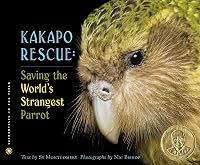
I love birds, so I decided to read this book based on the cover. The wide dark eyes and feathery beak drew me in at once. My family had only pet birds as I grew up—two cockatiels (one at a time) and my own parakeet, Romeo, whom I got as a baby when I was 13. I knew how intelligent birds in the parrot family could be. Romeo, in particular, was as smart as a whip. He would "play ball" with you, say "Pretty bird!" and thought that his toy bell was a baby. (He would feed it and cuddle with it.) I was crushed when, at the age of 7, he had to be put to sleep due to failing kidneys. (Parakeets have a fairly short lifespan, so he was well into his later years.) If Romeo had been green instead of blue, the kakapo on the cover would look very much like him.
I had never heard of this bird before, and the fact it was so large—8 pounds!!—and could not fly astounded me. I assumed penguins were the only birds that didn't fly until now. I was horrified by how few birds were left and amazed at the lengths that New Zealanders have gone to in order to preserve and build the remaining population. As an h.s. language arts teacher, this book would be great to show investigative reporting in a newspaper unit. show less
During the show more time on the island, the author and her photographer witnessed some eggs hatching, the sudden death of a chick and another adult kakapo, the affections of a kakapo who was in love with humans, the hard work the volunteers put in, and at the end both the author and photographer had a spontaneous, unexpected encounter with one of the island's feathered creatures. The book's final chapter detailed that encounter, as well as including a brief afterward that detailed what happened to some of the eggs after they had left the island.
I love birds, so I decided to read this book based on the cover. The wide dark eyes and feathery beak drew me in at once. My family had only pet birds as I grew up—two cockatiels (one at a time) and my own parakeet, Romeo, whom I got as a baby when I was 13. I knew how intelligent birds in the parrot family could be. Romeo, in particular, was as smart as a whip. He would "play ball" with you, say "Pretty bird!" and thought that his toy bell was a baby. (He would feed it and cuddle with it.) I was crushed when, at the age of 7, he had to be put to sleep due to failing kidneys. (Parakeets have a fairly short lifespan, so he was well into his later years.) If Romeo had been green instead of blue, the kakapo on the cover would look very much like him.
I had never heard of this bird before, and the fact it was so large—8 pounds!!—and could not fly astounded me. I assumed penguins were the only birds that didn't fly until now. I was horrified by how few birds were left and amazed at the lengths that New Zealanders have gone to in order to preserve and build the remaining population. As an h.s. language arts teacher, this book would be great to show investigative reporting in a newspaper unit. show less
Members
- Recently Added By
Lists

Children's Books About Science and Math
461 works; 12 members

Favorite Animal Non-Fiction
293 works; 144 members

Robert F. Sibert Informational Book Medal
102 works; 1 member
Author Information

52+ Works 11,014 Members
Sy Montgomery was born on February 7, 1958 in Frankfurt, Germany. She is a 1979 graduate of Syracuse University, a triple major with dual degrees in Magazine Journalism from the S.I. Newhouse School of Public Communications and in French Language and Literature and in Psychology from the College of Arts and Sciences. She was awarded an Honorary show more Doctorate of Humane Letters from Keene State College in 2004, and an Honorary Doctorate of Humane Letters from Franklin Pierce University and also from Southern New Hampshire University in 2011. Montgomery is a naturalist. She is an author, and scriptwriter. Her most popular book, The Good Good Pig, is a memoir of her life with her pig, Christopher Hogwood. The book became listed on the New York Times bestseller list in 2015. How to be a Good Creature: A Memoir in Thirteen Animals was published in September 2018. Her other notable titles include Journey of the Pink Dolphins, Spell of the Tiger, and Search for the Golden Moon Bear. (Bowker Author Biography) show less

Nic Bishop is the talented author and photo-illustrator of Backyard Detective: Critters Up Close, which was named a NCTE Notable Children's Book and won an Oppenheim Toy Portfolio Gold Award. He is also the photo-illustrator of Red-Eyed Tree Frog, by Joy Cowley, which won the Boston Globe-Horn Book Award for Picture Book. Originally from New show more Zealand, where he received a doctorate in biological sciences, Nic now makes his home with his wife and several small animal friends in Kalamazoo, Michigan show less
Awards and Honors
Awards
Distinctions
Series

Common Knowledge
- Canonical title
- Kakapo Rescue: Saving the World's Strangest Parrot
- Original publication date
- 2010-05-24
- Important places
- Codfish Island, New Zealand
Classifications
Statistics
- Members
- 347
- Popularity
- 91,072
- Reviews
- 25
- Rating
- (4.13)
- Languages
- English
- Media
- Paper, Audiobook, Ebook
- ISBNs
- 12
- UPCs
- 1
- ASINs
- 2