
On This Page
Description
Book Two of 1Q84 ended with Aomame standing on the Metropolitan Expressway with a gun between her lips. She knows she is being hunted, and that she has put herself in terrible danger in order to save the man she loves. But things are moving forward, and Aomame does not yet know that she and Tengo are more closely bound than ever. Tengo is searching for Aomame, and he must find her before this world's rules loosen up too much. He must find her before someone else does.Tags
Recommendations
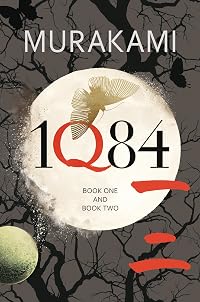
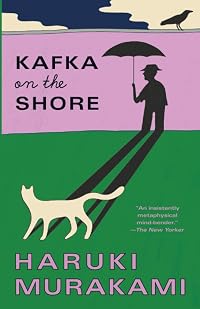





















Member Recommendations

by Jona25
Member Reviews
È stata una lunga cavalcata; non vedevo l'ora di scoprire dove mi avrebbe portato ma, contemporaneamente, avrei anche voluto che non avesse mai fine. Tendenzialmente, quando vengo rapito da questa improbabile accoppiata di sentimenti, vuol dire che mi trovo davanti a qualcosa di speciale. Molti hanno definito questo il miglior libro di Murakami, io non sono sicuro dato che del grande autore giapponese ho amato tutto ciò che ho letto allo stesso modo, ma posso dire che 1Q84 è un capolavoro sotto tutti i punti di vista.
La bravura di Murakami come narratore si esprime in questo romanzo ai suoi massimi livelli: non una parola in più, non una scena di raccordo che sembrasse in qualche modo artificiosa, la complicatissima trama si dipana show more in maniera perfettamente naturale con una capacità magistrale dell'uso dei tempi narrativi. Non tutti i misteri che vengono mostrati nel libro trovano una soluzione e molte domande rimarranno senza risposta; questo potrebbe infastidire qualche lettore, ma io penso che vada bene così. il mondo parallelo 1Q84 continua a vivere di vita propria vicino al nostro, i misteri che ci siamo lasciati alle spalle quando ne siamo usciti continueranno a rimanere tali e a generare storie, ma non sarà compito nostro esserne spettatori. show less
La bravura di Murakami come narratore si esprime in questo romanzo ai suoi massimi livelli: non una parola in più, non una scena di raccordo che sembrasse in qualche modo artificiosa, la complicatissima trama si dipana show more in maniera perfettamente naturale con una capacità magistrale dell'uso dei tempi narrativi. Non tutti i misteri che vengono mostrati nel libro trovano una soluzione e molte domande rimarranno senza risposta; questo potrebbe infastidire qualche lettore, ma io penso che vada bene così. il mondo parallelo 1Q84 continua a vivere di vita propria vicino al nostro, i misteri che ci siamo lasciati alle spalle quando ne siamo usciti continueranno a rimanere tali e a generare storie, ma non sarà compito nostro esserne spettatori. show less
[Poderás ler este comentário/análise ao som de - https://www.youtube.com/watch?v=3mdx-mqvh24 (Janacek's Sinfonietta)]
Uma história de amor(?); um romance de ficção científica(?); um thriller policial(?), três elementos muito bem encadeados num novo mundo ao qual te quererás entregar.
Aqui, uma terceira perspetiva é acrescentada aos acontecimentos. Este novo intérprete dá à escrita uma atmosfera diferente.
Chegamos ao volume de todas as respostas. Obtemos algumas que ajudam a fazer sentido daquilo que lemos, contudo, o autor opta inteligentemente por deixar áreas em aberto para preenchermos com a imaginação.
Sabemos que Aomame e Tengo estão de certa forma ligados e ambos se procuram. Procuram um ao outro à espera de um show more toque, de um abraço, de um beijo, de tudo o que possa preencher o vazio deixado pela difícil infância que estiveram sujeitos.
“ᴡʜᴇɴ ɢʀᴀɴᴛᴇᴅ ʜᴏᴘᴇ, ᴀ ᴘᴇʀꜱᴏɴ ᴜꜱᴇꜱ ɪᴛ ᴀꜱ ꜰᴜᴇʟ, ᴀꜱ ᴀ ɢᴜɪᴅᴇᴘᴏꜱᴛ ᴛᴏ ʟɪꜰᴇ. ɪᴛ ɪꜱ ɪᴍᴘᴏꜱꜱɪʙʟᴇ ᴛᴏ ʟɪᴠᴇ ᴡɪᴛʜᴏᴜᴛ ʜᴏᴘᴇ.”
Porém, várias circunstâncias e partes ativas das suas histórias têm outros planos. Especialmente esta pessoa que ganha destaque neste terceiro volume.
Nos dois primeiros livros, os capítulos alternavam-se entre os dois protagonistas.
E apesar de alguma repetição de detalhes, o que leva ao aumento excedente do número de páginas, Murakami ao acrescentar uma nova visão, intensifica a tensão; cria conflitos, o que resulta num reforço da vontade do leitor de conhecer o quão este novo obstáculo perturba aquilo que se espera.
Aomame está agora escondida (a razão conhecem nos outros dois livros). Vai lendo Marcel Proust, 'Em Busca do Tempo Perdido' e o livro reescrito por Tengo.
Tengo visita a "cidade dos gatos" onde está o seu pai doente. Ao mesmo tempo, mantém contacto com a curiosa Fuka-Eri.
Tengo e Aomame. Os seus caminhos entrelaçam-se a tempo?
“ʜᴇ ʜᴀᴅ ʙᴇᴇɴ ꜰᴇᴇʟɪɴɢ ꜰᴏʀ ꜱᴏᴍᴇ ᴛɪᴍᴇ ᴛʜᴀᴛ ʜᴇ ᴡᴀꜱ ᴄᴀᴜɢʜᴛ ᴜᴘ ɪɴ ᴀ ꜱᴛʀᴏɴɢ ᴄᴜʀʀᴇɴᴛ, ᴏɴᴇ ᴛʜᴀᴛ ɴᴇᴠᴇʀ ᴡᴀᴠᴇʀᴇᴅ. ᴀɴᴅ ᴛʜᴀᴛ ᴄᴜʀʀᴇɴᴛ ᴡᴀꜱ ᴅʀᴀɢɢɪɴɢ ʜɪᴍ ᴏꜰꜰ ᴛᴏ ꜱᴏᴍᴇ ᴜɴᴋɴᴏᴡɴ ᴘʟᴀᴄᴇ."
A "cidade dos gatos"; as duas luas; as referências ao "Povo Pequeno"; a Crisálida de Ar, são mencionadas no ponto certo e compõem a parte ficcional do enredo, relembrando o leitor onde está.
Aomame e Tengo são duas pessoas ficcionais que não se esquecerá tão cedo, especialmente a primeira.
Os diálogos e as interações deles com as personagens secundárias, a forma como refletem e agem com base no senso comum e na lógica, bem como no instinto, na perspicácia, nas ligações e impressões emocionais pessoais ocasionais, são alvo do meu destaque.
O sentimento de que o leitor é um detetive, a tentar descobrir as pistas deixadas; a traçar teorias e a juntar pequenos pormenores, para que tudo faça sentido, estará presente até ao final.
O volume 3 conclui com qualidade uma história que se tornou verdadeiramente fantástica.
“ᴛɪᴍᴇ ꜰʟᴏᴡᴇᴅ ʙʏ ᴘᴇᴀᴄᴇꜰᴜʟʟʏ, ᴡʜᴇʀᴇ ꜰʀɪᴇɴᴅꜱ.”
O que é 1Q84? Um recanto mágico onde os erros do real 1984 podem ser corrigidos?
Encontra a tua versão nas páginas desta trilogia e fala-me dela.
Fiquei mais atento à lua e ainda me questiono por vezes se não estou em 2Q23. show less
Uma história de amor(?); um romance de ficção científica(?); um thriller policial(?), três elementos muito bem encadeados num novo mundo ao qual te quererás entregar.
Aqui, uma terceira perspetiva é acrescentada aos acontecimentos. Este novo intérprete dá à escrita uma atmosfera diferente.
Chegamos ao volume de todas as respostas. Obtemos algumas que ajudam a fazer sentido daquilo que lemos, contudo, o autor opta inteligentemente por deixar áreas em aberto para preenchermos com a imaginação.
Sabemos que Aomame e Tengo estão de certa forma ligados e ambos se procuram. Procuram um ao outro à espera de um show more toque, de um abraço, de um beijo, de tudo o que possa preencher o vazio deixado pela difícil infância que estiveram sujeitos.
“ᴡʜᴇɴ ɢʀᴀɴᴛᴇᴅ ʜᴏᴘᴇ, ᴀ ᴘᴇʀꜱᴏɴ ᴜꜱᴇꜱ ɪᴛ ᴀꜱ ꜰᴜᴇʟ, ᴀꜱ ᴀ ɢᴜɪᴅᴇᴘᴏꜱᴛ ᴛᴏ ʟɪꜰᴇ. ɪᴛ ɪꜱ ɪᴍᴘᴏꜱꜱɪʙʟᴇ ᴛᴏ ʟɪᴠᴇ ᴡɪᴛʜᴏᴜᴛ ʜᴏᴘᴇ.”
Porém, várias circunstâncias e partes ativas das suas histórias têm outros planos. Especialmente esta pessoa que ganha destaque neste terceiro volume.
Nos dois primeiros livros, os capítulos alternavam-se entre os dois protagonistas.
E apesar de alguma repetição de detalhes, o que leva ao aumento excedente do número de páginas, Murakami ao acrescentar uma nova visão, intensifica a tensão; cria conflitos, o que resulta num reforço da vontade do leitor de conhecer o quão este novo obstáculo perturba aquilo que se espera.
Aomame está agora escondida (a razão conhecem nos outros dois livros). Vai lendo Marcel Proust, 'Em Busca do Tempo Perdido' e o livro reescrito por Tengo.
Tengo visita a "cidade dos gatos" onde está o seu pai doente. Ao mesmo tempo, mantém contacto com a curiosa Fuka-Eri.
Tengo e Aomame. Os seus caminhos entrelaçam-se a tempo?
“ʜᴇ ʜᴀᴅ ʙᴇᴇɴ ꜰᴇᴇʟɪɴɢ ꜰᴏʀ ꜱᴏᴍᴇ ᴛɪᴍᴇ ᴛʜᴀᴛ ʜᴇ ᴡᴀꜱ ᴄᴀᴜɢʜᴛ ᴜᴘ ɪɴ ᴀ ꜱᴛʀᴏɴɢ ᴄᴜʀʀᴇɴᴛ, ᴏɴᴇ ᴛʜᴀᴛ ɴᴇᴠᴇʀ ᴡᴀᴠᴇʀᴇᴅ. ᴀɴᴅ ᴛʜᴀᴛ ᴄᴜʀʀᴇɴᴛ ᴡᴀꜱ ᴅʀᴀɢɢɪɴɢ ʜɪᴍ ᴏꜰꜰ ᴛᴏ ꜱᴏᴍᴇ ᴜɴᴋɴᴏᴡɴ ᴘʟᴀᴄᴇ."
A "cidade dos gatos"; as duas luas; as referências ao "Povo Pequeno"; a Crisálida de Ar, são mencionadas no ponto certo e compõem a parte ficcional do enredo, relembrando o leitor onde está.
Aomame e Tengo são duas pessoas ficcionais que não se esquecerá tão cedo, especialmente a primeira.
Os diálogos e as interações deles com as personagens secundárias, a forma como refletem e agem com base no senso comum e na lógica, bem como no instinto, na perspicácia, nas ligações e impressões emocionais pessoais ocasionais, são alvo do meu destaque.
O sentimento de que o leitor é um detetive, a tentar descobrir as pistas deixadas; a traçar teorias e a juntar pequenos pormenores, para que tudo faça sentido, estará presente até ao final.
O volume 3 conclui com qualidade uma história que se tornou verdadeiramente fantástica.
“ᴛɪᴍᴇ ꜰʟᴏᴡᴇᴅ ʙʏ ᴘᴇᴀᴄᴇꜰᴜʟʟʏ, ᴡʜᴇʀᴇ ꜰʀɪᴇɴᴅꜱ.”
O que é 1Q84? Um recanto mágico onde os erros do real 1984 podem ser corrigidos?
Encontra a tua versão nas páginas desta trilogia e fala-me dela.
Fiquei mais atento à lua e ainda me questiono por vezes se não estou em 2Q23. show less
there is something about the way murakami writes...he reels me in and just keeps holding me tight. as with 'kafka on the shore', his world is weird and a touch halucinogenic. as with 'norwegian wood', there is an intensity that you never truly grasp but you are certain is there, lurking under the characters' words and thoughts. and you hold your breath until the very last pages, not knowing whether the plot will explode, implode, or peter out beautifully. and you can't figure out for yourself which type of ending you'd rather want to see. For a three volume book that easily translates to 1000+ pages in paperback, 1Q84's plot, language, and rythm is very terse, poetic, and with hints here and there of contained power.
a lot of readers say show more that 1Q84 is a love or hate thing...for me, I LOVED IT! :) show less
a lot of readers say show more that 1Q84 is a love or hate thing...for me, I LOVED IT! :) show less
Finalmente mi sono decisa ad affrontare il capitolo decisivo di 1Q84, romanzo che ho amato l'anno scorso. Ero frenata perchè temevo che mi avrebbe delusa dopo le magiche atmosfere dei primi mesi aprile-settembre.
E così NON è stato, questo libro è la degna conclusione dei primi due e non ha minimamente abbassato il livello, anzi ha reso tutto più chiaro o comunque ha dato una fine ad una storia già bellissima.
Questo libro terzo racchiude in se la molteplicità di situazioni e significati che caratterizzano gli scritti di Murakami. Ti accorgi gradualmente che pensavi di avere tra le mani un libro magico, un libro di spionaggio, un libro assurdo e invece ti ritrovi semplicemente una storia d'amore ma non di quelle sdolcinate o show more romantiche, un amore che va oltre, che è vissuto ad un livello talmente intimo che quasi ti sembra di intrometterti troppo a volte...
Non sono solita affezionarmi ai personaggi femminili ma Aomame è una delle mie donne preferite, impossibile non amarla.
Ancora una volta Murakami con me non fallisce e colpisce punti vivi stimolando riflessioni sempre interessanti e utili. show less
E così NON è stato, questo libro è la degna conclusione dei primi due e non ha minimamente abbassato il livello, anzi ha reso tutto più chiaro o comunque ha dato una fine ad una storia già bellissima.
Questo libro terzo racchiude in se la molteplicità di situazioni e significati che caratterizzano gli scritti di Murakami. Ti accorgi gradualmente che pensavi di avere tra le mani un libro magico, un libro di spionaggio, un libro assurdo e invece ti ritrovi semplicemente una storia d'amore ma non di quelle sdolcinate o show more romantiche, un amore che va oltre, che è vissuto ad un livello talmente intimo che quasi ti sembra di intrometterti troppo a volte...
Non sono solita affezionarmi ai personaggi femminili ma Aomame è una delle mie donne preferite, impossibile non amarla.
Ancora una volta Murakami con me non fallisce e colpisce punti vivi stimolando riflessioni sempre interessanti e utili. show less
OK! So I’m in trouble. I’ve found another author who has a long list of books to his credit and I am now inclined to read them all. Bottom line, I enjoyed 1Q84 Book One, Book Two and Book Three. How I got to that bottom line is a meandering tale of inverted snobbery, ignorance, misconceptions, clever marketing, revulsion, and susceptibility to beautifully designed book covers.
I was not intimately familiar with Murakami’s work. When I first became aware of 1Q84 it was the cover of Book Three that attracted me; the dark background, the enigmatic title, “1Q84”, with a crow perched on the Q, and the title and the crow silhouetted against an image of a somewhat distorted moon, not to mention a smaller, green hued moon a short show more distance to the bottom left. (I hope you can all see the second moon. Please tell me you can.)
After my initial attraction to the cover I read some of the online blurb about the book. (I try to avoid reading reviews of books before I read the actual work in case they give away plot lines and spoil the work for me. That is also why I try never to give anything other than the highest level plot information in the reviews I write. I believe the author has laid out the plot of his/her work in the way he/she intends the reader to discover it and that a preview of the plot is just something that can only remove an element of the pleasure to be gleaned by reading the book unsullied by prior knowledge. Of course, some book blurbs can be equally dangerous in this regard. End of sermon.) There was mention of Orwell’s 1984 which left me with the, as it turned out, misconception that it was simply a re-write of 1984. That was when my revulsion kicked in. “Why”, thought I, “do people just rewrite other people’s stories? I don’t think I would enjoy reading just a rewrite of 1984.”
Also, thought I, I’ve never heard of this book before and the first thing I see is Book Three. What about books One and Two? Oh, how convenient, they are available in a single volume. Clever; heavily market Book Three and draw people into having to buy the previous two books. This reminded me of my experience of Philip Pullman’s “His Dark Materials” books. I first became aware of “The Amber Spyglass” being marketed heavily and being a very stunning looking volume. I had never noticed the earlier volumes. I thought the 1Q84 publishers were pulling the same trick and I was a bit reluctant to be a victim to clever marketing.
The 1Q84 book covers are designed very differently from Murakami’s other novels. This prevented my realising that Murakami was the same person who wrote “Kafka on the Shore”, a book that I had noticed being critically acclaimed but had, due to my superficial scanning of news articles on the book, considered as one of those “literary” works of merit that mere mortals such as myself could not appreciate without having swallowed a dictionary of literary terms and fully paid my dues as a member of the literati. Yes, this was my inverted snobbery and ignorance.
Anyway, I found myself in a bookshop and the combined Book One and Book Two volume of 1Q84 was in front of me. I decided to try the first page. That was a fatal mistake. I immediately bought the two volume set and have not regretted it one bit. As you can see, I had a lot of emotional energy invested in these books before I started reading them. Being a reader is so draining.
“What about the books?” I hear you cry.
1Q84 Books One & Two were published in a single volume which, apparently, is in line with the original Japanese publication. In my opinion they are really a single book. The subtlety of the dividing line between one book and the next escaped me. It just appeared to be an arbitrary delineation of the end of one book and the beginning of another; perhaps I'm just not sensitive enough or perhaps it’s my overdue membership for the literati being exposed.
Regardless, I enjoyed the book. Its structure worked well; chapters alternated between the viewpoint of one of the two primary characters and that of the other. Having finished the book (or "books" if you prefer) I can say it (they) constitute a good, enjoyable novel. If Book 3 had never come into existence I would be happy that Books 1 and 2 were sufficient in themselves to be regarded as a good work of fiction.
The primary theme in Book One and Book Two is violence against women. However, here are many other themes worked into the story; namely, love, family (in particular parent/child relationships), religious sects, justice, helplessness, isolation, etc... There is also a strong "coming of age" element. In addition, there are many episodes of sexual gymnastics. I hasten to add that I was enjoying the book before I reached Chapter 3, and I didn't enjoyed it any less having read the hot lesbian encounter in that chapter.
Chapter 1 introduces Aomame (pronounced “Ah-oh-mah-meh” and meaning “green peas”) and describes a piece of music by Janáček, as well as providing some historical context for Janáček’s music. Chapter 2 gives some interesting information on the workings of the world of publishing and some pointers on writing, as well as introducing Tengo Kawana, a maths teaching aspiring author. Described in the fashion above chapters 1 and 2 may not appear to be material that would draw a reader into a three book story. I was well hooked before even getting to chapter 2 and was in the landing net before I got to chapter three.
The strongest characters in all three books are female. This includes the primary character Aomame, some of her friends and a rather enigmatic seventeen year old. Tengo and Tamaru (you’ll have to read the book to find out who he is) are no slouches, but the ladies do have the majority of the strong roles. This is not a “women good – men bad” sort of novel, but more everyone is equal story.
Another message from Book One and Book Two is that the bad guy may not necessarily be the bad guy; he/she could be a victim too.
Book Two ends with many questions unanswered, but it is not necessary to answer these questions. The fact that they are not answered is a strength of the book. Had this been the end of the story I would have been quite happy and would still feel it was a good tale. It reminded me of the end of K-Pax by Gene Brewer. The fact that there was a third 1Q84 book scared me. K-Pax was an excellent book but the author went on to produce K-Pax II and K-Pax III, books that destroyed the mystery, the wonder and the awe of the original K-Pax story (which is faithfully and excellently replicated in the film of the same name). My fear was that Book Three of 1Q84 would destroy the great work done in Book One and Book Two.
I need not have worried. While Book Three may not have been necessary it did work well and complemented the earlier work. While it tied up some loose ends it still left enough unanswered questions to leave the reader with a mind buzzing with queries and wondering about many things. It can often be what is not said that gives the reader the most reward.
Book Three was not predominantly about violence against women, but was much more a thriller with danger at every turn, a powerfully romantic love story, a tale of tenacity, and realisation that we all face sojourns in a dangerous world filled with unknowns, and that we sometimes have to take the bull by the horns and dictate the path of our own destiny; and that sometimes this does not always work out.
Murakami keeps the tension up right to the very end. This is not a story where one gets to the penultimate chapter and knows what is going to happen. A very rewarding read.
The translation of Book One and Book Tow by Jay Rubin was excellent. I say this based on the easy flow of the book's English rather than from any knowledge of how well the English reflected the original Japanese meaning. One piece had me puzzled though, and I don't know if it was due to literal translation, differences in Japanese language structure, an error or whatever; it was where one of the characters asks about the difference between lunatic and insane, and the words are both described as being adjectives. Not a major issue, but it has me curious about the Japanese language.
Book Three was translated by Philip Gabriel. Another competent job.
This book also encouraged me to look at the geography of Japan and to finally go and look at a map to see were all the places I’ve heard of in the past are actually located.
Murakami is excellent at inserting references to Japanese cuisine and lifestyle. His books also contain interesting references to pieces of music and several classic texts.
In summary, an enjoyable read with some thought provoking elements. show less
I was not intimately familiar with Murakami’s work. When I first became aware of 1Q84 it was the cover of Book Three that attracted me; the dark background, the enigmatic title, “1Q84”, with a crow perched on the Q, and the title and the crow silhouetted against an image of a somewhat distorted moon, not to mention a smaller, green hued moon a short show more distance to the bottom left. (I hope you can all see the second moon. Please tell me you can.)
After my initial attraction to the cover I read some of the online blurb about the book. (I try to avoid reading reviews of books before I read the actual work in case they give away plot lines and spoil the work for me. That is also why I try never to give anything other than the highest level plot information in the reviews I write. I believe the author has laid out the plot of his/her work in the way he/she intends the reader to discover it and that a preview of the plot is just something that can only remove an element of the pleasure to be gleaned by reading the book unsullied by prior knowledge. Of course, some book blurbs can be equally dangerous in this regard. End of sermon.) There was mention of Orwell’s 1984 which left me with the, as it turned out, misconception that it was simply a re-write of 1984. That was when my revulsion kicked in. “Why”, thought I, “do people just rewrite other people’s stories? I don’t think I would enjoy reading just a rewrite of 1984.”
Also, thought I, I’ve never heard of this book before and the first thing I see is Book Three. What about books One and Two? Oh, how convenient, they are available in a single volume. Clever; heavily market Book Three and draw people into having to buy the previous two books. This reminded me of my experience of Philip Pullman’s “His Dark Materials” books. I first became aware of “The Amber Spyglass” being marketed heavily and being a very stunning looking volume. I had never noticed the earlier volumes. I thought the 1Q84 publishers were pulling the same trick and I was a bit reluctant to be a victim to clever marketing.
The 1Q84 book covers are designed very differently from Murakami’s other novels. This prevented my realising that Murakami was the same person who wrote “Kafka on the Shore”, a book that I had noticed being critically acclaimed but had, due to my superficial scanning of news articles on the book, considered as one of those “literary” works of merit that mere mortals such as myself could not appreciate without having swallowed a dictionary of literary terms and fully paid my dues as a member of the literati. Yes, this was my inverted snobbery and ignorance.
Anyway, I found myself in a bookshop and the combined Book One and Book Two volume of 1Q84 was in front of me. I decided to try the first page. That was a fatal mistake. I immediately bought the two volume set and have not regretted it one bit. As you can see, I had a lot of emotional energy invested in these books before I started reading them. Being a reader is so draining.
“What about the books?” I hear you cry.
1Q84 Books One & Two were published in a single volume which, apparently, is in line with the original Japanese publication. In my opinion they are really a single book. The subtlety of the dividing line between one book and the next escaped me. It just appeared to be an arbitrary delineation of the end of one book and the beginning of another; perhaps I'm just not sensitive enough or perhaps it’s my overdue membership for the literati being exposed.
Regardless, I enjoyed the book. Its structure worked well; chapters alternated between the viewpoint of one of the two primary characters and that of the other. Having finished the book (or "books" if you prefer) I can say it (they) constitute a good, enjoyable novel. If Book 3 had never come into existence I would be happy that Books 1 and 2 were sufficient in themselves to be regarded as a good work of fiction.
The primary theme in Book One and Book Two is violence against women. However, here are many other themes worked into the story; namely, love, family (in particular parent/child relationships), religious sects, justice, helplessness, isolation, etc... There is also a strong "coming of age" element. In addition, there are many episodes of sexual gymnastics. I hasten to add that I was enjoying the book before I reached Chapter 3, and I didn't enjoyed it any less having read the hot lesbian encounter in that chapter.
Chapter 1 introduces Aomame (pronounced “Ah-oh-mah-meh” and meaning “green peas”) and describes a piece of music by Janáček, as well as providing some historical context for Janáček’s music. Chapter 2 gives some interesting information on the workings of the world of publishing and some pointers on writing, as well as introducing Tengo Kawana, a maths teaching aspiring author. Described in the fashion above chapters 1 and 2 may not appear to be material that would draw a reader into a three book story. I was well hooked before even getting to chapter 2 and was in the landing net before I got to chapter three.
The strongest characters in all three books are female. This includes the primary character Aomame, some of her friends and a rather enigmatic seventeen year old. Tengo and Tamaru (you’ll have to read the book to find out who he is) are no slouches, but the ladies do have the majority of the strong roles. This is not a “women good – men bad” sort of novel, but more everyone is equal story.
Another message from Book One and Book Two is that the bad guy may not necessarily be the bad guy; he/she could be a victim too.
Book Two ends with many questions unanswered, but it is not necessary to answer these questions. The fact that they are not answered is a strength of the book. Had this been the end of the story I would have been quite happy and would still feel it was a good tale. It reminded me of the end of K-Pax by Gene Brewer. The fact that there was a third 1Q84 book scared me. K-Pax was an excellent book but the author went on to produce K-Pax II and K-Pax III, books that destroyed the mystery, the wonder and the awe of the original K-Pax story (which is faithfully and excellently replicated in the film of the same name). My fear was that Book Three of 1Q84 would destroy the great work done in Book One and Book Two.
I need not have worried. While Book Three may not have been necessary it did work well and complemented the earlier work. While it tied up some loose ends it still left enough unanswered questions to leave the reader with a mind buzzing with queries and wondering about many things. It can often be what is not said that gives the reader the most reward.
Book Three was not predominantly about violence against women, but was much more a thriller with danger at every turn, a powerfully romantic love story, a tale of tenacity, and realisation that we all face sojourns in a dangerous world filled with unknowns, and that we sometimes have to take the bull by the horns and dictate the path of our own destiny; and that sometimes this does not always work out.
Murakami keeps the tension up right to the very end. This is not a story where one gets to the penultimate chapter and knows what is going to happen. A very rewarding read.
The translation of Book One and Book Tow by Jay Rubin was excellent. I say this based on the easy flow of the book's English rather than from any knowledge of how well the English reflected the original Japanese meaning. One piece had me puzzled though, and I don't know if it was due to literal translation, differences in Japanese language structure, an error or whatever; it was where one of the characters asks about the difference between lunatic and insane, and the words are both described as being adjectives. Not a major issue, but it has me curious about the Japanese language.
Book Three was translated by Philip Gabriel. Another competent job.
This book also encouraged me to look at the geography of Japan and to finally go and look at a map to see were all the places I’ve heard of in the past are actually located.
Murakami is excellent at inserting references to Japanese cuisine and lifestyle. His books also contain interesting references to pieces of music and several classic texts.
In summary, an enjoyable read with some thought provoking elements. show less
Whilst fun to immerse yourself in Murakami's world at length, I can't help thinking that the author's style is much better suited to shorter works. At this length, the books did not feel well-written, with repetition to no effect and things explained to the reader at great length ("show, don't tell!").
Una vez terminado de leer el tercer libro de ‘1Q84’, me pregunto si era necesario. Porque realmente añadiendo unas 100 ó 150 páginas al anterior volumen, hubiese sido suficiente. Sinceramente, este tercer volumen es muy flojo, además de que Murakami se dedica a marear la perdiz, como suele decirse, enredándose en situaciones insustanciales e innecesarias, que no te emocionan y que apenas sirven para mantener un ligero interés por lo que está sucediendo. Y es que el bueno de Murakami se saca de la manga más de 400 páginas para resolver una historia que ya estaba casi resuelta en los libros 1 y 2. ¿Valía la pena Murakami? Humm, me huele a estrategia para hacer caja típica en otros autores de mucha menor calidad que el gran show more Murakami, que gustan de escribir mamotretos para vender a peso.
No voy a hablar del argumento, ya que éste continúa donde se quedaron los libros 1 y 2, y estropearía su disfrute a futuros lectores. Sólo diré que esta vez contamos con tres personajes, con tres puntos de vista: los ya conocidos Aomame y Tengo, y ahora Ushikawa, el singular investigador, que ayuda un tanto a hilar las diferentes tramas. Está claro que es imposible dejar cerrados todos los misterios, pero Murakami deja algún que otro cabo suelto.
Decepción. Esta es la palabra. No me ha gustado este Murakami. show less
No voy a hablar del argumento, ya que éste continúa donde se quedaron los libros 1 y 2, y estropearía su disfrute a futuros lectores. Sólo diré que esta vez contamos con tres personajes, con tres puntos de vista: los ya conocidos Aomame y Tengo, y ahora Ushikawa, el singular investigador, que ayuda un tanto a hilar las diferentes tramas. Está claro que es imposible dejar cerrados todos los misterios, pero Murakami deja algún que otro cabo suelto.
Decepción. Esta es la palabra. No me ha gustado este Murakami. show less
Members
- Recently Added By
Published Reviews
ThingScore 83
[...] en romanförfattares främsta uppgift är att skriva bra romaner snarare än företräda en eller annan nation, ideologi eller religion. Det anser i alla fall jag, och på denna enda grund kan jag från hjärtat rekommendera ”1Q84”.
added by Jannes
Berättelsen lunkar på i sin makliga takt, ändå kan man inte sluta läsa.
added by Jannes
Murakami är i grunden en gammal hederlig sagoberättare. En moralist som genom sagans exempel vill lära oss någonting om den verkliga världen.
added by Jannes
Lists

Japanese Literature
230 works; 40 members

Books Read in 2022
5,166 works; 112 members

Books Read in 2013
1,630 works; 51 members

Books Read in 2018
4,360 works; 110 members
Author Information

293+ Works 174,620 Members
Haruki Murakami was born on January 12, 1949 in Kyoto, Japan and studied at Tokyo's Waseda University. He opened a coffeehouse/jazz bar in the capital called Peter Cat with his wife. He became a full-time author following the publication of his first novel, Hear the Wind Sing, in 1979. He writes both fiction and non-fiction works. His fiction show more works include Norwegian Wood, Colorless Tsukuru Tazaki and His Years of Pilgrimage, The Strange Library, and Men Without Women. Several of his stories have been adapted for the stage and as films. His nonfiction works include What I Talk About When I Talk About Running. He has received numerous literary awards including the Franz Kafka Prize for Kafka on the Shore, the Yomiuri Prize for The Wind-Up Bird Chronicle, and the Jerusalem Prize. He has translated into Japanese literature written by F. Scott Fitzgerald, Raymond Carver, Truman Capote, John Irving, and Paul Theroux. (Bowker Author Biography) show less
Some Editions
Awards and Honors
Distinctions
Notable Lists
Series

Belongs to Publisher Series
Work Relationships
Is contained in
Common Knowledge
- Canonical title
- 1Q84 Book 3
- Original title
- 1Q84 Book 3; Ichi-kyū-hachi-yon
- Alternate titles*
- 1Q84 Bog 3
- Original publication date
- 2010
- People/Characters
- Tengo Kawana; Masami Aomame; Eriko Fukada; Toshiharu Ushikawa; Tamaru; Shizue Ogata (show all 7); Kumi Adachi
- Important places
- Tokyo, Japan
- Epigraph*
- It's a Barnum and Bailey world, Just as phony as it can be, But it wouldn't be make-believe If you believed in me - 'It's Only a Paper Moon' (E.Y. Harburg en Harold Arlen)
- First words
- - Importava-se de não fumar, senhor Ushikawa? - perguntou o homem mais baixo.
- Quotations*
- Là où il y a de l'espoir, forcément, il y a des épreuves.
Il y aura toujours plus de gens qui ne font rien d'utile à la société que le contraire. - Last words*
- (Click to show. Warning: May contain spoilers.)Sie standen nebeneinander und betrachteten schweigend den Mond über der Stadt, bis er in der aufgehenden Sonne seinen nächtlichen Glanz verlor und sich in einen grauen Papierschnipsel verwandelte.
- Original language
- Japanese
- Disambiguation notice
- This is book 3 of 1Q84. It should not be combined with one of the other parts of the trilogy.
*Some information comes from Common Knowledge in other languages. Click "Edit" for more information.
Classifications
- Genres
- Fiction and Literature, General Fiction
- DDC/MDS
- 895.635 — Literature & rhetoric Literatures of other languages Literatures of East and Southeast Asia Japanese Japanese fiction 1945–2000
- LCC
- PL856 .U673 .A615 — Language and Literature Languages and literatures of Eastern Asia, Africa, Oceania Languages of Eastern Asia, Africa, Oceania Japanese language and literature Japanese literature Individual authors and works
- BISAC
Statistics
- Members
- 2,061
- Popularity
- 10,065
- Reviews
- 69
- Rating
- (3.84)
- Languages
- 28 — Arabic, Catalan, Chinese, Czech, Danish, Dutch, English, Estonian, Finnish, French, German, Galician, Greek, Hebrew, Hungarian, Italian, Japanese, Korean, Norwegian (Bokmål), Norwegian, Polish, Portuguese, Romanian, Russian, Spanish, Swedish, Turkish, Vietnamese
- Media
- Paper, Audiobook, Ebook
- ISBNs
- 75
- UPCs
- 1
- ASINs
- 16