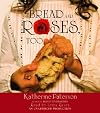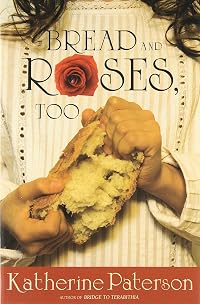
Bread and Roses, Too
by Katherine Paterson
On This Page
Description
Jake and Rosa, two children, form an unlikely friendship as they try to survive and understand the 1912 Bread and Roses strike of mill workers in Lawrence, Massachusetts.Tags
Recommendations
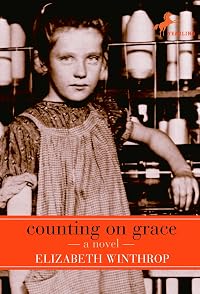
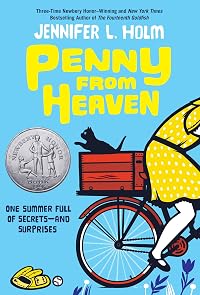
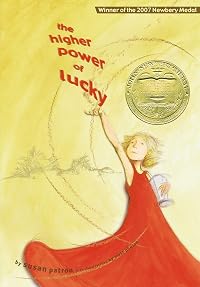
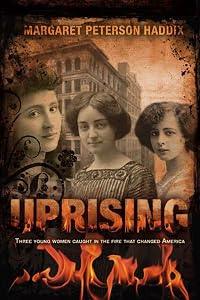
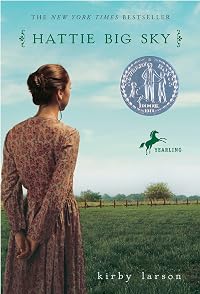


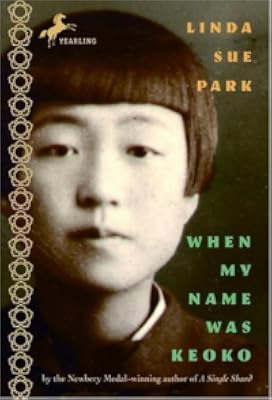
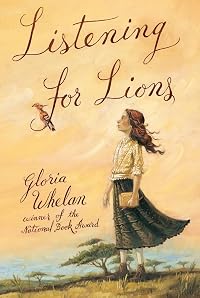
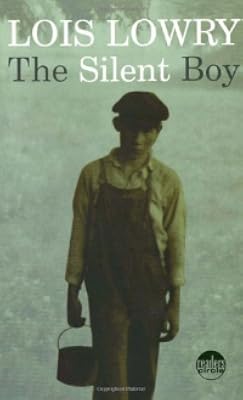
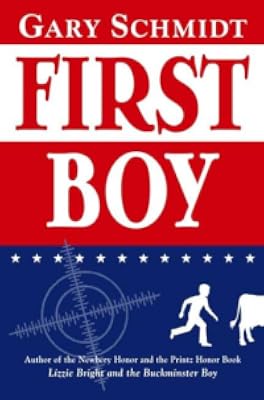
Member Recommendations
Member Reviews
Rosa's mother is singing again, for the first time since Papa died in an accident in the mills. But instead of filling their cramped tenement apartment with Italian lullabies, Mamma is out on the streets singing union songs, and Rosa is terrified that her mother and older sister, Anna, are endangering their lives by marching against the corrupt mill owners. After all, didn't Miss Finch tell the class that the strikers are nothing but rabble-rousers--an uneducated, violent mob? Suppose Mamma and Anna are jailed or, worse, killed? What will happen to Rosa and little Ricci? When Rosa is sent to Vermont with other children to live with strangers until the strike is over, she fears she will never see her family again. Then, on the train, a show more boy begs her to pretend that he is her brother. Alone and far from home, she agrees to protect him . . . even though she suspects that he is hiding some terrible secret. show less
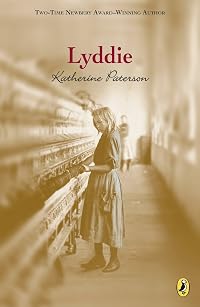
Paterson compellingly presents the story of the Lawrence mill strike of 1912 through the point of view of two affected children, Rosa and Jake. Adding the second protagonist provides more perspective on living conditions and tension between classes as well as ethnicities, and there is a turning point in the story where the main protagonist becomes the secondary protagonist and vice versa. Although Jake appears early on throughout the novel, Rosa’s inner turmoil over the strike propels the first half of the book as Paterson convincingly puts the reader at the crossroads of Rosa’s concerns of wanting to be a “proper” American and Catholic while staying true to her immigrant family. Paterson makes brilliant use of Rosa’s school show more teacher to further this tension, turning pro-strike and true American into an either/or binary. Rosa’s happy ending is when the strike eventually ceases, but it is Jake who grows and develops more as a character, changing throughout the book. Paterson’s secondary characters are somewhat unevenly developed given their importance. For instance, although Rosa’s school teacher was given sufficient characterization and development, Rosa’s older sister was somewhat underdeveloped, which is surprising considering her role in the book. However, it is clear that this book has been well researched and Paterson does a nearly seamless job of integrating her characters into her setting in a convincing manner. Bread and Roses, Too reads as a solid work of historical fiction and can be read alongside or in compliment to Lyddie, an earlier work of Paterson’s with some common elements. This book is recommended for children ages ten to twelve. show less
In Lawrence, MA, the immigrant workers of the wool mills go on strike to demand better wages and conditions. The story focuses on two young teens: Rosa, who fears the consequences of her mother and sister’s participation in the strike, and Jake, a mill worker and the son of an abusive, drunk father whom he escapes by sleeping in the streets. As the strike progresses, the worker parents decide to send their children away “on vacation” to be cared for by other families with the help of the union. Thirty-five of the kids, including Rosa are sent to Barre, VT. Jake, on the run after discovering his father is dead and fearing the police may be after him, sneaks on to the train thinking he is headed for New York. Rosa pretends Jake is show more her brother and they are taken in by an elder Italian couple, the Gerbatis. In the midst of fear, anger, and skepticism glimmers love and hope. Lib notes: Some ethnic slurs, such as “wop.” show less
Historical Fiction. The 1912 “Bread and Roses” textile mill strike in Lawrence, Massachusetts, is seen through the eyes of Rosa Serutti, a 12-year-old immigrant, and 13-year-old Jake Beale, a child laborer in the mill. After a wage cut, Rosa’s mother and older sister go on strike while Jake is fired, earning the ire of his alcoholic, abusive father. When the strike turns violent, Rosa and Jake are sent to live temporarily with a family in Vermont. Jake’s prickly exterior falls away as he learns to trust his new father figure, while Rosa’s impatience with her mother’s old-world ways becomes a moot point when her life is in danger. Paterson has written a very realistic historic fictional account of the labor movement. The show more shifting point of view between Rosa and Jake allows each character to be well-developed. The plot moves along nicely and the setting rings true, but it’s the sense of injustice that ties the children’s perspective to the strike going on around them. show less
This seemed like a well-researched book. Labor strikes are not taught about in US schools, and certainly not extensively. It never even occurred to me that children might have been involved or even affected. In this book, I learned they were sent away like London children were sent away during air raids, although I am likely later to discover this might be an insensitive comparison. Such is not my intent. This book was boring! The use of broken English among the adults and the bigotry among the children was likely historically accurate, but on the page, was aggravating. I originally mistook this for another book entirely and rated it waaaay back when I thought the Goodreads algorithm mattered and wasn't the waste of time it is now.
One of the many things I like about Paterson is the way she can bring characters alive for readers. I'm particularly drawn to her historical fiction. Her books always make great titles for literature circles and social studies connections. Bread and Roses, Too is set during the 1912 labor strike in Lawrence Massachusetts. Some of the children of strikers were sent on "vacation" to Vermont to escape the potential violence. Like so many great historical fiction novels for young people, it made me want to learn more about the real people and events. I immediately went to the Library of Congress website to find photographs of the strike.
Young Rosa is anxious about her mother and sister's involvement in a strike of mill workers in Lawrence, Massachusetts; in the same town, Jake, a young mill worker now on strike, is trying to survive.
This historical fiction novel portrays the mill strike in Lawrence through the viewpoints of two adolescents connected to, but not directly involved with, the strike. Though the strike is a strong presence in the novel, the main focus is the personal turmoil and changes these children experience as the strike progresses. Authorities Rosa was taught by her mother to obey-- the Catholic church and her schoolteacher-- have condemned the strike as sinful and dangerous, and Rosa fears her mother's involvement will destroy her family both show more morally and physically. Jake, though a mill worker, is too hungry and cold to become concerned with the strikers' ideals, and occasionally tries to cross the picket lines. By focusing on the children and their concerns, this novel excellently portrays a significant historical event from the perspective of an everyday individual, and shows what the children experienced while their friends and families tried to change the world. There is some implied violence and one especially disturbing scene that may make the book unsuitable for very young readers, but it is appropriate for upper level middle school or junior high readers. show less
This historical fiction novel portrays the mill strike in Lawrence through the viewpoints of two adolescents connected to, but not directly involved with, the strike. Though the strike is a strong presence in the novel, the main focus is the personal turmoil and changes these children experience as the strike progresses. Authorities Rosa was taught by her mother to obey-- the Catholic church and her schoolteacher-- have condemned the strike as sinful and dangerous, and Rosa fears her mother's involvement will destroy her family both show more morally and physically. Jake, though a mill worker, is too hungry and cold to become concerned with the strikers' ideals, and occasionally tries to cross the picket lines. By focusing on the children and their concerns, this novel excellently portrays a significant historical event from the perspective of an everyday individual, and shows what the children experienced while their friends and families tried to change the world. There is some implied violence and one especially disturbing scene that may make the book unsuitable for very young readers, but it is appropriate for upper level middle school or junior high readers. show less
Members
- Recently Added By
Published Reviews
ThingScore 88
Claire Rosser (KLIATT Review, September 2006 (Vol. 40, No. 5))
Everything Paterson writes is excellent. This historical novel is about the strike by workers in Lawrence, Massachusetts in 1912. In some ways it is a continuation of the theme of her novel Lyddie, about a mill worker in Lowell, Massachusetts in the mid-19th century. She tells of two young people's experience over the several months show more of the strike. It's interesting because neither of them, Rosa or Jake, is an enthusiast for workers' rights; they just get swept up in the events surrounding them. Rosa's mother and older sister are workers who are completely committed to the strike. Rosa is slightly ashamed of them, their poor English, their risk-taking. Jake is a worker himself, abused by his drunken father, illiterate, a petty thief. The two are sent with other children from Lawrence to Barre, Vermont, to socialist families supporting the strikers by taking in the starving children, taking care of them until the strike is over. An Italian American couple takes in Rosa and Jake, who are pretending to be brother and sister. The man, an accomplished stone worker and nobody's fool, soon suspects Jake is lying, but his response is unexpectedly kind. The way Paterson works in the historical details that are known--the terrible plight of the workers and their families, the evolution of the strike, the support from the growing labor movement around the country--is moving and sound. She speculates on how the slogan of the strike, Bread and Roses, Too, came into being, which fits in nicely with her characters and their feelings. show less
Everything Paterson writes is excellent. This historical novel is about the strike by workers in Lawrence, Massachusetts in 1912. In some ways it is a continuation of the theme of her novel Lyddie, about a mill worker in Lowell, Massachusetts in the mid-19th century. She tells of two young people's experience over the several months show more of the strike. It's interesting because neither of them, Rosa or Jake, is an enthusiast for workers' rights; they just get swept up in the events surrounding them. Rosa's mother and older sister are workers who are completely committed to the strike. Rosa is slightly ashamed of them, their poor English, their risk-taking. Jake is a worker himself, abused by his drunken father, illiterate, a petty thief. The two are sent with other children from Lawrence to Barre, Vermont, to socialist families supporting the strikers by taking in the starving children, taking care of them until the strike is over. An Italian American couple takes in Rosa and Jake, who are pretending to be brother and sister. The man, an accomplished stone worker and nobody's fool, soon suspects Jake is lying, but his response is unexpectedly kind. The way Paterson works in the historical details that are known--the terrible plight of the workers and their families, the evolution of the strike, the support from the growing labor movement around the country--is moving and sound. She speculates on how the slogan of the strike, Bread and Roses, Too, came into being, which fits in nicely with her characters and their feelings. show less
added by kthomp25
Pat Dole (KLIATT Review, July 2007 (Vol. 41, No. 4))
In 1912 in the mill town of Lawrence, Massachusetts, immigrant workers are being exploited by greedy mill owners. An additional pay cut finally ignites a general strike that is ruthlessly suppressed by local police and militia. Rosa Cerutti, the young daughter of a poor Italian widow, is so bright that her mother and older sister work in a show more mill to support the family so that she can have the luxury of going to school. When the anti-strike violence escalates dangerously, the strikers decide they must send their children away from Lawrence to cities where union members have agreed to shelter them for the duration. Rosa is destined for Barre, Vermont. Jake, an illiterate, desperate, abused boy she has met accidentally, persuades Rosa to pretend that he is her brother so that he can get on the train with her and escape to a new life. With the new name of Salvatore, Jake is warmly welcomed along with Rosa by an older Italian couple in Barre, who shower them with new clothes and good food. All the while, though, Rosa is in an agony of fear for the safety of her mother and sister, especially when she finds out that they have been jailed and her little brother taken away from them. In the end the plot is neatly wrapped up. Narrator Raver has a grand time portraying the effusive Italian women who figure prominently in the story (based upon a true incident) and she voices an Irish priest and a rough-spoken boy with equal ease. Category: Fiction Audiobooks. KLIATT Codes: J--Recommended for junior high school students. 2006, Listening Library, 6 cds. 7 hrs.; Vinyl; plot, author, reader notes., $39.00. Ages 12 to 15. show less
In 1912 in the mill town of Lawrence, Massachusetts, immigrant workers are being exploited by greedy mill owners. An additional pay cut finally ignites a general strike that is ruthlessly suppressed by local police and militia. Rosa Cerutti, the young daughter of a poor Italian widow, is so bright that her mother and older sister work in a show more mill to support the family so that she can have the luxury of going to school. When the anti-strike violence escalates dangerously, the strikers decide they must send their children away from Lawrence to cities where union members have agreed to shelter them for the duration. Rosa is destined for Barre, Vermont. Jake, an illiterate, desperate, abused boy she has met accidentally, persuades Rosa to pretend that he is her brother so that he can get on the train with her and escape to a new life. With the new name of Salvatore, Jake is warmly welcomed along with Rosa by an older Italian couple in Barre, who shower them with new clothes and good food. All the while, though, Rosa is in an agony of fear for the safety of her mother and sister, especially when she finds out that they have been jailed and her little brother taken away from them. In the end the plot is neatly wrapped up. Narrator Raver has a grand time portraying the effusive Italian women who figure prominently in the story (based upon a true incident) and she voices an Irish priest and a rough-spoken boy with equal ease. Category: Fiction Audiobooks. KLIATT Codes: J--Recommended for junior high school students. 2006, Listening Library, 6 cds. 7 hrs.; Vinyl; plot, author, reader notes., $39.00. Ages 12 to 15. show less
added by kthomp25
Author Information

73+ Works 56,564 Members
Katherine Paterson was born in Qing Jiang, Jiangsu, China in 1932. She attended King College in Bristol, Tennessee and then graduate school in Virginia where she studied Bible and Christian education. Before going to graduate school, she was a teacher for one year and after graduate school, she moved to Japan to be a missionary. Her first book, show more Sign of the Chrysanthemum was published in 1991. Other titles to follow included The Bridge to Terabithia and Jacod Have I Loved which both won her a Newbery Award, The Great Gilly Hopkins, Lyddie and The Master Puppeteer. In addition to the Newbery Award, she is the recipient of numerous others including the Scott O'Dell Award, the National Book Award for Children's Literature, the American Book Award, the American Library Association's Best Books for Young Adults Award and the New York Times Outstanding Books of the Year Award. She was also honored with the Hans Christian Anderson Award. (Bowker Author Biography) show less
Some Editions
Awards and Honors
Awards
Common Knowledge
- Original publication date
- 2006
- People/Characters
- Jake Beale; Rosa Serutti; Anna Serutti; Billy Wood; Angelo Corti; Miss Finch (show all 18); Granny Jarusalis; Ricci Serutti; Marija Jarusalis; Joe Etter; Mrs. Jarusalis; Mamma Serutti; Arturo Giovannitti; Big Bill Haywood; Elizabeth Gurley Flynn; Mrs. Gerbati; Mr. Gerbati; Mr. Duncan
- Important places
- Lawrence, Massachusetts, USA; Barre, Vermont, USA
- Important events
- Bread and Roses Strike (1912)
- Epigraph
- "This was more than a union. It was a crusade for a united people--for 'Bread and Roses.'" -- Elizabeth Gurley Flynn, The Rebel Girl: An Autobiography
- Dedication
- For Karen Lane, Barre's extraordinary librarian, with gratitude and affection . . . and in memory of Vermont's premier labor historian, Dr. Richard Hathaway . . . and in honor of all those in our society who, despite their la... (show all)bor, receive less than a living wage.
- First words
- The tenements loomed toward the sky on either side of the aley like glowering giants, but they'd keep the wind off.
- Last words
- (Click to show. Warning: May contain spoilers.)How strange, how wonderful it seemed to be running, not away from petty crime or deadly fear, but toward a new life where bread was never wanting and rose grew in stone.
Classifications
- Genres
- Kids, Tween, Fiction and Literature, Children's Books
- DDC/MDS
- 319 — Society, government, & culture Statistics General statistics of Australasia, Pacific Ocean islands, Atlantic Ocean islands, Arctic islands, Antarctica
- LCC
- PZ7 .P273 .B — Language and Literature Fiction and juvenile belles lettres Fiction and juvenile belles lettres Juvenile belles lettres
- BISAC
Statistics
- Members
- 587
- Popularity
- 49,964
- Reviews
- 26
- Rating
- (3.72)
- Languages
- English, Serbian
- Media
- Paper, Audiobook, Ebook
- ISBNs
- 12
- ASINs
- 8