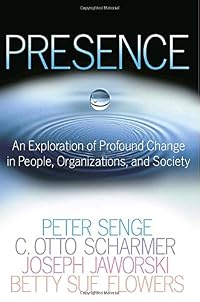
Presence: Human Purpose and the Field of the Future
by Peter Senge, Betty Sue Flowers, Joseph Jaworski, C. Otto Scharmer
On This Page
Description
Presence is an intimate look at the development of a new theory about change and learning. In wide-ranging conversations held over a year and a half, organizational learning pioneers Peter Senge, C. Otto Scharmer, Joseph Jaworski, and Betty Sue Flowers explored the nature of transformational change--how it arises, and the fresh possibilities it offers a world dangerously out of balance. The book introduces the idea of "presence"--a concept borrowed from the natural world that the whole is show more entirely present in any of its parts--to the worlds of business, education, government, and leadership. Too often, the authors found, we remain stuck in old patterns of seeing and acting. By encouraging deeper levels of learning, we create an awareness of the larger whole, leading to actions that can help to shape its evolution and our future. Drawing on the wisdom and experience of 150 scientists, social leaders, and entrepreneurs, including Brian Arthur, Rupert Sheldrake, Buckminster Fuller, Lao Tzu, and Carl Jung, Presence is both revolutionary in its exploration and hopeful in its message. This astonishing and completely original work goes on to define the capabilities that underlie our ability to see, sense, and realize new possibilities--in ourselves, in our institutions and organizations, and in society itself. show lessTags
Recommendations









Member Reviews
For a rational lover of non-fiction by Dawkins, Diamond and the like, reading this book caused a lot of aggravation. The basic message is maybe okay, though it does feel like a course for MBTI "S"s on how to become more of an intuitive "N".
The tone is intolerably smug, and factoids that are supposed to underpin certain outlandish theories are often given without reference to any reliable source. The American-centric point of view provides ludicrous distortions, such as in the passage where the authors discuss how on Sep 11, RNGs (random number generators) across the world started spouting non-random, correlated numbers because they sensed that humanity was suffering. As if that admittedly awful event was the greatest suffering that show more humanity ever knew.
I'll admit "natural mystique" experiences can feel very real, but here they are presented as attempts of a volitional universe to communicate with humans. The weather also communicates with us, eg when thunder strikes, it is the universe communicating with us and blessing our meeting, etc etc.
If the author of all this communication were described as a monotheistic deity, this book would be immediately dismissed. Since in this book the prime agent is described in new-agey fashion as the 'universe', some gullible people will find this inspirational (indeed, one of them recommended this book to me - I'll know what to do what any future recommendations by this person).
In short, I hated it. I filed this under "drivel" and "comfort for small minds" show less
The tone is intolerably smug, and factoids that are supposed to underpin certain outlandish theories are often given without reference to any reliable source. The American-centric point of view provides ludicrous distortions, such as in the passage where the authors discuss how on Sep 11, RNGs (random number generators) across the world started spouting non-random, correlated numbers because they sensed that humanity was suffering. As if that admittedly awful event was the greatest suffering that show more humanity ever knew.
I'll admit "natural mystique" experiences can feel very real, but here they are presented as attempts of a volitional universe to communicate with humans. The weather also communicates with us, eg when thunder strikes, it is the universe communicating with us and blessing our meeting, etc etc.
If the author of all this communication were described as a monotheistic deity, this book would be immediately dismissed. Since in this book the prime agent is described in new-agey fashion as the 'universe', some gullible people will find this inspirational (indeed, one of them recommended this book to me - I'll know what to do what any future recommendations by this person).
In short, I hated it. I filed this under "drivel" and "comfort for small minds" show less
Going to have to read some more Senge after this one.
SUMÁRIO:
[011] - Prefácio à Edição Brasileira.
(.)
[017] - Introdução: Sobre partes e todos
[019] - 00.01 O advento de instituições vivas;
[021] - 00.02 Novas maneiras de pensar o aprendizado;
[023] - 00.03 O campo do futuro;
[024] - 00.04 Presença;
[025] - 00.05 Sobre este livro.
(.)
[033] - 01.00.00 PARTE I APRENDENDO A VER.
[033] - 01.01.00 Um cenário de réquiem.
[038] - 01.02.00 Vendo como vemos;
[040] - 01.02.01 A capacidade de deixar em suspenso;
[042] - 01.02.02 Suspender em conjunto;
[043] - 01.02.03 Construindo espaços receptivos;
[045] - 01.02.04 A coragem de ver o novo;
[046] - 01.02.05 O suspender como trabalho interior;
[048] - 01.02.06 Integrando o trabalho interior.
[051] - 01.03.00 Vendo a partir do todo;
[052] - 01.03.01 show more Redirecionamento: vendo o processo gerador;
[055] - 01.03.02 O encontro com o Todo autêntico;
[057] - 01.03.03 Vendo a partir do interior de uma organização;
[058] - 01.03.04 O trabalho interior do redirecionamento.
[061] - 01.04.00 Vendo com o coração.
(.)
[077] - 02.00.00 PARTE II NO INTERIOR DO SILÊNCIO.
[077] - 02.01.00 O momento gerador.
[086] - 02.02.00 Uma compreensão emergente: a Teoria U;
[086] - 02.02.01 As sementes de uma teoria;
[088] - 02.02.02 Um segundo tipo de aprendizado;
[090] - 02.02.03 Sentir;
[091] - 02.02.04 Presenciar;
[093] - 02.02.05 Concretizar.
[095] - 02.03.00 O buraco da agulha: deixar ir e deixar vir;
[096] - 02.03.01 Uma questão de coração;
[097] - 02.03.02 Renunciar ao controle;
[098] - 02.03.03 Conhecimento Original;
[101] - 02.03.04 O Eu estranho;
[103] - 02.03.05 Entregando-se ao compromisso.
[105] - 02.04.00 Casamento.
(.)
[115] - 03.00.00 PARTE III TORNANDO-SE UMA FORÇA DA NATUREZA.
[115] - 03.01.00 No corredor dos sonhos.
[131] - 03.02.00 A grande vontade;
[133] - 03.02.01 Cristalizando o intento;
[137] - 03.02.02 Sementes são pequenas;
[138] - 03.02.03 Trabalho intencional;
[140] - 03.02.04 Despertando.
[142] - 03.03.00 Em diálogo com o universo;
[143] - 03.03.01 Protótipos;
[145] - 03.03.02 Criando e ajustando;
[149] - 03.03.03 Ouvindo o "feedback";
[151] - 03.03.04 Redescobrindo o propósito;
[153] - 03.03.05 Permanecer conectado;
[154] - 03.03.06 Sincronicidade.
[157] - 03.04.00 Concretização e a arte de criar instituições.
(.)
[171] - 04.00.00 PARTE IV ENCONTRANDO O NOSSO FUTURO.
[171] - 04.13.00 Liderança: tornando-se um ser humano.
[180] - 04.14.00 A ciência praticada com espírito de sabedoria;
[182] - 04.14.01 Fragmentação;
[184] - 04.14.02 Mensuração;
[185] - 04.14.03 Totalidade Intacta;
[187] - 04.14.04 O ponto cego;
[189] - 04.14.05 Uma ciência reflexiva dos sistemas vivos;
[192] - 04.14.06 A ciência praticada com espírito de sabedoria;
[194] - 04.14.07 Nossa barganha faustiniana: transferência de responsabilidade para a ciência e a tecnologia modernas;
[199] - 04.14.08 Um novo caminho;
[202] - 04.15.00 Sincronicidade.
(.)
[222] - Epílogo: "Desaparecido o homem, haverá esperança para o gorila?".
[235] - Notas.
[248] - Agradecimentos.
[250] - Sobre os autores.
[253] - Sobre as organizações. show less
[011] - Prefácio à Edição Brasileira.
(.)
[017] - Introdução: Sobre partes e todos
[019] - 00.01 O advento de instituições vivas;
[021] - 00.02 Novas maneiras de pensar o aprendizado;
[023] - 00.03 O campo do futuro;
[024] - 00.04 Presença;
[025] - 00.05 Sobre este livro.
(.)
[033] - 01.00.00 PARTE I APRENDENDO A VER.
[033] - 01.01.00 Um cenário de réquiem.
[038] - 01.02.00 Vendo como vemos;
[040] - 01.02.01 A capacidade de deixar em suspenso;
[042] - 01.02.02 Suspender em conjunto;
[043] - 01.02.03 Construindo espaços receptivos;
[045] - 01.02.04 A coragem de ver o novo;
[046] - 01.02.05 O suspender como trabalho interior;
[048] - 01.02.06 Integrando o trabalho interior.
[051] - 01.03.00 Vendo a partir do todo;
[052] - 01.03.01 show more Redirecionamento: vendo o processo gerador;
[055] - 01.03.02 O encontro com o Todo autêntico;
[057] - 01.03.03 Vendo a partir do interior de uma organização;
[058] - 01.03.04 O trabalho interior do redirecionamento.
[061] - 01.04.00 Vendo com o coração.
(.)
[077] - 02.00.00 PARTE II NO INTERIOR DO SILÊNCIO.
[077] - 02.01.00 O momento gerador.
[086] - 02.02.00 Uma compreensão emergente: a Teoria U;
[086] - 02.02.01 As sementes de uma teoria;
[088] - 02.02.02 Um segundo tipo de aprendizado;
[090] - 02.02.03 Sentir;
[091] - 02.02.04 Presenciar;
[093] - 02.02.05 Concretizar.
[095] - 02.03.00 O buraco da agulha: deixar ir e deixar vir;
[096] - 02.03.01 Uma questão de coração;
[097] - 02.03.02 Renunciar ao controle;
[098] - 02.03.03 Conhecimento Original;
[101] - 02.03.04 O Eu estranho;
[103] - 02.03.05 Entregando-se ao compromisso.
[105] - 02.04.00 Casamento.
(.)
[115] - 03.00.00 PARTE III TORNANDO-SE UMA FORÇA DA NATUREZA.
[115] - 03.01.00 No corredor dos sonhos.
[131] - 03.02.00 A grande vontade;
[133] - 03.02.01 Cristalizando o intento;
[137] - 03.02.02 Sementes são pequenas;
[138] - 03.02.03 Trabalho intencional;
[140] - 03.02.04 Despertando.
[142] - 03.03.00 Em diálogo com o universo;
[143] - 03.03.01 Protótipos;
[145] - 03.03.02 Criando e ajustando;
[149] - 03.03.03 Ouvindo o "feedback";
[151] - 03.03.04 Redescobrindo o propósito;
[153] - 03.03.05 Permanecer conectado;
[154] - 03.03.06 Sincronicidade.
[157] - 03.04.00 Concretização e a arte de criar instituições.
(.)
[171] - 04.00.00 PARTE IV ENCONTRANDO O NOSSO FUTURO.
[171] - 04.13.00 Liderança: tornando-se um ser humano.
[180] - 04.14.00 A ciência praticada com espírito de sabedoria;
[182] - 04.14.01 Fragmentação;
[184] - 04.14.02 Mensuração;
[185] - 04.14.03 Totalidade Intacta;
[187] - 04.14.04 O ponto cego;
[189] - 04.14.05 Uma ciência reflexiva dos sistemas vivos;
[192] - 04.14.06 A ciência praticada com espírito de sabedoria;
[194] - 04.14.07 Nossa barganha faustiniana: transferência de responsabilidade para a ciência e a tecnologia modernas;
[199] - 04.14.08 Um novo caminho;
[202] - 04.15.00 Sincronicidade.
(.)
[222] - Epílogo: "Desaparecido o homem, haverá esperança para o gorila?".
[235] - Notas.
[248] - Agradecimentos.
[250] - Sobre os autores.
[253] - Sobre as organizações. show less
Jan 29, 2020 (Edited)Portuguese (Brazil)
Ratings
Members
- Recently Added By
Author Information

37+ Works 6,283 Members
Peter M. Senge is a senior lecturer at the MIT Sloan School of Management and the founder of the Society for Organizational Learning (SoL).
2+ Works 646 Members
5 Works 1,032 Members
Joseph Jaworski began his professional career as an attorney with the Houston-based firm of Bracewell and Patterson. In 1980, he founded the American Leadership Forum, and has since served as head of Global Scenario Planning for the Royal Dutch/Shell Group of Companies in London. In 1994, he joined the MIT Center for Organizational Learning, where show more he works with a consortium of leading corporations to build learning organizations. He is also a founder and chairman of the Centre for Generative Leadership. show less

10 Works 966 Members
Common Knowledge
- Canonical title*
- Presence. Esplorare il cambiamento profondo nelle persone, nelle organizzazioni e nella società
- Original title
- Presence: Exploring Profound Change in People, Organizations and Society
- Original publication date
- 2004
- Epigraph
- It's common to say that trees come from seeds. But how could a tiny seed create a huge tree? Seeds do not contain the resources needed to grow a tree. These must come from the medium or environments within which the tree g... (show all)rows. But the seed does provide something that is crucial: a place where the whole of the tree starts to form. As resources such as water and nutrients are drawn in, the seed organizes the process that generates growth. In a sense, the seed is a gatewaythrough which the future possibility of the living tree emerges.
- Dedication
- Dedicated to the memory of Francisco J. Varela
(1946-2001) - First words
- (Introduction) Although the four of us come from quite different backgrounds, we do share one thing in common: we have all been part of extraordinary moments of of collective awakening, and seen the consequent changes in larg... (show all)e social systems.
The four of us were witting in a circle in the study of Otto's home on Maple Avenue in Cambridge, Massachusetts. - Last words
- (Click to show. Warning: May contain spoilers.)"Without thinking, I relied, 'we have no idea of our capacity to creat the world anew.'"
(Click to show. Warning: May contain spoilers.)(Epilogue) "I think if we can find our place, we will find our purpose." - Blurbers
- Fritz, Robert; Perlas, Nicanor; Teerlink, Rich; Wilber, Ken; Winslow, Darcy
*Some information comes from Common Knowledge in other languages. Click "Edit" for more information.
Classifications
- Genres
- Business, Nonfiction, Sociology, General Nonfiction
- DDC/MDS
- 302.35 — Social sciences Social sciences, sociology & anthropology Social interaction Social interaction within groups Social interaction in complex groups
- LCC
- HD58.8 .P735 — Social sciences Industries. Land use. Labor Industries. Land use. Labor Organizational behavior, change and
- BISAC
Statistics
- Members
- 641
- Popularity
- 44,776
- Reviews
- 3
- Rating
- (3.79)
- Languages
- Dutch, English, Italian, Portuguese
- Media
- Paper, Ebook
- ISBNs
- 11
- ASINs
- 3