
Charles B. Handy (1932–2024)
Author of The Age of Unreason
About the Author
Charles Handy was born in Kildare, Ireland, in 1932, and was for many years a professor at the London Business School. From 1977 to 1981, Handy served as warden of the St. George's House in Windsor Castle, a private conference and study center concerned with ethics and values in society. He is now show more an independent writer and broadcaster who describes himself, these days, as a social philosopher. Other books by Handy include Waiting for the Mountain to Move, Beyond Certainty, and The Hungry Spirit. show less
Image credit: Charles and Elizabeth Handy By einalem from Leeds - Charles and Elizabeth HandyUploaded by Magnus Manske, CC BY-SA 2.0, https://commons.wikimedia.org/w/index.php?curid=9525326
Works by Charles B. Handy
Understanding Voluntary Organizations: How to Make Them Function Effectively (Penguin business) (1988) 58 copies
Im Bauch der Organisation. 20 Einsichten für Manager, und alle anderen, die etwas bewegen wollen. (1993) 5 copies
O Espírito Faminto Livro 1 1 copy
Repensando El Futuro: Los negocios, los principios, los mercados, la competencia, el liderazgo y el mundo (Spanish Edition) (1997) 1 copy
El espíritu hambriento más allá del capitalismo : en busca de propósito en el mundo moderno (1998) 1 copy
Wiek przezwyciężonego rozumu 1 copy
A Segunda Curva 1 copy
A era da irracionalidade 1 copy
Associated Works
Rethinking the Future: Rethinking Business, Principles, Competition, Control and Complexity, Leadership, Markets, and the World (1993) — Contributor — 124 copies
On the Manner of Negotiating with Princes: From Sovereigns to CEOs, Envoys to Executives: Classic Principles of Diplomacy and the Art of Negotiation [Kindle] (1716) — Introduction, some editions — 50 copies, 1 review
Tagged
Common Knowledge
- Legal name
- Handy, Charles Brian
- Birthdate
- 1932-07-25
- Date of death
- 2024-12-13
- Gender
- male
- Education
- Bromsgrove School, England
Oriel College, Oxford University (Bx|Greats) - Occupations
- fellow (London Business School)
consultant
lecturer
commentator (BBC) - Relationships
- Handy, Elizabeth (wife|1962|her death|2018)
- Nationality
- Ireland
UK - Birthplace
- Clane, County Kildare, Ireland
- Place of death
- London, England, UK
- Associated Place (for map)
- Clane, County Kildare, Ireland
Members
Reviews

This book is not new having been written nearly fifteen years ago. However the recent events in the financial markets reveal that its message remains remarkably relevant.
Handy begins by discussing how economic progress has been won at a high cost. The claimed increase in freedom and choice have meant less equality and more misery if not for the wealthy few, for the rest of society. One of many paradoxes that Handy explores. I particularly enjoyed his thoughts on how paying for jobs to be show more done, often destroys the jobs. His argument being that many worthwhile and valuable jobs simply become uneconomical once they are paid for, and thus disappear. It’s certainly my belief that the willingness of someone to pay for something is a very poor measure of whether something is worth doing. Think of the care you lavish on your children or time spent on hobbies.
The title comes from his plea that people should not be reduced to being empty raincoats.
“We were not destined to be empty raincoats, nameless numbers on a payroll, role occupants, the raw material of economics or sociology, statistics in some government report",
"If that is to be its price, then economic progress is an empty promise." Handy believes that it is every individual’s challenge to fill their empty raincoat. to make meaning in their life.
Handy argues that life is full of paradox and things simply can’t be predicted or understood. The challenge of life is to manage paradox, not to accumulate possessions.
He argues that wealth should not be measured in property and land, but in terms of knowledge.
"The means of production" in the future will be owned by the workers because it will be based on their intelligence and know how - a difficult thing to gauge in financial terms alone.
Handy makes the analogy that where in the past an organisation was like a castle, it will become more like a condominium: "an association of temporary residents gathered together for their mutual convenience".
It seems to me that the messages of this book provide a reminder that the world is rapidly changing and that our understanding of change must also change.
"Like dogs, if we are well fed we are content. However, contentment and complacency have no place in a world where inequality and despair are rife. Success and vision can no longer be about our individual "empty raincoat" struggle for profit and material gain. If we do not help each other then we most certainly cannot help ourselves.”
Charles Handy has worked as an oil executive, an economist and a professor. show less
Handy begins by discussing how economic progress has been won at a high cost. The claimed increase in freedom and choice have meant less equality and more misery if not for the wealthy few, for the rest of society. One of many paradoxes that Handy explores. I particularly enjoyed his thoughts on how paying for jobs to be show more done, often destroys the jobs. His argument being that many worthwhile and valuable jobs simply become uneconomical once they are paid for, and thus disappear. It’s certainly my belief that the willingness of someone to pay for something is a very poor measure of whether something is worth doing. Think of the care you lavish on your children or time spent on hobbies.
The title comes from his plea that people should not be reduced to being empty raincoats.
“We were not destined to be empty raincoats, nameless numbers on a payroll, role occupants, the raw material of economics or sociology, statistics in some government report",
"If that is to be its price, then economic progress is an empty promise." Handy believes that it is every individual’s challenge to fill their empty raincoat. to make meaning in their life.
Handy argues that life is full of paradox and things simply can’t be predicted or understood. The challenge of life is to manage paradox, not to accumulate possessions.
He argues that wealth should not be measured in property and land, but in terms of knowledge.
"The means of production" in the future will be owned by the workers because it will be based on their intelligence and know how - a difficult thing to gauge in financial terms alone.
Handy makes the analogy that where in the past an organisation was like a castle, it will become more like a condominium: "an association of temporary residents gathered together for their mutual convenience".
It seems to me that the messages of this book provide a reminder that the world is rapidly changing and that our understanding of change must also change.
"Like dogs, if we are well fed we are content. However, contentment and complacency have no place in a world where inequality and despair are rife. Success and vision can no longer be about our individual "empty raincoat" struggle for profit and material gain. If we do not help each other then we most certainly cannot help ourselves.”
Charles Handy has worked as an oil executive, an economist and a professor. show less
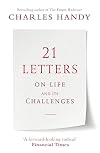
This book by Charles Handy is delightful. While there is much that we should all know - and do - we forget most of the simple lessons life offers.
Charles Handy wrote 21 letters (I assume to his grandchildren) which serve as a useful template for anyone starting in life. He wrote the letters in a charming, humble, almost self-deprecatory manner and they are a pleasure to read.
They are excellent lessons for young people, and are useful reminders for many of us who have strayed from the path.
Charles Handy wrote 21 letters (I assume to his grandchildren) which serve as a useful template for anyone starting in life. He wrote the letters in a charming, humble, almost self-deprecatory manner and they are a pleasure to read.
They are excellent lessons for young people, and are useful reminders for many of us who have strayed from the path.
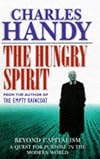
Like his style and experience as well as the content. The use of metaphor and image takes the complex and gives you a language for understanding your organisation. ! The book raises the powerful question that if wealth is a means rather then a end what is the end/purpose of capitalism?
I like the approach of using political ideas such a federal separation of powers for large business. Always gets me hooked back into a classical criticism of liberalism that they leave democracy at the door show more when they enter the workplace. Think what a republican/citizen company would be like!
Also the market works because it sees many costs as public not private and so related to the venture. For example the closure of many garages as competition from Supermarkets have driven them from the market. I benefit as prices are lower, the service better. The companies benefit with higher profits( and me again if I have a pension). But as a citizen I have to now deal with the decaying garage sites that are becoming vandal ridden sites that leave the area looking tired. show less
I like the approach of using political ideas such a federal separation of powers for large business. Always gets me hooked back into a classical criticism of liberalism that they leave democracy at the door show more when they enter the workplace. Think what a republican/citizen company would be like!
Also the market works because it sees many costs as public not private and so related to the venture. For example the closure of many garages as competition from Supermarkets have driven them from the market. I benefit as prices are lower, the service better. The companies benefit with higher profits( and me again if I have a pension). But as a citizen I have to now deal with the decaying garage sites that are becoming vandal ridden sites that leave the area looking tired. show less
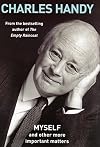
An introspective and reflective Handy offers an analysis of his life and works, giving subtle pointers to where he thinks he might have been right and where he thinks perhaps he was less so. Unassuming and avuncular and therefore somewhat boring, I began to yearn for a tale about his unbridled lust for African male prostitutes while he worked for Shell in the Congo, but there are no such Important Matters as these compared to constructing and living the Portfolio Career. Like an intellectual show more warm bath, I’d read five pages before bed to lull me off to sleep, and I was disappointed that this was less interesting than I’d hoped. show less
Awards


You May Also Like


Associated Authors
Statistics
- Works
- 54
- Also by
- 3
- Members
- 2,488
- Popularity
- #10,307
- Rating
- 3.6
- Reviews
- 11
- ISBNs
- 149
- Languages
- 13
- Favorited
- 6